


Couture continues to present itself as fashion’s highest form. It promises creative freedom, exceptional technique, and protection for specialist knowledge that industrial production cannot sustain. Fall Winter 2026 offered persuasive evidence for each claim. It also exposed how difficult it has become to separate couture’s artistic purpose from the publicity system that surrounds it.
DORIC ORDER
Paris hosted the Fall Winter 2026 couture collections from July 6 to 9. The schedule brought established houses together with major debuts, including Pierpaolo Piccioli’s first couture collection for Balenciaga and Duran Lantink’s first for Jean Paul Gaultier. The week centered on fantasy, experimental materials, extreme silhouettes, celebrity appearances, and increasingly elaborate forms of presentation.
That combination produced powerful images. It did not always produce convincing ideas.
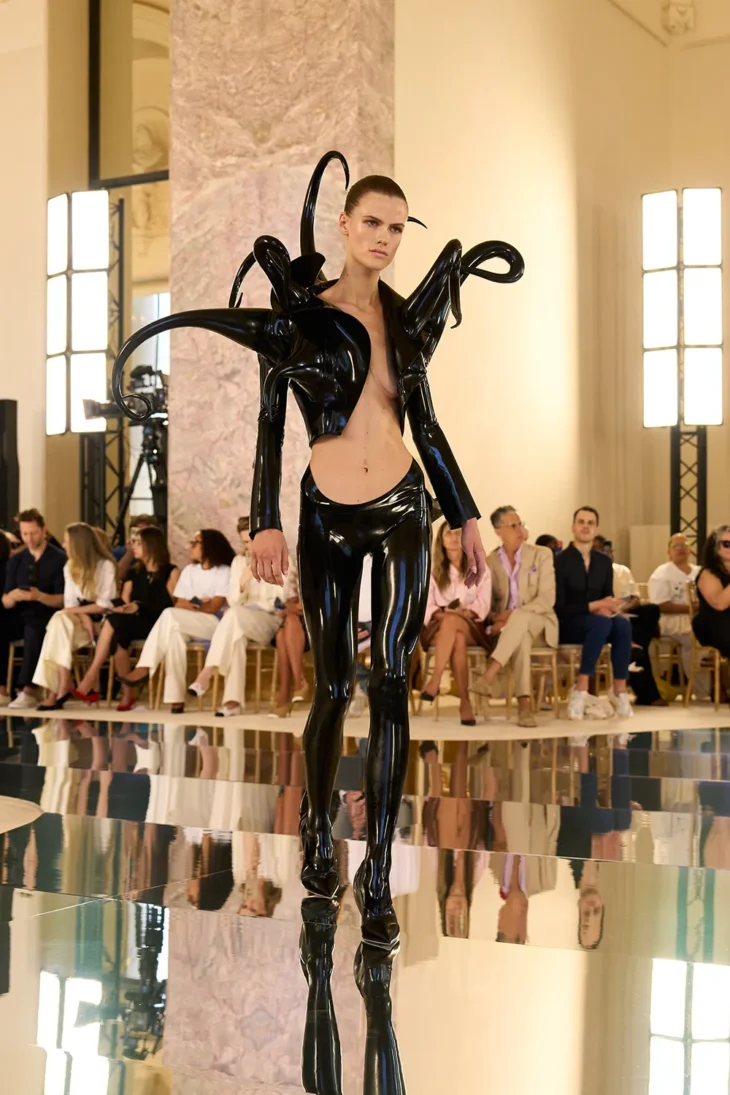
At Schiaparelli, Daniel Roseberry placed silicone, latex, inflated forms, and skin-like moulded surfaces at the centre of the collection. Breastplates appeared to glow, while tendril-like structures extended from the body. The work challenged conventional definitions of couture material and demonstrated the technical effort required to make rubber behave like fabric. It also operated with the visual immediacy that Schiaparelli now delivers almost automatically.
Couture still protects rare skills while depending heavily on spectacle, exclusivity, and branded visibility.
The question concerns what happens after the initial shock. Schiaparelli’s work travels exceptionally well through photographs and short videos, where a distorted torso or impossible surface becomes instant content. Its technical experiments deserve attention, but the house’s dependence on visual astonishment risks turning couture into a sequence of increasingly unusual objects designed for circulation. Surprise becomes a requirement, and each collection must exceed the previous one before viewers have had time to consider what any of it means.
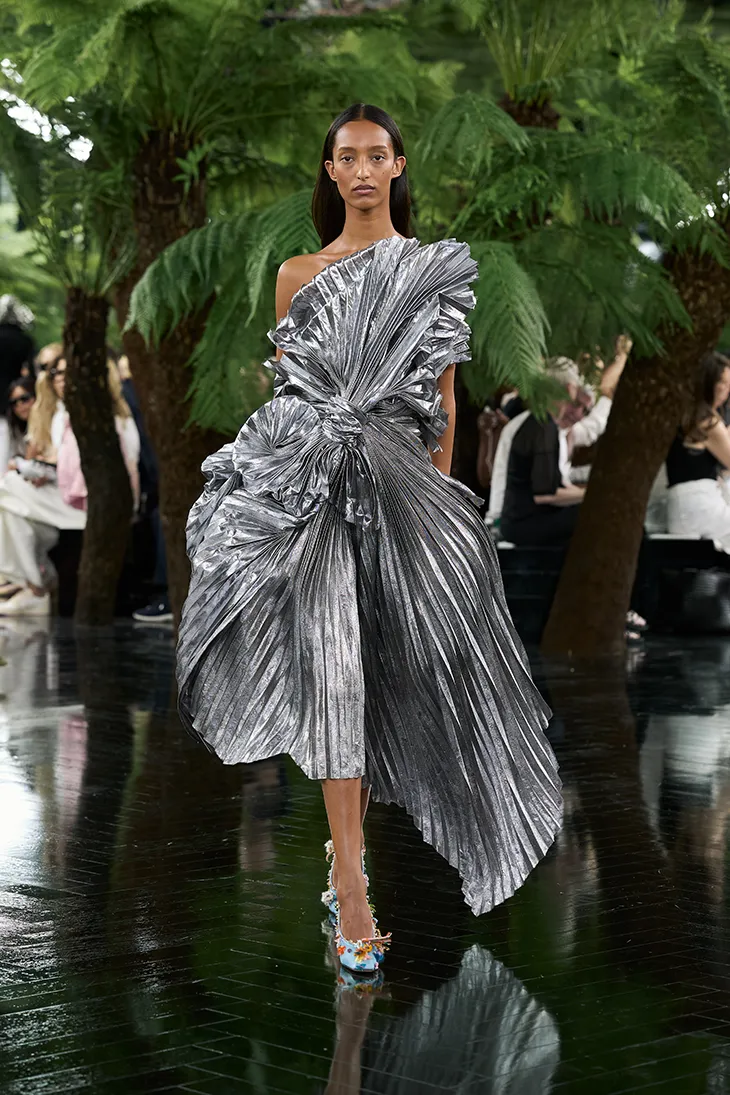
Jonathan Anderson’s Dior collection also explored unconventional materials through his continuing exchange with American artist Lynda Benglis. Anderson translated Benglis’s poured rubber works into dresses with iridescent surfaces and developed pleated metal forms connected to her sculptural practice. The collaboration brought fine art directly into the couture process and expanded the material language of the house.
Fall Winter 2026 proved that technical ambition does not always produce a convincing idea.
Yet artistic reference does not automatically create intellectual depth. Luxury fashion frequently borrows authority from contemporary art, using an artist’s name and methods to frame clothing as culturally serious. The strongest collaborations produce a genuine exchange between disciplines. The weakest reduce an artwork to texture, motif, or press-release context. Dior’s Benglis connection raises a productive question: does couture interpret art, or does it use art to validate its own status?
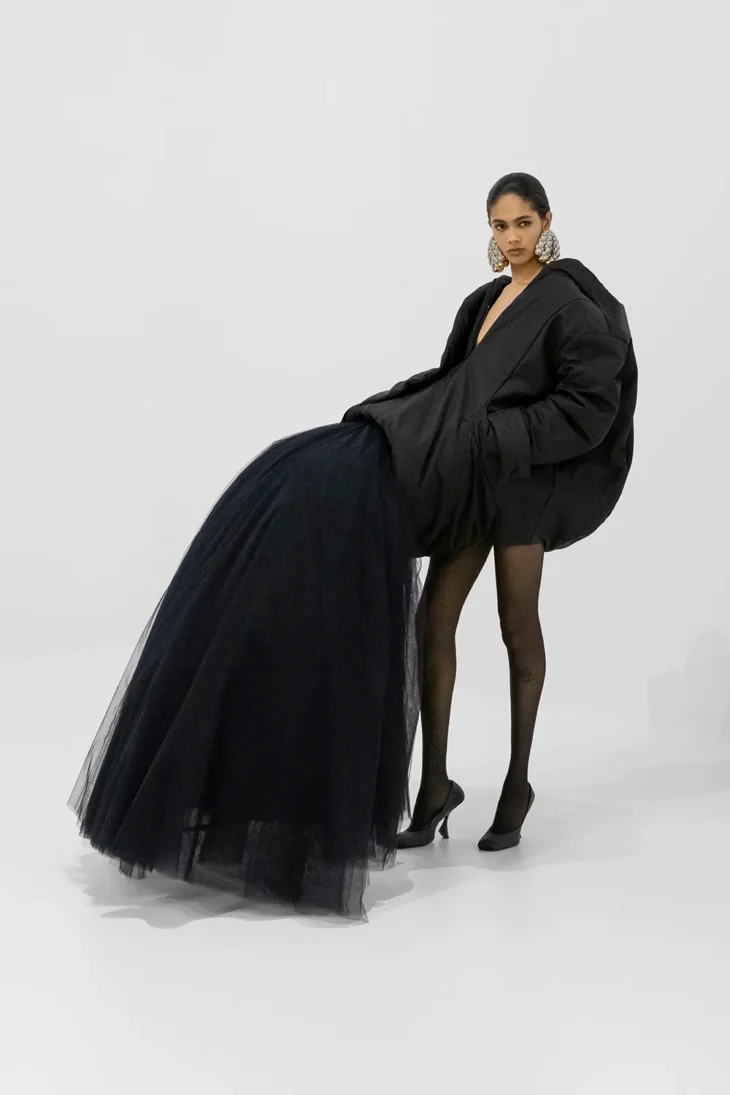
Duran Lantink’s Jean Paul Gaultier debut pushed the body through TPU, latex, distorted torsos, and compressed or expanded anatomy. The collection fit Gaultier’s history of provocation while introducing Lantink’s established interest in bodily manipulation. Its technical ambition made sense within couture, where custom construction allows designers to create forms that resist standard sizing and production.
Couture insists on permanence, yet survives through images consumed in seconds.
Still, distortion has become one of contemporary fashion’s most familiar forms of experimentation. Enlarging, compressing, exposing, or duplicating the body can look radical while repeating an established visual language. Couture should demand more than difficulty. A garment can require extraordinary labor and remain conceptually predictable.
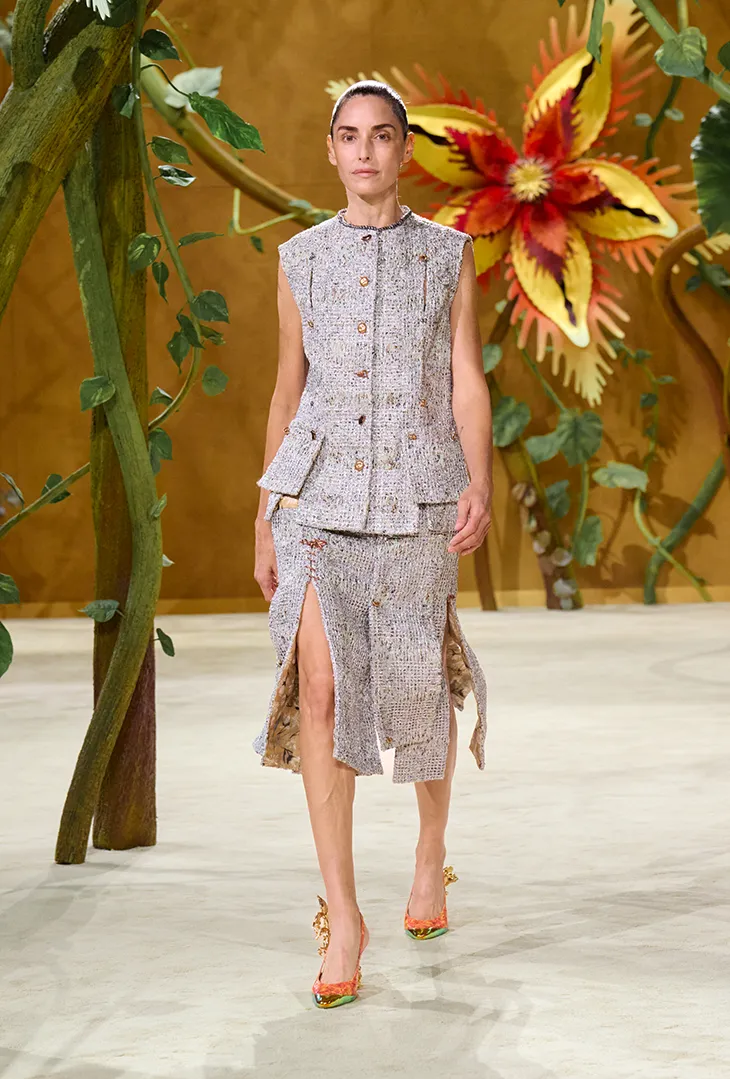
Matthieu Blazy offered a different proposition at Chanel. His fairy-tale collection included embroidered bean fronds, floral applications, narrative buttons, imaginative shoes, and references to stories such as Jack and the Beanstalk, Goldilocks, and Puss in Boots. Blazy also spoke about everyday women and removed pieces he considered excessively opulent, directing attention toward clothes with practical clarity.
Chanel’s relative restraint provided a useful correction to couture’s obsession with the monumental. Coat dresses, tailoring, tunics, and trousers suggested that technical refinement can exist without forcing every garment into a red-carpet climax. Yet the language of everyday life becomes complicated when attached to clothes available to an exceptionally small group. Couture can reference school runs, work routines, and domestic gestures, but it cannot become ordinary simply by describing them.
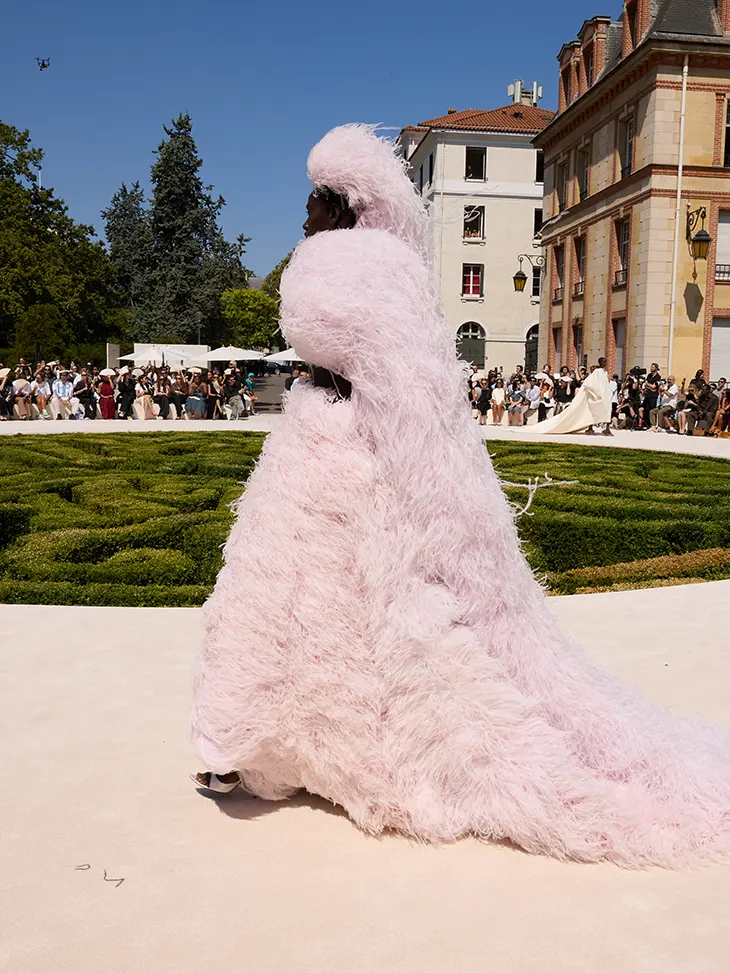
At Balenciaga, Pierpaolo Piccioli produced giant volumes, intense color, feathered surfaces, sculptural coats, and sweeping dresses. His most significant gesture may have come at the finale, when he brought the atelier workers onto the runway. Piccioli, who began his own career inside couture production, stressed the relationship between designers, clients, bodies, and the specialist hands capable of realizing each garment.
This visibility matters because couture habitually celebrates labor while obscuring laborers. Houses publish enormous hour counts and descriptions of embroidery techniques, yet creative directors and celebrity wearers receive most of the recognition. Bringing the atelier onto the runway does not resolve the hierarchy, though it makes the system visible for a moment.
The atelier remains essential, even when the system keeps it out of view.
Fall Winter 2026 also demonstrated that couture remains economically healthier than its apparent anachronism might suggest. Reports from the week described strong demand from wealthy clients, waiting lists, and a shortage of skilled artisans. Couture’s survival therefore does not depend solely on abstract cultural value. A market exists, and its exclusivity forms part of the product.
That reality complicates the familiar defence that couture functions as pure experimentation. These collections sell clothes, secure clients, generate celebrity placements, support fragrance and accessories, and strengthen the public identity of major houses. None of this invalidates their artistic content. It does make claims of freedom from commerce difficult to accept.
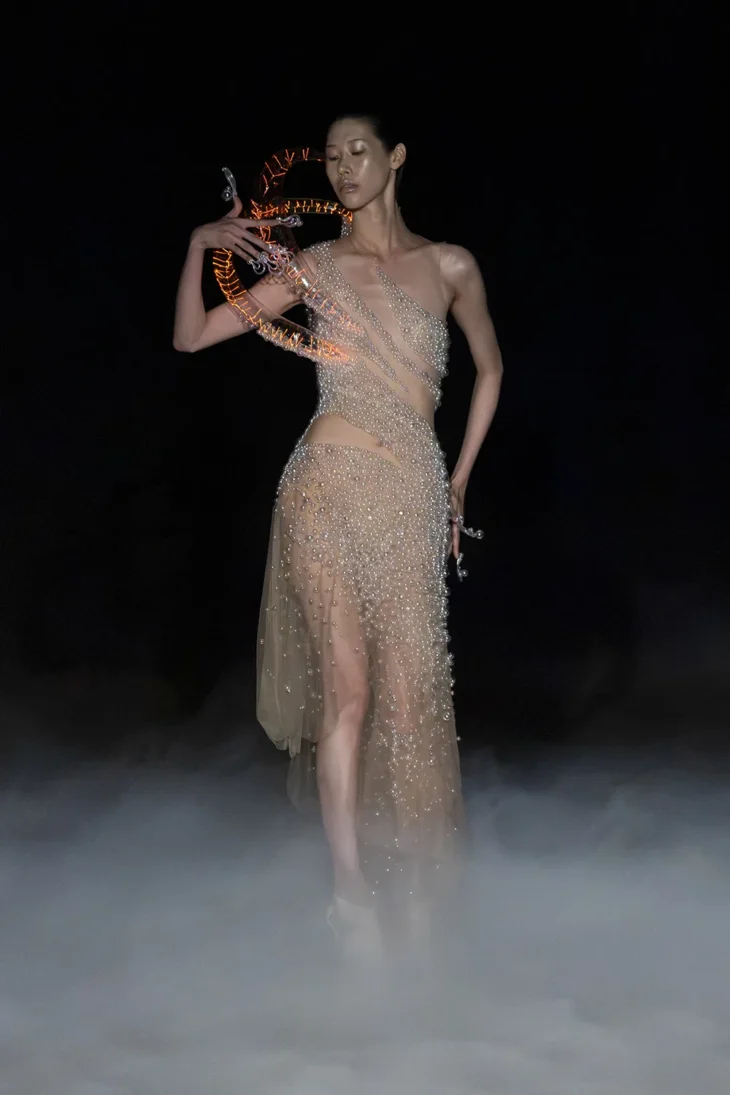
The season’s most experimental techniques included 3D printing, thermoplastics, silicone structures, lab-developed materials, and Iris van Herpen’s use of technology connected to a particle accelerator. Such projects show that couture can still support research beyond standard clothing production. Yet technical novelty carries its own danger. Innovation can become another spectacle category, judged by how impossible a process sounds instead of what it contributes to the finished work.
Couture still protects knowledge, creates employment for specialists, and gives designers room to test ideas at a scale unavailable elsewhere. Fall Winter 2026 confirmed those strengths. It also showed an institution increasingly skilled at converting labor, fantasy, art, and technology into branded visibility.
Every collection spoke about transformation. Few transformed the conversation.
The question is no longer whether couture should exist. It clearly has clients, resources, and influence. The harder question asks whether it deserves the cultural authority it receives.
To justify that authority, couture must offer more than expensive difficulty, celebrity approval, and images engineered for immediate circulation. It must make its labor visible, treat artistic and cultural references with precision, and produce ideas that remain meaningful once the runway image leaves the screen.