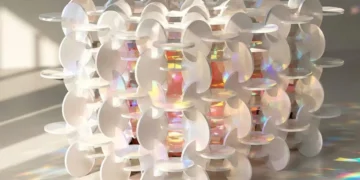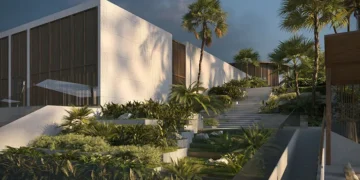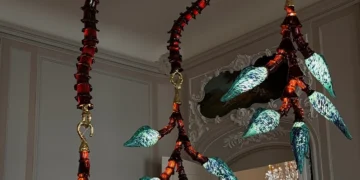



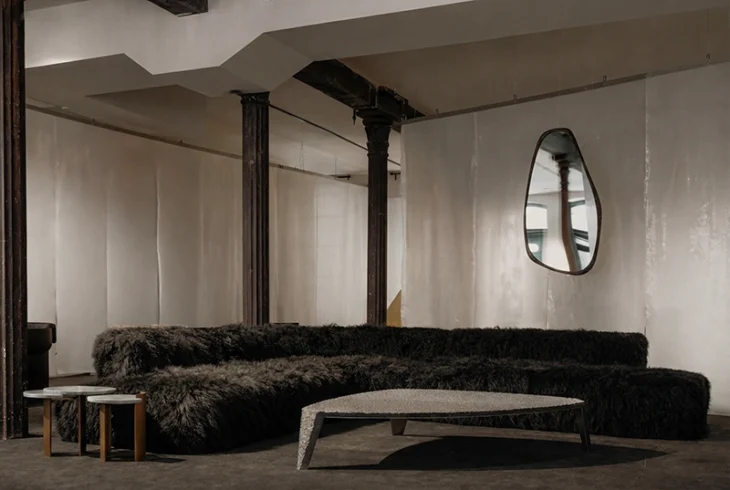
Alexander Diaz Andersson approaches design as a system that moves between architecture, object, and material, where each element carries equal weight. Through ATRA Studio, he has built a practice that operates across Mexico City, Los Angeles, and New York, shaping residential and hospitality spaces through a precise control of volume, circulation, and craft. His work develops in close collaboration with artisans through ATRAFORM, where material knowledge and execution remain inseparable from the design process.
ORDER IN PRINT AND DIGITAL
In this conversation for DSCENE, features Editor Jana Kostic speaks with Andersson about building a studio across different cultural contexts, the role of craftsmanship in shaping a design language, and the decision to treat interiors as complete architectural systems. The discussion moves through the launch of Diálogo Gallery, the positioning of ATRA within emerging markets, and the discipline required to maintain clarity in a landscape defined by speed and expansion.
You have built ATRA across Mexico City, Los Angeles, and New York, working within very different cultural and architectural contexts. How do these distinct environments shape your approach to design, and how do you navigate the specific pressures each market places on your creative decisions? – The approach to design doesn’t necessarily change. It remains consistent because we operate from a very clear philosophy that defines us as a firm and the story we are building.
What shifts is the context. Each market has its own conditions, its own behaviors, its own climate, its own way of being. Context is everything. Whether we are working in New York, Mexico City, or Los Angeles, the goal is always to create a dialogue between who we are and where we are.
In New York, for example, the urban condition, the density, the pace, and the cultural framework require a different response. We adapt our language to that environment, blending our identity with the character of the city. New York, for us, is an amplifier. It positions us within a higher level of discourse across art, architecture, and institutions. It’s not just another market, it’s a statement of where we stand.
Context is everything. Whether we are working in New York, Mexico City, or Los Angeles, the goal is always to create a dialogue between who we are and where we are.
In your work, which moves between sculpture and utility, what takes priority when deadlines tighten or limitations come into play? – For us, there isn’t a clear division between sculpture and utility. I don’t see the work as sculptural. It’s a design language informed by time, science, nature, and multiple references.
Functionality and comfort always form the base layer. From there, we build. The aesthetic and the expression come on top of something that works first. It’s not about choosing one over the other, it’s about constructing from a foundation that makes sense.
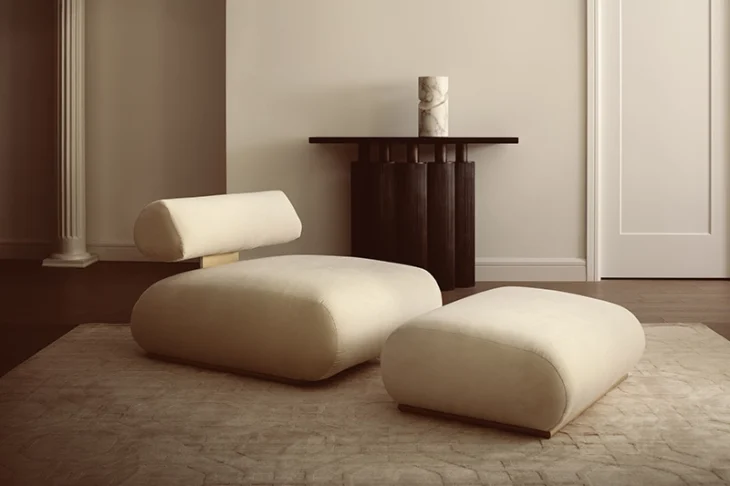
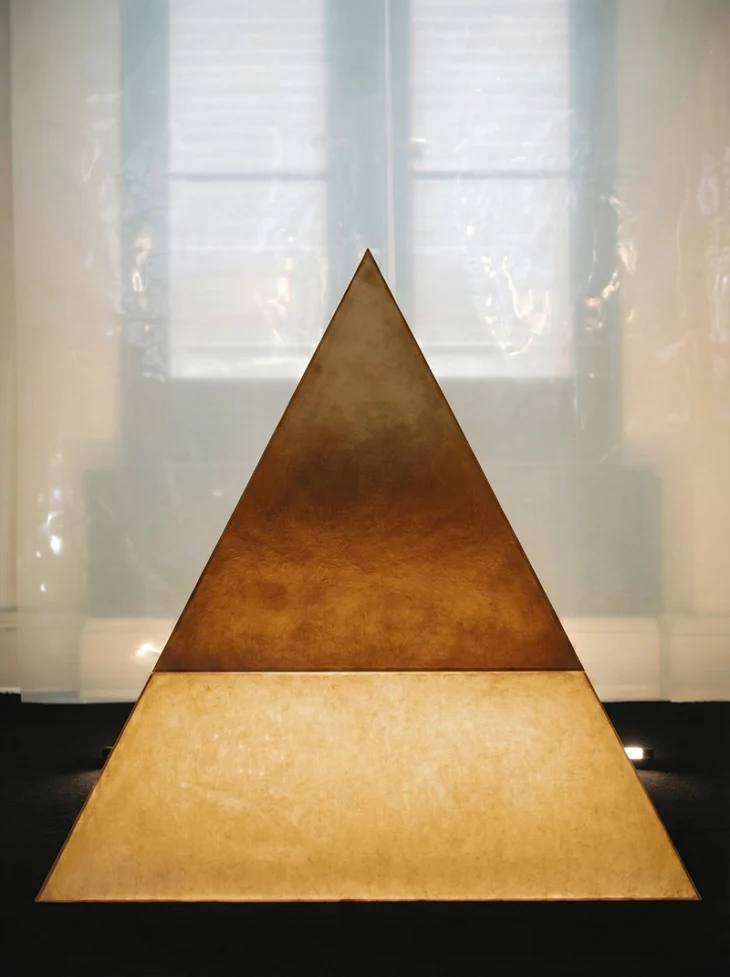
ATRA operates through ATRAFORM, a series of workshops focused on close collaboration with master artisans. How has working at that level of skill and experience shaped the way you think through a design? – My background started in building, upholstery, woodworking, paint, metals, oxidation. That process has always shaped how I design.
When you work directly with materials, you understand their limitations, but also their potential. The more you understand the material, the more you can push it.
Craft has always been part of the process because we design with construction in mind. At ATRA, you cannot separate the idea from how it is made. We don’t just hand over drawings and expect someone else to resolve them. You need to understand the process, communicate it clearly, and guide it through execution so the final result reflects the intention.
The more you understand the material, the more you can push it.
With the launch of Diálogo Gallery in San José del Cabo, what changes for you when your work moves into a more public space? – Diálogo is a natural step in our evolution. It’s similar to New York in that it positions us within a broader conversation, but it also introduces a new layer through collaboration with Glenn, Piero, and Marco.
We are entering a market where high-level design is not yet fully established. That creates an opportunity. By introducing a different level of quality and a new way of thinking, we can position ourselves as an entry point for a new type of clientele.
Cabo has an incredible natural context, but there is space to add value through design, through curation, and through a more considered architectural language. The idea of “Diálogo” reflects how we see everything, as relationships. Between client and designer, between architecture and landscape, between object and space. Everything is connected.
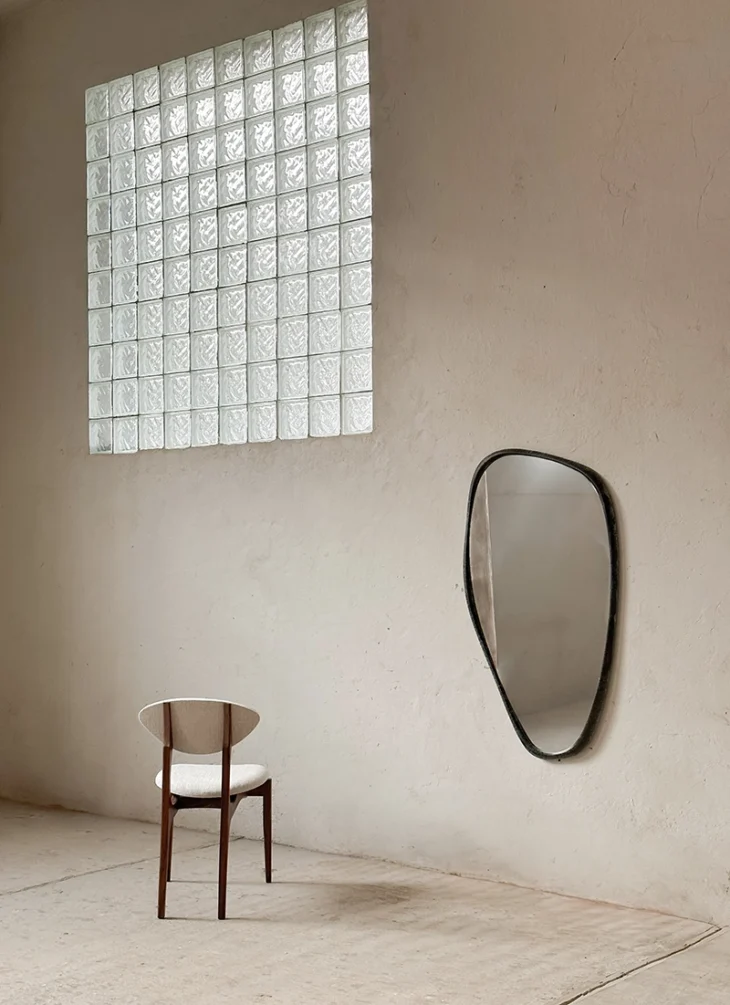
The gallery opens in Los Cabos at a moment of rapid luxury development. How do you navigate market demand while maintaining an approach rooted in Mexican material traditions? – In Los Cabos, we believe in organic growth. We understand that what we do is not for everyone.
The focus is on design integrity. It’s about proposing work that makes sense for the market, while also responding to how people want to live and use space there. At the same time, we are contributing a cultural and spatial value that may not yet exist.
There is already a strong presence of international firms, but the landscape tends to feel homogeneous. By introducing a different perspective, we have the opportunity to help shape a new design and cultural narrative in the region, especially alongside our partners.
At ATRA, you cannot separate the idea from how it is made.
You describe your new gallery spaces as research laboratories. How do you sustain the time and space needed for experimentation that resists easy categorization? – We describe them as laboratories because each market requires a different approach, and each space evolves over time.
They often begin with a strong aesthetic statement, but the programming develops in response to the environment. In New York, for example, it starts as a showroom, but quickly becomes a platform for collaboration, for dinners, for conversations with people across disciplines.
We don’t see these spaces as retail. They are cultural platforms. Places to exchange ideas, host events, and understand the dynamics of the city. Through that, we identify where we can contribute and create value.
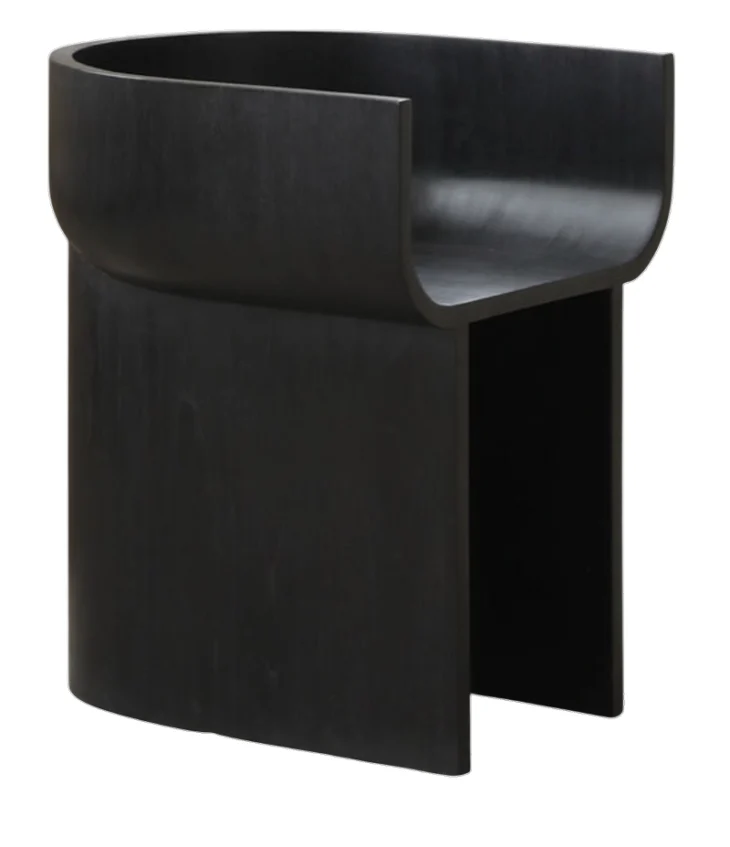
You were raised in Sweden, educated in Spain, and now work between Mexico and the United States. Do you feel your work belongs to a specific place? – The work carries a Scandinavian foundation, and there is clearly a Mexican influence, but together they create something more cosmopolitan.
At the core, the philosophy is about timelessness. It’s about creating work that can exist beyond a specific place or moment. Something that is not limited by geography.
The goal is to develop a language that can move across contexts without losing its identity.
Our work is not about isolated objects. It’s about systems.
You recently unveiled ATRA FORM in New York in the former Vito Schnabel Gallery. Why did you approach the space as an architectural system instead of a furniture showroom? – Because the work is not about isolated objects. It’s about systems.
Approaching the space architecturally allows us to present the work as part of a larger framework, where objects relate to each other and to the environment. It becomes a spatial experience rather than a display.
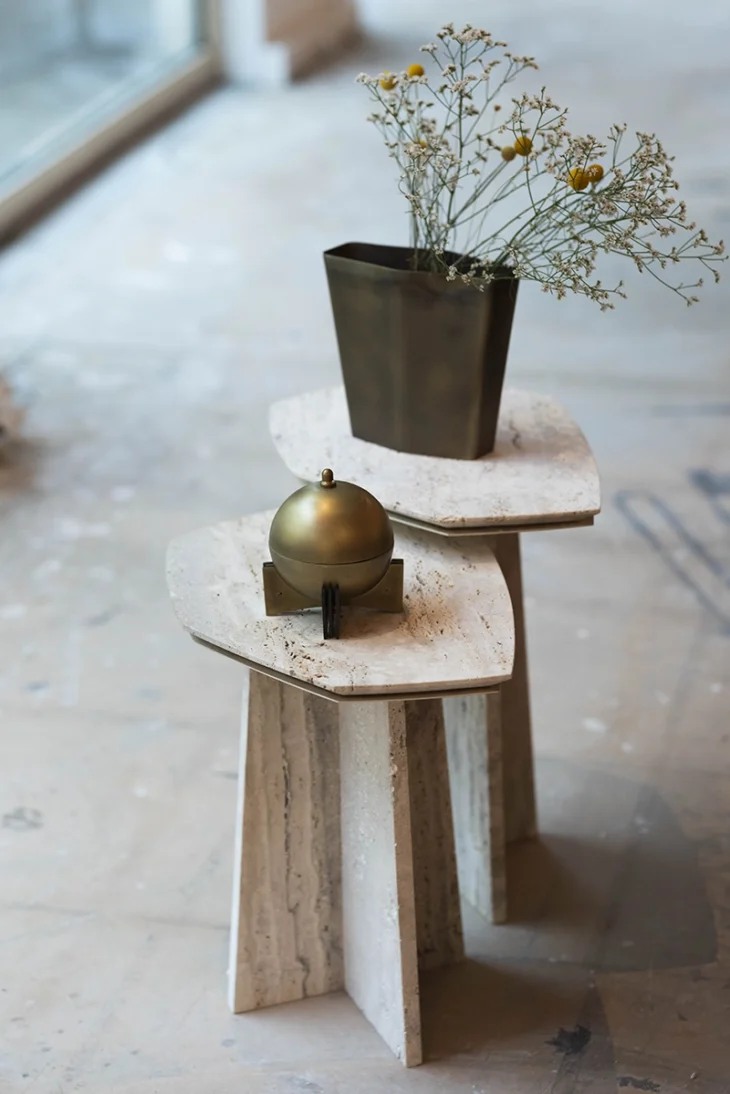
You’ve been based in Mexico for nearly two decades. Beyond materials, what is it about the creative energy of Mexico City that allows a multidisciplinary studio like yours to thrive internationally? – Mexico offers a level of craftsmanship and flexibility that is difficult to find elsewhere. It allows us to develop new techniques and evolve together with the people we work with.
At the same time, Mexico City was not historically positioned as a global design capital, which forced us to define our own identity and language. That process created a certain resilience and independence in how we think.
There is also a broader cultural moment happening. Cities that go through periods of instability or transition often become fertile ground for creative output. New York in the 80s is an example of that. I think Mexico City is experiencing something similar now, and that energy will continue to shape its identity over time.
Our process is rooted in contemplation, research, and understanding. That takes time, and that is part of the value.
When everything moves faster, and expectations keep rising, what guides your design decisions? – Speed is not what defines the work.
Our process is rooted in contemplation, research, and understanding. That takes time, and that is part of the value.
We create pieces that are meant to be specific and meaningful. That level of depth cannot be achieved quickly, and the people we work with understand that. What they are investing in is time, thought, and a level of uniqueness that comes from that process.