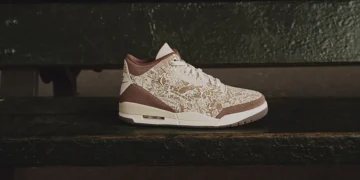



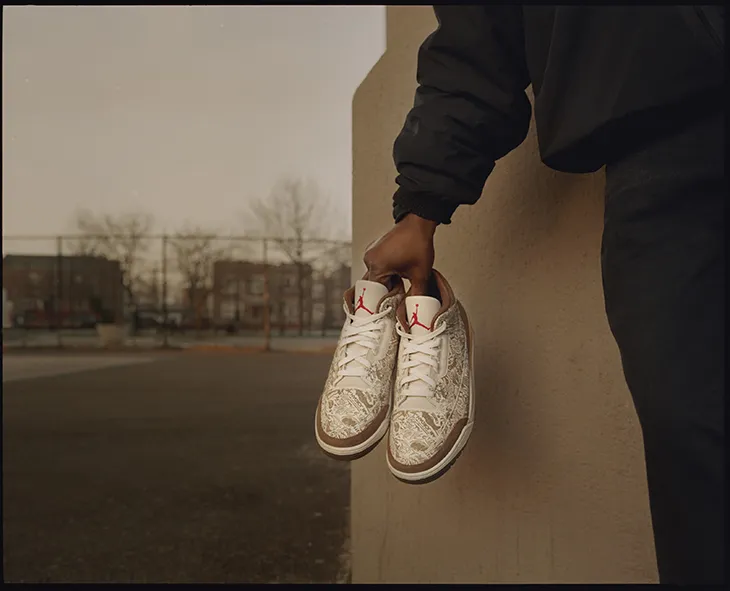
Jordan Brand introduces the Air Jordan 3 Laser, a white leather edition covered in laser-etched illustrations inspired by Michael Jordan‘s interests, achievements and cultural influence.The concept follows one central idea: greatness develops through an accumulation of details. The design expresses that idea through a dense field of laser etched illustrations that reference different parts of Jordan’s life and public image.
SNEAKERS
Each graphic contributes a separate reference. Together, the illustrations create a layered portrait of the influences that shaped Jordan’s identity as a global icon. The shoe asks for close attention because no single image explains the full concept. Repeated viewing reveals new elements and gives each section of the upper its own value.
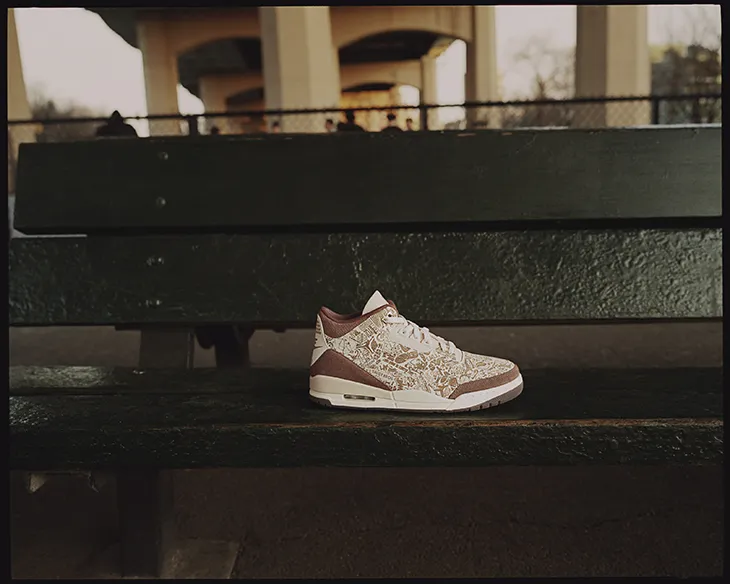
The design gives the familiar Air Jordan 3 a different surface treatment. Instead of the elephant print associated with the model since 1988, this edition uses premium tumbled leather and low pile suede. Laser etched illustrations cover the leather panels, while a red Jumpman logo appears on the tongue and Nike Air branding marks the heel.
The Air Jordan 3 gives the concept a familiar structure. Tinker Hatfield designed the model, and Nike introduced it in 1988 as his first Air Jordan design. Hatfield also created the elephant-print treatment that became a signature feature of the silhouette. Michael Jordan wore the Air Jordan 3 during his third Slam Dunk Contest, and Nike links his victory and the resulting image to the birth of the Jumpman icon.
Nike traces its original laser launch to 2003. The company credits designer Mark Smith’s detailed laser graphics with projects including the Air Jordan 4 Laser, tattoo-inspired Air Force 1 editions and the Air Jordan 20. Nike released the Air Jordan 20 in 2005 with over 200 icons that referenced Michael Jordan’s life and career. That documented history shows how laser engraving became a tool for placing biographical imagery directly onto footwear.
The Air Jordan 3 Laser applies that approach to one of Jordan Brand’s best-known models. Its upper treats every illustration as part of a larger account, while the tumbled leather and suede give the imagery a tactile base. The design asks viewers to look beyond the overall silhouette and examine the smaller references that define it.