


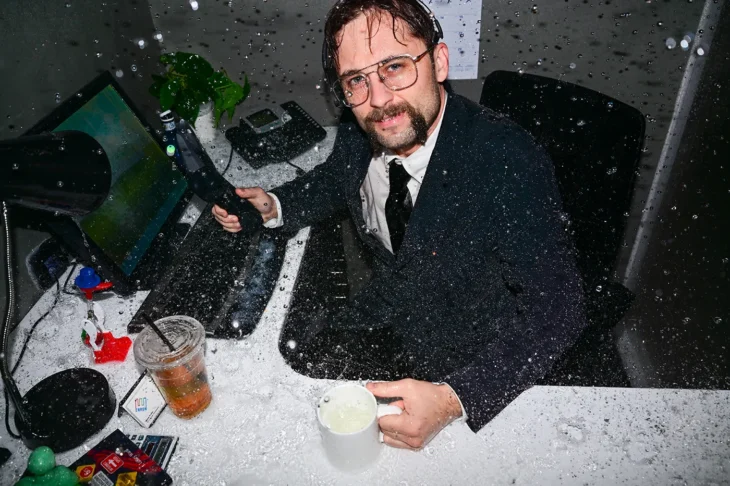
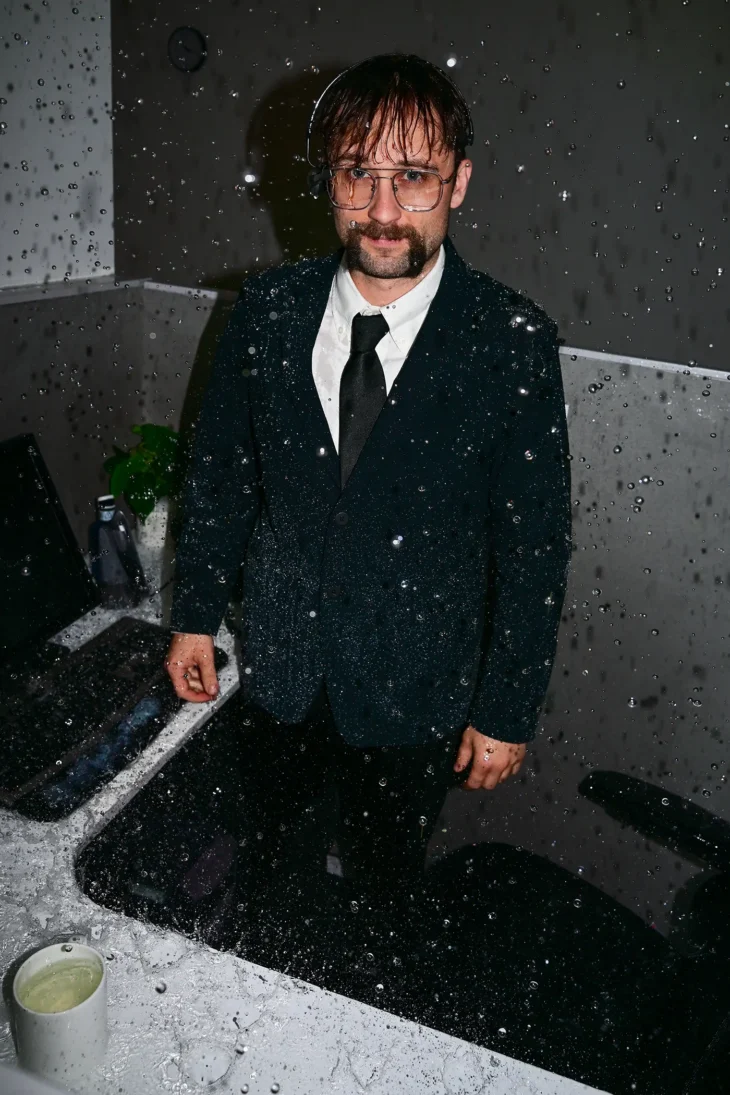
In October, Lukas Bentel left MSCHF, the Brooklyn collective he co-founded in 2019 and helped turn into one of the most talked-about art groups of its time. As founding Chief Creative Officer, Bentel was the mind behind much of the work that made the collective famous, from the Satan Shoes that ignited a lawsuit and a satanic panic to the Big Red Boot that became a fashion obsession. After seven years, he is stepping out on his own.
MSCHF was built on a simple idea: art should not stay on gallery walls. The group made objects that people could buy, wear, and argue about, blurring the line between artistic activism and consumer brand marketing. Across nearly 300 released works, the collective collaborated with Reebok, Crocs, AMG, Tiffany and most recently Lexus, staged solo shows at Perrotin and Nanzuka, and placed work in the permanent collection of the Cooper Hewitt.
Bentel’s path to that point started at RISD, where he earned a BFA in furniture design in 2015, and at Brown, where he studied computer music and multimedia. Before MSCHF, he co-founded Hello Velocity, an artist group and design studio with Kevin Wiesner, whose work led to the collective. The 2025 monograph Made by MSCHF, published by Phaidon, documents those years.
In this interview, Bentel reflects on the anonymity that gave MSCHF’s work room to land without preconceptions. He recalls how a plan for 200 pairs of Big Red Boots grew into 20,000 pairs and a wave of dupes, and why he never expected the Satan Shoes backlash. He explains why he never saw the provocation as marketing, what the team gave up by slowing its drop cycle, and why he now sees client work as a chance to make bigger ideas with people who share them.
Bentel is pursuing solo art alongside commissioned design and commercial work, and he is planning projects with his brother, fellow artist and designer Nik Bentel. He also wants to make with his hands again, and to explore sound from his Brown training on a personal level. The conversation covers the uncertainty of starting over, the value of working with others, and his belief that the stories a work carries outlast the object itself.
The interview was conducted by Zarko Davinic, Editor-in-Chief of DSCENE. Questions and answers follow.
MSCHF worked because a collective could absorb risk, legal fights, and production at scale. What does your process look like when the infrastructure is gone, and which of those constraints do you now see as having shaped the work more than you realized? – There’s truth to that, but I don’t think the ability to absorb risk is unique to a collective. Some of that comes from having a company structure which is something that many individual artists do not. What felt more specific to early MSCHF was the anonymity. The name gave the work a kind of shelter: people could encounter something without immediately filtering it through their associations with whoever had made it.
I believe the things that last the longest are stories.
At the beginning, we were super scrappy. The first group of us made everything from scratch, from the websites to figuring out production. As MSCHF grew and more people joined the team there were many more hand involved in the creation process and my role moved slightly more high level. I was still making a ton of things and designing products but idea and concept conception were my main focus.
The organizational and administrative support was enormously helpful because it gave us room to be creative. I am already sure I will miss that. MSCHF was an environment at first that prioritized creative and concept integrity over everything else.

What I’m looking forward to now is getting back to some of that early scrappiness, including the uncertainty of not knowing exactly what I’m doing. We spent years figuring out a format that worked, but I don’t know whether that format is what will produce good work for me or the world now. We are in such a liminal moment that feels so fragile and fraught with uncertainty I felt it a risk to stay put versus getting back to being nimble. That’s something I want to find out through making.
The legal and production questions will come up, and I’ll deal with them as they do. Pray for me!
Your guiding question was “Will you buy this and what does it mean if you do?” That frames the purchase as the work’s final act. If you are aiming for pieces that “stay with people long after the moment has passed,” does the sale still belong at the center, or does permanence require a different relationship between object and audience? -I don’t think “Will you buy this, and what does it mean if you do?” was the ultimate question. It was definitely a question we considered quite a bit, especially because we live in a time where purchasing a product, consumerism, and capitalist intent are maybe the dominant forces in our culture. Buying and selling things fits very naturally into that environment. Those are acts that people understand and know how to engage with. Just scrolling social media you’d be hard pressed to find any content there that is not trying to either promote a product or giving you something in exchange for social capital. When something doesn’t have this current capitalistic drive I’ve seen it confuse the audience and that can be a good way to get people to engage with the world differently.
Once people start wearing it, photographing it, and making it part of their own lives, you lose control over the image. It is no longer yours, it is now everyone’s.
But look at a project like Key4All. People bought a key, but they didn’t buy a key just to have a key. It was access to a performative object and ultimately a larger narrative. With the key they could gain access to a car and drive it around and bump into other people trying to do the same thing. That was what was interesting.
When I talk about work that stays with people, I don’t necessarily mean physically, although that’s something that’s also intriguing to me. I’m currently working on a few projects that play with very durable materials and narratives or trends that aren’t so durable. But I believe the things that last the longest are stories. We’re still telling and retelling stories from hundreds and thousands of years ago. I think, oftentimes, those are the most permanent objects.
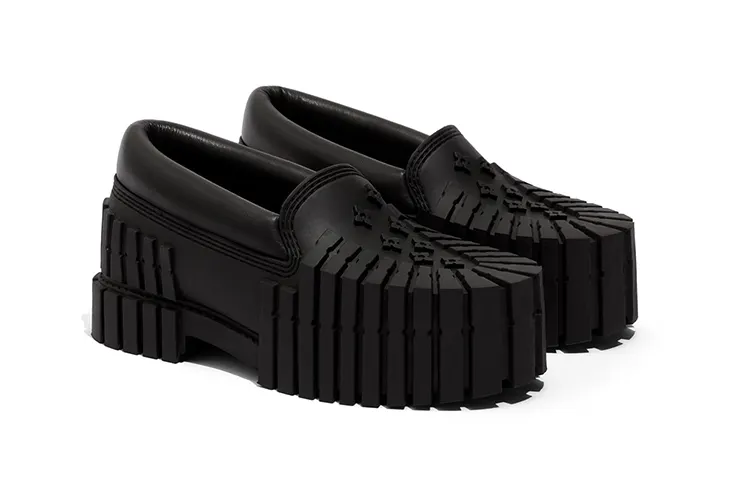
Big Red Boot was meant to satirize trend cycles and then became a trend, with 20,000 pairs made against an original plan of 200 and dupes following. At what point does satire stop critiquing a system and start feeding it, and how do you design against that outcome now? – I wasn’t explicitly trying to satirize trend cycles. I think that’s a conflation or maybe something someone said at one point but it wasn’t the initial thought from the conception of the object. A lot of MSCHF projects had satire and critique in them, but this one, in some ways, didn’t. I designed and conceived it with the intent to make an interesting aesthetic fashion object that could have some cultural staying power. It was aesthetically pulling from the cartoon world and shapes that we all recognize in 2d but never see realized in 3d.
I was thinking about it much more as an image, a sculptural footwear object you might see on a runway. I wasn’t thinking about 20,000 different feet stomping around in it and using it for clout online. Some of the early people wearing it really, really dressed it well. Wisdom Kaye and Lil Wayne wore very interesting fits that made it work. It was a hard thing to style properly, and seeing what people did with it was exciting and honestly challenging which I think led to the rush of people trying to get their hands on a pair.
Internally, there was massive debate about putting it out. I remember at the beginning having a hard time convincing people internally that it was a good idea and having a hard time getting it over the finish line. The 200 pairs was more a concession to the fact that we didn’t necessarily think we would be able to sell that many. It was playing with these increasingly large and outlandish proportions, which, just several years later, feel almost too ubiquitous. But at the time, getting people to see it took some convincing.
The brands just shouldn’t be scared of big ideas.
It ended up being much more culturally powerful than we’d realized it could ever be. The larger production run also helped sustain the practice. A big win like the Big Red Boot gave us more room to keep putting out crazier and crazier works.
For me, the learning was that you can put something into the world that you feel you own creatively, and you can feel like you’re placing it in the best light possible, but it can still culturally run away from you. Once people start wearing it, photographing it, and making it part of their own lives, you lose control over the image. It is no longer yours, it is now everyone’s. That is both a scary and a beautiful thing.
Satan Shoes drew condemnation from Christian leaders and a Nike lawsuit, and the controversy arguably became the main text of the piece. Was the backlash a designed component of the work, or a variable you accepted? How would you separate provocation as method from provocation as marketing? – I don’t think we could have ever predicted the backlash. We actually weren’t anticipating it because we’d done the Jesus Shoes before and faced basically no backlash, despite it being essentially the same project. The only difference was swapping out Jesus for Satan. I guess that does ruffle some feathers more. At the same time, when you’re dealing with that kind of subject matter, you know the material itself is provocative.
I didn’t see the provocation as marketing; making the Satan Shoe as an object was the end goal. Honestly the people who called attention to it and used it to start that mini satanic panic were, weirdly, the people who promoted it the most. That made it an interesting cultural object, because the reaction became part of how people encountered it.
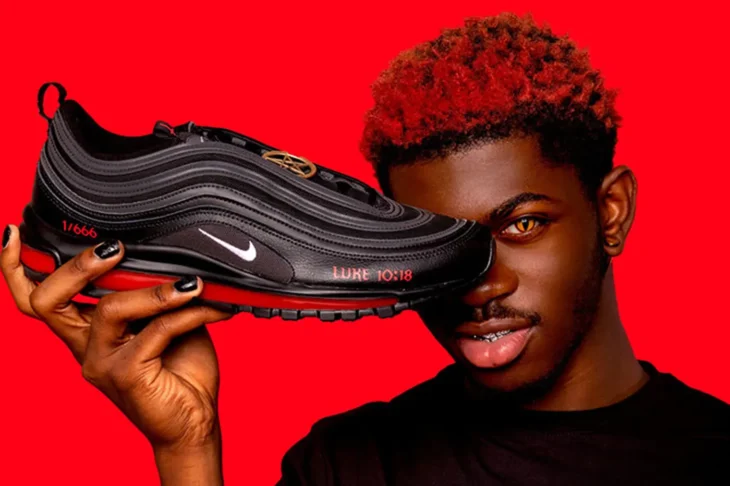
Artists have been playing with very similar material for years, so I don’t think it was an especially abnormal object within that history. Christian imagery and Christian leaders are also so integrated into the cultural and political landscape of the U.S. that we encounter that material all the time. What was interesting was how differently people reacted when we approached essentially the same project from the other direction.
MSCHF released nearly 300 works, many of which you conceived or directed. What does a slower practice allow you to say that such a quick drop cycle could not, and what do you risk losing by giving up that tempo? – I think time and care on projects is important. Obviously, without the group power of MSCHF, I’ll be a bit less efficient. But ideas and concepts can be made to work at different scales. As MSCHF became bigger, the projects became more ambitious, and I want to maintain that ambition on a conceptual level, even if the scale changes.
This idea of the singular genius artist is almost never true.
I also think the question describes the early pace more than the recent one. For the first four or five years, we maintained that tempo, but as we started working on longer-term projects, the practice slowed down. Over the last two years, MSCHF has independently released a handful of projects. So I actually want to attempt to make things at a slightly higher pace than I’ve been operating at for the past couple of years. I want to experiment and maybe even show a bit more of the behind-the-scenes of making and thinking I’m looking forward to having more room to try things and share some of that process as I figure it out.
You will now take commissions and commercial work alongside solo projects, after collaborations with AMG, Reebok, Crocs, Gufram, and Tiffany. Where does a brand partnership become a form of critique, and where does it simply become a client relationship? What would make you decline a brief? – Those MSCHF collaborations were never client relationships; they were seen much more as truly collaborative partners. We only partnered with someone if they offered something we couldn’t do through our own devices. That could be materials, IP, production, material; something that added to the conception of the project. Largely, we would initiate those relationships based on concepts we already had and thought could execute better because of the partnership.
With client work now, I do want to be selective, but I’m very open to working with many different people and look forward to it. The brands just shouldn’t be scared of big ideas. To do anything today and stand out, you have to make work that’s different and challenging. Doing something because you’ve seen it work elsewhere isn’t a good reason to do it. And honestly if you’ve seen it done elsewhere why do it again? If someone wants that kind of certainty but isn’t comfortable trying something different, that’s probably not the right fit.
I’m interested in working with places that are new and have fresh ideas, and places that are old and have a legacy. Both can be exciting. At the end of the day, I also want to work with good people. That matters the most to me.

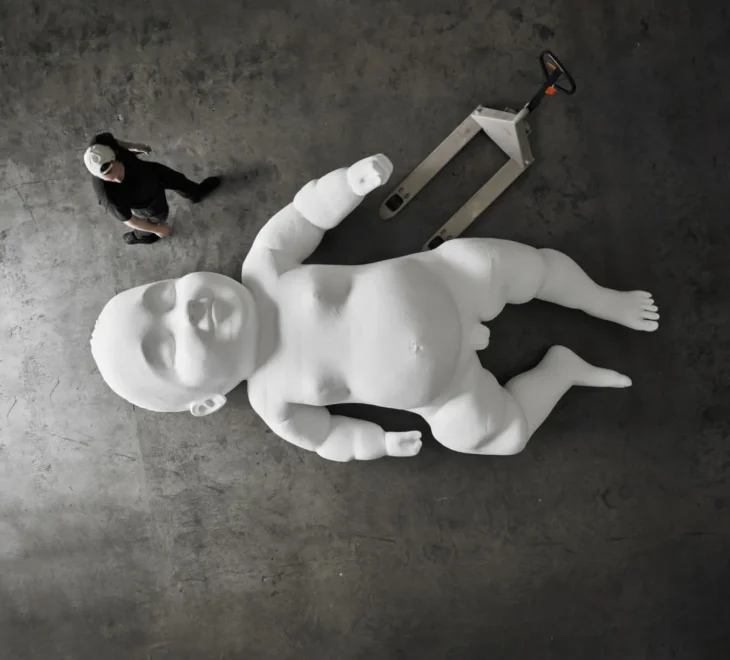
Your training spans furniture design at RISD and computer music and multimedia at Brown. MSCHF largely expressed itself through products and software. Which of those two disciplines has been underused in your public work, and does your next phase draw on it? – Wow, that’s a good deep dive. I really see both sets of tools as things that taught me how to think about making. I would love to make more use of my hands and develop more of an art-making practice at the same time that I am looking forward to designing. Obviously, there was some handwork at MSCHF, but I really enjoy that type of meditative fabrication work. I felt that when I painted on the Botero or when I chopped the spots out of the Damien Hirst. I’d like to get back to a bit more of that here and there. I think it’s good for the soul.
I think my Computer Music and Multimedia degree was less used from a practical standpoint, but not from a conceptual standpoint. I didn’t make that much music at MSCHF, although here and there, a smattering of compositions made their way into the work through various videos. I would love to get back to a bit of that on a personal level, but nothing is planned there for the moment. There’s just so much to make.
The Cooper Hewitt acquired MSCHF’s work, which was designed to be bought and worn, not preserved. When a museum collects something built to be consumed, does that validate the work or neutralize it? – I don’t think it neutralizes the object at all. If anything, it preserves the story. They collected objects that, on one hand, are meant to be used, but the story is what lasts.
After spending a ton of time working with factories all over the world to make products you realize that there is so much good, innovative creative labor that goes into anything people make. Much of it is hidden and is almost never celebrated. The Global Supply Chain Handbag was an idea I conceived to highlight that underappreciated creative labor that happens within factories and production facilities. They didn’t collect the bag because it was a cute bag, even if it is. It was the story around it. The story is what lasts, and that narrative and design history is what they’re collecting.
Your work with your brother Nik is part of what comes next. How do two artists with a shared background divide authorship, and does a smaller, family-based structure change who holds creative authority compared with a collective? – We have a few projects in the works but haven’t planned it all out yet, but it’s something we’ve talked about for years, and now that I’m a free agent, I know it will happen. I think it will come naturally because we grew up making things together, and I come from a family where everyone works together. My parents, grandparents, and uncles are architects who have worked together. My siblings, including Nikolas, either have architecture degrees or are actively working toward them. We grew up in an environment where making was a collaborative process.
What I’m looking forward to now is getting back to some of that early scrappiness, including the uncertainty of not knowing exactly what I’m doing.
Working together was never the issue. I’ve been a serial collaborator, and I think that’s something I learned from my family. This idea of the singular genius artist is almost never true. You have to work with people to get stuff done. That’s always been part of how I understand making things. We haven’t figured it out yet, but working together feels very natural and I’m excited for it!
Catch up with Lukas Bentel on Instagram @hi.lukas.