


A few years ago, nobody would have thought to congratulate a fashion house for hiring an illustrator. Today, the announcement that something has been created by an actual human being is practically a campaign in itself. Somewhere between the arrival of generative artificial intelligence and our collective exhaustion with its endless possibilities, the ability to hold a pencil has become a remarkable professional qualification. Apparently, human-made is the new luxury.
DORIC ORDER
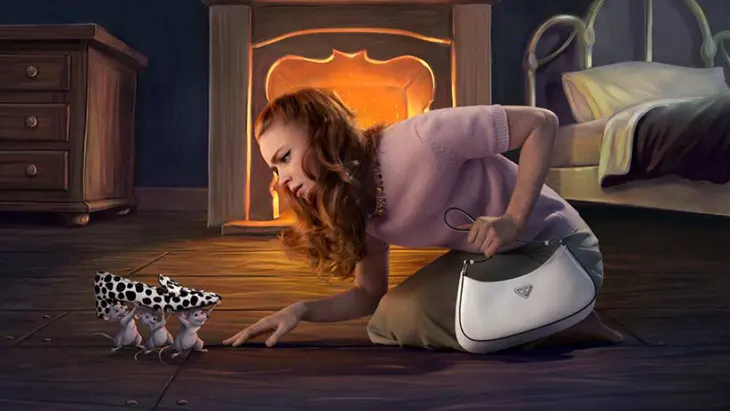
Prada seems to have understood this particularly well. For its Holiday 2026 campaign, Drawing Prada: Animated by Hand, the house commissioned veteran animator John Pomeroy and a team of artists to create an illustrated universe populated by curious animals, winter scenery, and characters who seem to have wandered out of a childhood storybook. Maya Hawke, Sadie Sink, and the rest of the campaign’s cast inhabit a world where photography meets traditional animation.

The campaign is charming. What I find particularly interesting, however, is how much attention Prada gives to explaining how it was made. The drawings, the artists, the painstaking process of animation: all of it becomes part of the story. We are invited to appreciate the labour behind the image almost as much as the image itself.
We spent years teaching machines to imitate humans. Now humans have to prove they aren’t machines.
This is a curious reversal. For decades, technological progress promised to make creative production faster and more sophisticated. Now, spending an extraordinary amount of time doing something that a computer might accomplish in seconds has become a point of pride. And perhaps it should be.
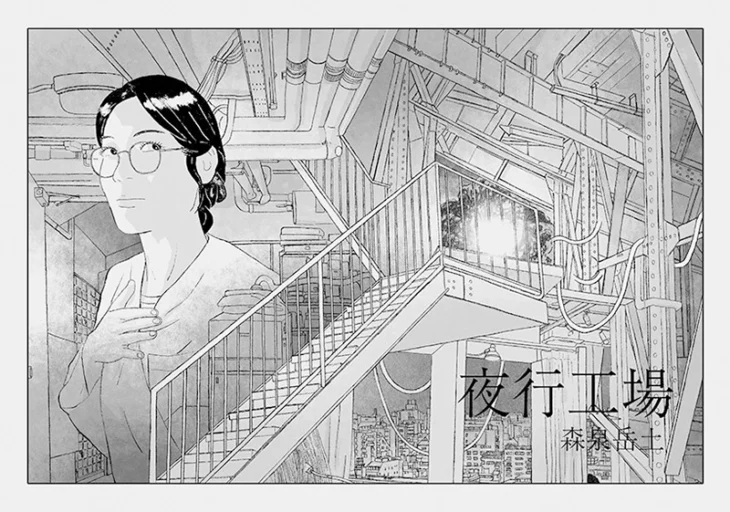
In Tokyo, Maison Margiela has taken a similarly unconventional route. To accompany the anniversary of its Ebisu store, the house commissioned artist Takehito Moriizumi to create The Factory at Night, a manga inspired by the building’s former existence as an electronics factory. The illustrations were created using a toothpick. A toothpick! Of all the instruments available to contemporary artists, there is something wonderfully unreasonable about choosing one that was designed for removing food from between your teeth.
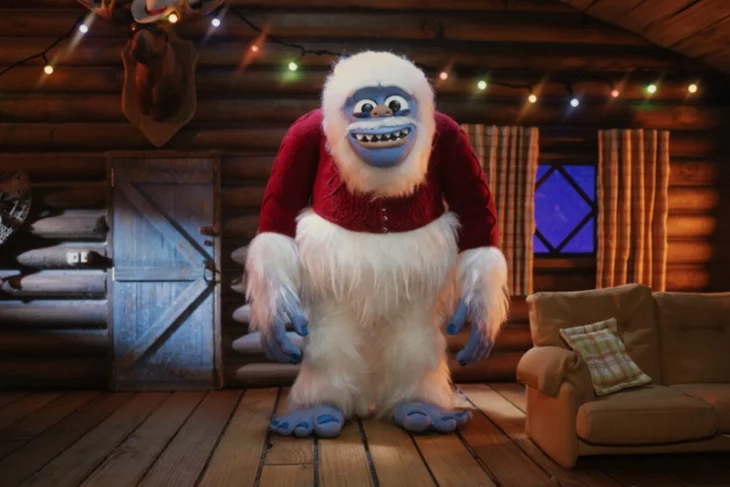
Levi’s, meanwhile, has produced a stop-motion holiday campaign featuring a handmade yeti, with miniature sets, costumes, and characters physically constructed for the film. According to the brand, every second of animation required approximately four hours of filming. Strathberry has created miniature worlds from felt, while other fashion and beauty companies are rediscovering the visual possibilities of traditional animation.
Suddenly, the hours spent making something are worth mentioning. The process has become part of the product. For luxury fashion, this makes a certain amount of sense. The industry has always depended on the idea that human skill, time, and attention create value. An expensive handbag is easier to justify when we imagine the hands responsible for making it. We admire the embroidery, the leatherwork, the patient construction of things that cannot be produced without knowledge accumulated over years.
But until recently, this fascination with the human hand was largely reserved for the objects being sold. Advertising was free to become increasingly digital, polished, and technologically extravagant. Now the campaign itself must demonstrate its humanity.
Today, the announcement that something has been created by an actual human being is practically a campaign in itself.
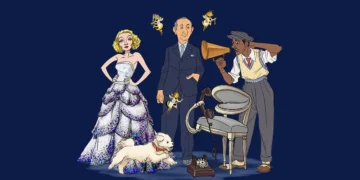
And then there is Dior. The house recently released Christian Dior’s Night in Colour, an animated holiday film directed by Sylvain Chomet, the celebrated French filmmaker behind The Triplets of Belleville. Dior presented the project as a hand-illustrated production, describing months of work and sharing details of the animation process.
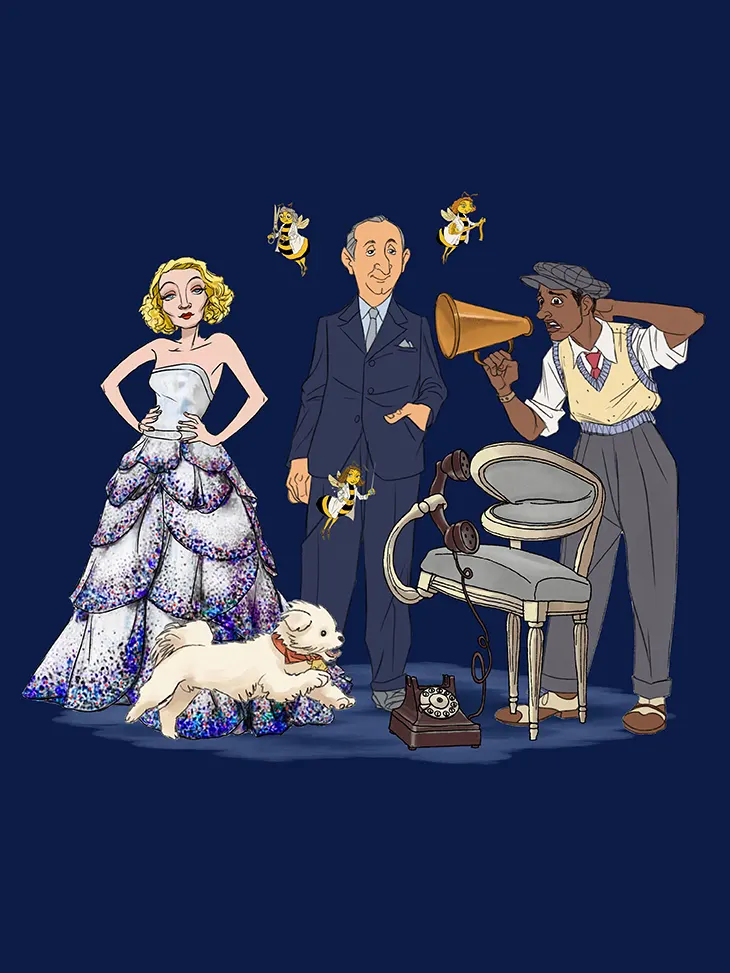
The internet, naturally, began investigating. Viewers questioned certain visual details, pointing to apparent inconsistencies in the animation and speculating that artificial intelligence might have been involved. The accusations circulated despite the participation of an established animator and the house’s description of the traditional techniques behind the film. There is no verified evidence establishing that Dior used generative AI.
What stands out is how quickly the discussion shifted away from the film itself. Instead of discussing its characters, visual language, or the quality of its storytelling, people began examining individual frames for evidence of technological deception. A hand-drawn animated film had become the subject of a forensic investigation.
We have reached a rather strange moment in visual culture. Imperfections, once considered evidence of an artist’s hand, are now occasionally interpreted as evidence of artificial intelligence. Meanwhile, AI-generated images can imitate paper textures, irregular brushstrokes, unfinished sketches, and practically every other visual quality we associate with handmade work.
What, exactly, are we supposed to look for? I find this especially troubling because it places artists in an almost impossible position. It is no longer enough to make something. Increasingly, they must also document themselves making it, explain their methods, and provide reassurance that the creative process occurred as advertised.
The artist becomes both creator and witness. Of course, there are legitimate reasons to ask brands about the use of generative AI. Questions about authorship, compensation, intellectual property, and the replacement of creative labour deserve serious attention. If a company promotes a campaign as handmade, audiences are entitled to expect that claim to be accurate.
But suspicion is not the same as evidence. A strange movement in an animation cannot, by itself, tell us how an entire film was produced. Nor does the use of digital software automatically mean that generative AI was involved.
The relationship between technology and art has always been complicated. Photography was once accused of threatening painting. Digital illustration unsettled traditional techniques. Computer animation transformed an industry built on drawing. Artists adapted, experimented, and incorporated new tools into their practices.
I see little reason to believe that creativity must remain technologically static to remain human. What concerns me is something different: the possibility that we are beginning to value the appearance of human labour more than the people performing it.
Perhaps human-made really is the new luxury.
A fashion house can commission hundreds of drawings, produce a beautiful behind-the-scenes film, and talk extensively about the importance of the human touch. That is meaningful when it reflects a real investment in artists and their work. But handmade aesthetics can also become another convenient visual category, as easily adopted and discarded as any seasonal colour.
And artificial intelligence is perfectly capable of making something look handmade. Perhaps the distinction we should care about is less visual than ethical. Who created the work? Were they paid fairly? Were their ideas respected? Did technology help them realise something they could not otherwise make, or was it introduced primarily to make their contribution unnecessary?
These are much harder questions to answer than whether an animated character has the correct number of fingers. I don’t think the return to traditional techniques is merely nostalgia. There is something reassuring about objects and images that carry evidence of time spent making them. A drawing can be revised a hundred times. A piece of fabric can be cut incorrectly. A stop-motion character must be moved, photographed, and moved again. Behind such work are countless decisions, some deliberate, others accidental.

Of course, fashion’s fascination with illustration is hardly new. René Gruau was creating advertisements for Dior in the 1940s. Prada commissioned James Jean to develop an illustrated universe for its Spring Summer 2008 collection, while Gucci worked with Helen Downie and Ignasi Monreal on campaigns built around painting and illustration. Back then, nobody felt the need to reassure us that an actual person had produced the images. We simply assumed it. Perhaps that’s the most revealing difference between those campaigns and the ones we’re seeing today.
And perhaps we are increasingly attracted to those decisions because so much of our digital experience now feels immediate, unlimited, and strangely anonymous. I am pleased to see fashion commissioning illustrators, animators, textile artists, and other specialists whose work deserves greater visibility. I hope the interest continues long after the holiday campaigns have disappeared.
Although, being human is no longer enough. You need to provide evidence.
But I also hope we can learn to appreciate human creativity without turning every artwork into a test of authenticity. There is something deeply ironic about the situation we have created. We spent years teaching machines to produce images that look as though people made them. Now we are asking people to prove that they made their own.
Perhaps human-made really is the new luxury.
Although, being human is no longer enough. You need to provide evidence.