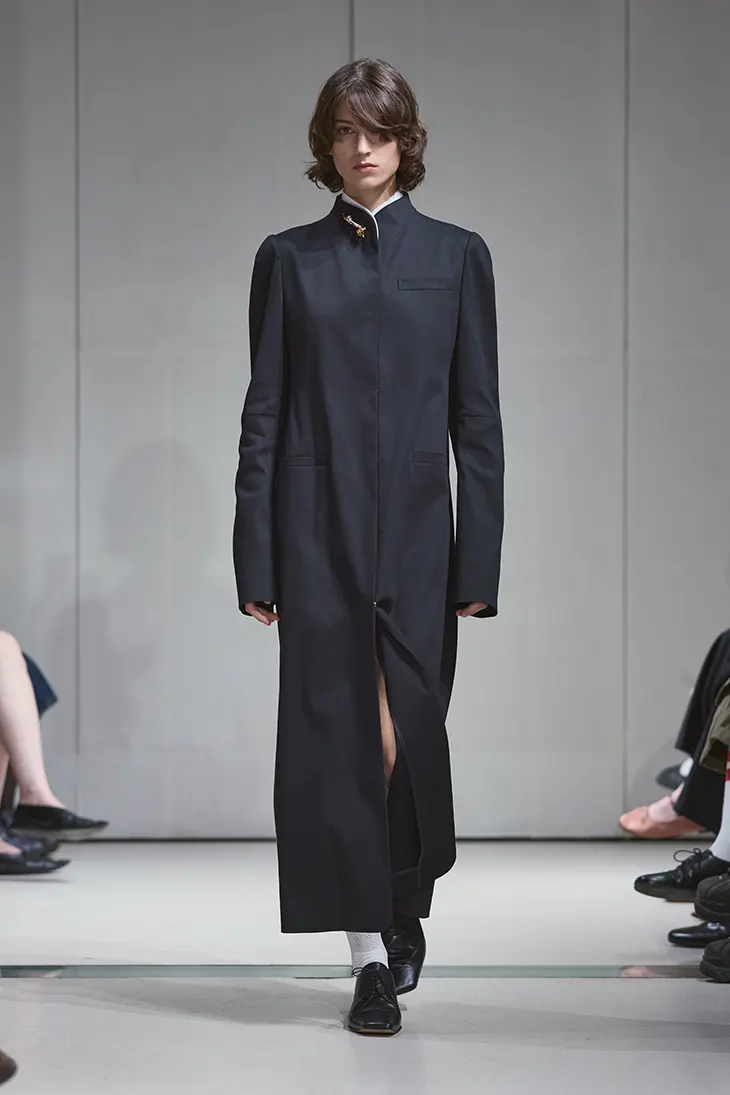



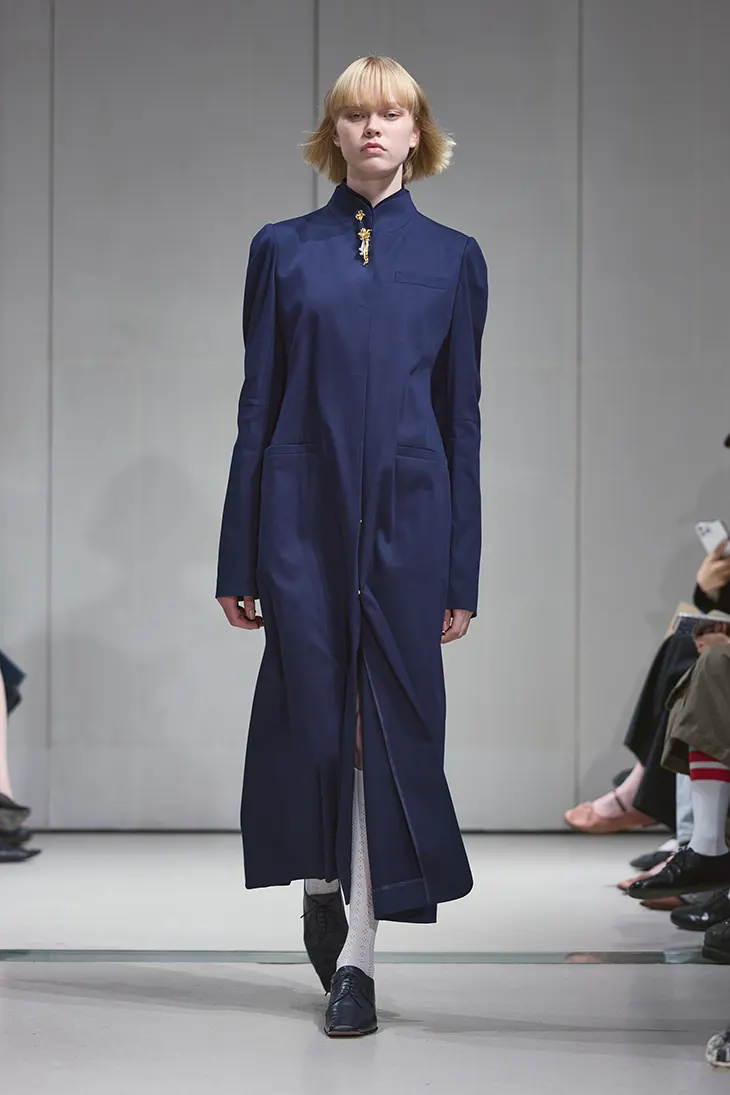
Japanese school uniforms provide the starting point for Mame Kurogouchi Spring Summer 2027, as Maiko Kurogouchi studies the personal variations students bring to standardized dress. Titled “Uniforms,” the collection studies how generations of students have altered familiar garments through proportion, styling and personal details.
SPRING SUMMER 2027
Kurogouchi connects the act of wearing a uniform with utsushi, a practice found in Japanese craft. Utsushi takes the form of an exemplary work from the past and carries its essence forward through the maker’s own physical process. Repetition inevitably introduces differences shaped by the body, sensibility and passing time. Kurogouchi applies a similar idea to uniforms, viewing them as established forms that gradually reveal the personality of each wearer.
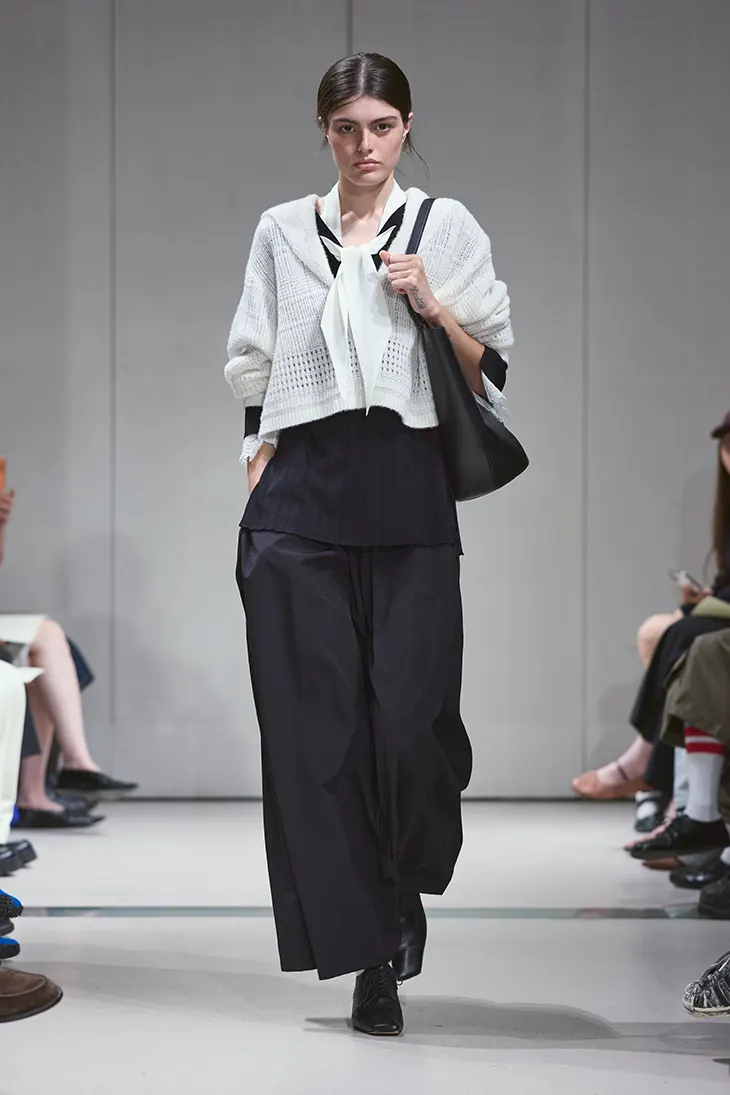
The collection shifts her attention away from the close observation of her own daily life that often informs her work. Instead, she studies the small modifications students make to standardized clothing. Trouser silhouettes vary between periods and regions. Ties loosen, gakuran stand collars receive careful attention and skirt lengths change. These details become records of personal choice within garments loaded with recognizable codes.
Mame Kurogouchi translates those observations through its established approach to tailoring, curved silhouettes and floral and botanical embroidery. Familiar elements from Japanese school dress appear throughout the collection, including blazers, stand-collar jackets, sailor collars, checks and pleats. Precise pattern construction and sheer, soft materials shift these references into contemporary clothing.
Proportions move between oversized and cropped forms. Stripes develop into checks across fabrics, while a blazer and skirt become a single dress. Multiple check patterns take on movement through shibori hand-twisting techniques. Sailor collars move beyond their expected position and appear across MA-1 jackets, blouses, dresses and knitwear.
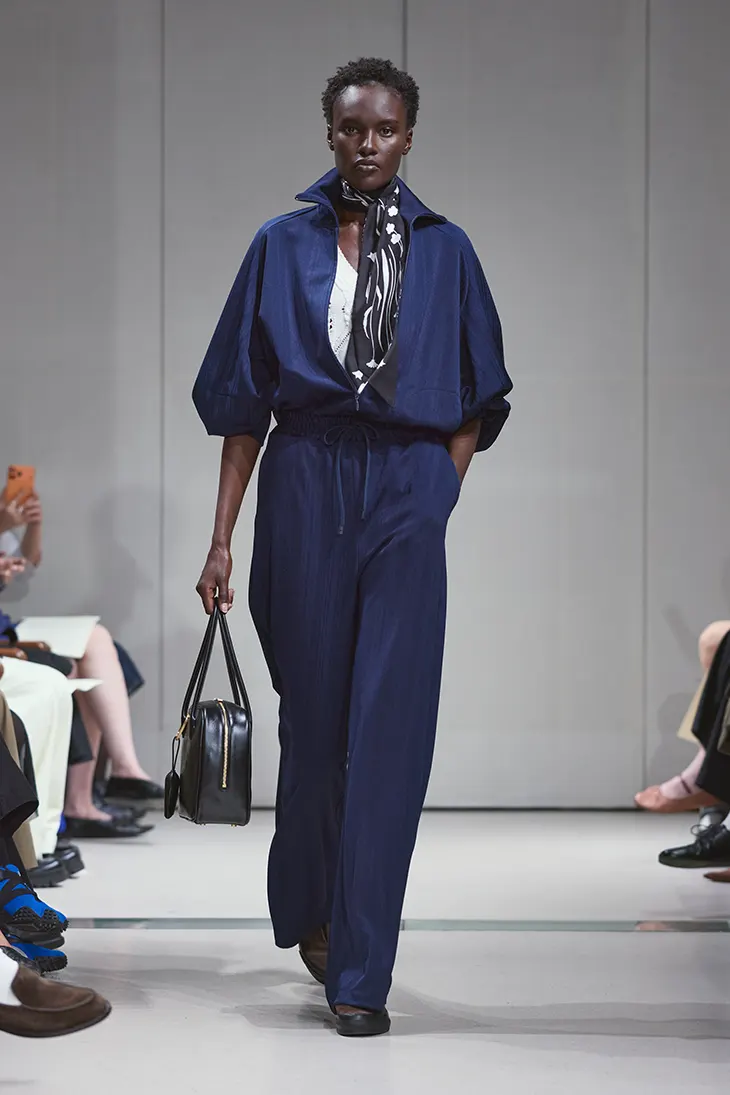
A restrained palette of black, navy and white keeps the connection to school dress visible. Kurogouchi introduces smaller bursts of color through socks, original brooches and embroidery that recall school emblems. These details bring a youthful quality to the collection without abandoning its controlled visual language.
Spring Summer 2027 also extends the uniform idea into accessories through two Japanese collaborations. Mame Kurogouchi introduces its first sneaker with MOONSTAR, taking the uwabaki indoor shoe commonly worn in Japanese schools as its starting point. The minimal slip-on combines the organic curves associated with Mame Kurogouchi with MOONSTAR’s footwear knowledge, developed from more than 150 years of production rooted in tabi making.
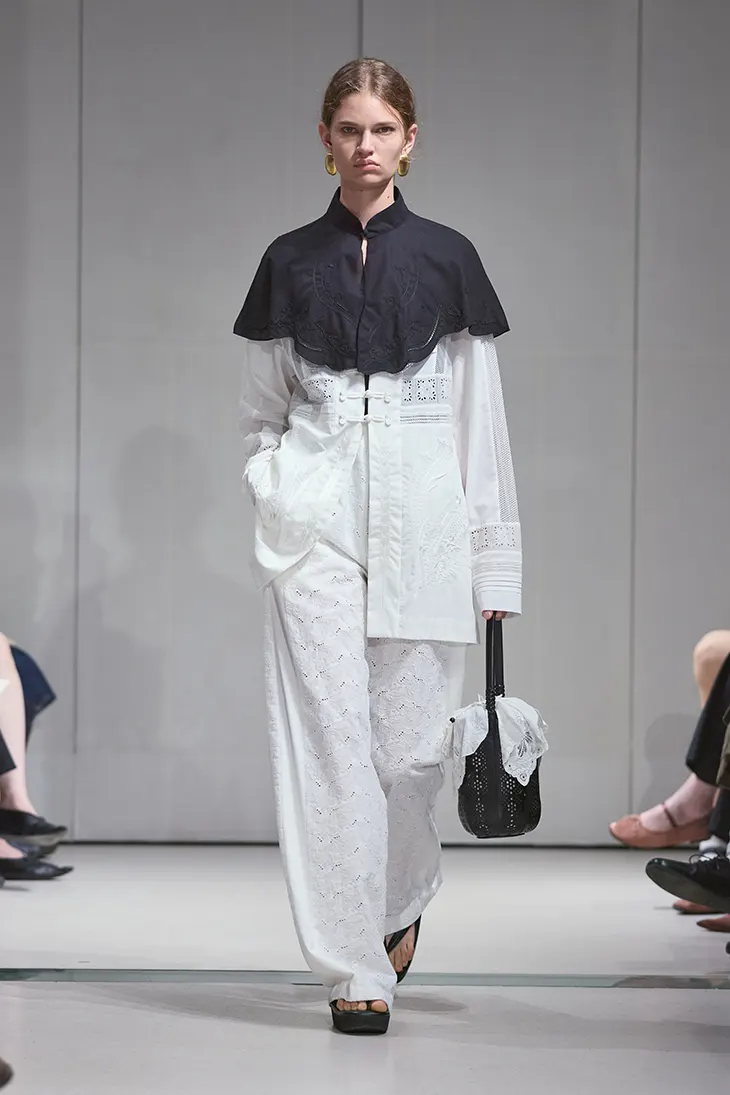
The brand also renews its collaboration with TSUCHIYA KABAN through three new designs. The range includes a canvas school bag, a leather bag finished with a flower charm and a leather bucket bag.
Japanese composer and musician Koshiro Hino created the music for the runway presentation. The composition follows the progression of a school day from morning through evening, moving through ideas of freedom, tension, learning and play.