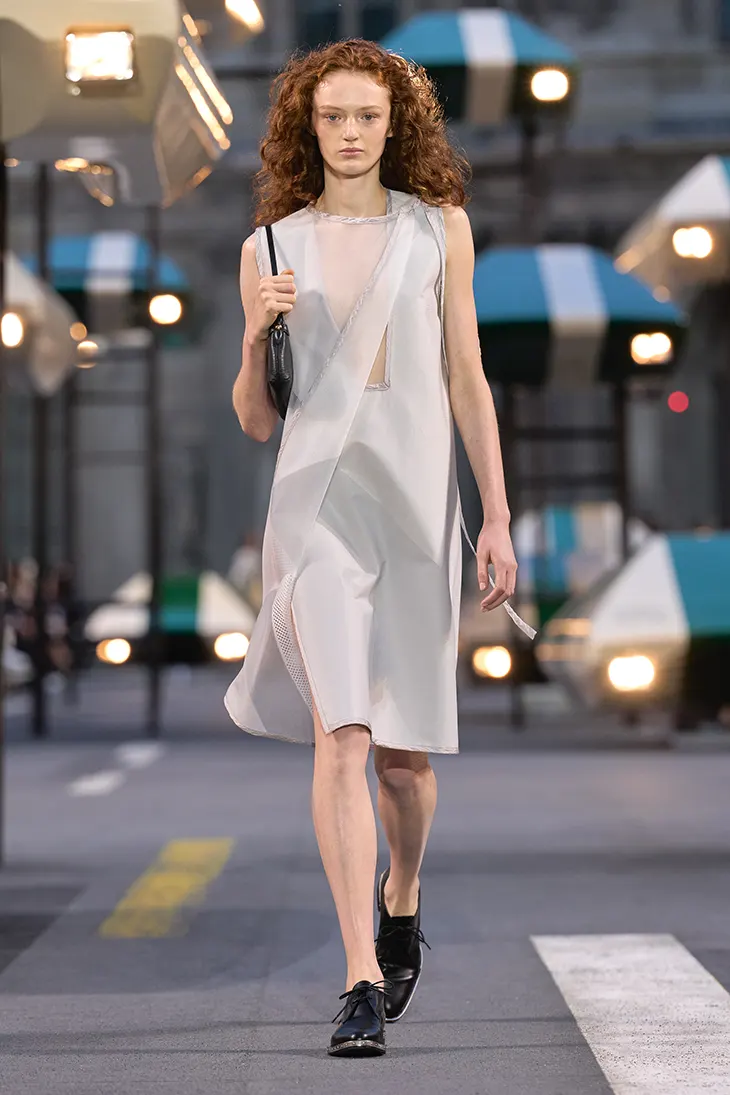



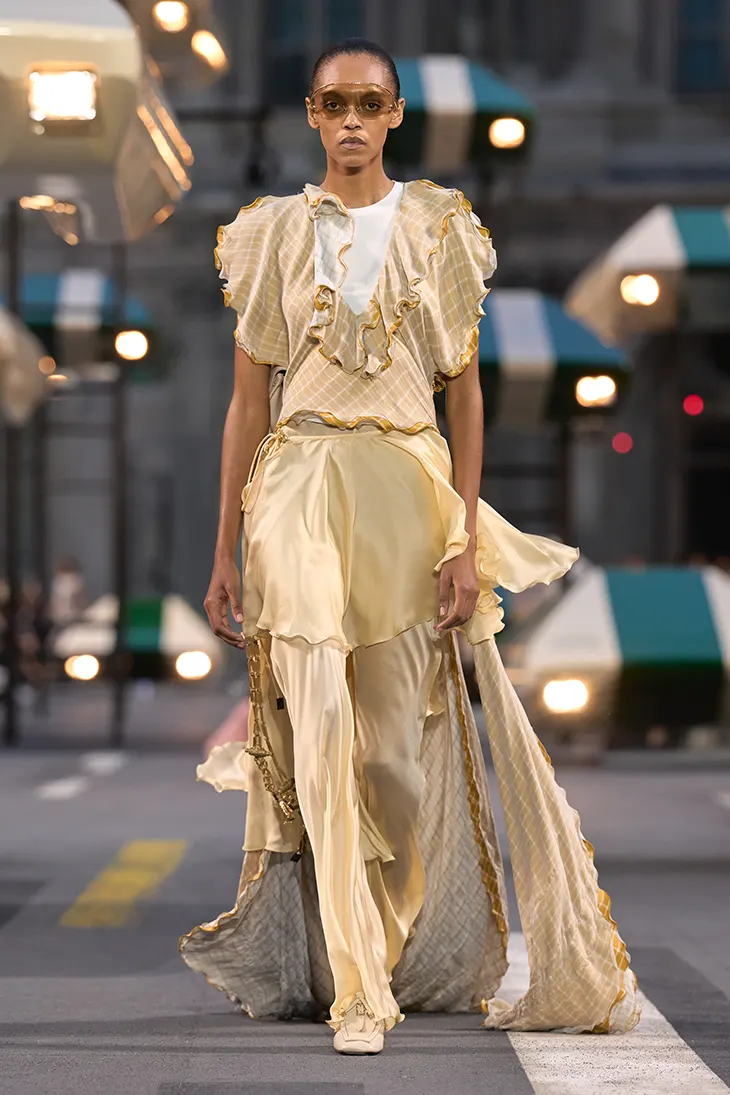
Louis Vuitton Spring Summer 2027, titled Ergonomie, takes ergonomics as its starting point, with Nicolas Ghesquière examining how clothing can respond to the human body and its movement. The collection considers how physical conditions, capabilities and movement can determine design, treating the wearer as the starting point for every garment. Ghesquière focuses on the connection between object, body and action, creating clothes that respond directly to movement.
SPRING SUMMER 2027
The approach also connects with Louis Vuitton’s long association with travel. Lightness and function guide the collection, with garments designed around mobility and physical activity. Ghesquière applies these principles to clothing by allowing the body to determine shape. The physique inside the garment controls its form, while fabrics react to changes in posture and motion.
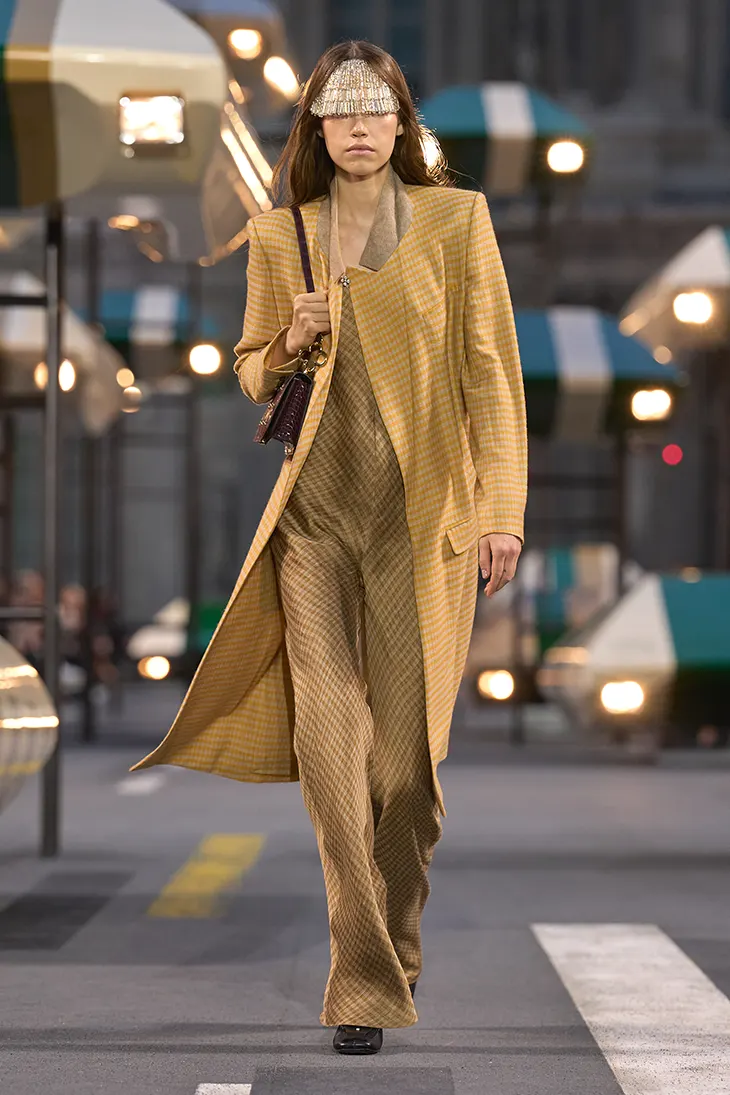
Fluidity plays a central role throughout the collection. Garments follow the body without rigidly defining it, creating the sensation of a second skin through construction and function. Ghesquière removes stiffness while maintaining structure, allowing pieces to shift as the wearer moves. The resulting silhouettes respond continuously to the body instead of fixing it within a predetermined outline.
This approach requires considerable technical construction. Pieces that initially appear structureless rely on different levels of surface tension to follow the body underneath. Materials sit closely against the wearer and react to changing contours. Louis Vuitton treats anatomy as part of the design process, using the movement of the body to determine how garments behave.
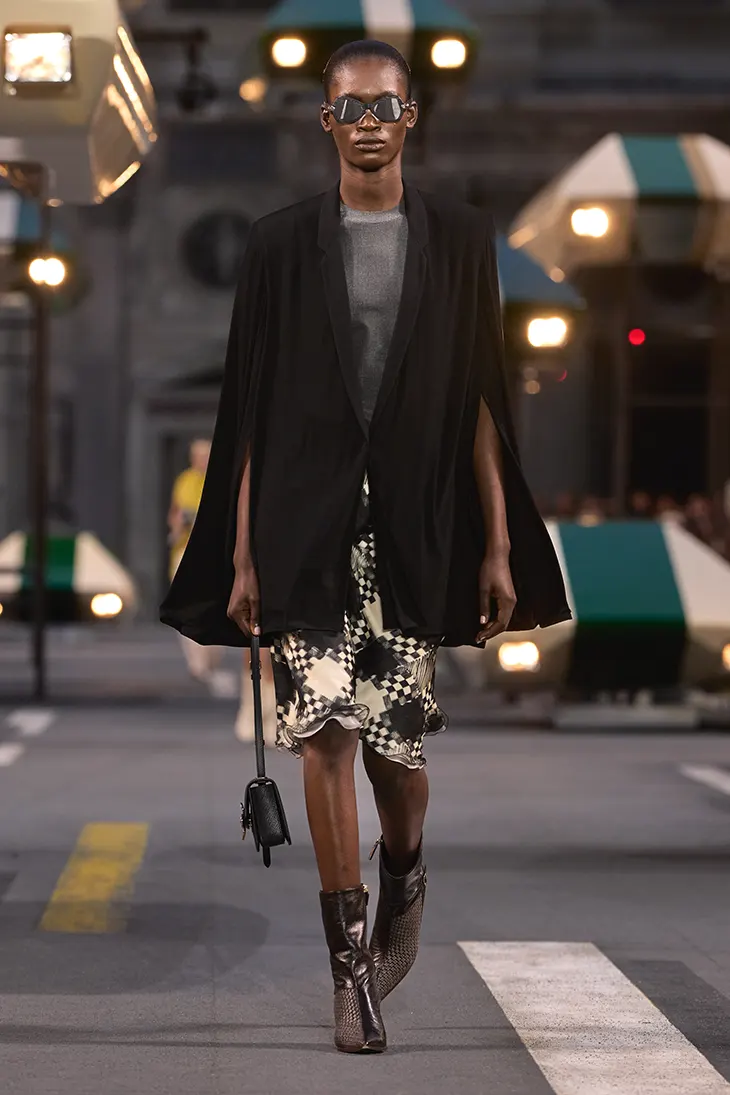
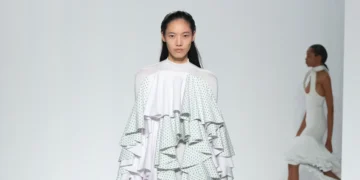
The collection uses ultralight materials across multiple categories, including double and triple composite chiffons, carré silks and scarf fabrics made from silk and cashmere. These fabrics give garments a reduced physical presence while allowing them to maintain complex forms.
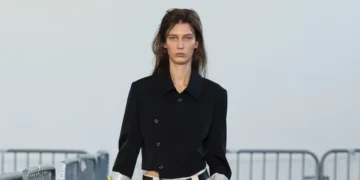
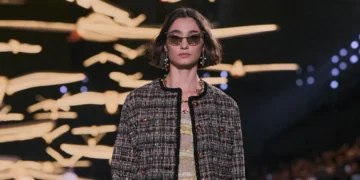
Ghesquière applies the same process to traditional tailoring. The house removes internal layers and reduces construction wherever possible, producing tailoring that retains definition without the usual density. Knitwear follows the body more closely, tracing its form through flexible materials. Footwear provides greater visual weight, grounding the lighter garments above.
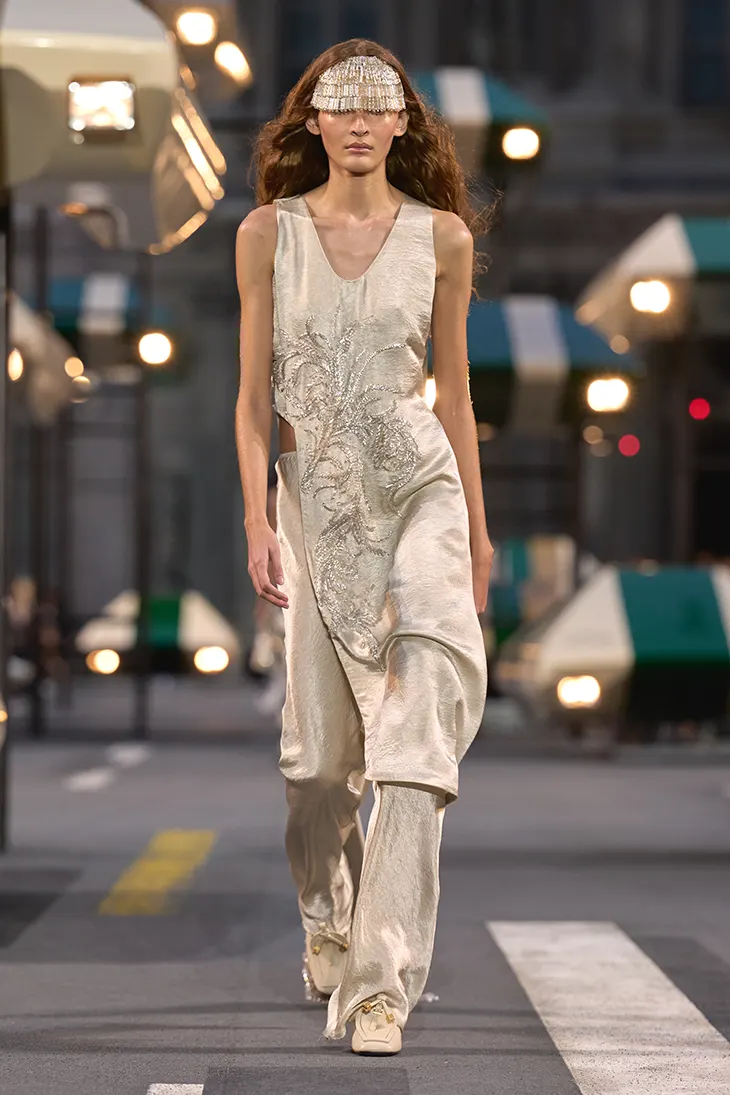
Across the collection, Louis Vuitton approaches clothing as equipment for a body that constantly changes position. Pieces respond to walking, turning and shifting, with materials and construction calibrated for movement. This principle gives the collection its mutable quality. Garments change according to the wearer instead of maintaining one fixed shape.
The Spring Summer 2027 presentation extends this idea into its scenography. A static city setting surrounds individual figures who appear unusually light within it, moving through the scene like feathers or balloons. Ghesquière studies how clothing can operate in direct response to physical movement. Louis Vuitton reduces weight, removes rigidity and recalibrates familiar constructions around the wearer. The collection treats clothing as something active, shaped continuously by the body and its motion.