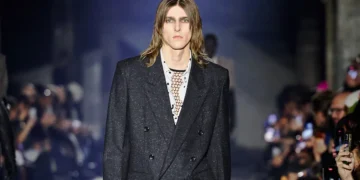



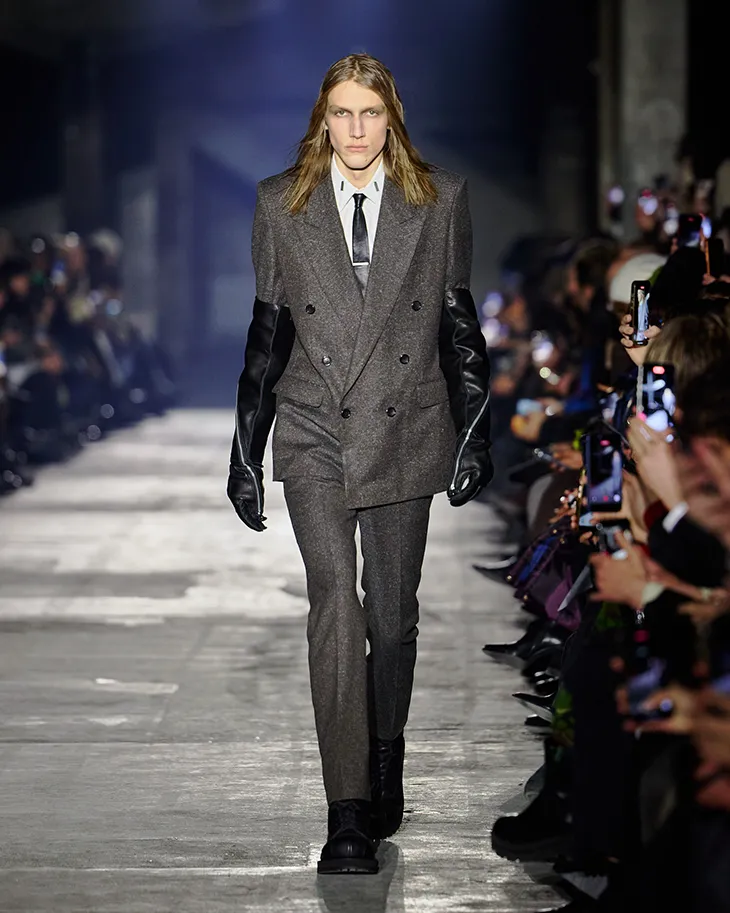
John Lawrence Sullivan presented its Fall Winter 2026 collection during Intervention at Berlin Fashion Week with a focus on physical discipline and defensive form. Arashi Yanagawa’s background as a former professional boxer informs the collection’s approach, where clothing responds to pressure through structure and force. Scandinavian black metal and darker metal subcultures inform the collection’s severity, introducing an ascetic attitude grounded in confrontation and inward force.
FALL WINTER 2026.27 MENSWEAR
Outerwear defines this approach through construction that reshapes posture. Long coats, tailored jackets, bombers, and biker jackets draw the body forward, compressing the chest and rounding the back. Forward-set sleeves, derived from military garments, increase in scale and curvature, directing weight and tension toward the front of the body. Shoulder placement reinforces this stance, producing silhouettes that suggest guarded readiness through form alone.
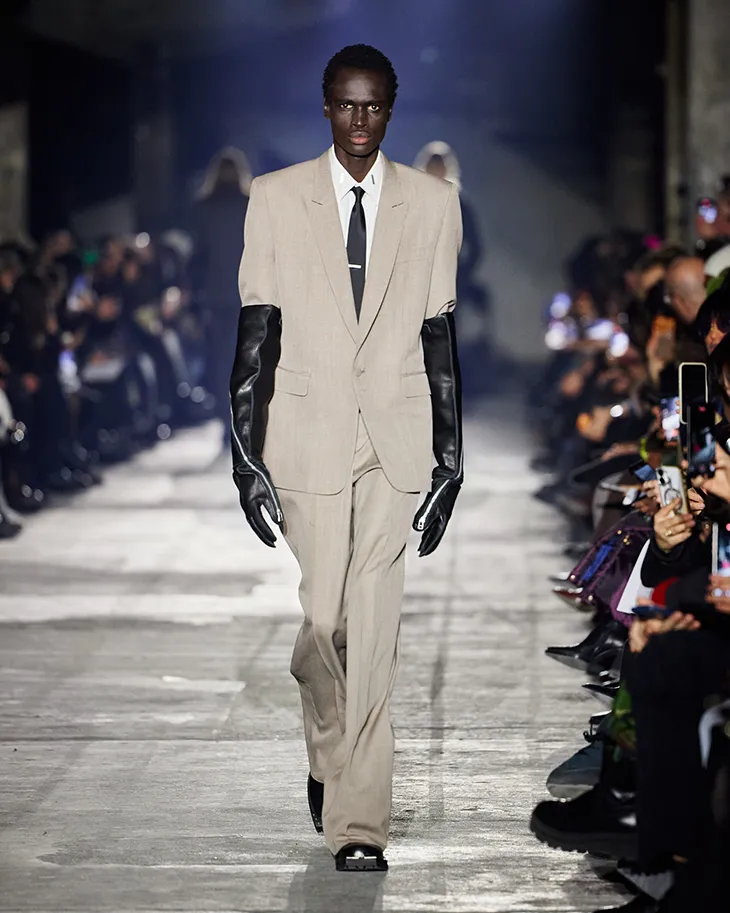
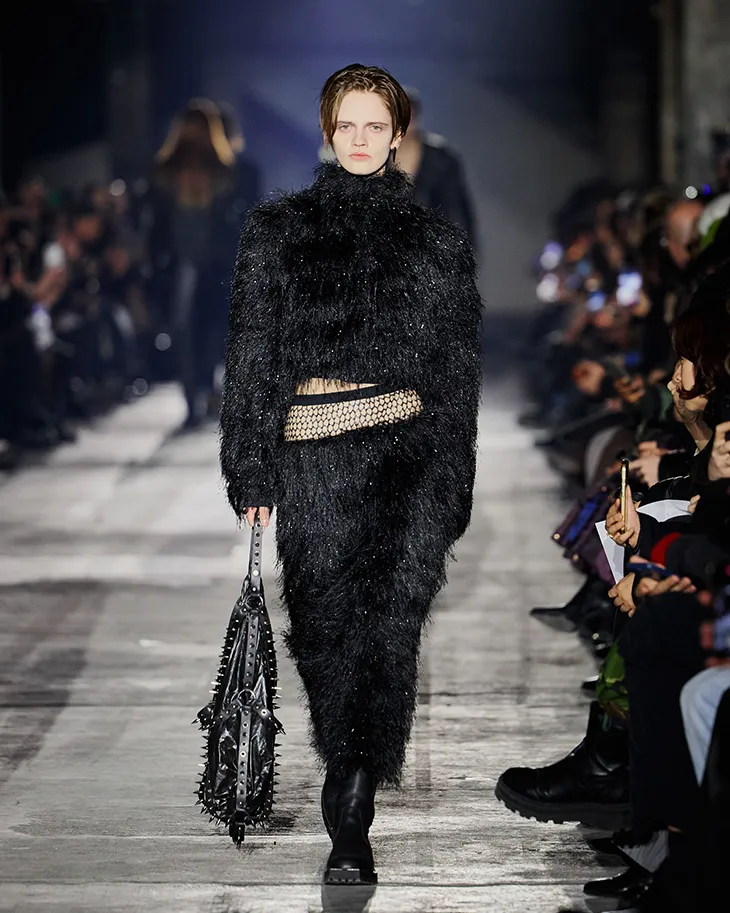
Material choice reinforces the collection’s physical logic. Second-skin leather wraps close to the body, heightening bodily awareness and reinforcing protection. Dense melton wool forms the core textile, carrying weight and resistance through each garment. Additional fabrics extend this tactile vocabulary. Kenpi melton with a snow-like surface, silk-nep flannel, wool-silk nep knits, icy silver lamé, and expressive silver leather introduce variation through texture and density. Each material contributes to a sense of insulation and pressure, allowing surface to communicate force without decoration.
Deep black dominates the palette, paired with snow white and ice silver that introduce a piercing coldness. Two camouflage patterns separate the season into autumn and winter expressions. Art director Katariina Lamberg of KL Studio developed these prints, alongside dot motifs that recall falling snow. Graphic elements draw from forest and river symbolism found in stories and mythology, translating natural references into abstract visual language grounded in surface and repetition.
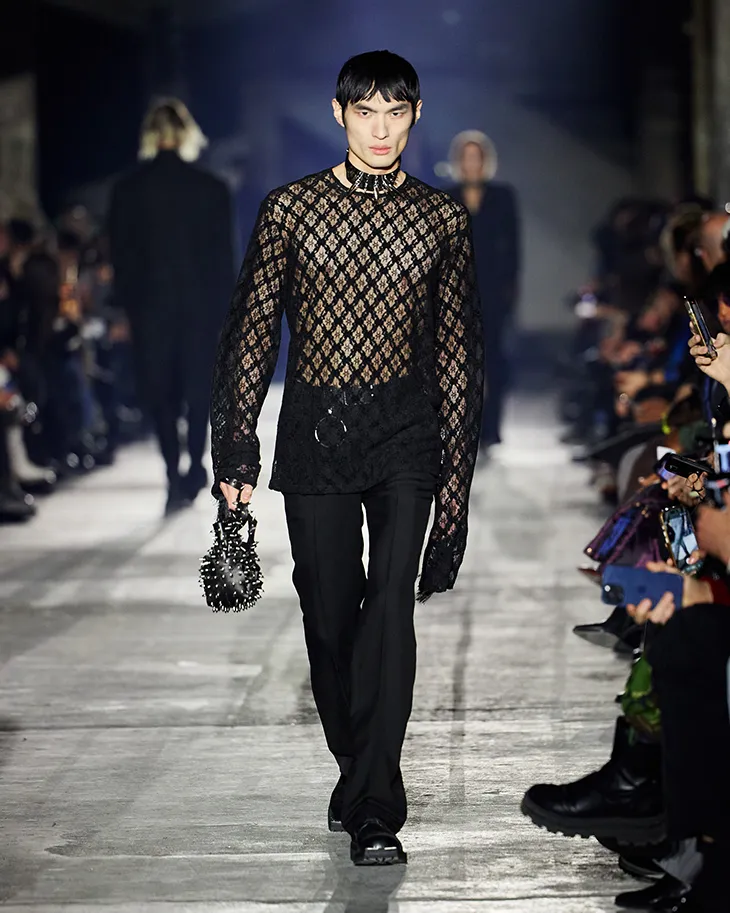
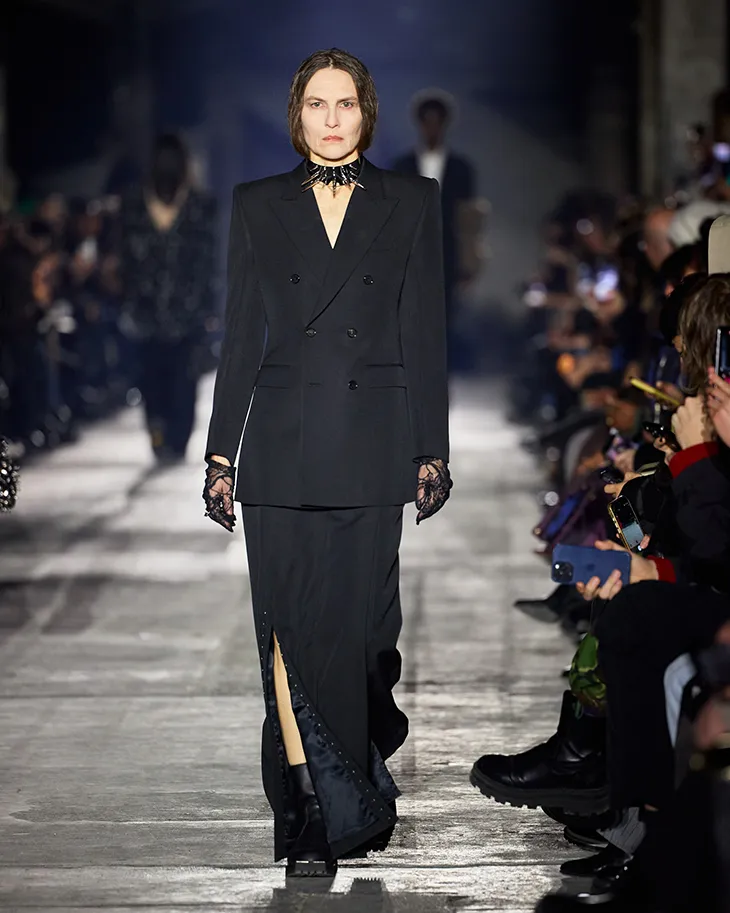
Accessories function as agents of tension. Dense stud work appears regimented and repetitive, generating visual pressure within each look. These elements operate as markers of independence, resisting easy alignment with commercial cycles. Jewelry created in collaboration with YOSHiKO CREATiON follows the same logic, extending restraint through material and form. Footwear continues this approach through long combat boots developed with KIDS LOVE GAITE, constructed with TEMPESTI’s Elbamatt Liscio leather and finished with Vibram rubber soles. Each component prioritizes durability and function while sustaining the collection’s defensive posture.
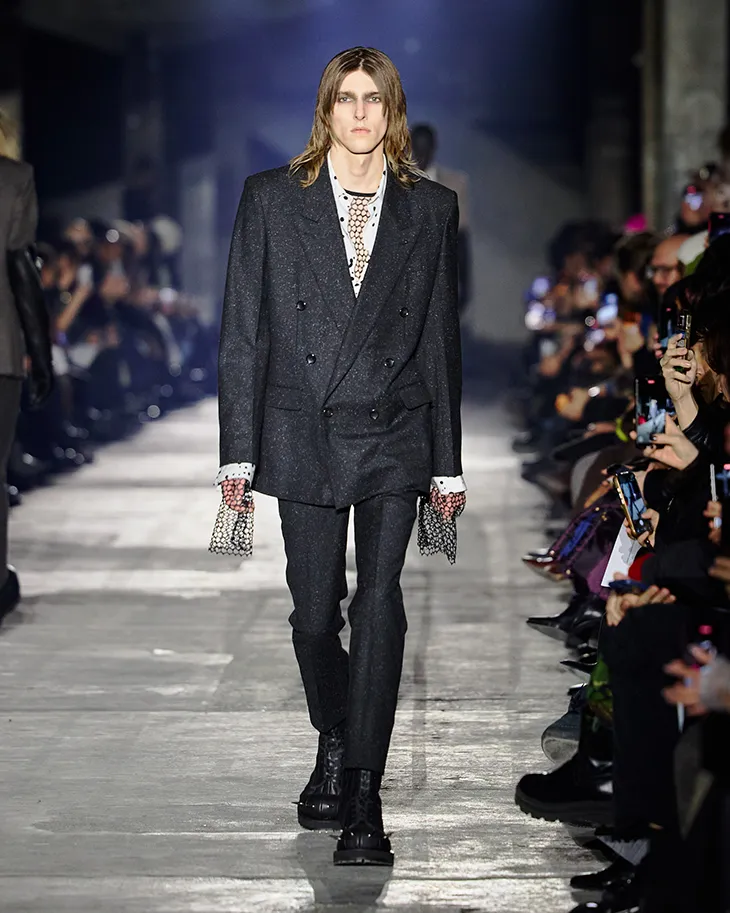
The womenswear line carries the same conceptual foundation while amplifying shoulder volume as a defining feature. Garments transpose traditionally masculine construction onto the female form, maintaining the collection’s emphasis on pressure and containment. Long denim skirts with heavy tuck pleats reference HAKAMA and TOKKOFUKU, while coats and tops integrate lingerie details with a fetishistic edge. These pieces sustain the guarded silhouette established in the menswear, allowing proportion and structure to drive expression.
Sound design supported the presentation through a score by Jonas Karsten. He built the composition around circular energy, with sound arranged to surround the audience instead of following a straight progression. Although technical limits required a stereo format and a continuous linear structure, the circular concept remained fundamental to the experience, reinforcing the collection’s themes of tension, defense, and internal conflict.