


Marc Jacobs returned to the Park Avenue Armory to present his Spring 2026 collection. This event marked a shift in direction for the designer as he moved away from extreme silhouettes. Jacobs used his show notes to discuss the nature of memory. He described memories as a faculty of purpose that influences current and future actions. These thoughts surfaced on their own to shape the identity of the brand. Jacobs noted that recovering the past reminds us that loss is inevitable and that hope requires work.
SPRING SUMMER 2026
The set design featured a life-sized version of the folding table and chairs by the late artist Robert Therrien. This furniture appeared in a far corner of the enormous space. A small painting of a daisy by Anna Weyant sat on the table. The artist pinned the petals of the flower like scientific specimens in a scrapbook. This tiny image remained distant from the audience. Jacobs suggested that while the internet runs on nostalgia, individual memories remain private.
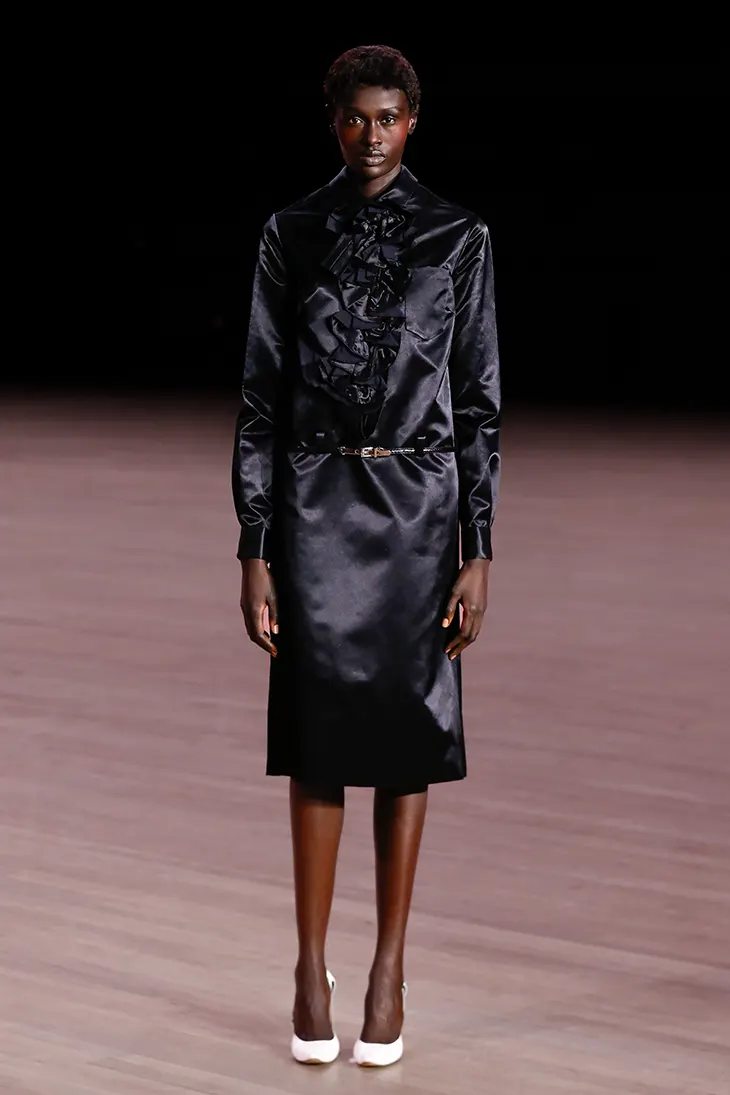
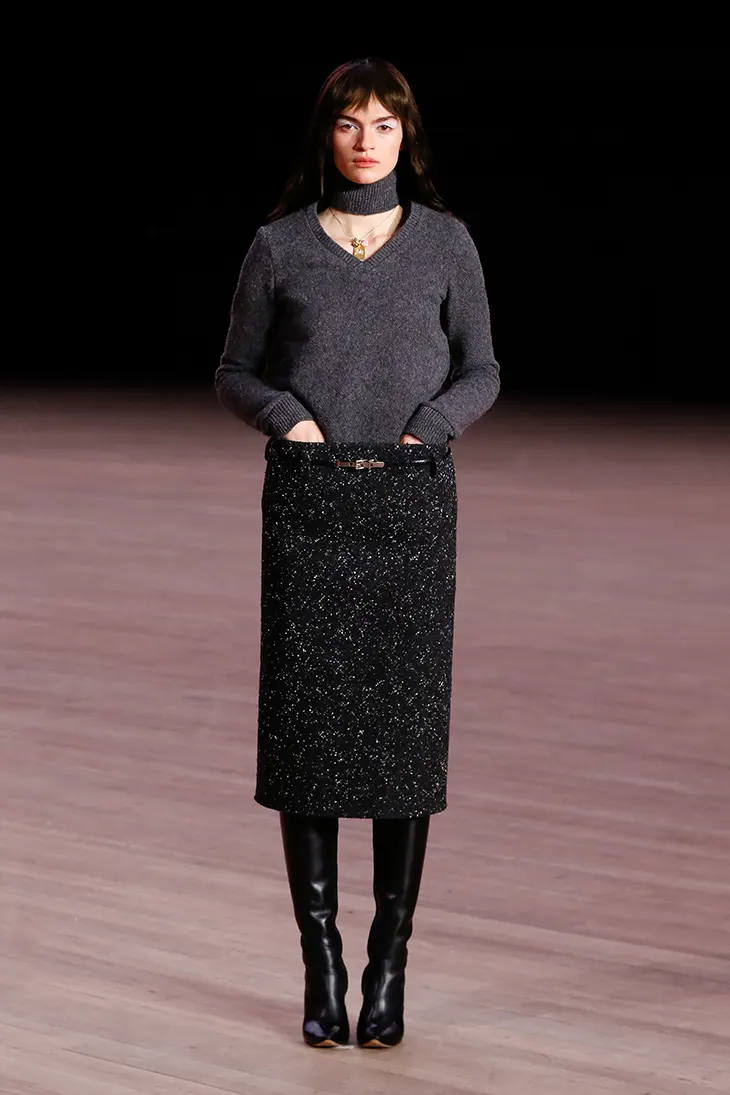
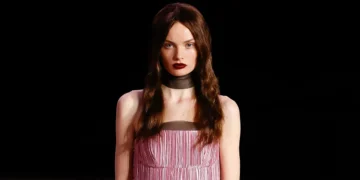
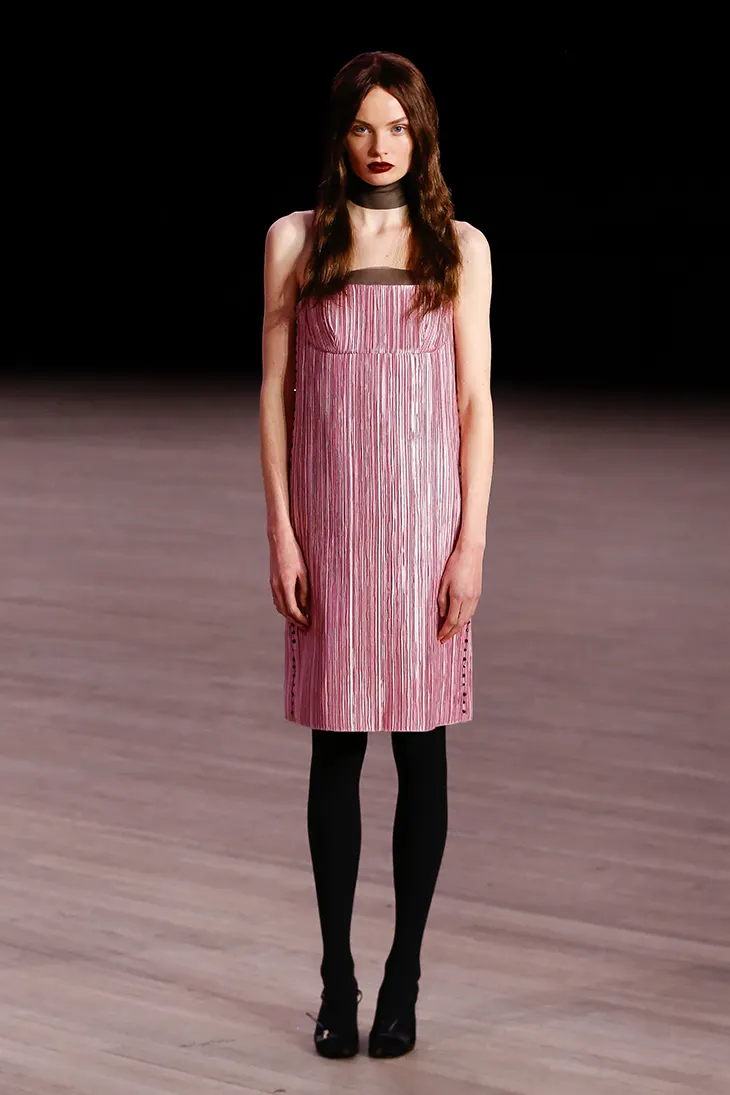
The soundtrack featured the song “Joga” by Bjork from 1997. This year holds significance as the start of the tenure of Jacobs at Louis Vuitton. It represented a peak in American sportswear before the expansion of the internet. The new collection revisited that era through v-neck knits and straight skirts. Jacobs also included button-downs and shift dresses. These pieces mirrored the uniform of fashion editors from the late 1990s.
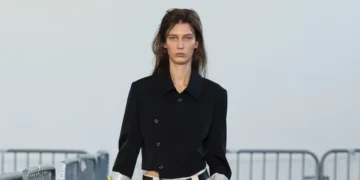
Waistbands sat loose on straight skirts and mini skirts. Some coats featured a front-to-back orientation with buttons running up the spine. The frogging on jackets and shirts used materials that shimmered. These changes moved away from the wild exaggerations of previous seasons. Recent collections functioned as performance art, but this lineup focused on clothes for daily life.
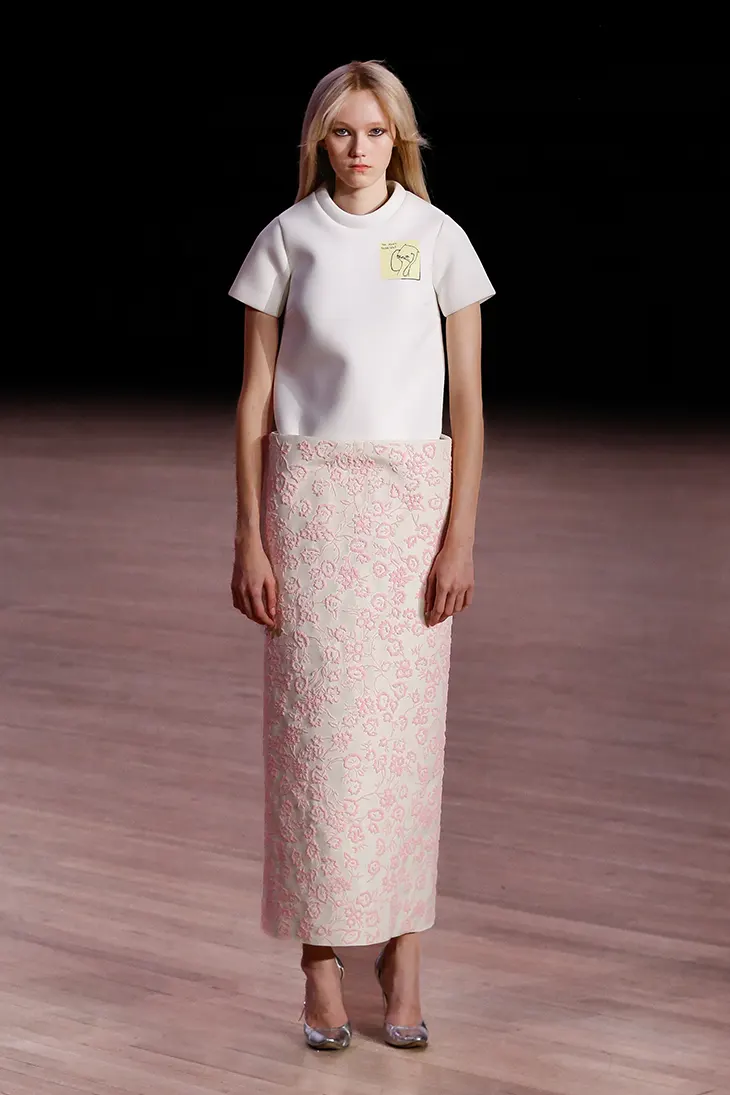
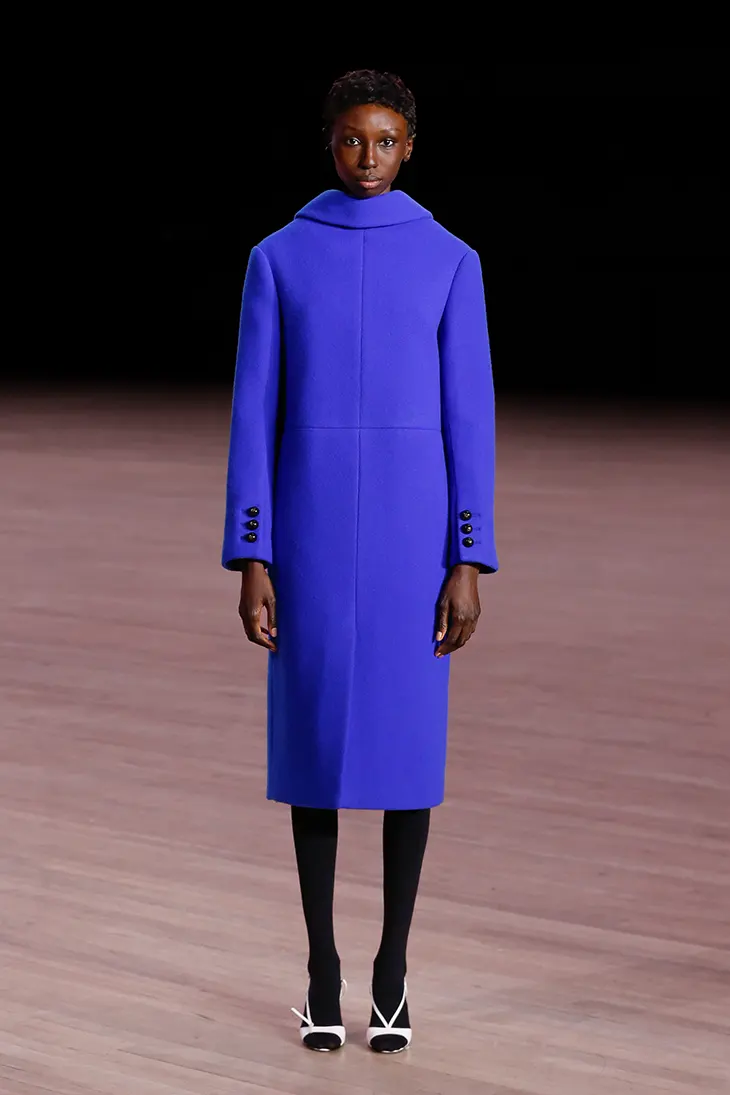
Jacobs cited specific influences from his career and the wider fashion world. These references included the 1965 Yves Saint Laurent couture collection and the 1993 Perry Ellis grunge show. He also credited the 1990s designs of Helmut Lang and Miuccia Prada. By listing these exact sources, Jacobs displayed a level of transparency rarely seen in the industry.
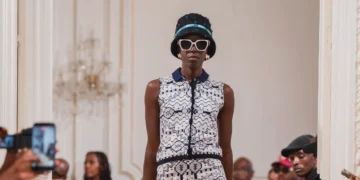
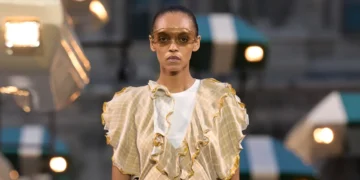
Specific 1990s codes appeared throughout the runway. Minidresses and skirt suits paired with curly hair scrunchies and tube tops. Ruffled blouses and sheer skirts balanced the mature tone of the lineup. The drop-waist skirts featured a stiff construction that sat away from the body.
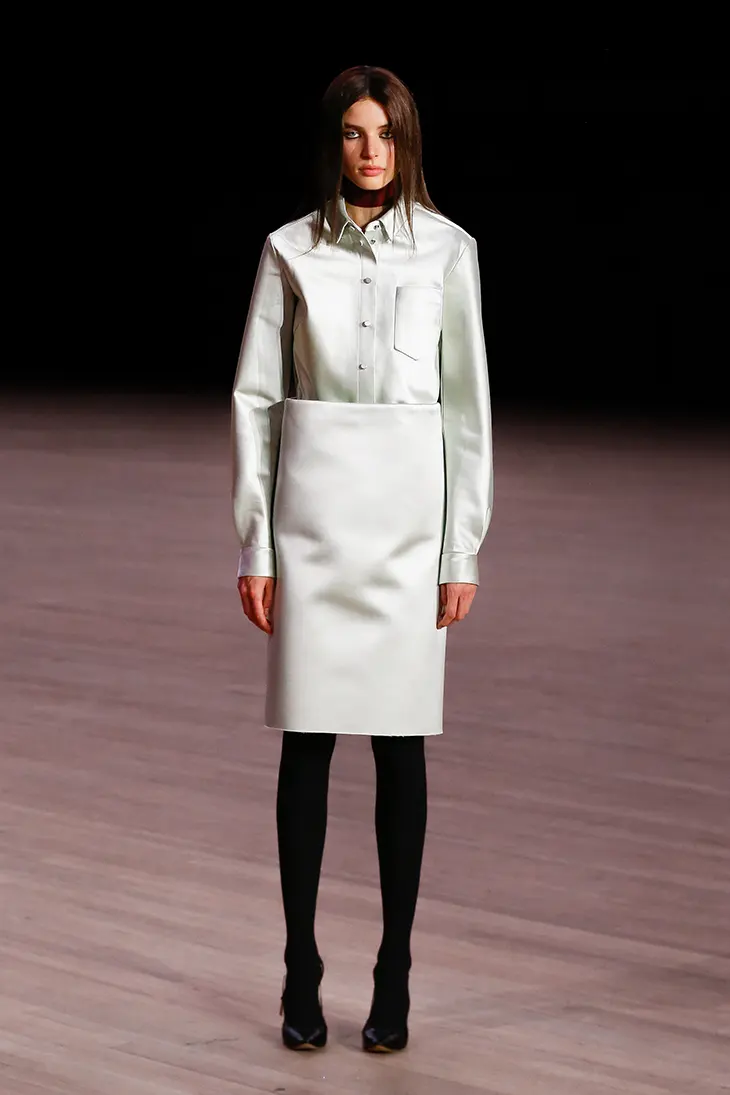
Business leaders from LVMH attended the show. The company is currently reinvesting in the Marc Jacobs brand. This collection arrived at a time when fashion is returning to everyday wardrobing and simple joys. The designs proved that Jacobs can still produce accessible clothing. While the inspiration came from a sense of loss, the resulting clothes provided a feeling of hope.