


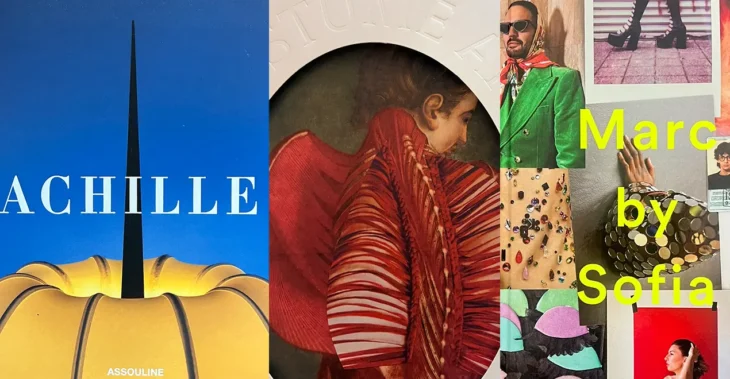
Every summer, I make a ritual of it. I spend a few weeks tracking down books that have either just arrived or deserve another look, books that feel essential in the way that very few objects actually do. The ones that survive the edit end up on my coffee table, where they stay. This year, the selection spans fashion history, indigenous engineering, Italian design mastery, and the raw private archive of an artist whose relevance refuses to dim. These are not decorative objects. They are working references, conversation starters, and in several cases, quiet arguments for what publishing at its best can be.
For more of our book recommendations, explore our dedicated section on DSCENE.
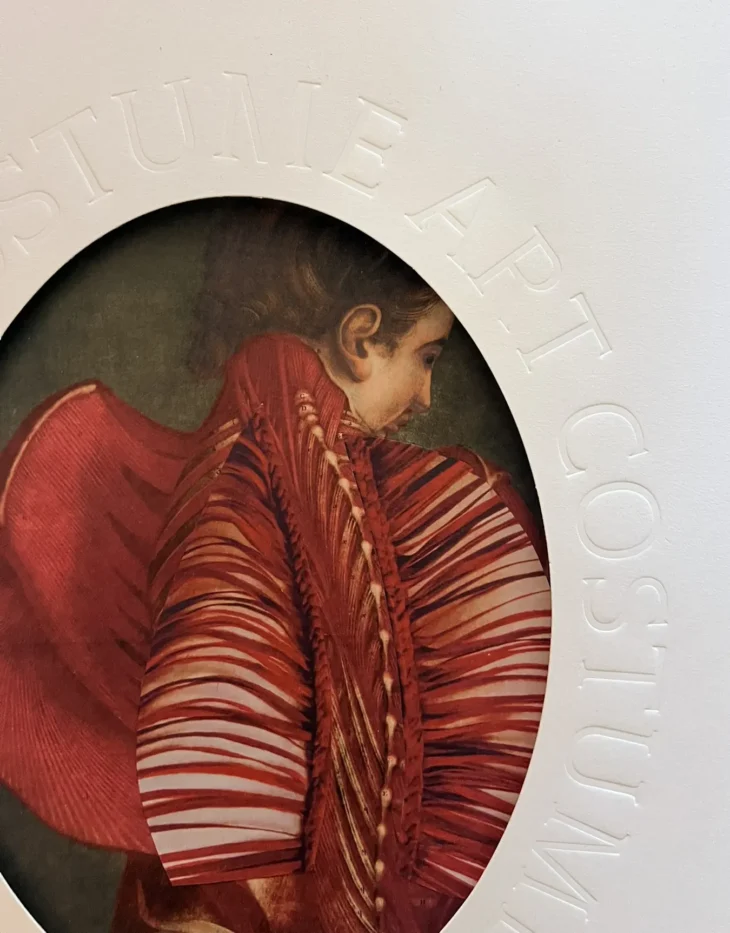
01. Costume Art
By Andrew Bolton, with contributions by Llewellyn Negrin, Andrew Solomon, and others. Photography by Paul Westlake. The Metropolitan Museum of Art.
There are books that announce themselves quietly and proceed to rearrange how you think. Costume Art, published by The Metropolitan Museum of Art and edited by Andrew Bolton, Curator in Charge of the Costume Institute, is one of them. It arrived this summer as one of the more intellectually ambitious releases I have handled in years, and it earns that description in almost every way.
The book’s central proposition is deceptively simple: fashion transforms the body. But the way Bolton and his collaborators pursue that idea, through the lenses of age, size, gender, and disability, gives the argument a range and seriousness that press materials for exhibitions rarely deliver. Llewellyn Negrin, the art and design scholar, opens the volume. Andrew Solomon, whose writing I have admired for a long time, closes it. Between them, the book traces fashion’s relationship to the clothed body from Greek molded cuirass armor and carved Roman sculptures through to the contemporary work of Madame Grès, Alexander McQueen, Rick Owens, and Madeleine Vionnet. It is worth noting that Andrew Bolton‘s vision for the Costume Institute continues to shape how fashion is read culturally, a conversation we have followed closely in our coverage of the Met Gala 2026 theme.
What makes this object genuinely special is the production. The cover is die-cut. Three specialty papers run through the interior. There are debossed details and metallic silver foils throughout. New assemblages by artist Julie Wolfe, composed of photographs by stylist and designer Nathalie Agussol, add a collage dimension that feels organic rather than ornamental. Paul Westlake‘s new photography, in which some designs are shown on bespoke mannequins created by scanning real people, quietly dismantles the idealized body that fashion photography has historically depended on.
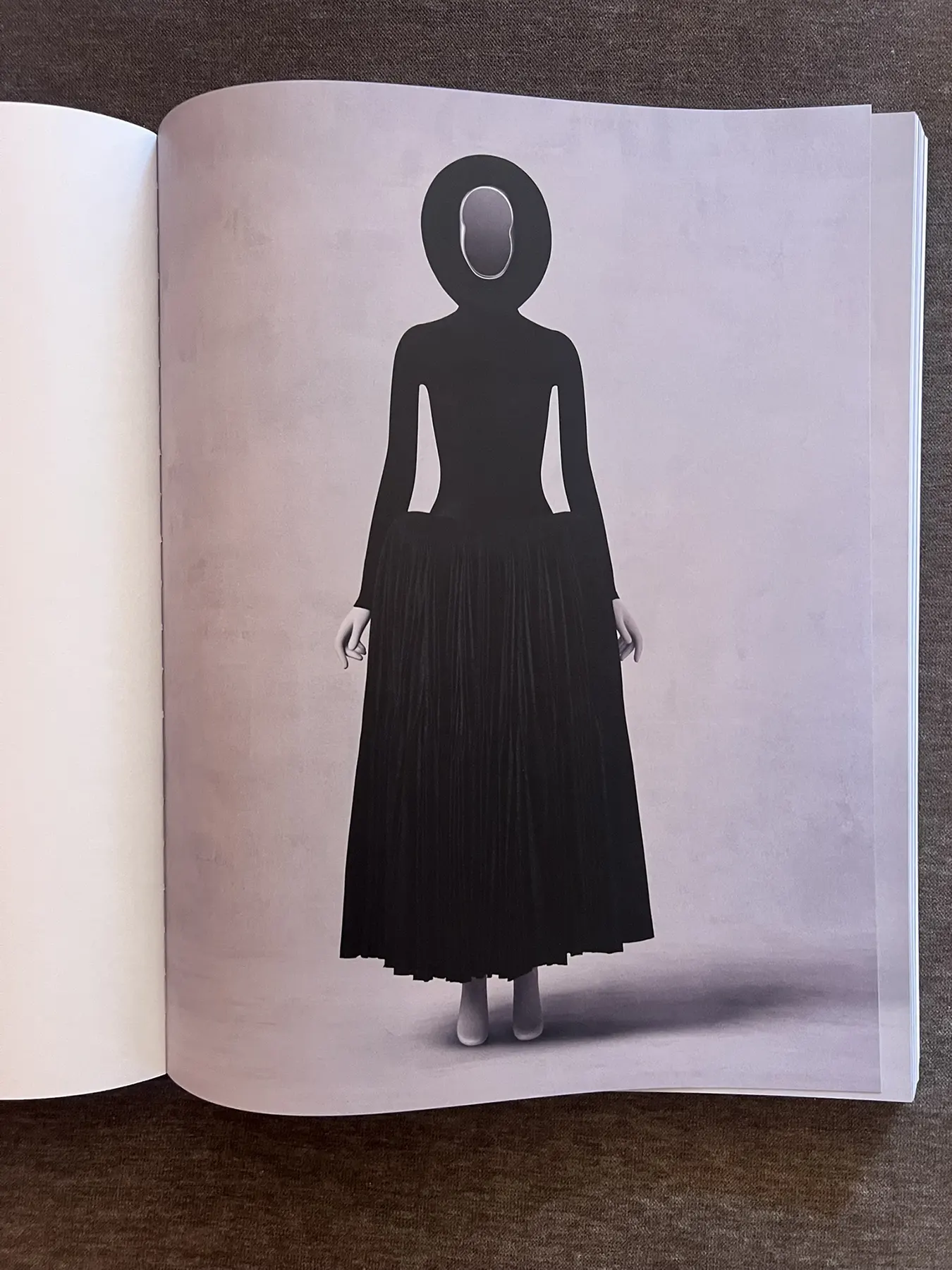
This is the kind of book the Met produces when it is working at full capacity. It is a scholarly publication that never reads as academic, a fashion book that never condescends. I placed it at the top of the pile on day one and it has not moved.
02. Marc by Sofia
By Sofia Coppola. A companion to the documentary by A24.
Some collaborations are so instinctively right that you wonder why it took this long for them to exist in book form. Sofia Coppola and Marc Jacobs have been close for more than two decades, their friendship running in parallel to two of the more consequential creative careers in their respective fields. This volume, produced as a companion to Coppola‘s documentary of the same name, is her portrait of Jacobs, and it carries all the qualities that make her filmmaking distinctive: economy of gesture, an eye for the telling detail, and an ability to render intimacy without overexplaining it.
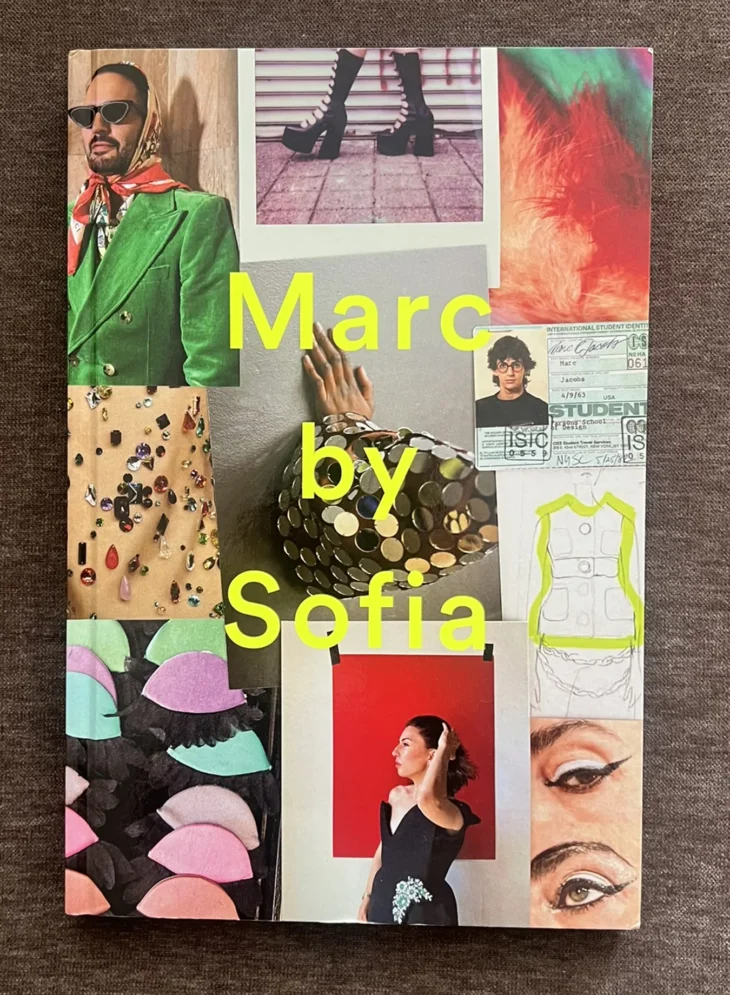
The book moves chronologically through Jacobs‘ career, beginning at Parsons, where his early work showed the kind of instinctive confidence that either gets a person into trouble or straight to the top. His grunge collection for Perry Ellis in 1993 remains one of the most discussed moments in American fashion history, a collection that cost him his job and defined his reputation simultaneously. Coppola covers it with the restraint it deserves. Neither hagiographic nor revisionist, her account gives the moment its proper weight.
The years at Louis Vuitton receive substantial attention, as does the construction of his own label into something genuinely global. Coppola had access to hundreds of personal photographs and behind-the-scenes materials from Jacobs‘ studio, and the visual texture of the book reflects that. These are not polished archival images. They are working photographs, the kind that get taken without anyone thinking they will matter later. They matter enormously here.
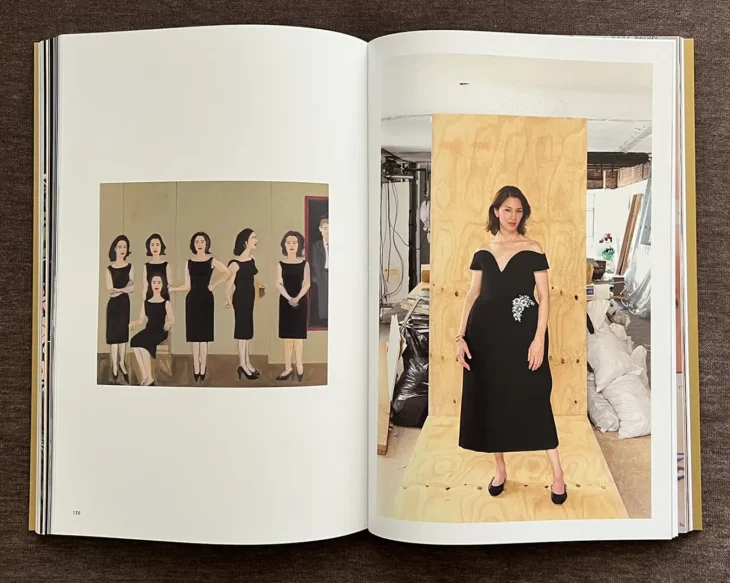
Conversations between Jacobs and Coppola, printed in full, give the book its spine. Their dynamic is warm, frank, and occasionally funny. For anyone who has followed either of their careers closely, this book is essential reading.
03. Lo-TEK. Water. A Field Guide for TEKnology
By Julia Watson. Taschen.
I came to Julia Watson‘s first Lo-TEK book several years ago and have returned to it regularly since. The second volume, focused specifically on water, arrived this year and it is, if anything, more urgent and more visually extraordinary than the first. Watson‘s project, which she has developed across her teaching at Harvard and Columbia and through the Lo-TEK Institute she co-founded, is fundamentally about recovering a category of knowledge that modernity has been systematically discarding.
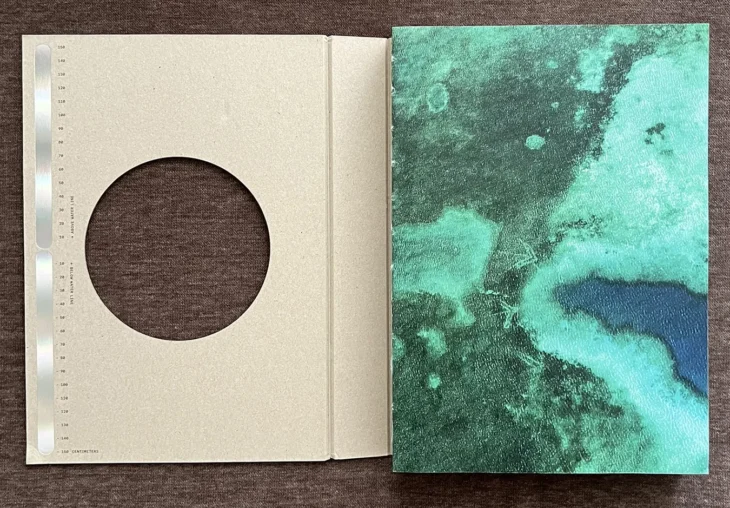
Traditional Ecological Knowledge, or TEK, refers to the techniques developed by Indigenous communities over centuries and often millennia to manage their relationship with natural systems. Watson‘s argument, made here with particular force through water, is that these systems are not primitive antecedents to modern engineering. They are sophisticated, adaptive, and in many cases more durable than the infrastructure we have spent the last century building in their place.
The specific technologies in this volume are astonishing. Mexico’s chinampas, floating agricultural platforms developed by the Aztec civilization, are still in use today. Bangladesh’s floating farms have sustained communities through floods that would destroy conventional agriculture. Micronesia’s tidal fish traps operate on principles that contemporary fisheries management is only beginning to formalize. China’s Sponge Cities, included here as one of twenty-two contemporary TEK projects, represent an explicit attempt to bring ancestral water logic into urban planning at scale.
The book is co-authored with Indigenous knowledge-keepers and carries a foreword by Dr. Lyla June Johnson. The design, handled by Piera Wolf and Stephanie Specht, with illustration by Lina Müller, treats the material with the visual seriousness it demands. At 558 pages, this is an object with real mass and real conviction. For anyone working in architecture, urban design, or simply paying attention to how we will live on this planet, it belongs on the shelf.
04. Achille
Text by Glenn Adamson. Published by Assouline.
When Assouline does something well, they do it at a scale that most publishers cannot match. This new monograph on Achille Salvagni, the Roman architect, artist, and designer whose eponymous gallery and studio operate between Rome, London, New York, and Palm Beach, is the house working at its best.
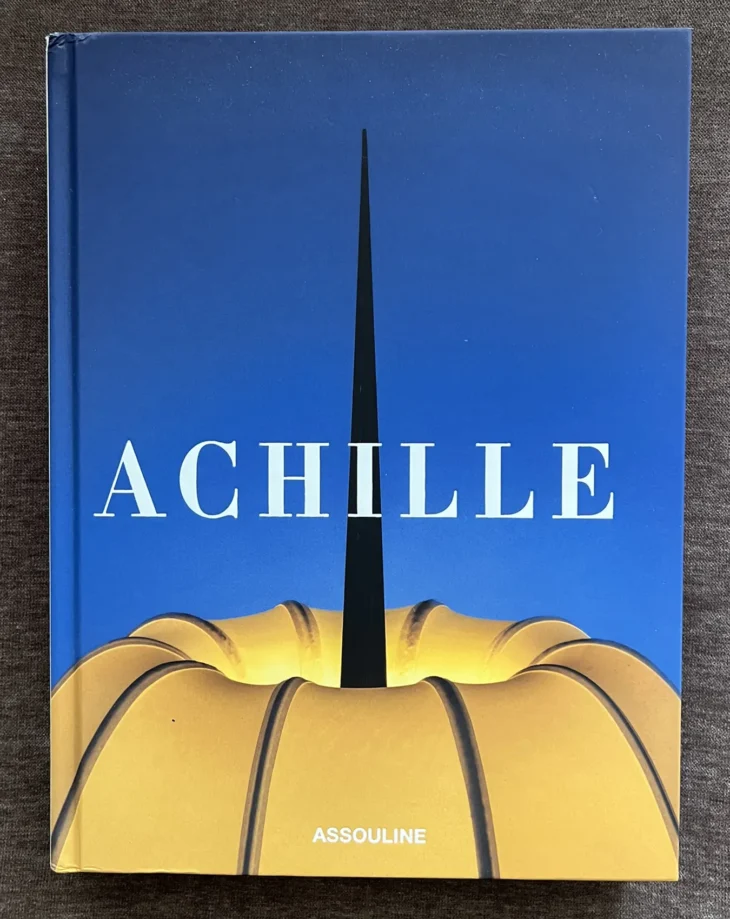
Salvagni‘s work occupies a category that resists easy classification. He is not strictly a furniture designer, not strictly an architect, not strictly a sculptor. His pieces, including the Spider chandelier first introduced in 2016, with its radiating bronze arms and glowing onyx diffusers, pull simultaneously from ancient Rome, Art Deco, mid-century Italian design, and contemporary sculpture. The effect should feel eclectic. Instead, it feels inevitable.
Glenn Adamson, the curator, writer, and historian who wrote the text, is exactly the right person for this material. His scholarship is wide enough to place Salvagni within a genuine continuum. His prose is precise enough to make that context legible without overwhelming the images. The book traces Salvagni‘s references from classical mythology through to the present, arguing convincingly that the timelessness his work achieves is not an accident of taste but the result of a particular discipline: beginning with craft and material rather than imposing form onto them.
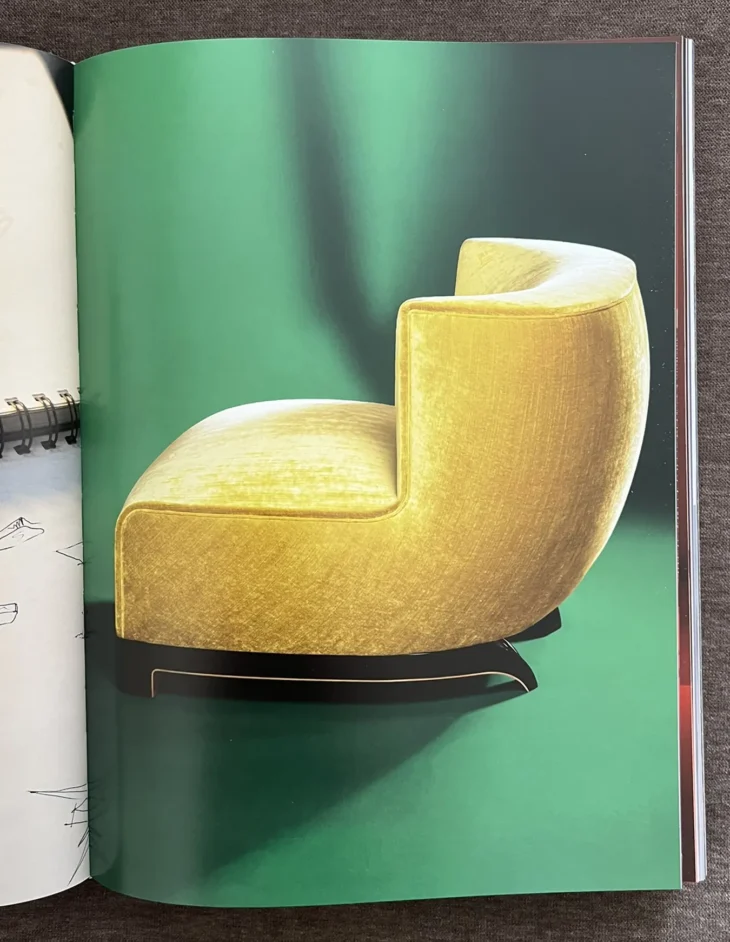
The photography, which covers Salvagni‘s ateliers and completed interiors across four cities, captures what furniture can mean when it is conceived as architecture at human scale. Bronze, onyx, marble, parchment, silk, rare woods. The details, down to hinges and patinas, receive the same attention as the overall composition. At 336 pages across 246 illustrations, this is a substantial document of a designer whose influence on contemporary luxury interiors is considerable. It landed on my coffee table the week it was released. It is staying there.
05. Splendido: The Radiant Stage of Portofino
Text by Matthew Bell. Published by Assouline. Belmond x Assouline Classics Collection.
I have been to Portofino once, briefly, years ago. The memory is specific in the way that only certain places manage: the light, the water’s particular color in the late afternoon, the feeling of a place that has absorbed a century of very deliberate looking. Splendido, the hotel that has sat above the village since 1902, is the organizing principle of that light and that looking for anyone who has spent time there.
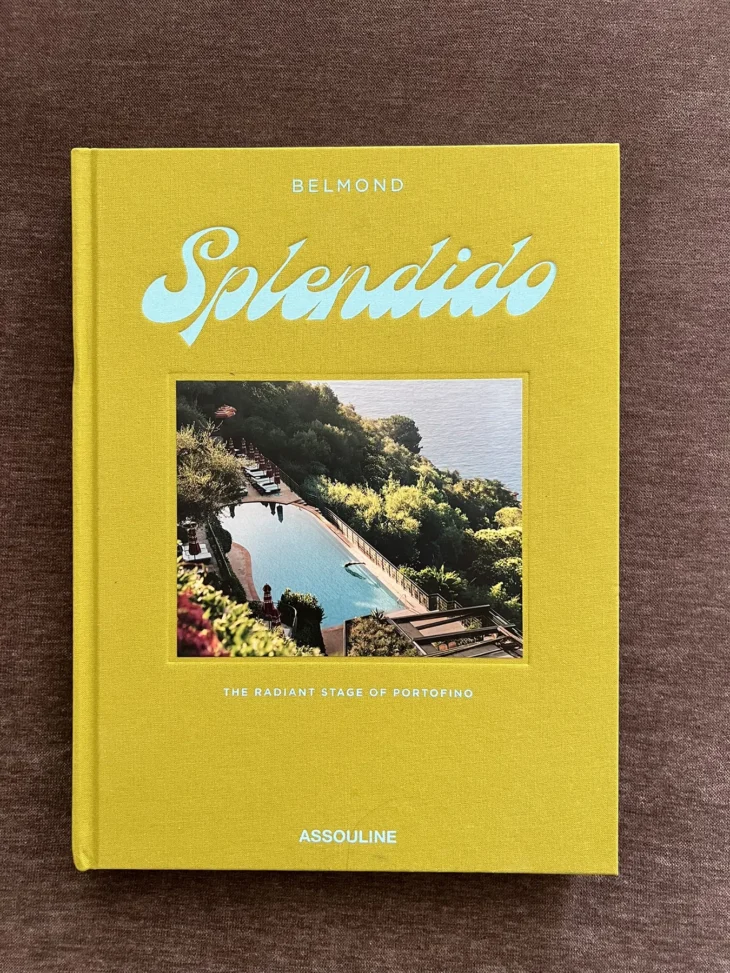
This book, the first in Assouline‘s new Legendary Destinations series in collaboration with Belmond, is organized thematically rather than chronologically, which was the right editorial decision. Matthew Bell‘s prose moves between the hotel’s history as a sixteenth-century Benedictine monastery, its transformation into a destination for Ava Gardner, Clark Gable, Elizabeth Taylor, and several decades of their successors, and the more recent renovation by interior designer Martin Brudnizki and landscape designer Marco Bay.
The additions covered here include the Bar Baratta Sedici and the first permanent Dior Spa in Italy. But what the book is really about is something harder to renovate: the feeling of la dolce vita as a genuine philosophy rather than a marketing category. Portofino has managed, by some combination of geography, discretion, and institutional will, to resist the kind of visibility that destroys the things it claims to celebrate.
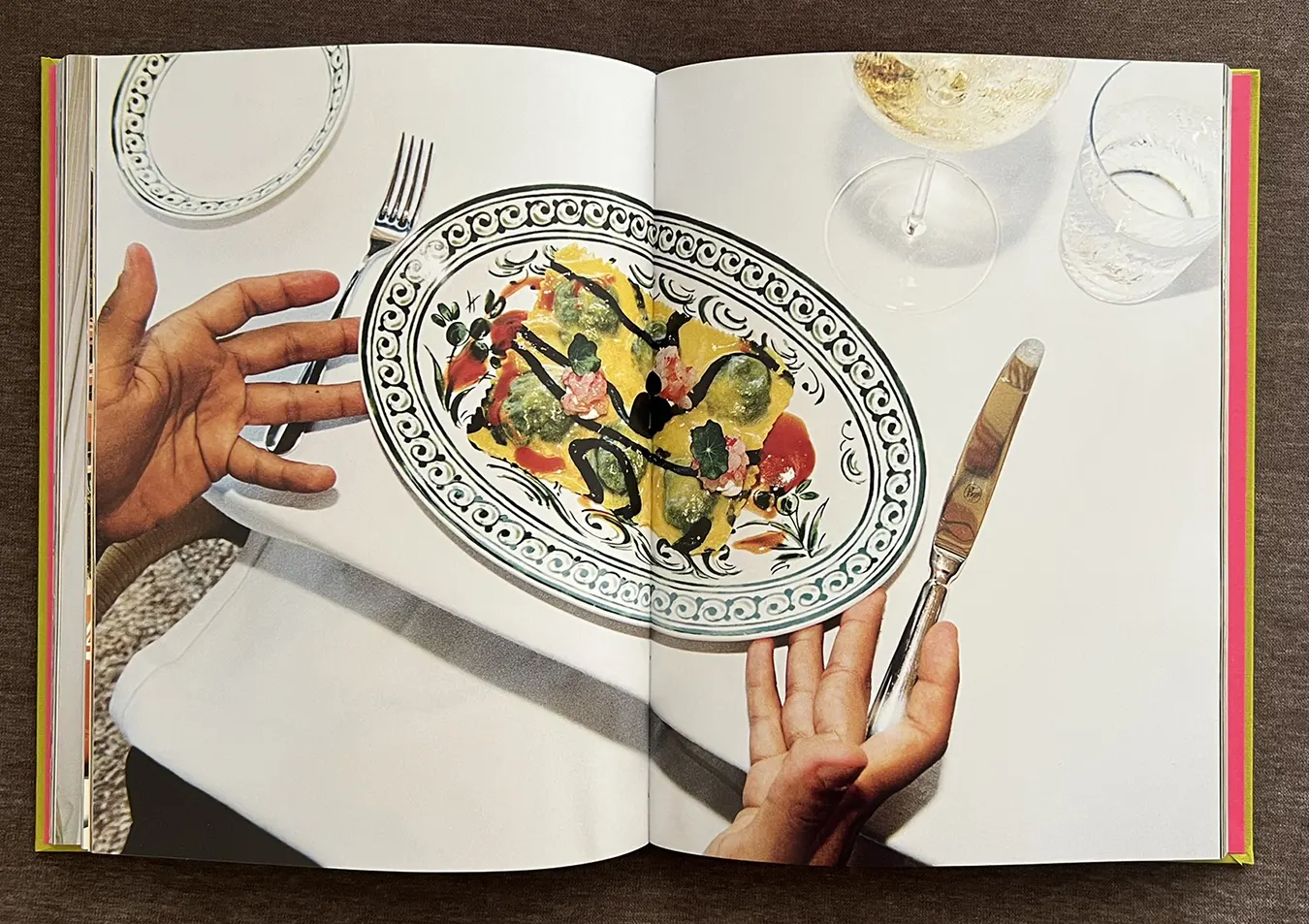
For a publication about hospitality, this one earns its place as a design object. The imagery, contributed by multiple photographers, is rich without being excessive. The cover is striking enough to function as the entry point it is meant to be. I picked this up partly for professional reasons and found myself reading it for pleasure instead.
06. Akris: A Century in Fashion
Edited by Peter Kriemler and Albert Kriemler. Photographs by Iwan Baan.
Swiss fashion does not receive the critical attention it deserves. The industry’s gravitational centers pull toward Paris, Milan, New York, and London, and houses that operate outside those coordinates tend to be discussed, when they are discussed at all, in terms of what they are not. Akris is not loud. It is not trend-driven. It does not seek the kind of coverage that lives for a week and disappears. What it does, with a consistency that spans a century, is make clothes that the women who wear them do not want to stop wearing.
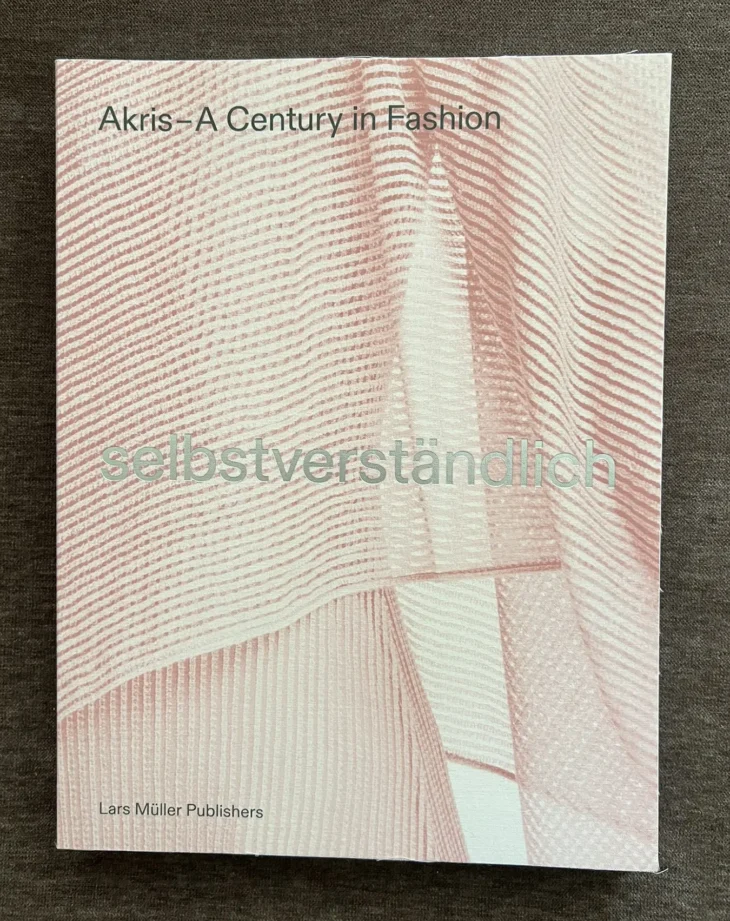
This monograph, edited by creative director Albert Kriemler and his brother Peter Kriemler, covers the house’s full history from its origins as an apron atelier in St. Gallen through its current position as one of the quietly essential names in international fashion. The word Albert uses to describe his aesthetic ideal is the German «selbstverständlich», natural modernity, the quality of being self-evident, of clothes that do not announce themselves but are simply, unmistakably right.
Iwan Baan‘s photographs of St. Gallen and the house’s workrooms give the book a documentary dimension that most fashion monographs avoid. The textile industry that made that city significant is part of the story here, and it is handled with the appropriate weight. Fashion writer Jessica Iredale contributes text, as do choreographer John Neumeier and artist Thomas Ruff, both of whom have collaborated with Kriemler over the years. Their perspectives are specific enough to be useful.
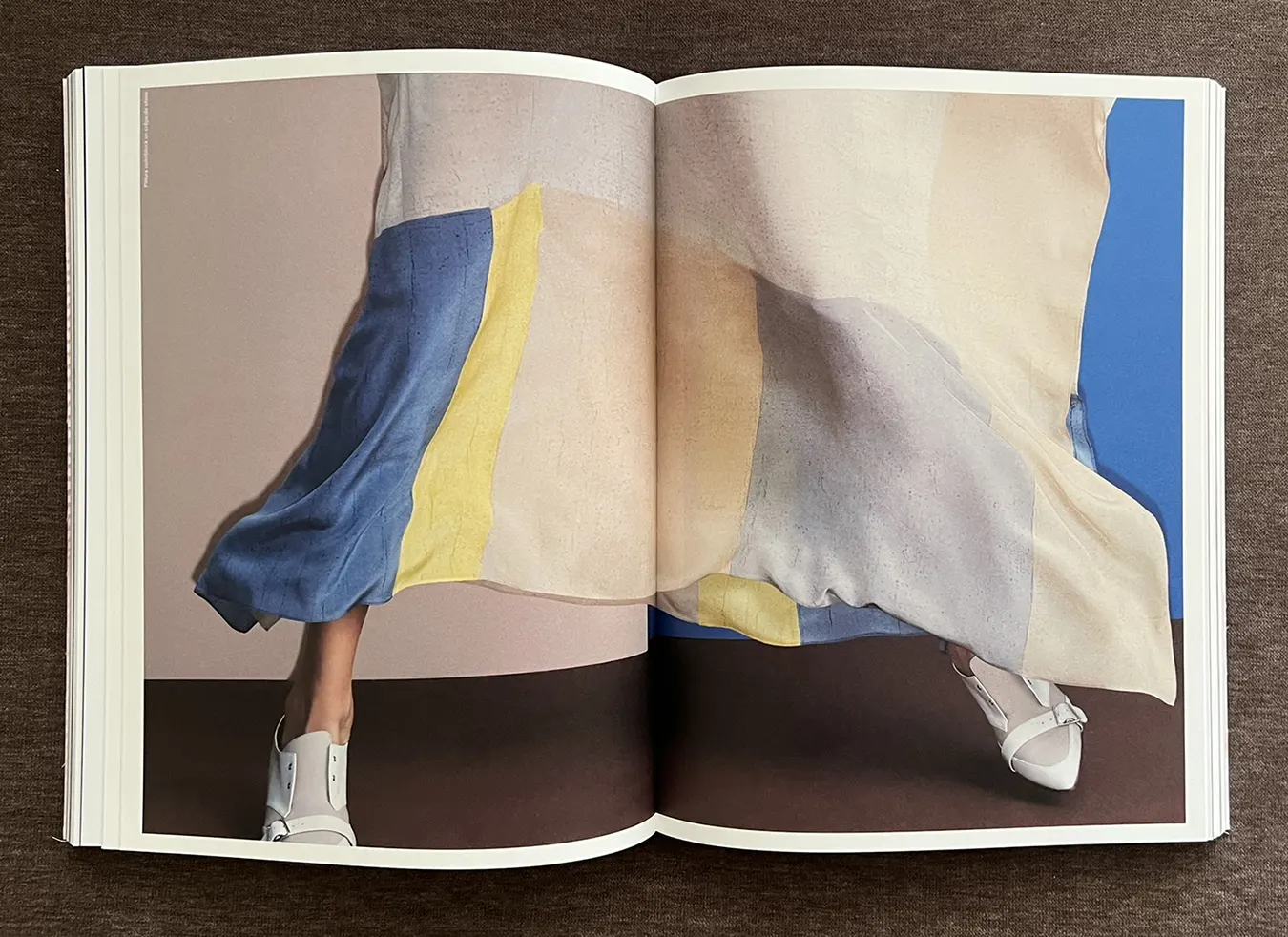
The design by Haller Brun is clean and considered, which is exactly what the material requires. At 320 pages, this is a substantial document of a house that has earned more sustained attention than it typically receives.
07. Andy Warhol: Polaroids 1958-1987
Published by Taschen, in collaboration with the Andy Warhol Foundation.
There are artists whose work you think you know until you encounter it in a format that removes the curatorial distance, and then you realize you knew a version of it. Andy Warhol: Polaroids 1958-1987, produced by Taschen in collaboration with the Andy Warhol Foundation, is one of those encounters. I have had a copy for years. I returned to it this summer and found it as alive as the first time.

Warhol used the Polaroid camera the way other people used notebooks: compulsively, unselfconsciously, as a record of whatever was immediately in front of him. Self-portraits, still lives, anonymous nudes, New York high society at its most dressed and its most disheveled. Cabbage Patch dolls alongside Dolly Parton. Keith Haring on one page, Audrey Hepburn on another. The range is the point. Warhol was documenting a world that moved fast and a life that moved faster, and the Polaroid’s immediacy was the only technology equal to that pace.
What this book reveals, across 408 pages and hundreds of images, is how much of Warhol‘s formal intelligence operated at the level of instinct. The compositions are casual and precise at once. The subjects are caught rather than posed, which means they are more revealing than any commissioned portrait would have been. The celebrities are less guarded. The anonymous figures are more present.

This is a classic and it deserves to be called one plainly. The format, Taschen at its most generous in scale and print quality, honors the material. If there is one book on this list that I would place in front of someone who does not particularly follow art or fashion and watch what happens, it is this one. It works on everyone.
08. Roger Vivier: Heritage and Imagination
Edited by Elizabeth Semmelhack. Published by Rizzoli.
There are fashion houses whose significance is so embedded in the history of the medium that writing about them risks becoming an act of pure cataloguing. Roger Vivier is not one of those houses, or at least this book refuses to let it be. Heritage and Imagination, edited by Elizabeth Semmelhack, director and senior curator at the Bata Shoe Museum in Toronto, is the first volume to treat Roger Vivier as both archive and living practice, and the result is considerably more interesting than a standard monograph.
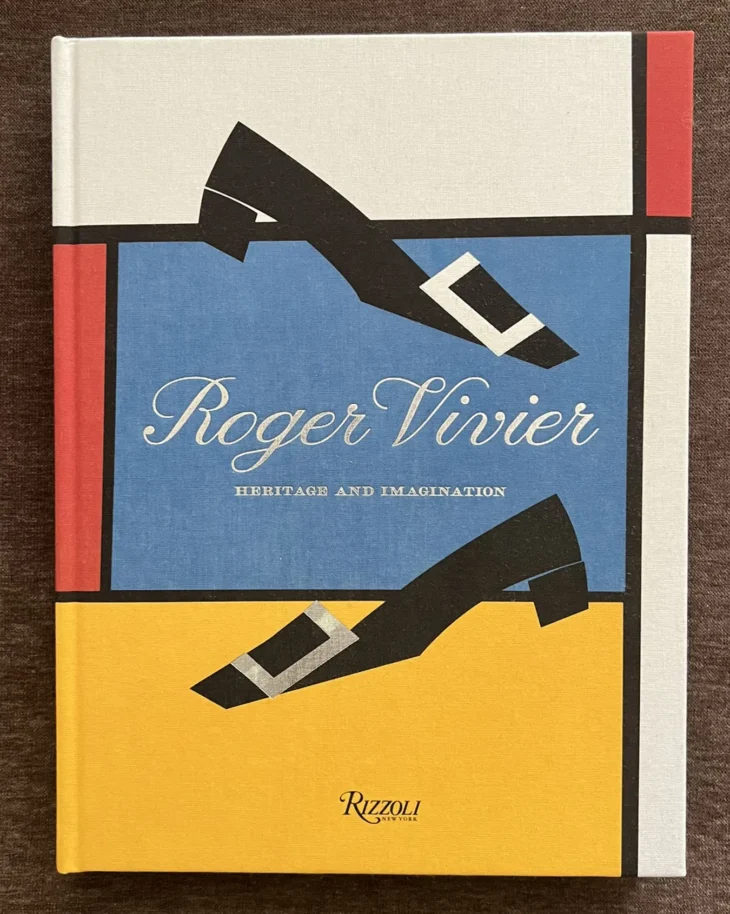
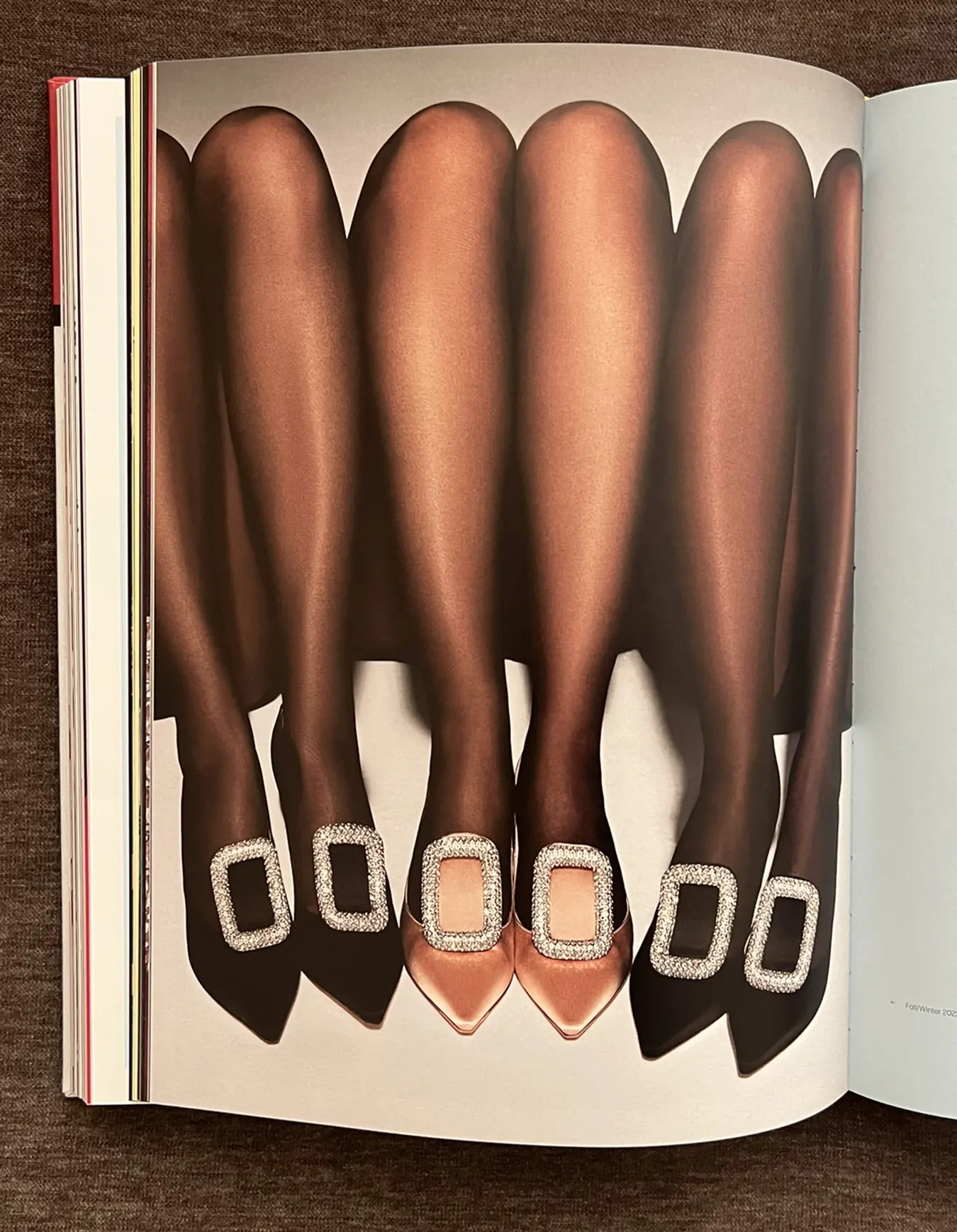
Vivier himself was born in 1907 and spent seven decades designing shoes of an audacity and craftsmanship that have few parallels in the history of footwear. The pilgrim shoes worn by Catherine Deneuve in Luis Buñuel‘s Belle de Jour in 1967 are among the most recognized objects in twentieth-century fashion. The virgule heel, the rectangular chrome buckle: these are not details. They are arguments, made in material, about what a shoe can mean and how far elegance can be pushed before it becomes something else entirely.
Vivier closed his business before his death in 1998, and the years that followed were a quiet period for the house. The acquisition by Diego della Valle, owner of Tod’s, in 2003 changed that, repositioning Roger Vivier from Parisian heritage shoemaker to international luxury label with genuine contemporary momentum. The appointment of Gherardo Felloni as creative director in 2018 gave that momentum a specific aesthetic direction. Felloni spent time inside the archives before designing anything, a discipline that shows in the coherence between what the house was and what it is now.
Semmelhack brings her cultural art history training to the material, which means the book reads as analysis as much as celebration. At 300 pages, it covers everything from the earliest archive materials through Felloni‘s most recent collections, making it genuinely useful for anyone serious about the history of design. I picked it up in January when it came out with Rizzoli and it has held its place on the table since.