


TAAKK Spring Summer 2027 begins with a return to attention. Takuya Morikawa frames The Ability of Discovery around two lasting fascinations: flowers and Irving Penn. Both become ways of looking rather than simple references. The collection asks how familiar things can become new again when the eye shifts, the hand changes its pressure or the distance between body and object narrows.
SPRING SUMMER 2027
Flowers enter the season through memory and time. Morikawa recalls the garden of his childhood home, the flowers tended by his mother and the lives of his grandparents close to nature and seasonal change. A flower grows, opens and fades, carrying time within its form. TAAKK uses that cycle as an emotional and visual structure, building garments that suggest emergence, fragility and transformation without turning the idea into romance alone.
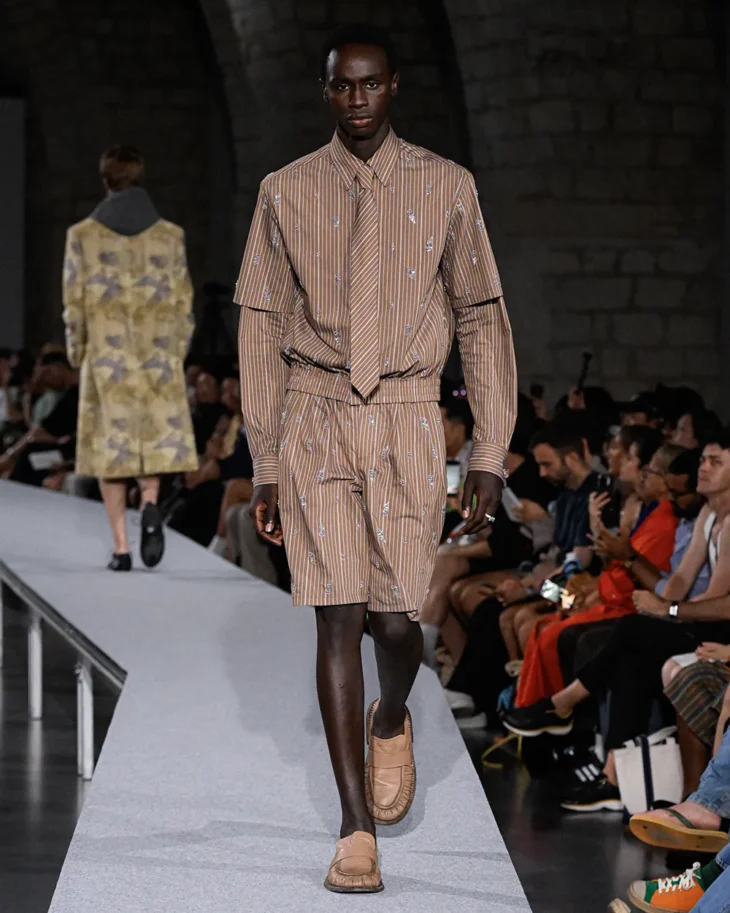
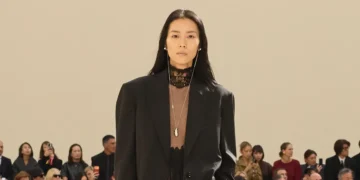
Irving Penn gives the collection its sharper lens. Morikawa looks to Penn’s ability to remove distraction while keeping density and presence intact. His influence appears in the collection’s restraint, where reduction does not lead to emptiness. Instead, it leaves behind tension, shadow and weight. TAAKK studies the familiar through this kind of focus: flowers, fabric, the body, material and structure become subjects for renewed observation.
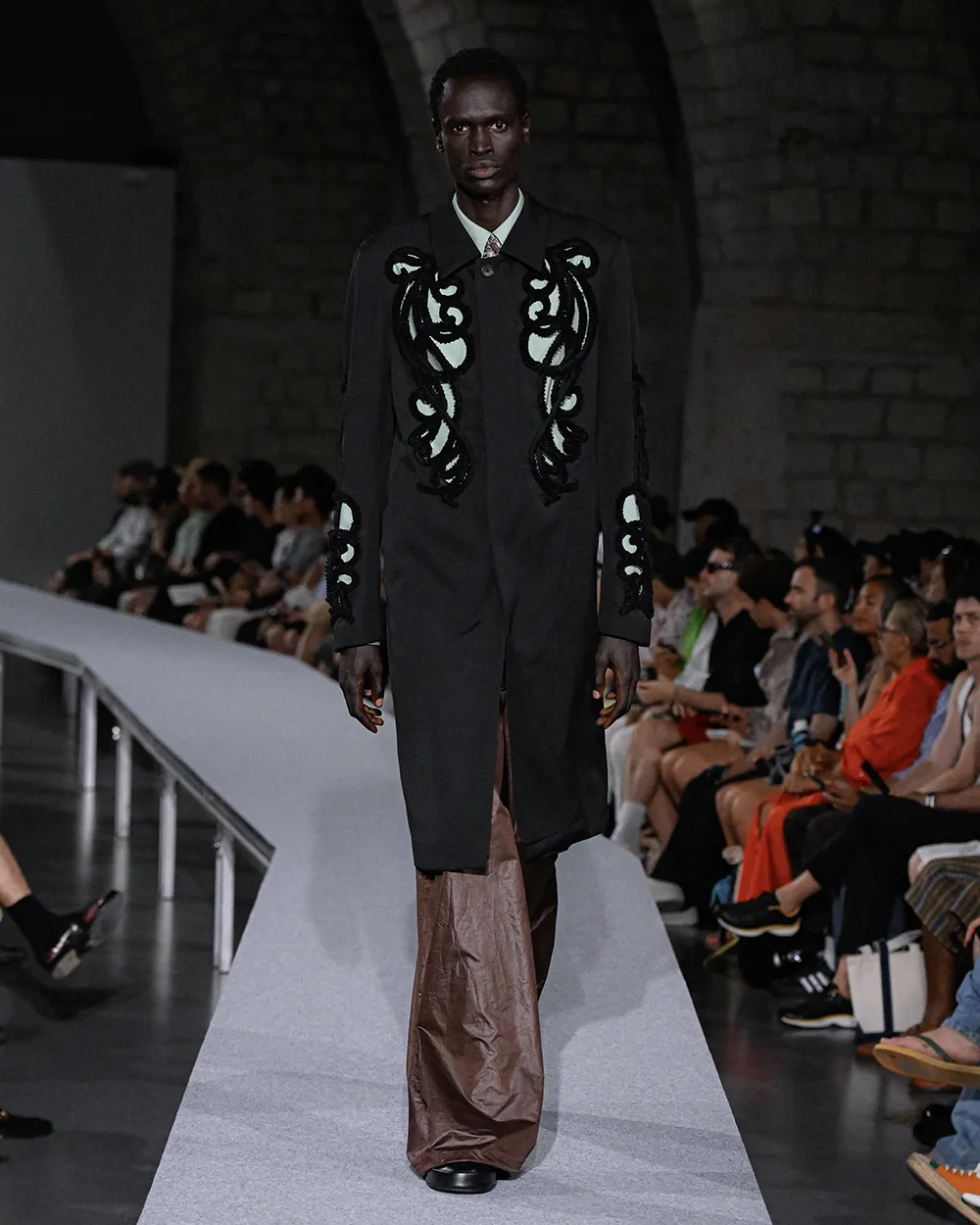
Textile development remains the core of the brand. For TAAKK, fabric does not arrive after design. It becomes the starting point. Morikawa works through weaving, texture, structure and finishing techniques to let garments grow from the material itself. This approach gives the collection its strongest identity, as surfaces shift, deepen and create movement before silhouette even takes control.
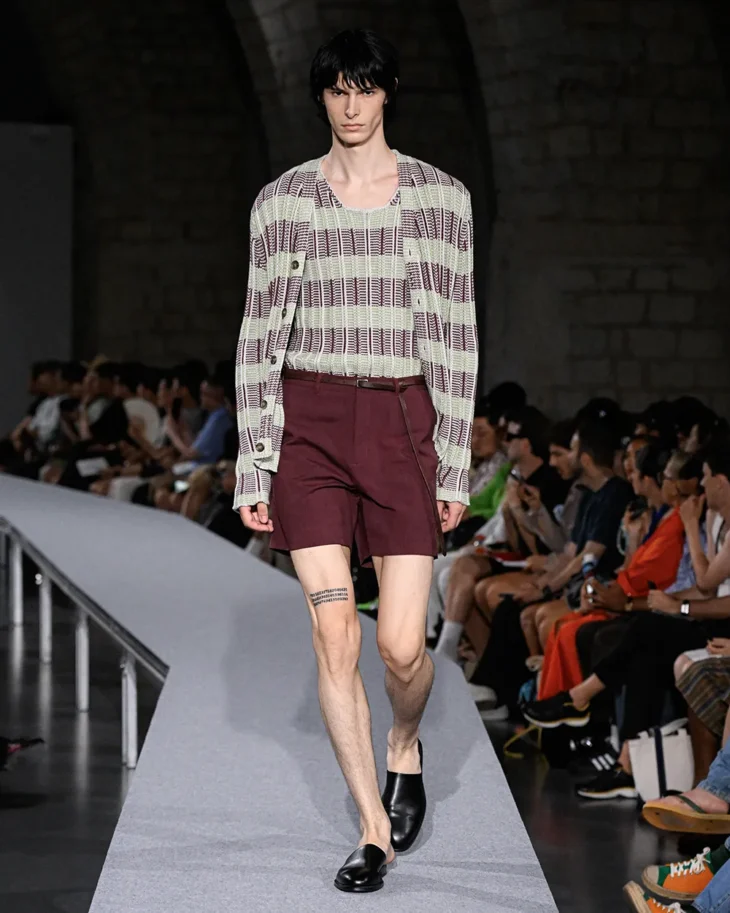
Gradient fabrics continue as one of TAAKK’s defining techniques. Here, gradient does not function only as color transition. Different materials and fabric structures evolve within a single cloth, allowing texture, tone and weave to change across the surface. The result gives garments a sense of movement from within, as if the fabric were discovering its own form.
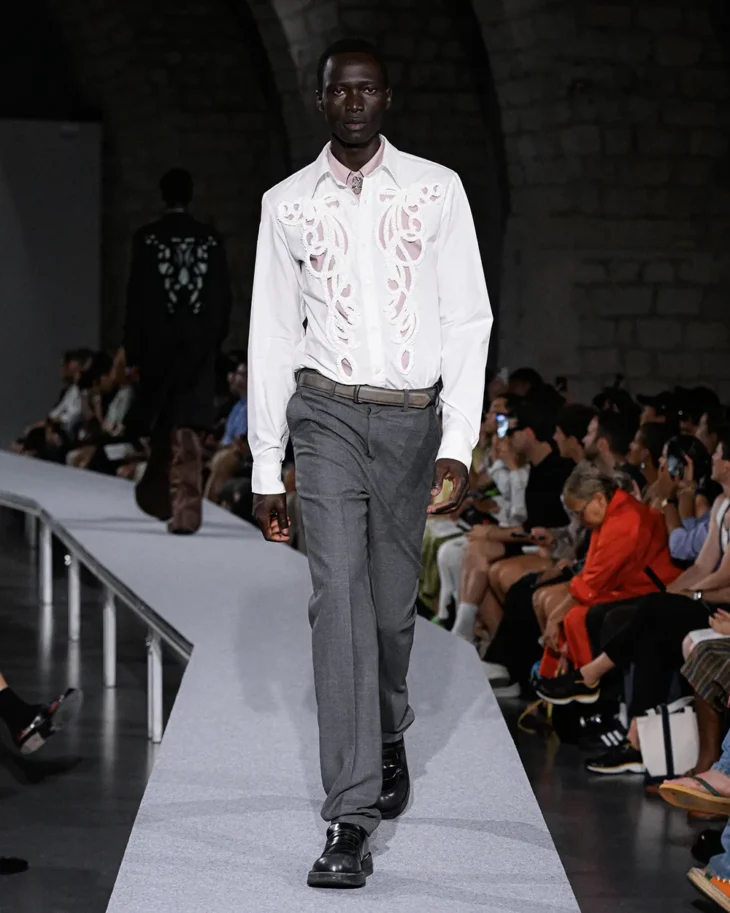
Embroidered structures add another level of depth. Cutwork and embroidery work together, with tape made from the same fabric placed over precise openings. This creates shadow, volume and sculptural presence. The technique avoids decoration for its own sake. It changes the fabric’s behavior and gives the garment a more physical surface.
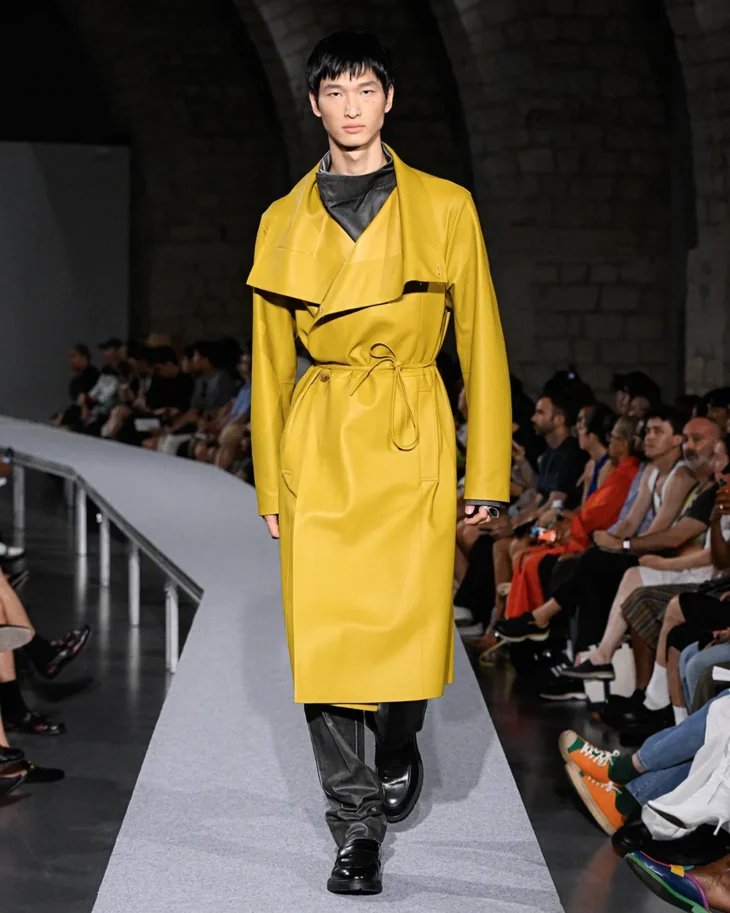
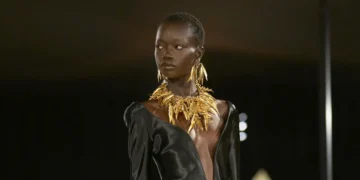
Jewelry extends the collection’s material thinking. Minerals appear in raw and irregular forms, carrying a sense of primordial memory. Created in collaboration with 4°C, the jewelry reflects TAAKK’s interest in revealing what already exists inside a material. Belts made with yuhaku bring another crafted element into the season.
With The Ability of Discovery, TAAKK does not chase novelty through excess. Morikawa finds force in looking again, touching differently and allowing existing forms to reveal something unexpected.