


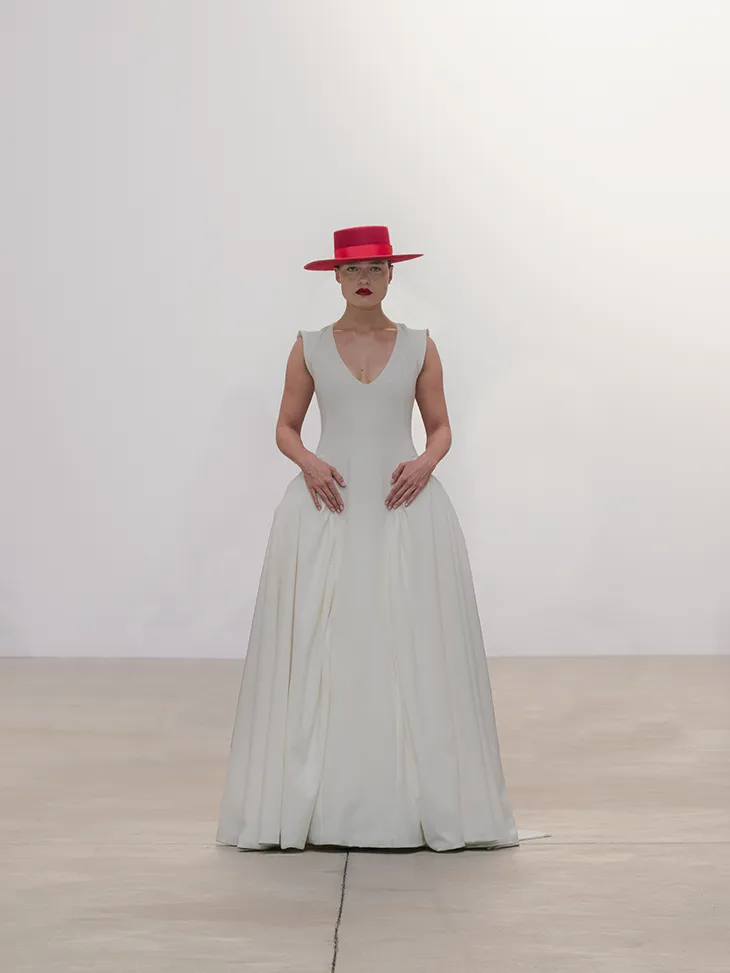
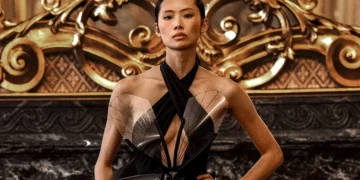
Leandro Cano presented Fall Winter 2026 Couture, titled Un Chien Andalou, at Fondazione Sozzani in Paris on July 7, 2026. The collection looks at Andalusia before cliché, away from postcard images and simplified ideas of the region. Cano treats it as a frontier shaped by millennia of contact, conflict, poetry, ritual and cultural exchange.
COUTURE COLLECTIONS
The collection begins with a declaration of inheritance. Cano links Andalusia to Persia, Damascus, high poetry, the Arab Empire and oral tradition. He describes a culture capable of solemnity, collective catharsis and emotional force. This language sets the tone for a collection built around memory that cannot always appear in direct form, yet still affects the body, the garment and the image.
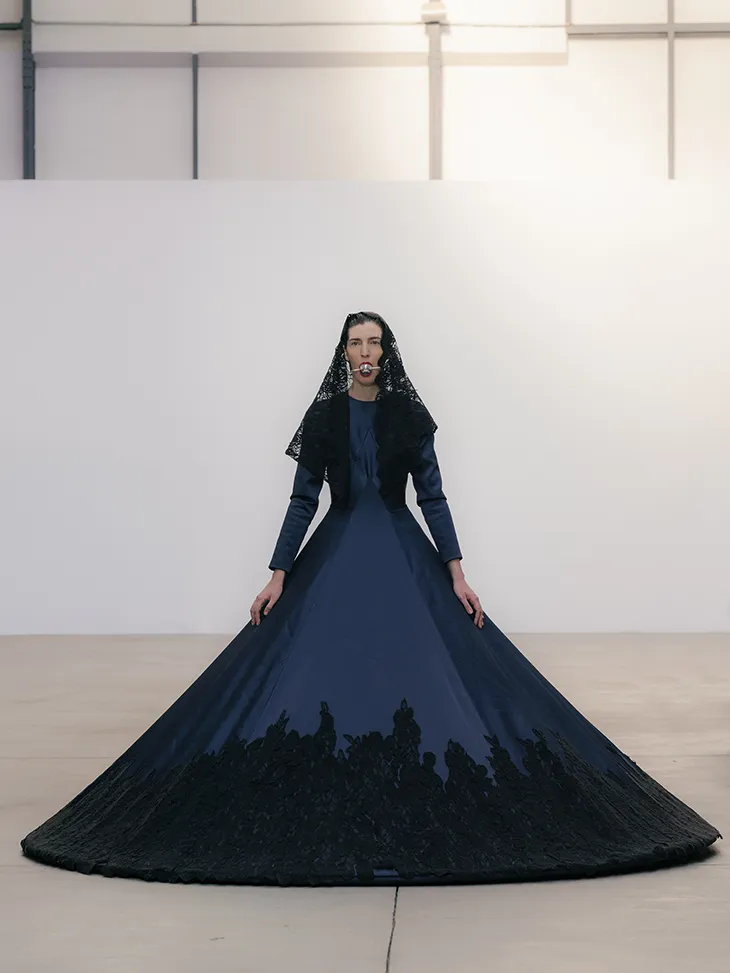
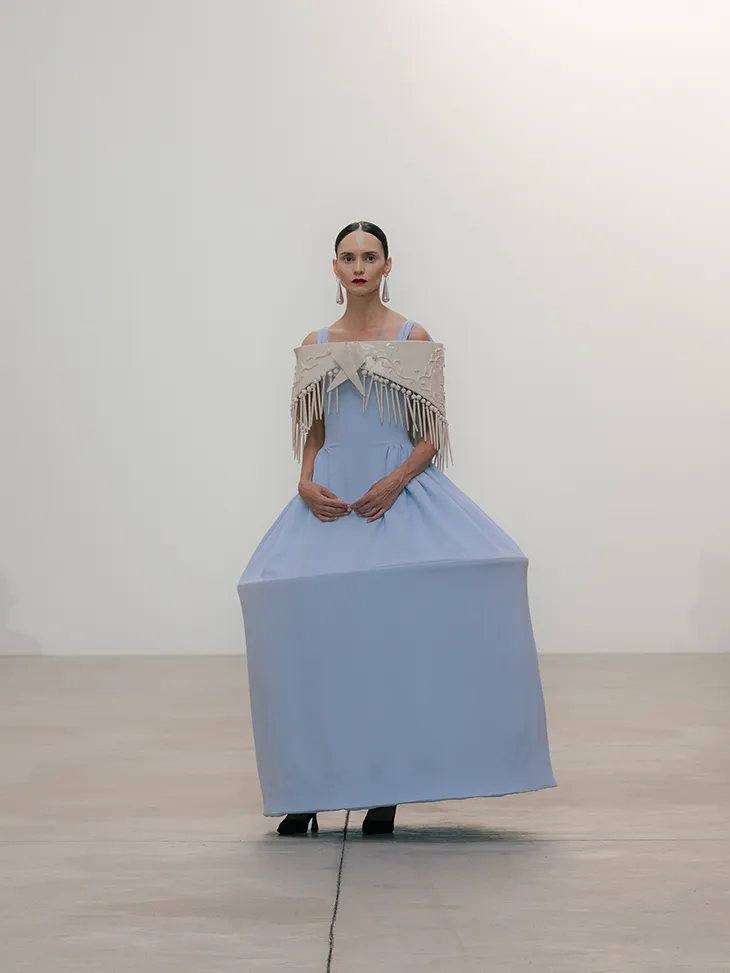
Un Chien Andalou asks how couture can reconstruct a place that history and representation have flattened. Cano looks at Andalusia as a territory of sung truths, sharpened metaphors, religious intensity, tenderness and rage. The collection treats Andalusia as a source of pressure, feeling and unresolved inheritance.
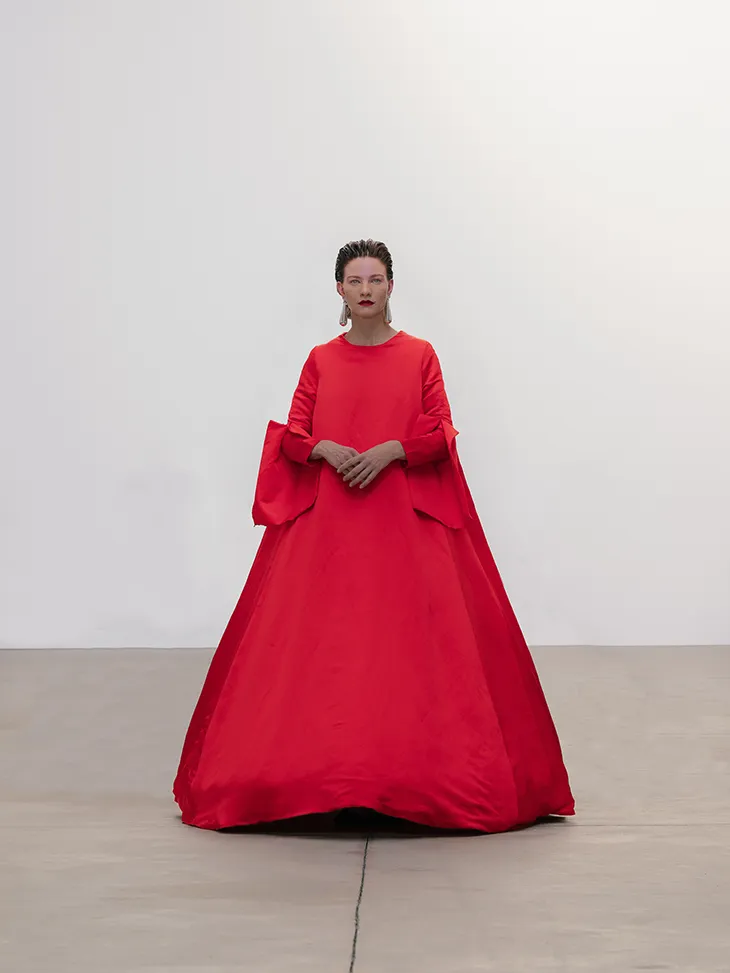
Materials carry much of that meaning. Cano uses satin, cotton, wool crepe, lace, natural hair, hand embroidery and antique Spanish textiles. These elements give the collection a dense physical language and connect the garments to craft, ritual and memory. The use of antique textiles brings Spanish material history into the present, while hand embroidery gives the clothes a direct human trace.
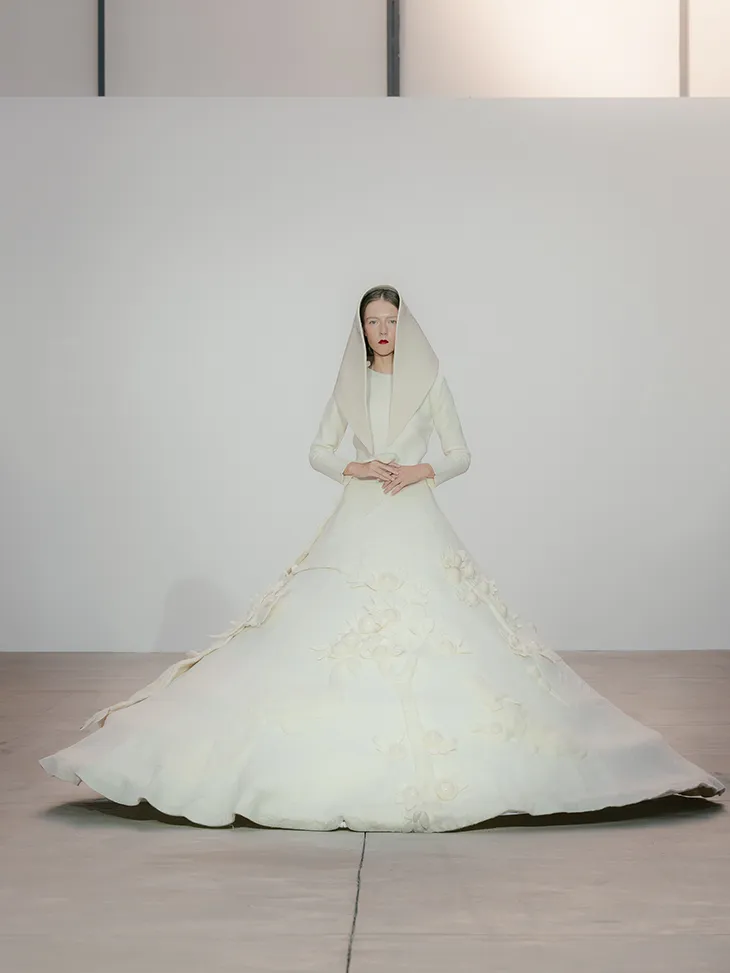
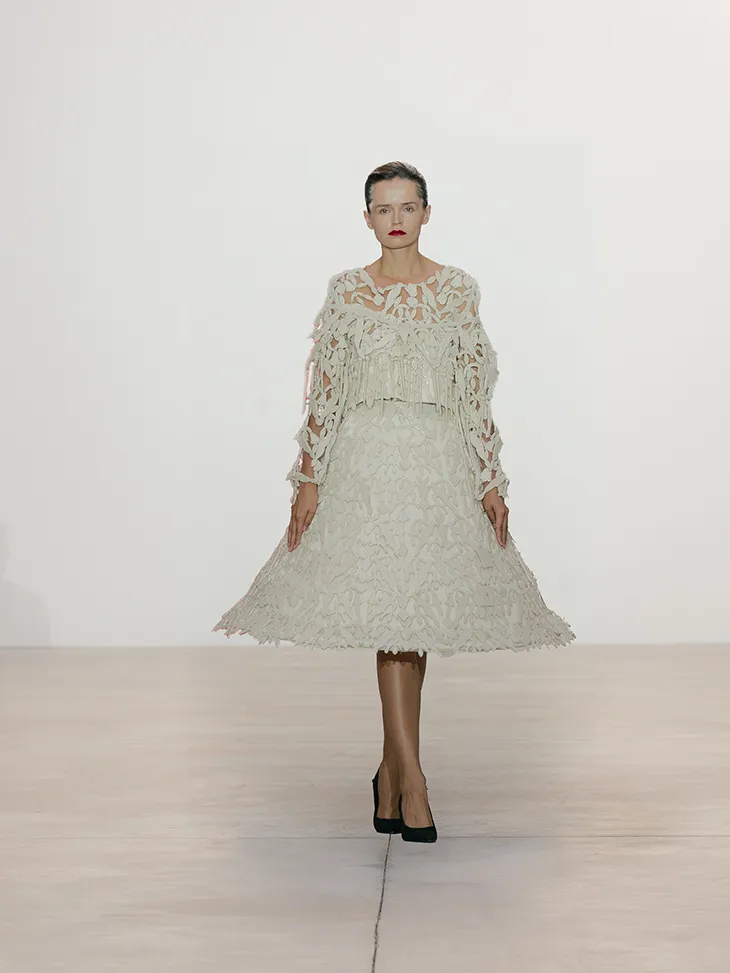
Scale gives the collection its strongest visual force. Cano transforms sacred mountains into portals, creating forms that suggest entry into another time and space. Ceramic couture appears as one of the collection’s most unusual gestures, shaped to suggest cloth while keeping the tension of a harder material. Combed felt creates large surfaces that demand close attention. Silver jewellery and crocheted masks add references to imposition, penance and silence.
The collection also draws from myth. Cano’s text evokes the Atlantic, the forge, golden apples, Charon, Medusa, Geryon, Argantonio and the Hesperides. These references connect Andalusia to thresholds, danger and the edge of the known. They give the collection a charged symbolic frame without removing it from its material base.



this is just too gimmicky, why is there a chalker in her mouth… cmon. this is not couture it is made to look like it.