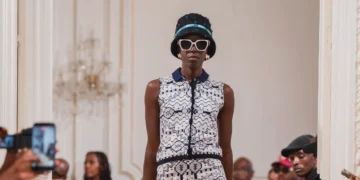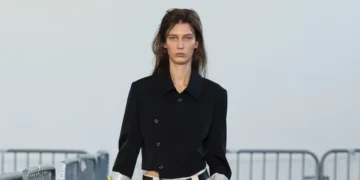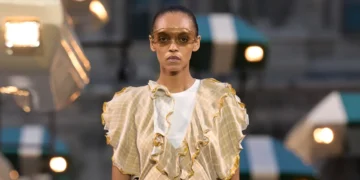



Duran Lantink makes his Jean Paul Gaultier Haute Couture debut with Tech Couture, an Fall Winter 2026 2027 collection built around tension: historical form and new technology, fantasy and dysfunction, body codes and garment architecture. His first couture proposal for the house does not approach Gaultier as archive to preserve. It treats the archive as material to test, distort and reactivate.
COUTURE COLLECTIONS
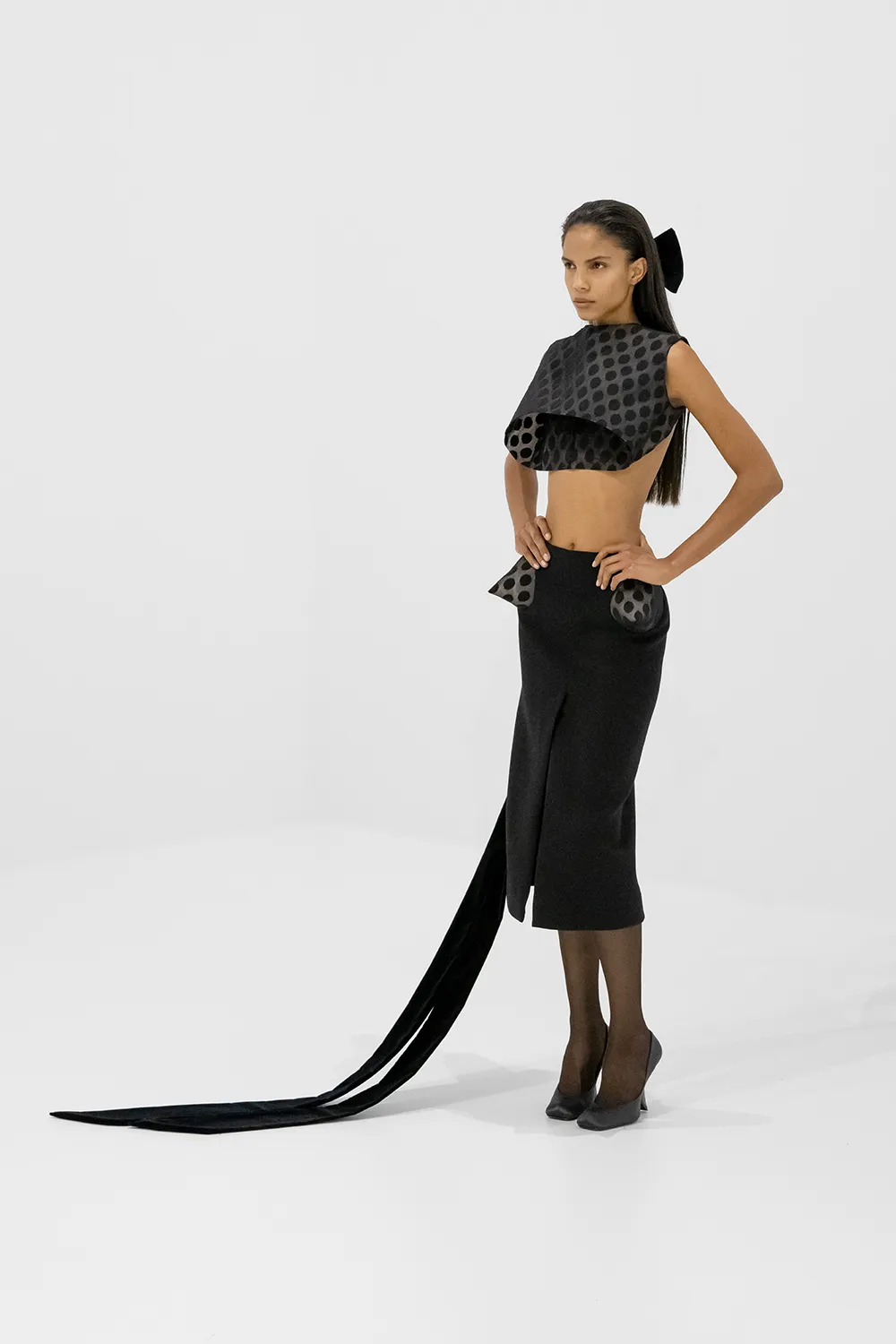
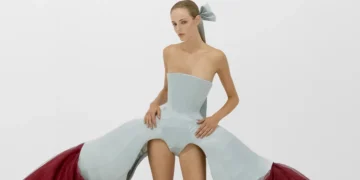
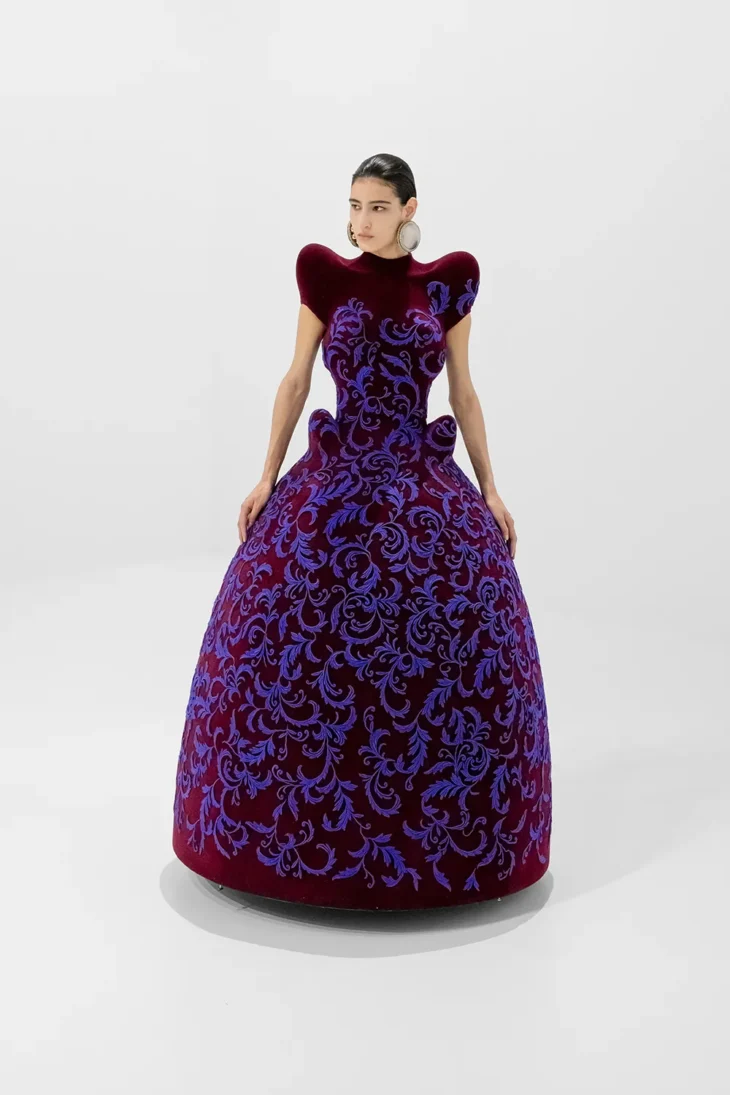
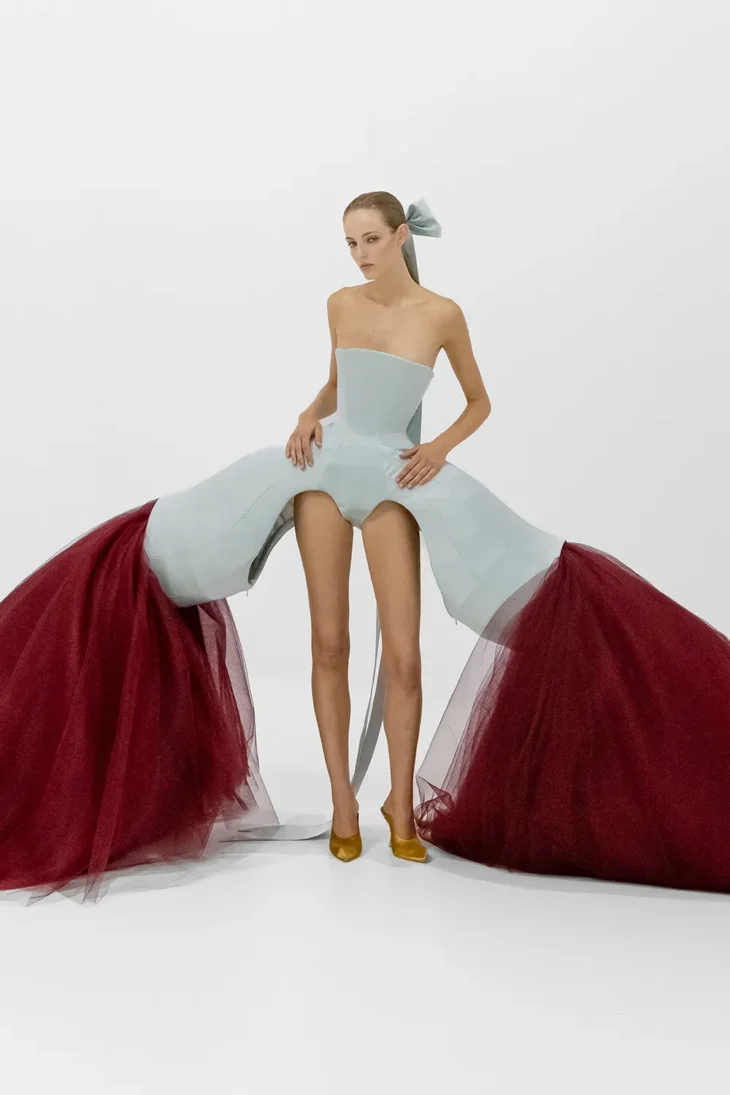
The collection begins with structure. Flexible TPU and PA12, both 3D printed, create exoskeletons that form the framework of the garments. These constructions amplify shoulders into extreme volumes, push collars and necklines forward into sculptural décolletés, and transform historic shapes into something more alien. Bustles mutate into wasp-like tails. Crinolines become conduits for tulle that erupts from unexpected points across the body. Through corsetry, padding and anatomical exaggeration, Lantink reshapes both feminine and masculine silhouettes.
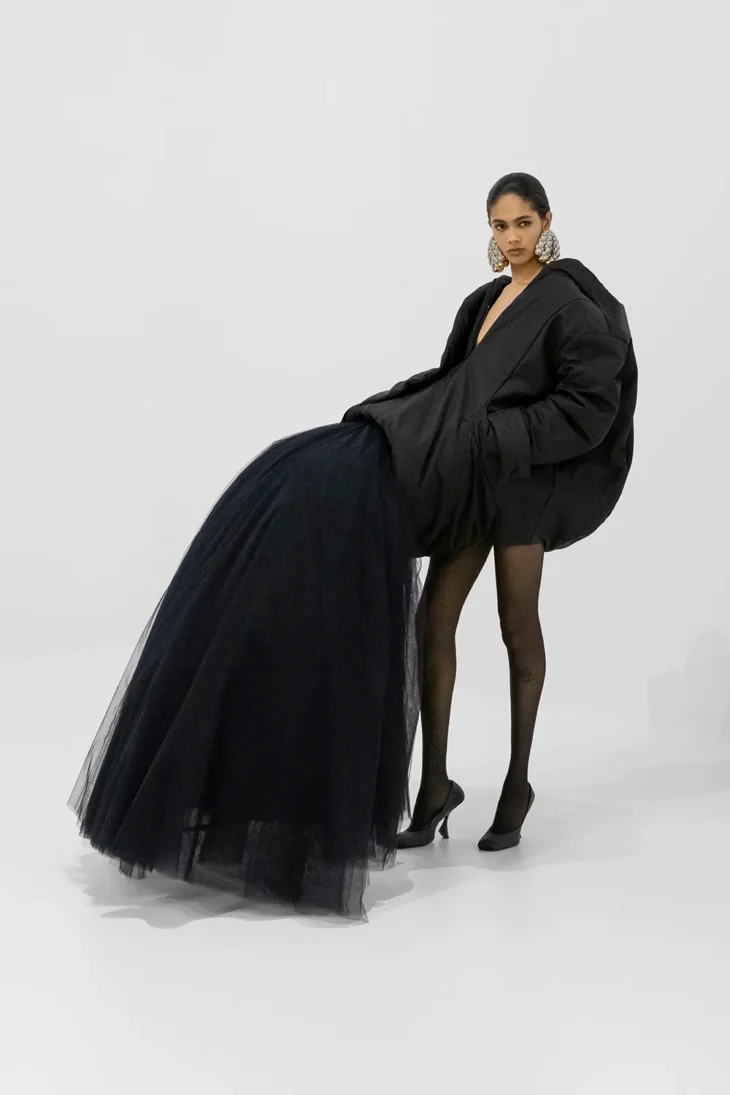
“I prefer to interrogate the silhouette rather than the body,” the designer explains. That distinction defines the collection. The clothes do not simply dress the figure. They question the garment’s ability to grow, protrude, support, distort and occupy space. Many looks demand to be seen from the side, from behind, or in movement. A frontal image cannot contain their full construction.
Marie Antoinette enters the collection as atmosphere and code. Lantink looks to eighteenth-century court dress, but he filters it through dysfunction. The references appear in rinceaux drawn from the Château de Versailles, floral embroideries inspired by the Queen’s bedchamber hangings and sablé beadwork tied to eighteenth-century technique. Capri trousers echo knee breeches from the habit à la française, while ribbons in the hair extend silhouettes like traces of a court procession.
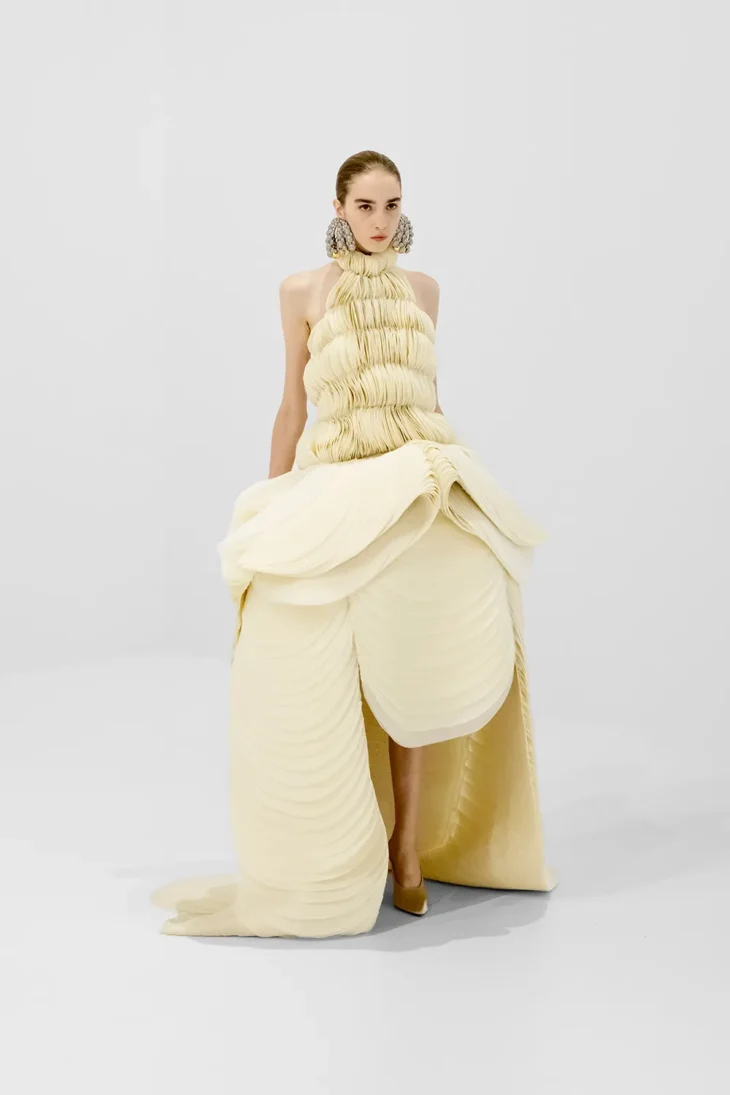
The designer’s interest lies in the impracticality of those historical forms. Monumental garments become uncomfortable, absurd and deliberately difficult. That lack of practicality gives the collection its sharpest point. Lantink places form above usefulness and turns couture into a site where function can collapse in favor of fantasy.
Color strengthens the historical dialogue. Burgundy, a recurring shade in Jean Paul Gaultier’s history, anchors the palette. Around it, intense Bleu de Roy, menthe fraîche green, flamant rose and softer shades of cuisse de nymphe build a chromatic world tied to another era. The names themselves add to the collection’s theatrical charge.
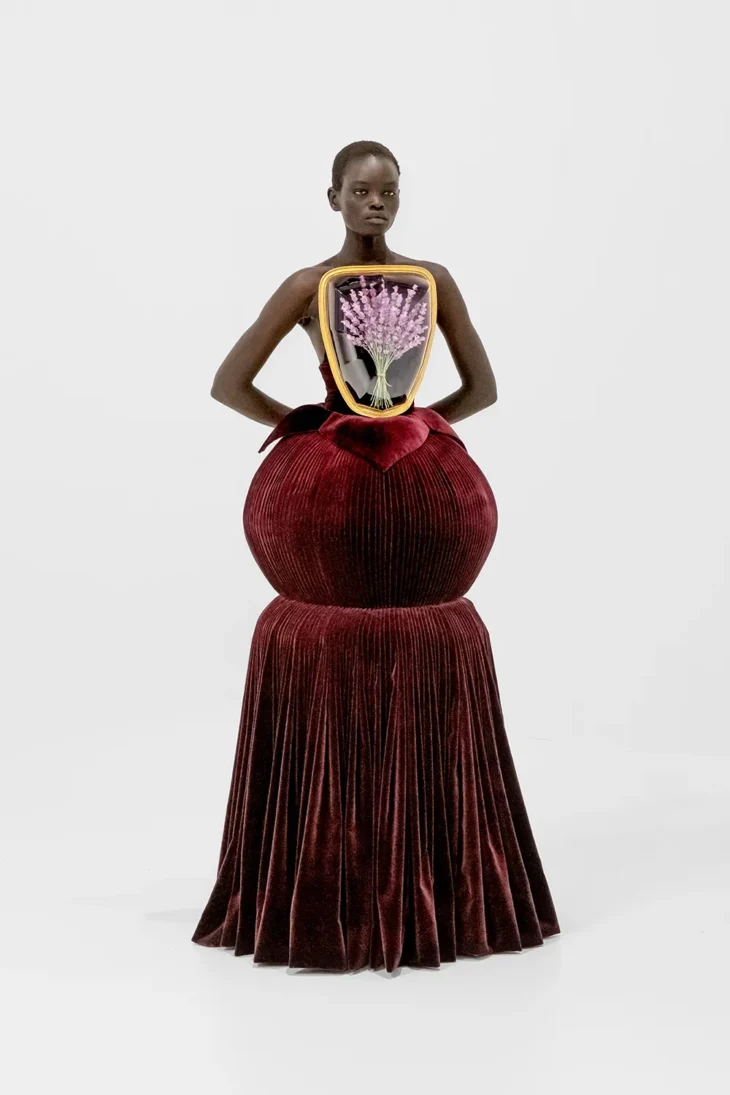
Lantink also revisits Gaultier’s defining codes. The corset, tailored jacket, Aran knit textures, sculptural tailoring and tulle skirts return through a new logic. The cone bra shifts away from its familiar placement, with conical shapes migrating across the body as sharp, thorn-like forms. Archival materials gain second lives: striped wool from the Fall Winter 2002 2003 Haute Couture collection Les Hussardes becomes a breastplate and tailored suit, while a forgotten biker jacket returns as a reconstructed patchwork piece.
Accessories deepen the personal and historical layers. Jewellery draws from Lantink’s Dutch heritage through Zeeuwse Knopen, traditional Zeeland buttons, enlarged and multiplied in silver or gold-toned metal. At times they protect the hair like armour. Even Le Mâle, Gaultier’s iconic fragrance, appears through a bouquet of white lavender beneath the glass dome of an oversized medallion.
With Tech Couture, Lantink treats the Gaultier ateliers as a laboratory. The collection tests what happens when couture specialists, digital fabrication, historical fantasy and house codes meet under pressure. It does not smooth out the contradictions. It makes them visible. His debut for Jean Paul Gaultier feels ambitious, strange and physically charged, opening a couture chapter where the impossible becomes the point.