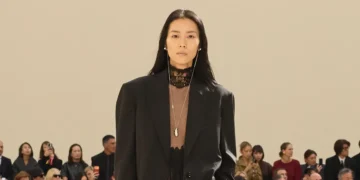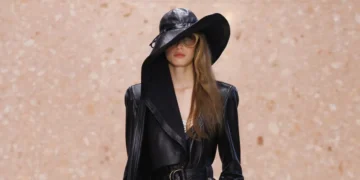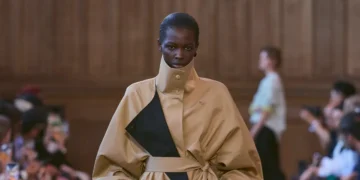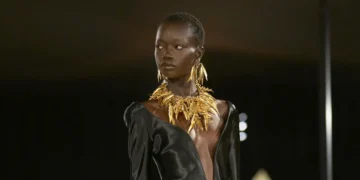



On June 15, Florence’s Manifattura Campus hosted twenty graduating designers from fifteen countries, each presenting the culmination of four years spent building a creative language in one of fashion’s most rigorous training grounds. Among them, Emilie Wenckstern distinguished herself entirely. Her collection, No Longer Human, claimed the Polimoda Best Collection 2026 award, bestowed by a jury comprising fashion director Tuomas A. Laitinen, photographer and conceptualist Eugene Rabkin, body confidence advocate Danae Mercer, designer Eva Cavalli, and actress Simona Tabasco. When pressed on which look would remain longest in memory, Rabkin was immediate: the final piece from No Longer Human, which seemed to distil the entire collection’s central tension between constructed identity and sculptural form.
At its essence, No Longer Human interrogates a question that has become increasingly urgent in 2026: if one possessed a body, would it remain human? The collection concerns itself with how digital culture has fractured our relationship with the corporeal form. Bodies are generated now, edited, constructed before they exist in the physical realm. Identity is no longer something inherited or discovered. It is designed. And if skin becomes surface, if the body becomes a canvas for construction, then at precisely what juncture does it cease to be human?
Wenckstern‘s background positioned her ideally to explore this territory. Before arriving at Polimoda in 2021, she spent years working within an art studio, cultivating skills across sculpture, photography, and installation. That artistic rigour permeates her fashion practice entirely. She did not arrive to design dresses. She arrived to construct a world, one where garments function as sculpture, where the distinction between fashion and fine art dissolves. Her references read as a manifesto: surrealist sculptor Hans Bellmer (bodies as malleable objects), photographer Paul Kooiker (hyper-refined digital renderings of skin), Alaïa‘s obsessive body-consciousness, Margiela‘s deconstructive impulse, and Schiaparelli‘s surrealist provocation.
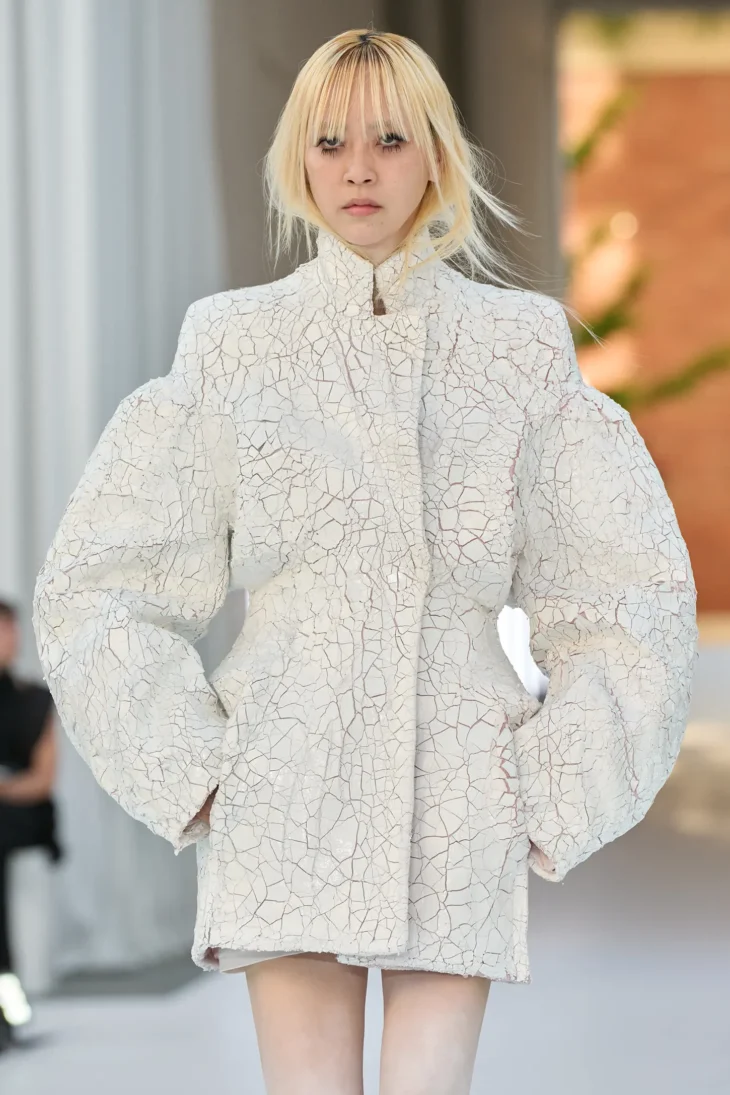
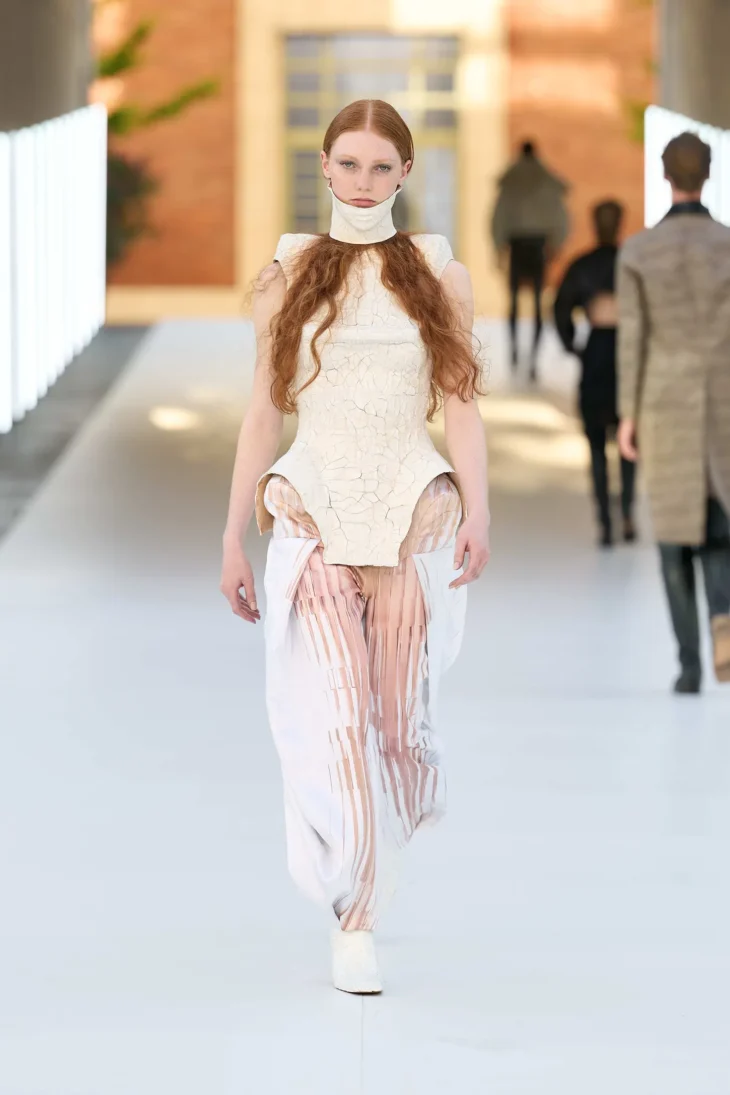
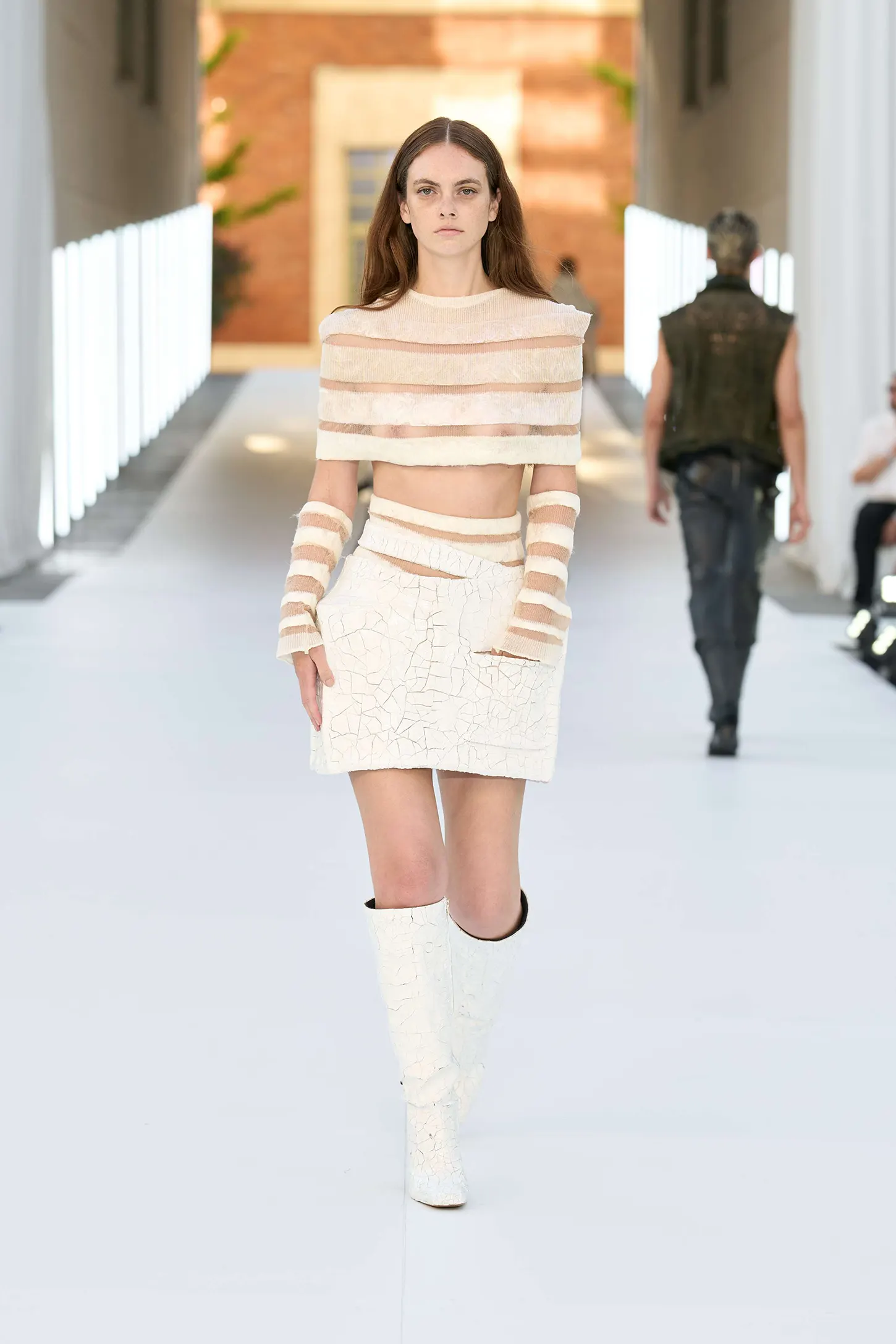
No Longer Human unfolds across six looks, structured around two complementary material registers that mirror the duality inherent to its concept: fragile set against controlled, imperfect positioned against designed. The first register constructs architectural bodies. Oversized jackets bloom with balloon sleeves. Miniskirts pair with matching boots. Structured shoulders rise like sculpture itself. Yet here emerges the unsettling detail: every surface is covered in a cracked finish applied to felted wool, evoking fractured porcelain. The effect is visceral. It registers as wrong. These are garments that appear damaged, fractured, yet somehow more compelling precisely for their fragility. Silk knitwear introduces striations that read as veins and joints (the body as system, reduced to component parts), whilst sheer bands and digital-print elements interrupt the tailored form like interference, like corrupted code.
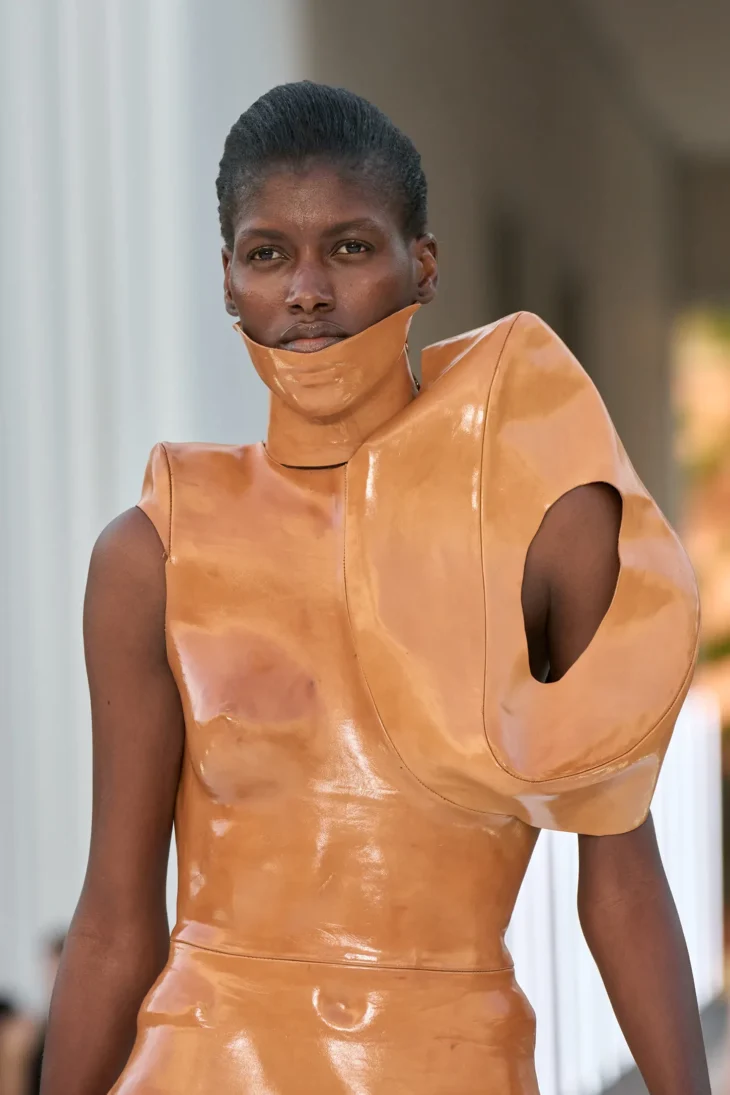
The second register moves into leather. Glossy, tone-on-tone, moulded directly onto the body. Cut-outs and asymmetric circular openings reference mannequin joints, the articulation points where a doll’s limbs connect. The boots extend upward, erasing the boundary where the leg concludes. One loses the distinction between garment and body, between clothing and prosthetic. It is both beautiful and deeply unsettling, which appears to be precisely intentional. Throughout, a recurring detail haunts the collection: a necklace that rises to obscure the mouth like a half-mask. Wenckstern articulates the stakes with clarity. If a doll possesses a mouth and eyes yet cannot communicate, perhaps it is voice, the capacity to employ it, that distinguishes us still. Silence becomes a marker of the artificial. Muteness becomes inhumanity. The colour palette is muted and precise: whites, beiges, pale pinks, synthetic skin tones. These are the colours of rendering engines and digital avatars, hues that hover between skin and synthetic material, between biological and artificial. They feel both intimate and cold simultaneously.
What elevates No Longer Human beyond conceptual exercise is its technical execution. Wenckstern collaborated with Ostinelli Seta on printed fabrics. Every piece was developed within Polimoda‘s workshops under the mentorship of Luke and Lucie Meier, who returned to the school where they trained together twenty-five years prior, alongside director Massimiliano Giornetti. The cracked surfaces demanded precise application. The leather moulding required absolute control. The proportions, exaggerated yet never cartoonish, necessitated the discipline that separates conceptual fashion from truly compelling fashion. Danae Mercer, speaking from her expertise in body confidence, noted what remained with her: not merely the concept, but the skill evident in the leatherwork, the craftsmanship beneath the idea. The concept is brilliant. The execution confirms she is no theorist playing at fashion; she is a designer with something to articulate and the technical vocabulary with which to articulate it.
LATEST WOMENSWEAR FEATURES ON DSCENE
Fashion has always engaged with the constructed body. Yet No Longer Human arrives at a particular cultural moment. Bodies are generated by artificial intelligence now. Filters reshape faces in real time. Identity is increasingly something curated rather than lived. Wenckstern‘s collection captures that peculiar contemporary anxiety: the fear that we are becoming less human, or that humanity itself is being redesigned entirely. Yet there exists no despair here. Instead, No Longer Human locates beauty in strangeness, in idealised forms that possess “less and less to do with the reality of the human form.” The cracked surfaces suggest damage, yes, but equally depth. The sculptural silhouettes suggest artifice, but equally elegance. The muted palette suggests distance, but equally intimacy.
Discover more of Emilie Wenckstern graduate collection in our gallery:
After four years within Polimoda, after translating sculpture and photography and a deeply personal visual language into fashion, Emilie Wenckstern has created something rare indeed: a graduate collection that functions simultaneously as artistic statement and wearable reality, one that will resonate far beyond the Florence campus where it debuted.