


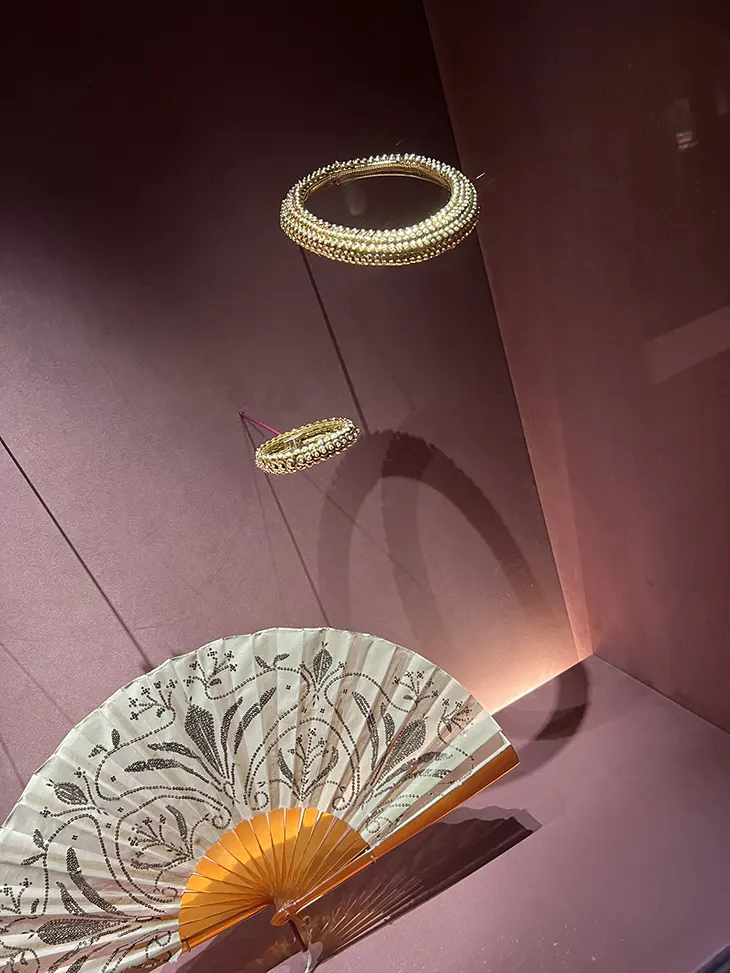
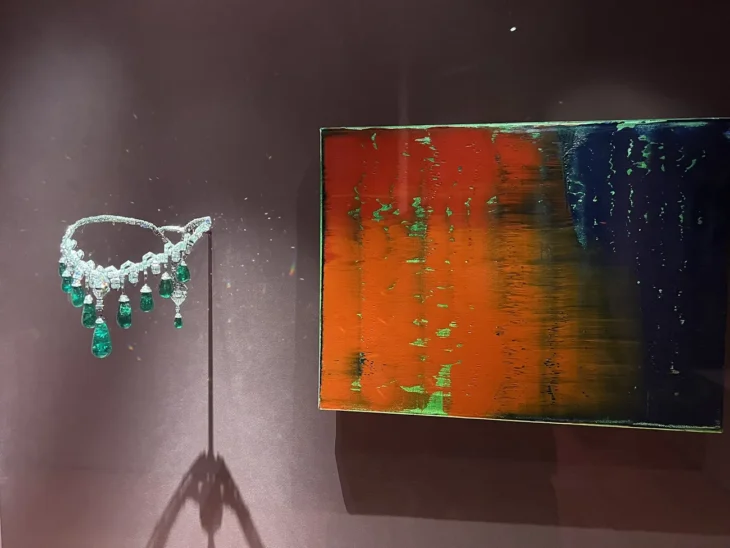
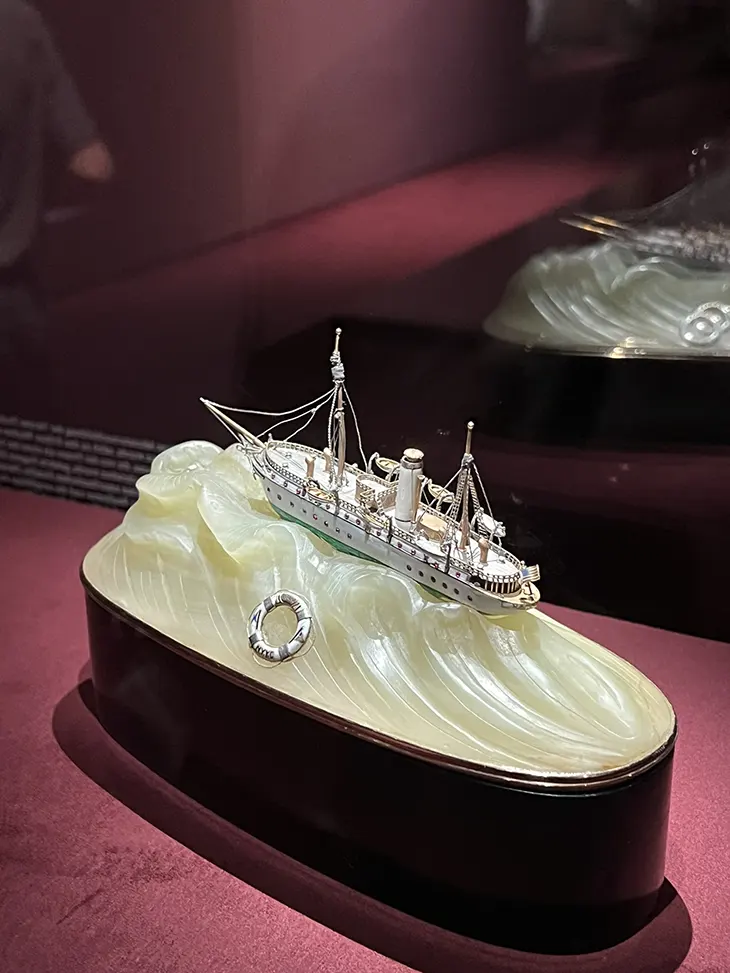
We were in Vienna two days before the impossible happened. Standing in the Lower Exhibition Hall at the Museum of Applied Arts (MAK), surrounded by nearly 500 objects that represent 120 years of Van Cleef & Arpels‘ mastery and the MAK’s unparalleled decorative arts collection, the exhibition felt sacred. Rare. Untouchable. The scenography designed by Atelier Tsuyoshi Tane created a labyrinth that guided us through six thematic chapters, Wanderlust, Architecture, Rhythmic Design, On Stage, Metamorphoses, and Nature & Cosmos, each a meditation on how jewelry and applied arts dialogue across centuries and cultures. We were midway through writing this story when the theft occurred. Now, that story has fractured in ways we could not have anticipated.
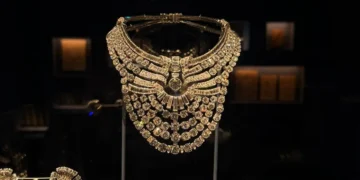
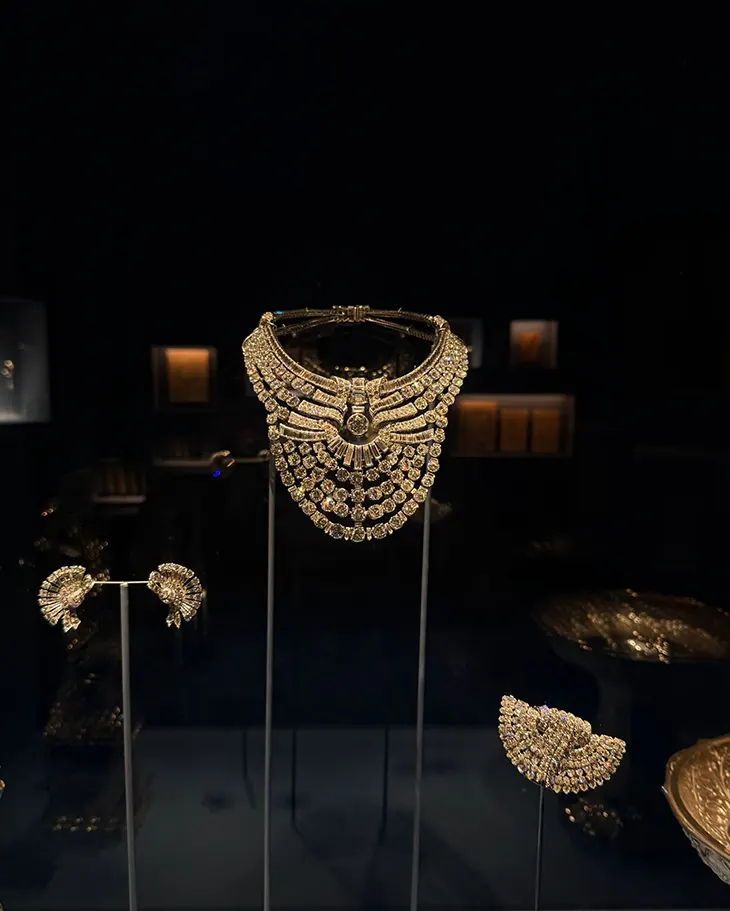
On Thursday afternoon, two men walked into the exhibition after purchasing tickets. They approached the display case holding the platinum necklace adorned with more than 600 diamonds, a piece designed for the former Egyptian royal family, worn by Queen Nazli in 1939 for her daughter Fawzia’s marriage to the future Shah of Iran. It is, by any measure, one of Van Cleef & Arpels’ most historically significant creations. A triumph of white jewelry, the diamonds alone exceed 200 carats. Its estimated value hovers around $4 million, after an auction to a private collector at Sotheby’s New York for 4.3 Million. And then, in broad daylight, they smashed the glass case and took it.
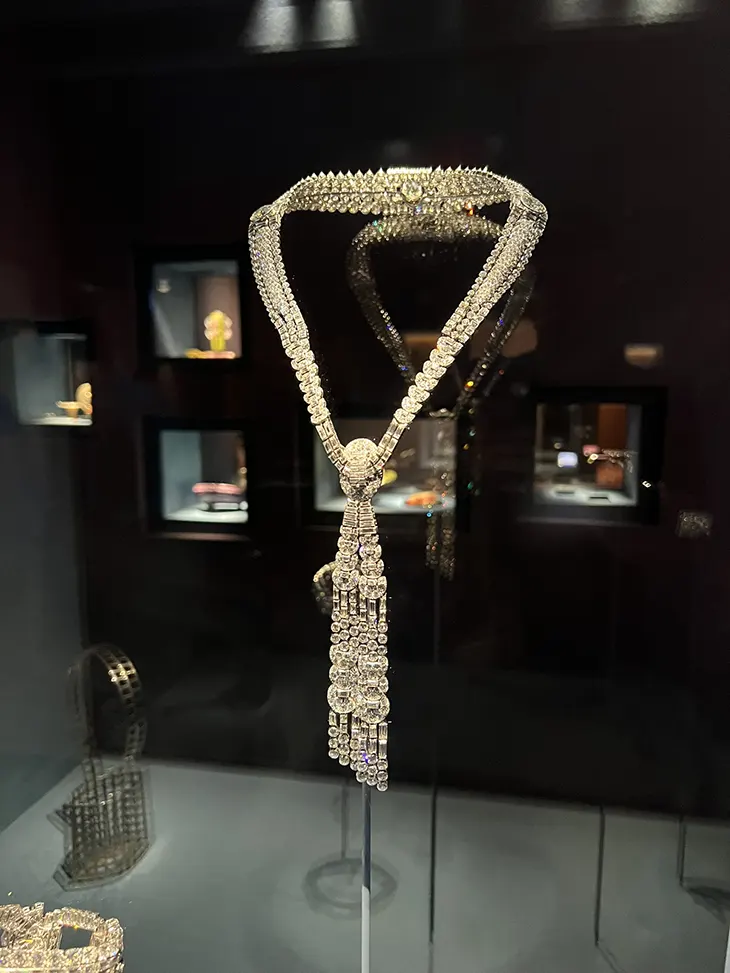
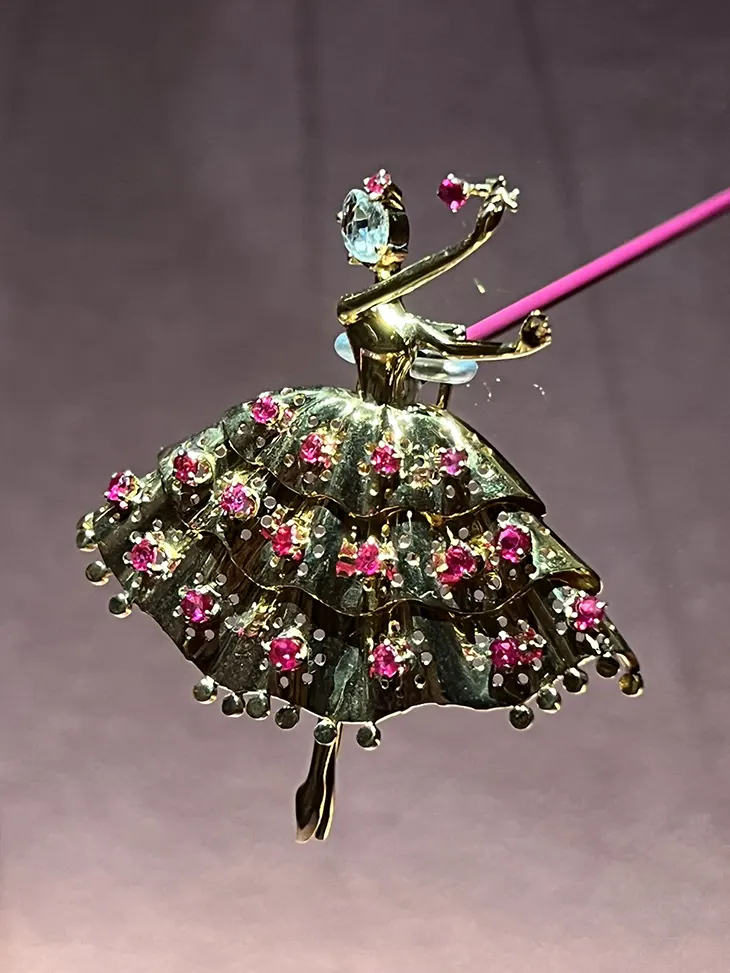
The audacity is almost incomprehensible. But what troubles us more is what the breach reveals: the security measures, while reportedly developed specifically for this exhibition in collaboration with Van Cleef & Arpels, did not appear to match the extraordinary value and significance of what was on display. We walked those halls. We saw the objects, the 1924 vanity case inspired by Japanese inrō, the 1972 Ribbed necklace convertible into a bracelet, the Leaf bracelet from the 1950s that once belonged to American socialite Marjorie Merriweather Post, the Van Cleef & Arpels ballerinas loaned by private collectors. Each piece represents not just monetary value but irreplaceable cultural and artistic patrimony. The security presence, however, felt understated. Measured. Perhaps even insufficient for what was at stake.
The pieces inspired by travel, by geometric modernism, by nature itself. These are the stories that should define Van Cleef & Arpels. Not a heist. Not a security failure. Not the anxiety that will now accompany any future collaboration with museums.
MAK director Lilli Hollein released a statement acknowledging that “security issues were taken very seriously and all security measures were carefully prepared.” Yet the theft happened anyway. In daylight. After a ticket purchase. This is not a failure of intent but a failure of execution, or perhaps a failure to fully comprehend the new reality of museum theft. Europol has warned that such heists are becoming “increasingly aggressive, with a shift towards violent and forceful methods,” suggesting “involvement of new criminal networks.” Vienna’s incident follows a brazen daylight raid on the Louvre in Paris last October, a prehistoric jewelry heist in Spain mere hours before this theft, Renaissance paintings stolen from Sicily, and Impressionist masterworks taken from Parma. The pattern is chilling.
The necklace remains missing. Vienna police have released CCTV images of the two unmasked suspects and mounted an international manhunt. One suspect was believed to be carrying a firearm. They fled toward Vienna’s Stadtpark. For now, the piece is somewhere in the criminal underworld, and we can only hope it surfaces intact.
But here is what truly haunts us: the consequences this will have for future exhibitions. The GLANZSTÜCKE project was the result of an intensive collaboration between two institutions united by shared enthusiasm for exceptional design and visionary ideas. More than 300 pieces came from the Van Cleef & Arpels Collection. But the remainder, the 200-plus accompanying objects from the MAK, and crucially, the pieces borrowed from private collectors, now carry a weight of risk that may never be lifted. Private collectors entrust museums with their most precious possessions on the promise of safety and stewardship. That promise has been broken. Why would a collector ever lend again?
Private collectors entrust museums with their most precious possessions on the promise of safety and stewardship. That promise has been broken. Why would a collector ever lend again?
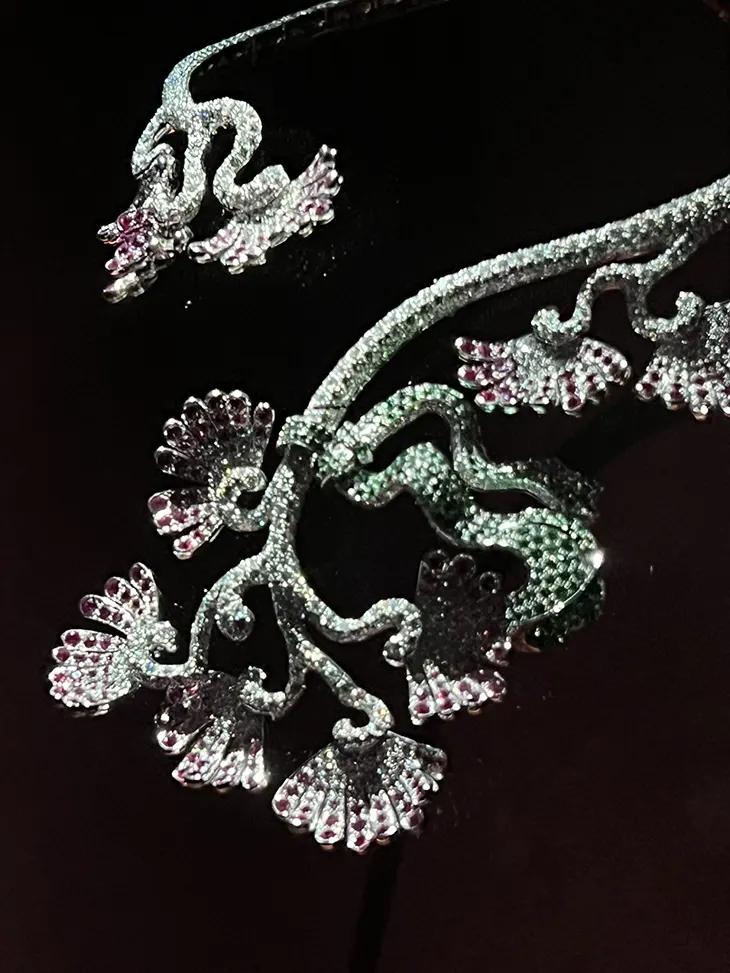
For Van Cleef & Arpels, this is particularly damaging. The Maison does not need a theft to achieve fame. It needs, instead, what this exhibition was providing: a platform to celebrate the artisanal craft that has defined its 120-year history. The Mystery Set™ technique patented in 1933. The Minaudière™ with its ingenious interior architecture. The convertible pieces that blur jewelry and sculpture. The pieces inspired by travel, by geometric modernism, by nature itself. These are the stories that should define Van Cleef & Arpels. Not a heist. Not a security failure. Not the anxiety that will now accompany any future collaboration with museums.
Yet we must also acknowledge the reality: if the necklace is recovered intact, it will indeed experience a surge in global awareness. The piece that was worn by Egyptian royalty, that survived auction houses and private collections, that was deemed important enough to anchor a museum exhibition, will have survived a $4 million theft. That narrative, the resilience of the object itself, will overshadow everything else. And perhaps that is what troubles us most. The necklace will become famous for being stolen, not for being magnificent.
The exhibition has reopened, minus the missing piece. The empty display case remains, a stark reminder of what was there. Vienna police continue their investigation. Forensic experts are analyzing CCTV footage and evidence. But the damage is already done, not to the exhibition’s intellectual merit, but to the ecosystem of trust that allows such ambitious collaborations to exist.
Discover more of the exhibition in our gallery:
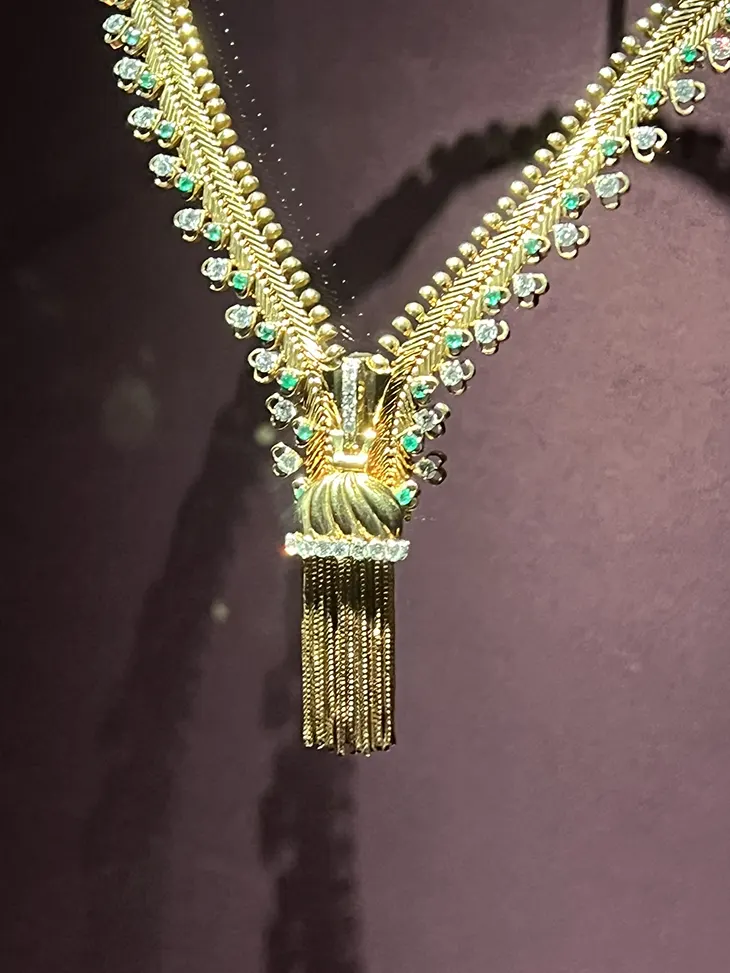
We still believe in the curatorial vision of GLANZSTÜCKE. The dialogue between Van Cleef & Arpels and the MAK remains profound and necessary. The remaining 499 pieces still tell the story of how jewelry and applied arts intersect across centuries. If you are in Vienna before September 27, we urge you to visit, it is even worth a trip. To bear witness to the craftsmanship and mesmerizing artistry created in more than a century of the house. But go with the knowledge that this exhibition, brilliant as it is, has been diminished by something entirely beyond its control. And once again I can’t shake the feeling that the real tragedy is not only the theft itself. It is that the artisanal mastery, the craftsmanship that should be the beacon of this moment, has been eclipsed by a single act of criminal audacity.





so many questions here ! I have been to the museum and absolutely loved the collection. Sadly Van Cleer & Arple is summed up to the lucky charm or however you call the bracelet that they have and butterfly, but the stone work is what it is famous for and you can see it so clearly there. It was impressive and i truly became a fan but having all of this now i can’t believe it. The security at the museum was truly beyond minimal, they were able to bring in a hamer and I am not surprised, nobody checked the begs or anything you can just walk in.