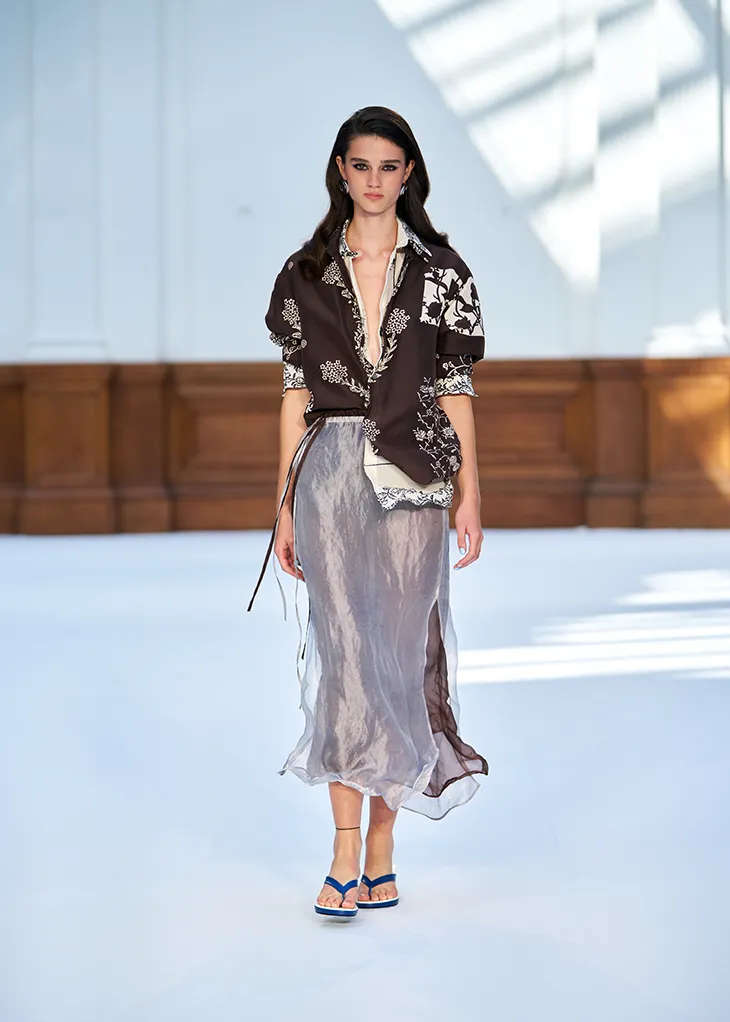



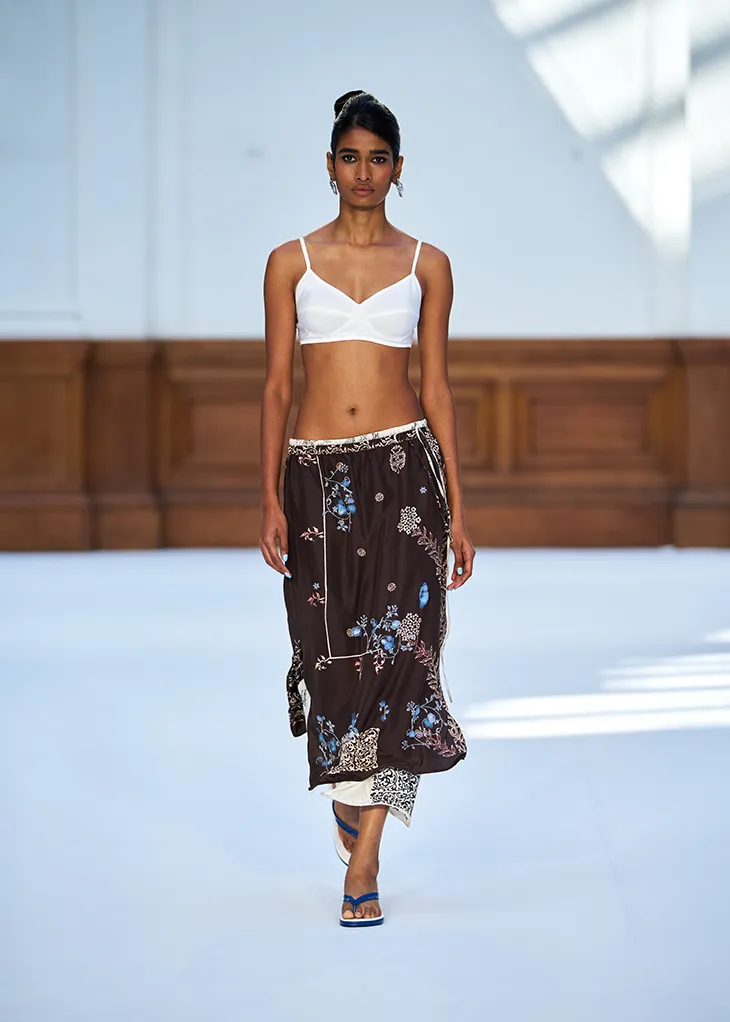
Lovebirds presented its Spring Summer 2027 collection at London Fashion Week, marking the Indian label’s debut on the schedule. Titled “India: IYKYK,” the collection draws from visual references that form part of daily life in India, using familiar signs, textiles and social details as material for the season.
SPRING SUMMER 2027
The concept begins with the gap between the India commonly shown abroad and the India experienced by people who live there. Marigolds, spices, elephants, the Taj Mahal and Varanasi often dominate external representations of the country. Lovebirds turns its attention elsewhere, toward images that rarely need explanation at home because people encounter them from childhood.
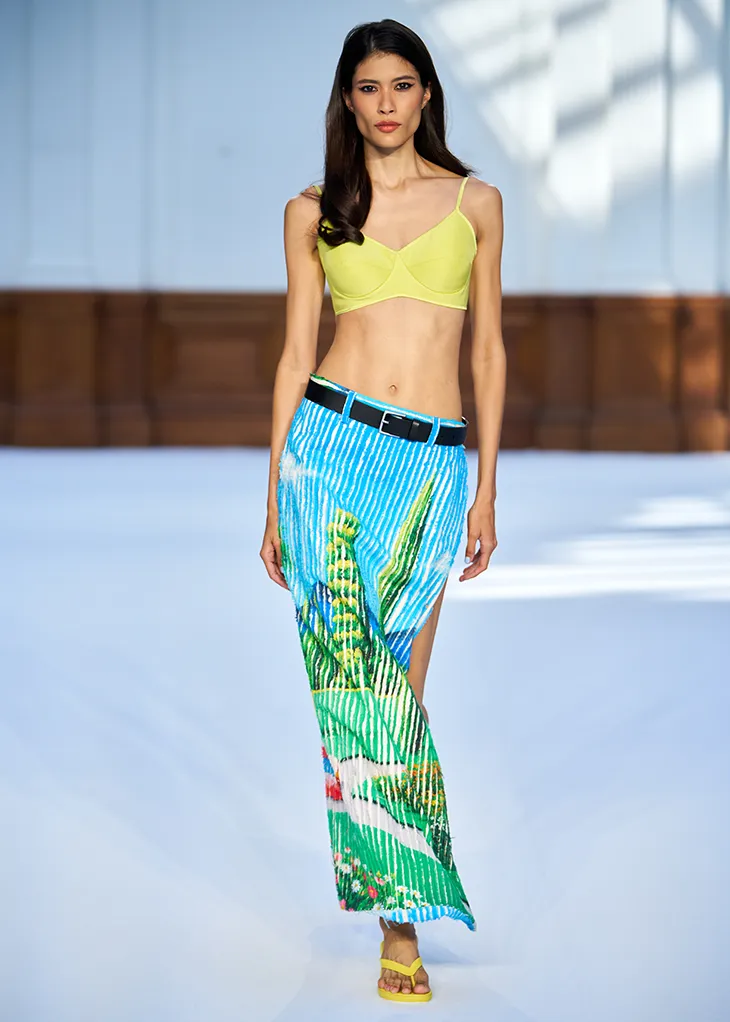
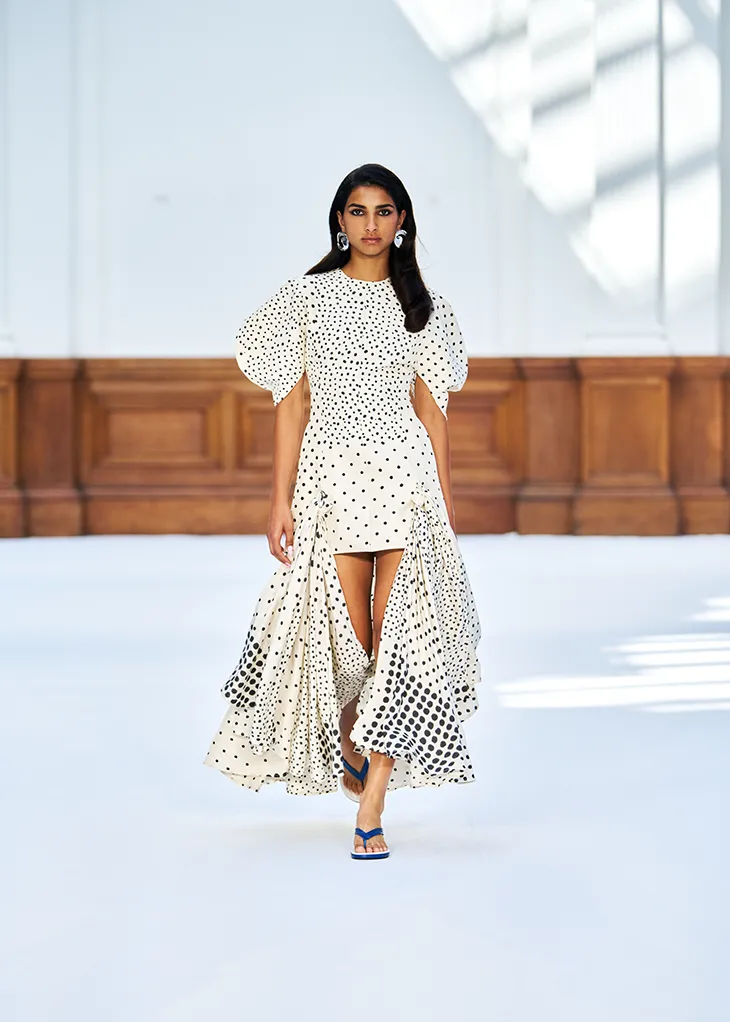
Those references range from painted studio settings used for formal photographs to oversized combs announcing barber shops. The collection also looks at two men walking through a market with interlaced fingers, streets packed with signs and visual information, hand-painted Bollywood posters and the Ideal Boy chart commonly found on school walls. None of these images function as grand symbols. Their importance comes from familiarity.
Lovebirds carries several of them directly into the clothes. The hands and ears of the Ideal Boy figure appear on fabric, separated from the original chart and given a different context. The painted photo-studio setting also enters the collection, with the team fraying and reconstructing it before using it on garments.
Textile development forms another major part of Spring Summer 2027 collection. Chintz receives particular attention. Lovebirds worked with block-printing artisans to alter classic chintz blocks through layering and disruption of the original repeats. Artisans then applied brushwork by hand over the printed cloth, thinning some areas and saturating others. The process breaks the regular pattern and gives the fabric a less uniform surface.
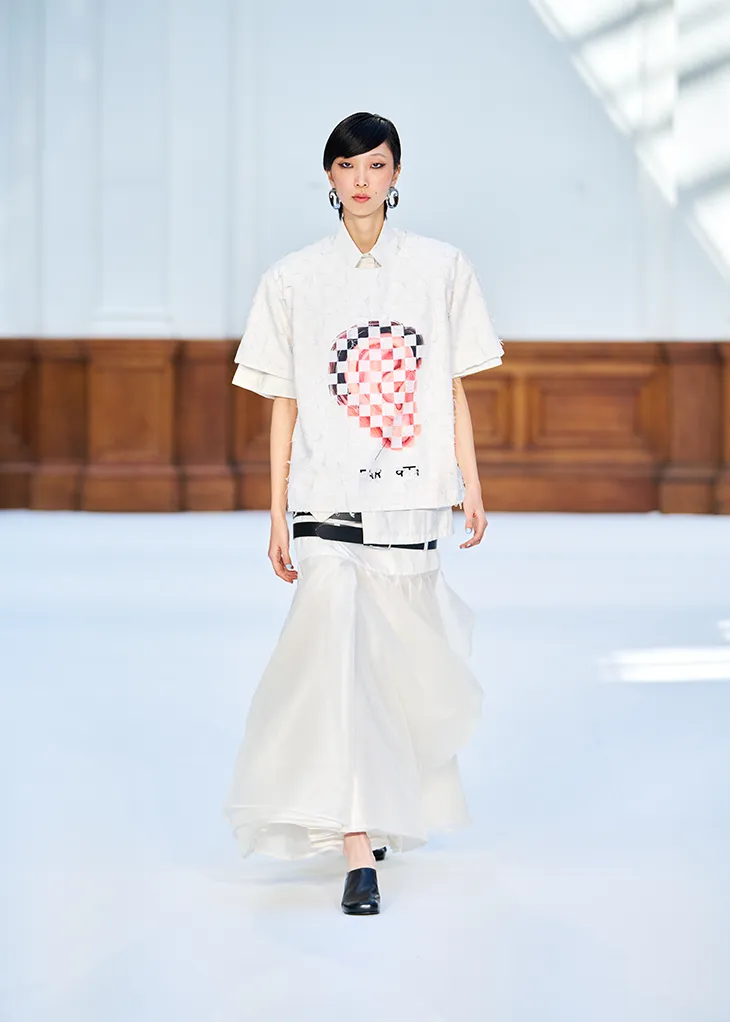
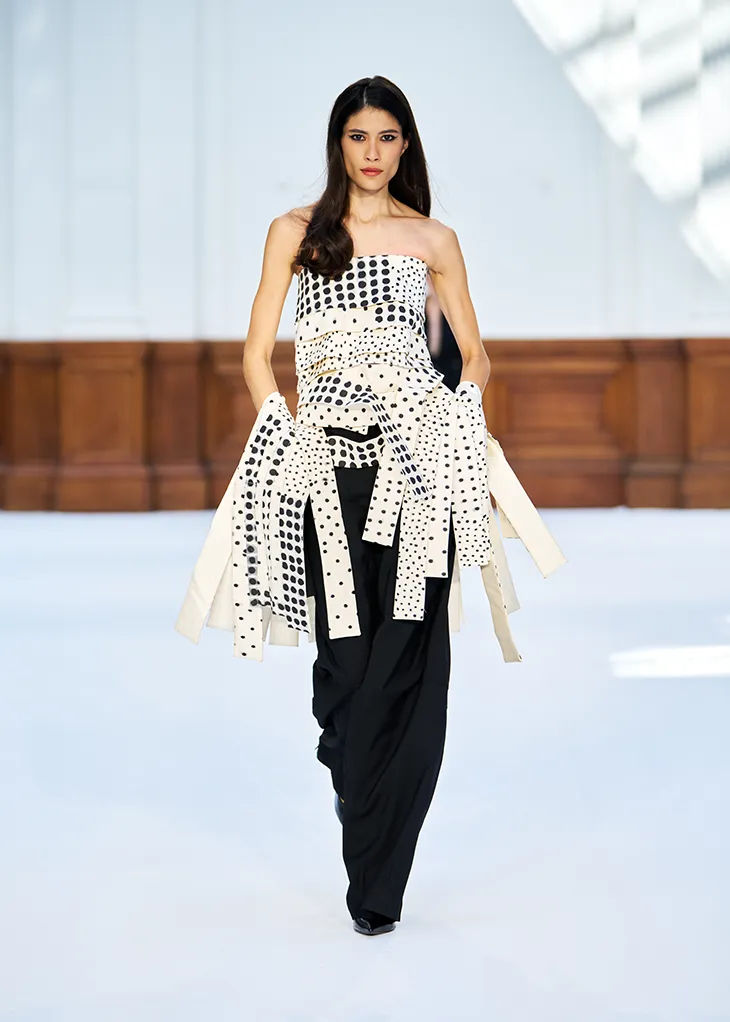
The label also developed handwoven tussar silk, dupion silk and brocade with weavers in Banaras and Kutch. After weaving, Lovebirds frayed the brocades and worked back into the material, loosening fabrics usually associated with a firmer construction. These treatments allow traditional techniques and materials to enter the collection through direct experimentation.
Gursi Singh explains that the references should feel immediately legible to people who grew up around them. Founder Amrita Khanna describes the season as an interpretation of the India the team already knows through a contemporary fashion lens.
Khanna and Singh have run Lovebirds independently and collaboratively for around a decade. The label has developed from its Indian roots with functionality and modernity shaping its approach to clothing.
Spring Summer 2027 brings that language to London Fashion Week for the first time. Lovebirds uses the debut to present India through details that usually remain outside familiar international imagery, grounding the collection in lived experience, local textile practices and visual codes carried through everyday life.