


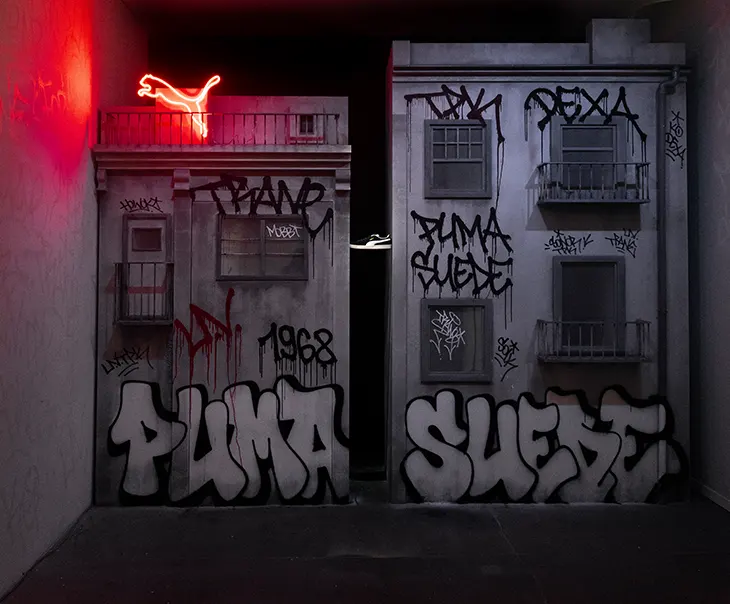
During Paris Fashion Week, PUMA establishes a physical presence in the city with Suede House, an immersive environment dedicated to one of the brand’s most recognizable shoes. The project places the Suede within a single location that reflects its role across sport, music, and street culture. Long associated with courts, stages, and everyday wear, the silhouette appears here as a point of connection between communities.
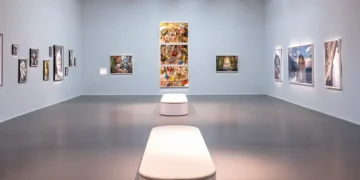
Suede House unfolds through a sequence of environments that track the shoe’s trajectory across time. The experience draws from archive material, community references, music, and making processes, using spatial design to guide visitors through different chapters of the Suede’s story. Each area focuses on cultural spaces that shaped the shoe’s visibility and relevance.
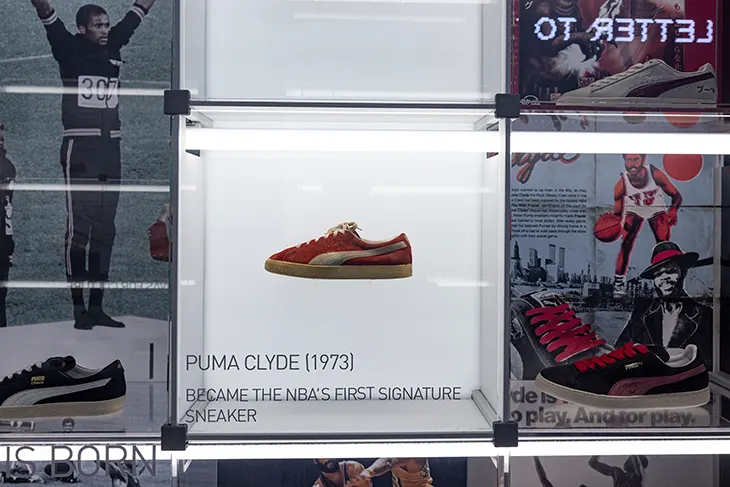
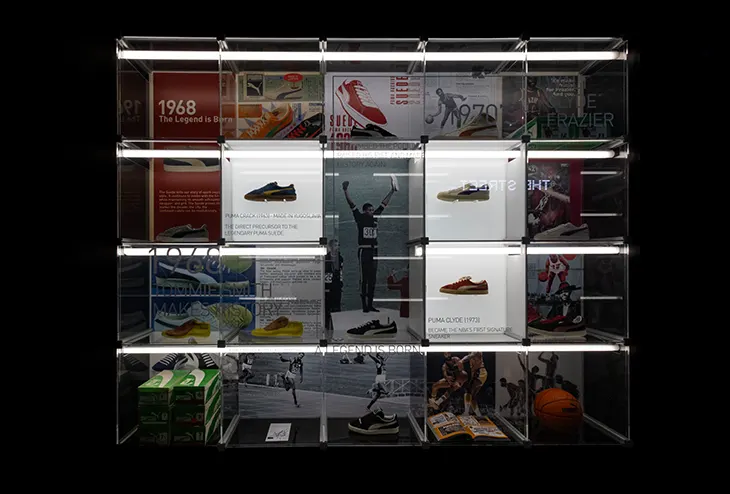
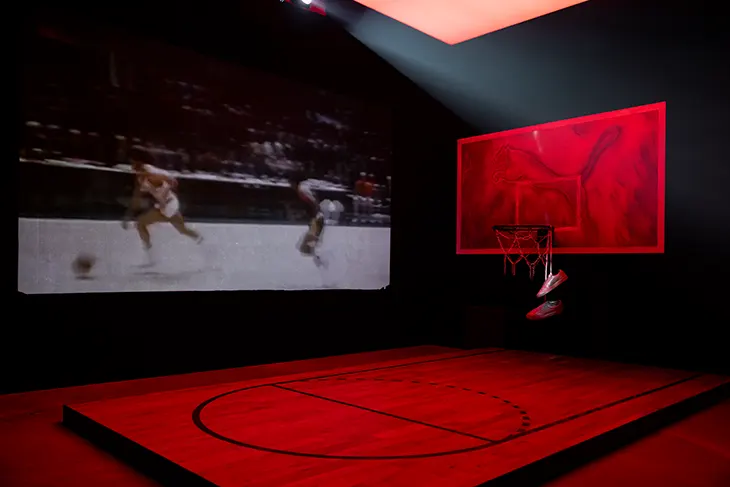
Several rooms focus on subcultures that played a defining role in the Suede’s rise. Basketball anchors one section, referencing the shoe’s early visibility on court. Another area centers on skateboarding and 1990s culture, reflecting how the Suede entered youth-driven scenes beyond sport. Street culture appears as a connective thread, showing how the shoe adapted through everyday wear and creative reinterpretation. Multimedia installations and curated displays structure these spaces, using sound, image, and material detail to frame each cultural context.
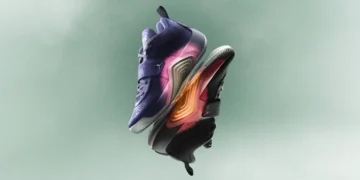
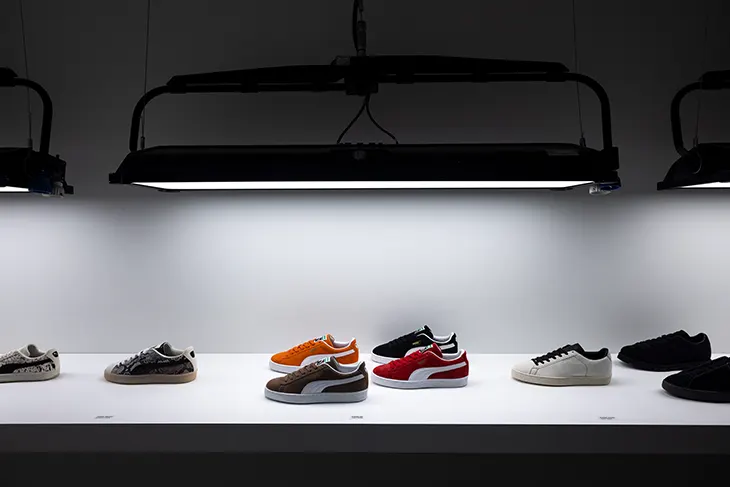
An archival exhibition runs through the experience, presenting key Suede models from 1968 through 2026 and beyond. The display traces shifts in design and usage over time, placing historical pairs alongside later iterations. The exhibition integrates it into the overall flow, allowing past and present to sit side by side within the same environment.
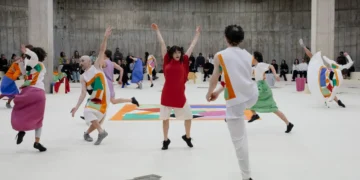
Creative partners including Samutaro, Welcome, and 114 Index contribute to the space through their own interpretations of the Suede. Their involvement shapes both the atmosphere and the creative output within the venue, expanding the narrative beyond a single brand voice. Additional partners and artists add further perspectives, reinforcing the idea of the Suede as a shared platform for expression.
Selected Paris cafés, including Grave and Bigshot, participate in the project, carrying Suede House into the surrounding city. These locations operate as informal extensions of the installation, allowing the Suede to surface within everyday social settings and broadening its presence across Paris during the week.
Access to Suede House begins with an invite-only preview for industry guests, followed by public opening hours throughout Paris Fashion Week. This structure positions the project as both a professional gathering point and a space open to the wider community.