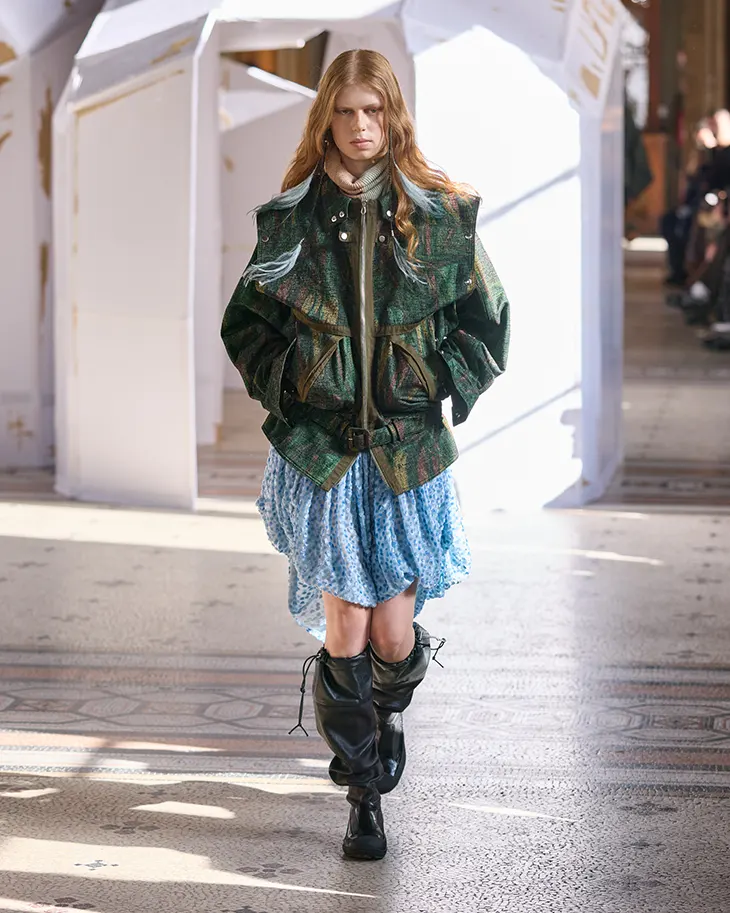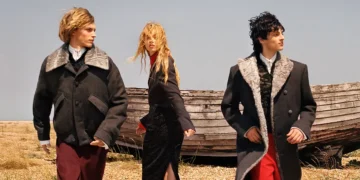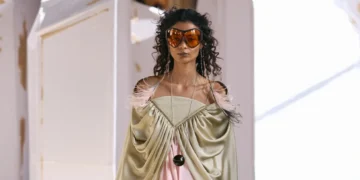



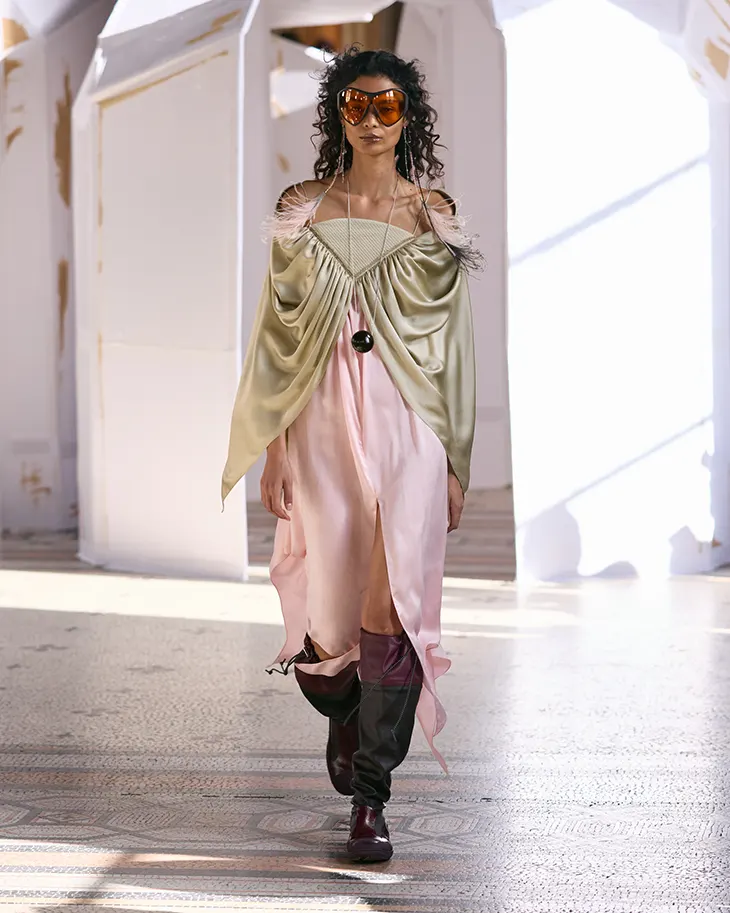
Kiko Kostadinov Fall Winter 2026 examines the relationship between observer and observed. The collection begins with a simple act of looking outward. Urban life offers small reminders of the natural world through birds that appear among buildings and streets. A heron, swan, or parakeet may cross the skyline of cities such as Paris, London, Tokyo, or Los Angeles. These encounters introduce a rhythm that connects everyday experience with the cadence of nature. The collection considers how observation shapes identity and perception, placing this exchange within the context of womanhood.
FALL WINTER 2026
Utility trousers and hidden-pocket jackets create space for notebooks, pens, and binoculars, supporting moments of observation. Double-layered knits and legging-jumpsuits extend the modular wardrobe that defines the label’s approach to dressing. Tailoring derived from menswear silhouettes gives structure to the autumn offering. Functional construction ensures practicality across the wardrobe. Soft waistcoats in shimmering materials introduce stitched pockets and structured shapes that remain usable within everyday life.
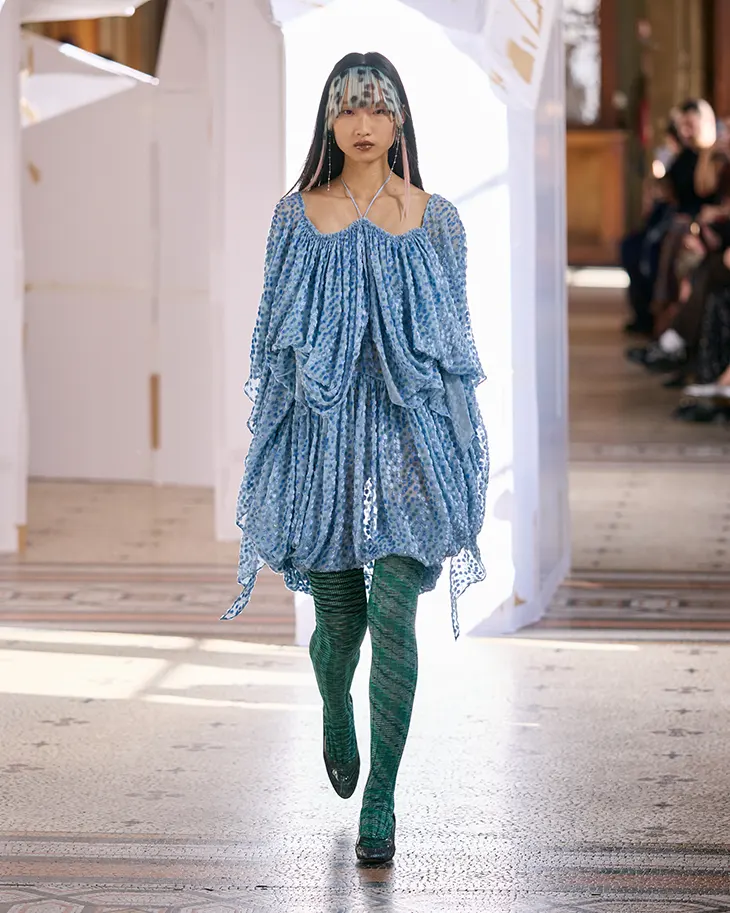
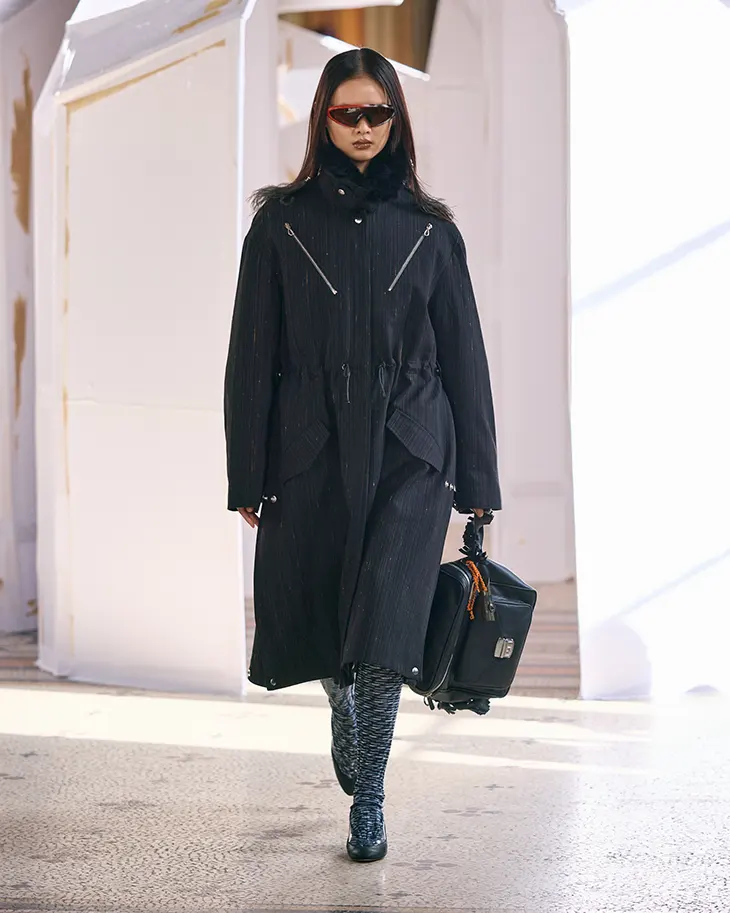
The collection draws conceptual inspiration from Fitcher’s Bird, tale number forty-six from the Brothers Grimm. This story opened a path toward further research into observation and perception. Cindy Sherman’s photographic essay from 1992, which carries the same title, informed the palette and surface language of the collection. Feather imagery drawn from these references shaped the textiles and treatments used across garments.
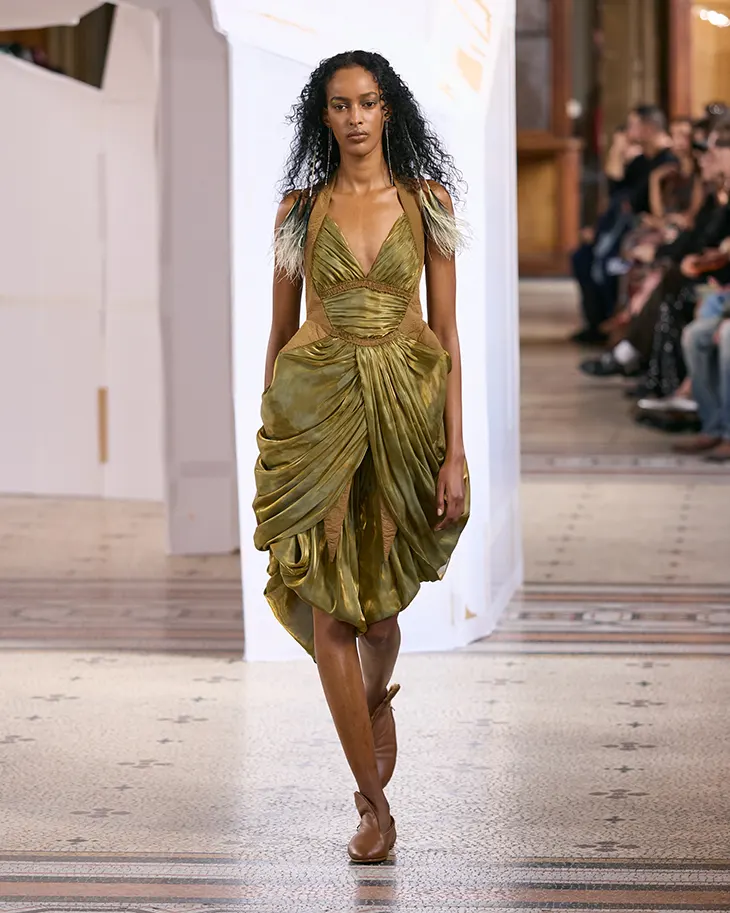
Dresses appear in luminescent and iridescent fabrics that respond to shifting light. Coated cotton presents a saturated, glossy surface. Needle-punched velvet and wool sweaters with intarsia feather yarn introduce texture that recalls feather structures. A matelassé coat with shimmering floral motifs contributes another layer of visual density. Iridescent satins printed with painted camouflage continue the reference to plumage and its varied surfaces.
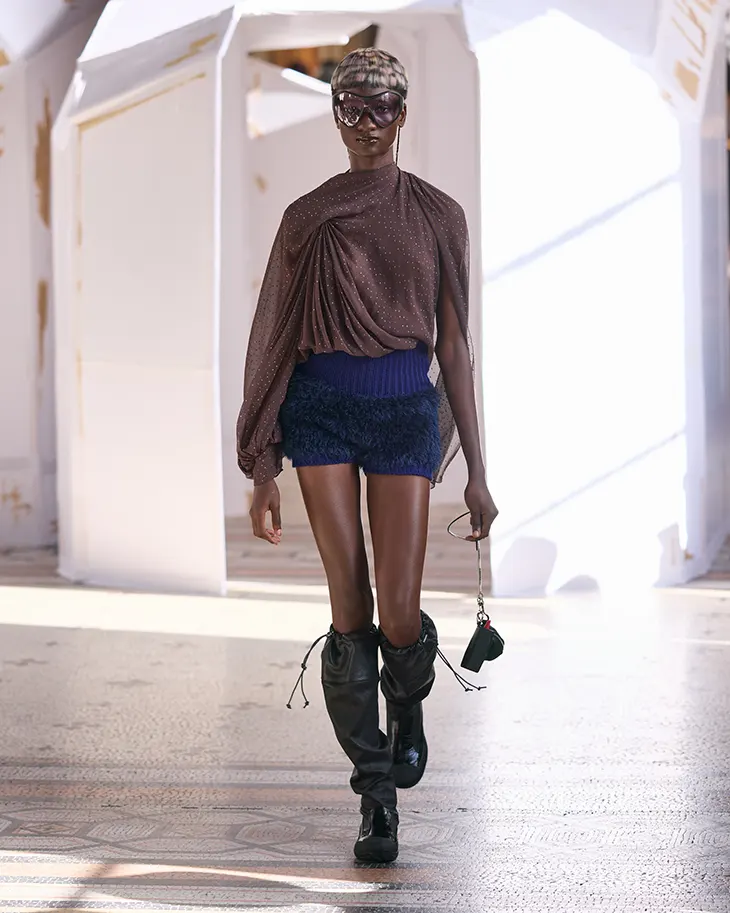
Hand-gathering produces textured forms that encourage the wearer to occupy space with confidence. Miniskirts flutter with motion while footwear allows the body to glide across the ground. Sleeve design played a major role in the season’s development. New Dolman sleeves, cape sleeves, and hybrid shapes combining balloon and batwing silhouettes extend traditional sleeve construction. Shimmering silks and multifaceted jacquards introduce a wide range of color across utility-driven designs.
The physical space of the show centered around a sculptural nestbox created by American artist Oscar Tuazon. His practice treats architecture as both material and method, forming structures that invite occupation and focused looking. In this setting the nestbox functioned as sculpture and observational device. The structure positioned viewers outside the architecture while encouraging attention toward the surrounding environment.
A new collaboration with Patcharavipa begins with the image of a guillemot egg. Its elongated asymmetrical form shaped the accessories design. The partnership introduces egg-shaped pendants crafted in 925 sterling silver. One version features portholes and Patcharavipa’s signature “antre” texture. Another carries an engraved poem by Sylvia Plath that reads, “I am not mystical: it is not as if I thought it had a spirit. It is simply in its element.” Hand-crafted pendants shaped like pillboxes appear in Thuya and Blackwood. Hanging earrings frame the neckline and follow the movement of the wearer.
Further collaborations expand the accessory offering. Work with Oakley introduces feather and wood motifs into eyewear through custom frames fitted with Prizm lenses. Footwear continues the collection’s focus on practicality. Perspex-trimmed pumps appear with glossy space-dyed socks, while stretch leather boots provide a second option. The ongoing partnership with ASICS revisits the tabi design. The shoe combines the language of a brogue at the front with the structure of a trail shoe at the back.