


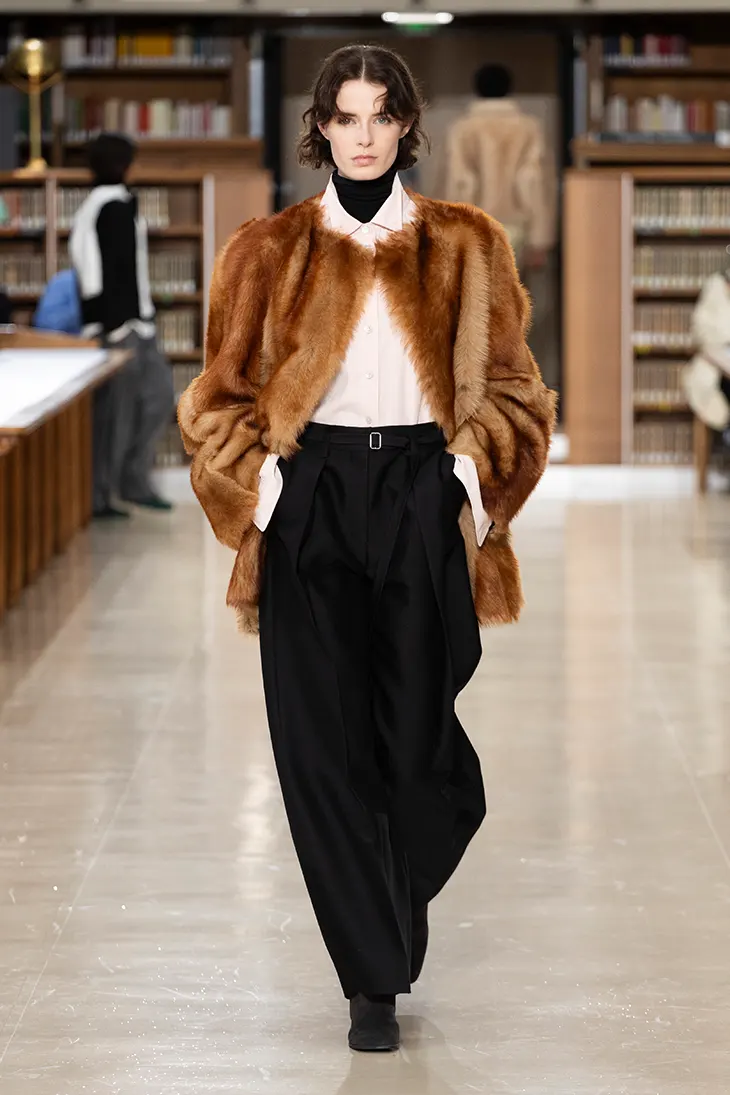
TIME Fall Winter 2026 develops the idea of time as a layered condition. The collection, titled Layers of Time, approaches time as accumulation that shapes identity and form. Moments do not disappear as they pass. Experience gathers through repetition and memory, forming the structure of the present. Within these layers, perception evolves through gestures, decisions, and expressions shaped by past experience.
FALL WINTER 2026
The collection draws its conceptual foundation from this understanding of accumulation. TIME considers how the past informs the present and how the present directs the future. Memories settle into daily life through subtle shifts in behavior and perception. Yesterday’s experiences influence the choices and emotions that define today.
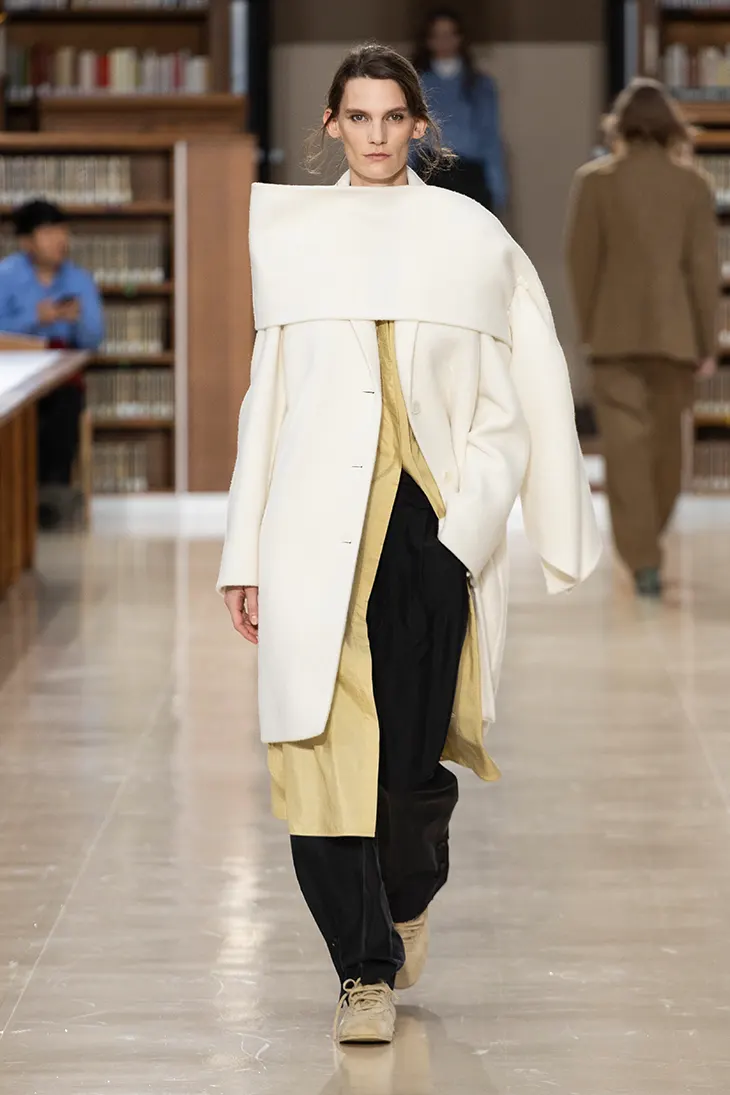
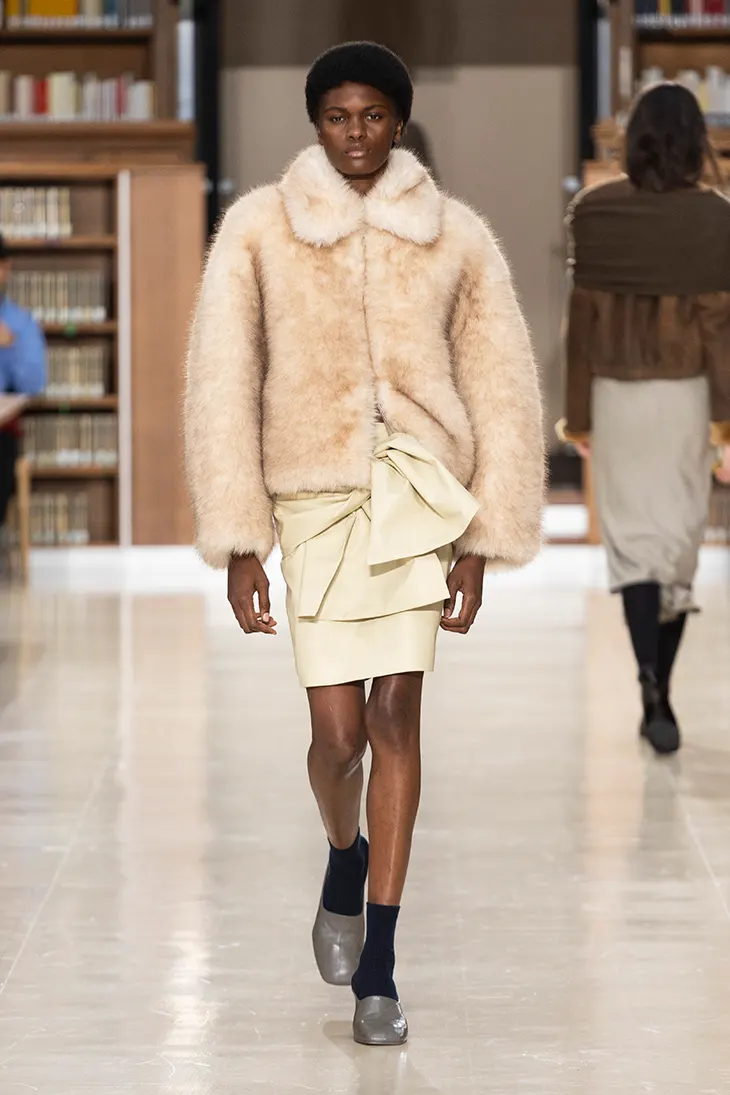
The brand also reflects on its own origins. TIME emerged during the 1990s, a period marked by experimentation and diversity shaped by postmodern thinking. Cultural production during that decade encouraged reinterpretation and hybrid approaches to design. The Fall Winter 2026 collection returns to that moment of origin through archival research. The collection revisits earlier work and reconsiders its visual language through a contemporary perspective.
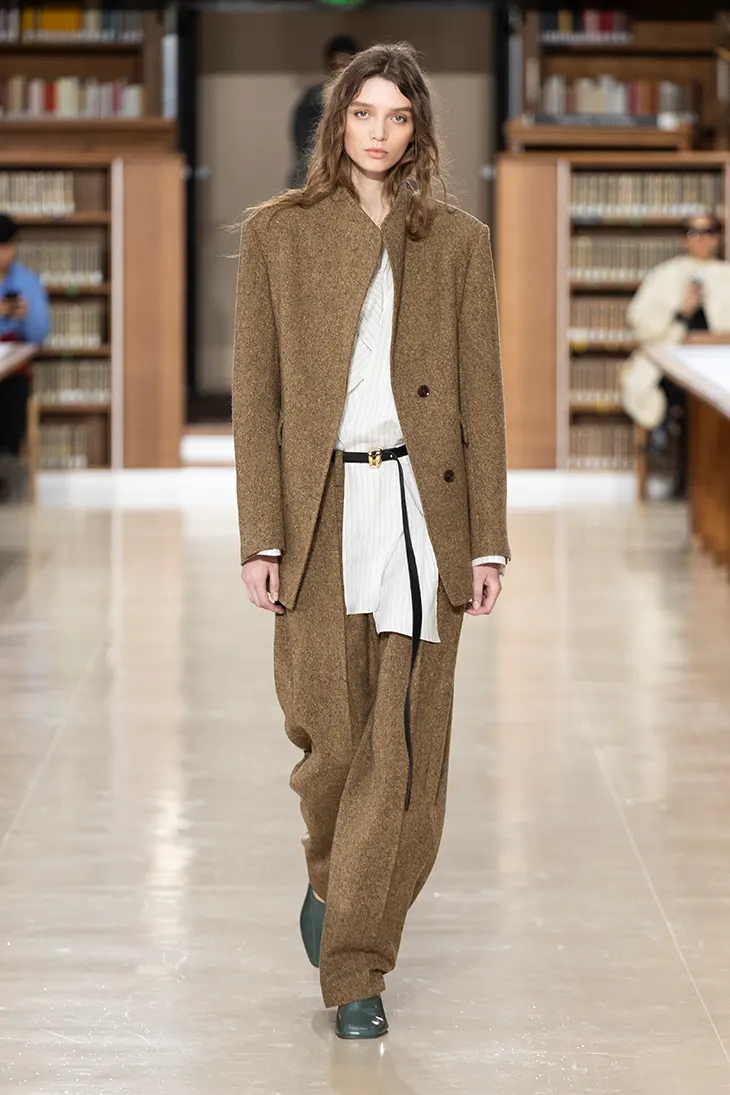
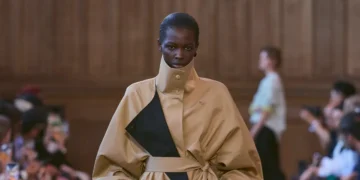
TIME constructs silhouettes through careful study of proportion and material. Trenches and coats appear with expanded architectural volume and renewed scale. These pieces maintain familiar outlines while introducing stronger spatial presence. The silhouettes reshape outerwear through volume and proportion.
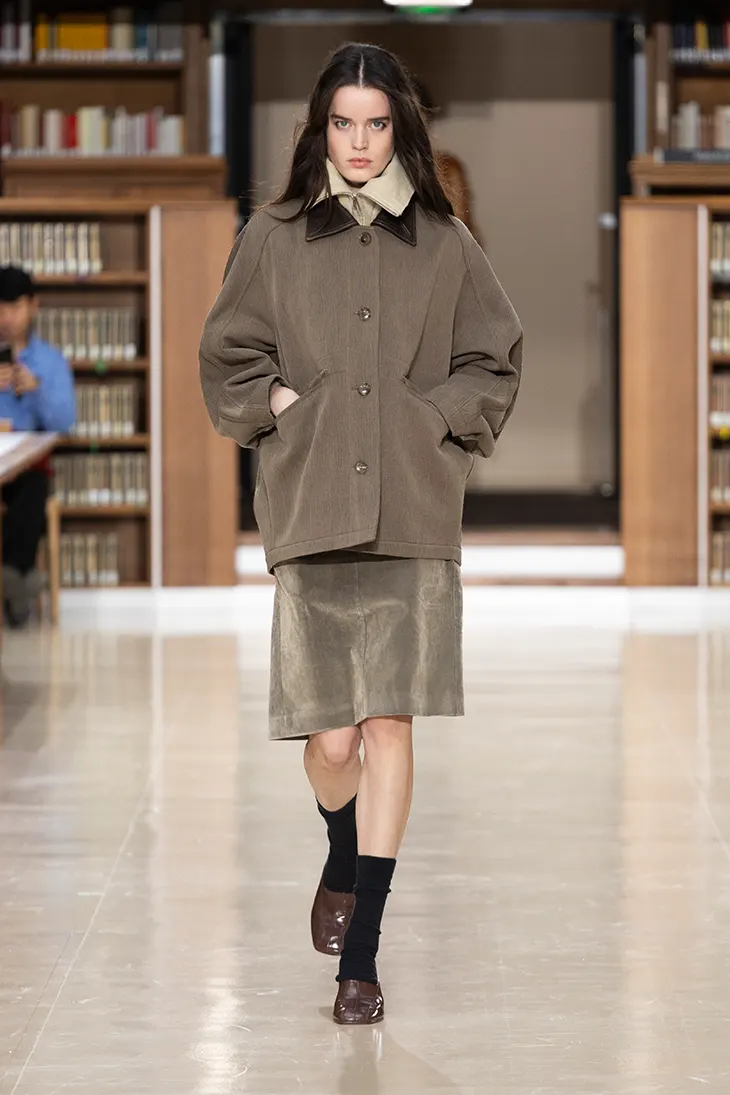
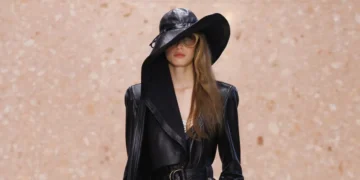
Exaggerated volume trousers appear beside sleek skirts that narrow toward the body. This relationship generates movement between proportion and restraint within the wardrobe. Shirts introduce modular neckline constructions that change depending on how the garment is worn. These elements allow variation in the silhouette while maintaining the garment’s structural integrity. Leather pieces extend this exploration through bold proportions that emphasize form.
Silhouettes develop volume through stacked elements that shape the outline of garments. Layers of fabric generate contrast in texture and depth. Some layers create sculptural shapes that expand outward from the body. Others introduce tonal variation through restrained colors and subtle shifts in shade. The palette remains restrained, with controlled tones that emphasize structure and material.
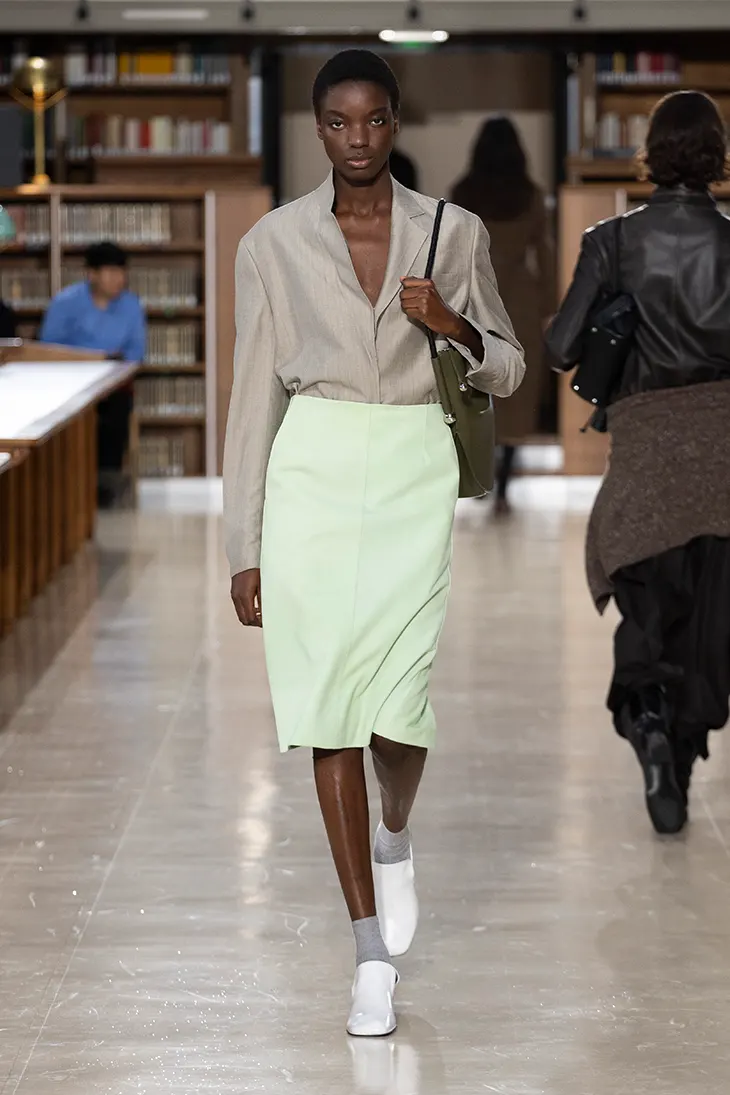
TIME presented the Fall Winter 2026 collection at the Richelieu site of the Bibliothèque nationale de France in Paris. The location contains extensive archives and vast shelves filled with books and documents. These materials accumulate in visible layers that mirror the conceptual direction of the collection. Classical symmetry organizes the architecture of the space while stacked archives introduce structural tension. The continuity of the bookshelves echoes the rhythm of layered garments.
The presentation also continues TIME’s collaboration with Fernando Bonastre for a second season. Bonastre designed two new handbags for the collection. The designer leads his own brand BONASTRE and previously created well-known bags for Lemaire. His work draws from modernist architecture and focuses on sculptural form and disciplined structure.