


Mihara Yasuhiro’s Fall Winter 2026 collection arrived at Paris’s Salle Wagram with a prose poem and a question: what happens when you stop fighting the forward motion?
Concept: Drifting Through Time
The collection arrives with a prose poem titled “Eternal Now,” a meditation on aging, disorientation, and the strange comfort of surrender. The designer describes falling asleep on a train, missing his station, watching the world lose its contours through blurring vision. “Where it was headed. Where the destination was. They were not my concern anymore.”
It’s a vulnerable framework for a fashion collection, one that trades the usual seasonal optimism for something more melancholic and honest. Mihara isn’t selling aspiration here. He’s selling acceptance, the kind that comes when you stop fighting the forward motion and let the train carry you where it will.
Clothes: Misalignment as Method
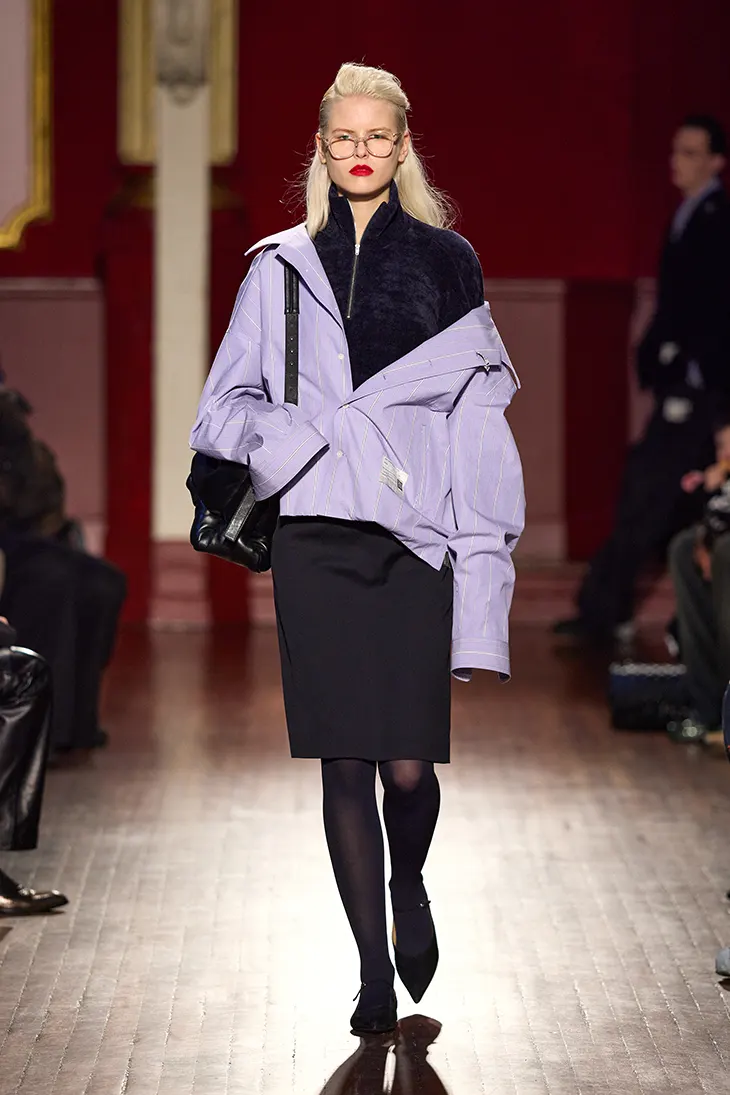
That philosophical underpinning translates into garments built on deliberate dissonance. Proportions shift unexpectedly. A lavender pinstripe shirt drapes off the shoulders, half-worn, half-abandoned, layered over a navy fleece quarter-zip. The combination reads as someone caught mid-transition, dressing in the dark, or perhaps undressing without finishing the thought.
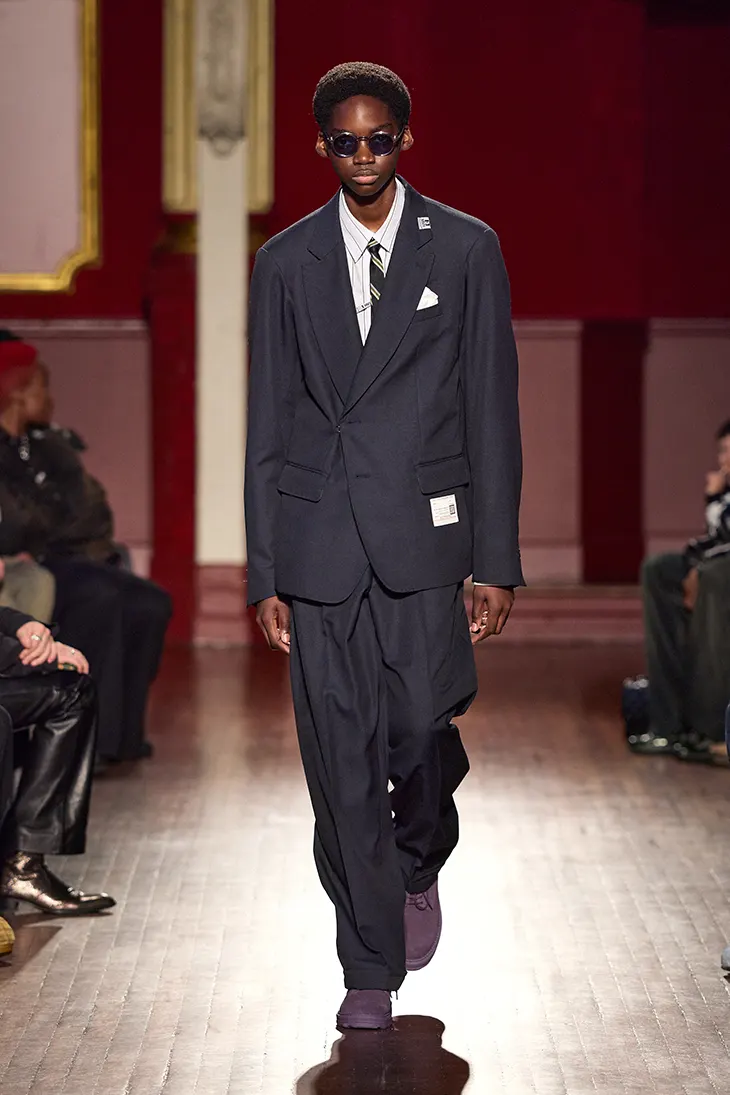
Tailoring arrives with Mihara’s signature subversion. An opening look pairs an oversized charcoal suit with a striped shirt, pocket square, and regimental tie, all the codes of traditional menswear present and accounted for. But the fit drifts loose, the trousers pool at the ankle, and circular blue sunglasses add a note of gentle eccentricity. It’s corporate dress code filtered through a dream state.
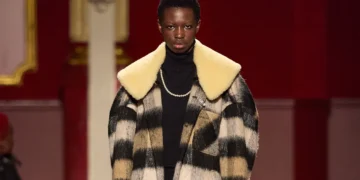
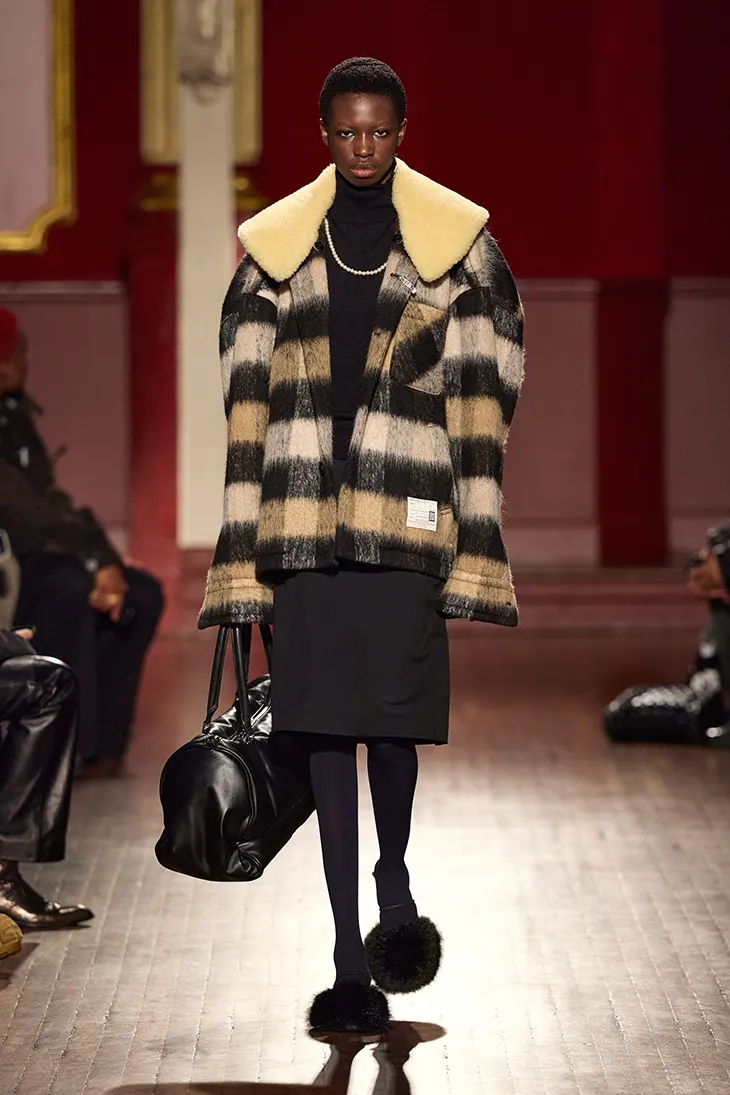
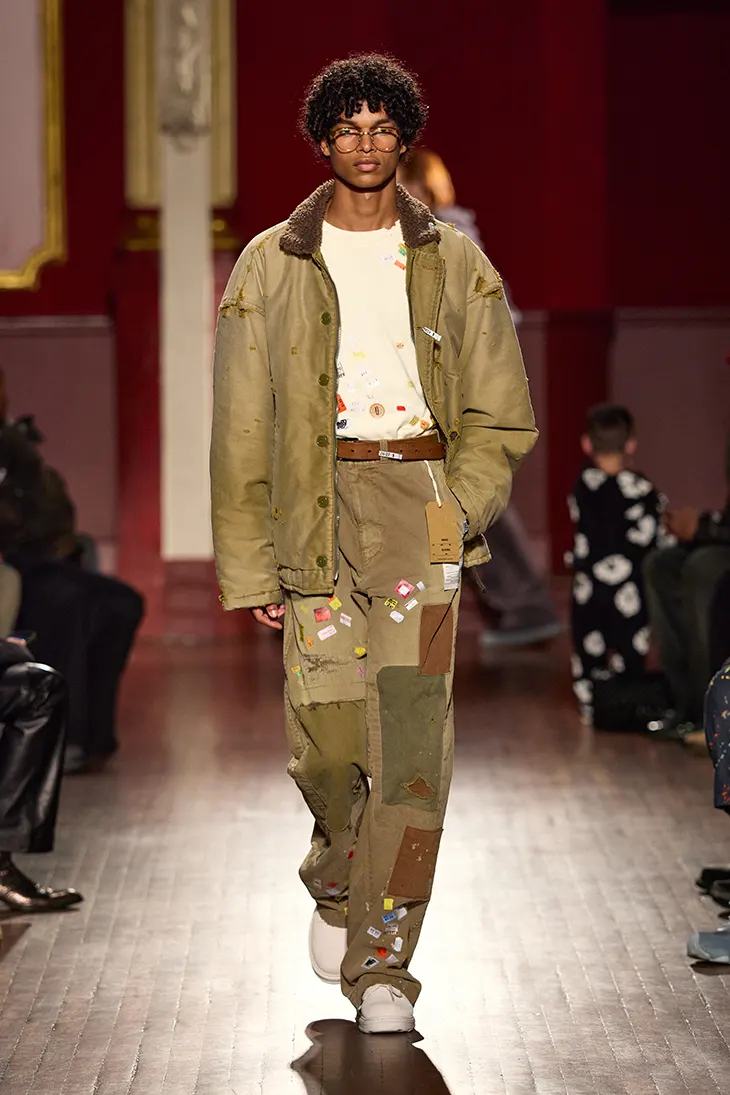
The collection’s strongest moments come in its outerwear. A cognac leather puffer jacket, quilted and glossy, sits enormous on the shoulders, worn over an all-black base of shirt and wide-leg trousers. The proportions are deliberately off, the jacket reading as borrowed or inherited, something that belonged to someone larger, someone from another time.
Details: Memory Fragments
Mihara’s show notes describe how “the familiar world and the objects around us become blurred and distorted” with age, yet “their gentle strength remains vividly etched as fragments of memory.” That tension between dissolution and preservation runs through every look.
Accessories carry particular weight. Oversized eyewear appears throughout, the frames themselves becoming a visual metaphor for altered perception. Bags hang from shoulders with casual disregard for placement. Shoes, always a Mihara signature, ground the collection in the designer’s sneaker expertise while maintaining the overall sense of soft edges and uncertain footing.
The color palette at the Paris Fashion Week show reinforces the dreamlike atmosphere. Lavenders, dusty pinks, and faded blues mix with deep navies and blacks. Nothing reads as sharp or new. Everything carries the patina of memory, of clothes that have been worn and loved and slightly forgotten.
Venue and Production
The Salle Wagram provided a fitting backdrop, its ornate Parisian architecture offering a sense of faded grandeur that echoed the collection’s themes. The production, handled by EYESIGHT with video by collective_parade, maintained a contemplative pace, allowing each look to register before dissolving into the next.
FALL WINTER 2026 RUNWAY COLLECTIONS
Hair by Martin Cullen and makeup by Masae Ito kept the models’ faces clean but slightly undone, as if they’d just woken or were about to sleep. The casting by Henry Thomas assembled a diverse group that moved through the space with the unhurried gait of travelers who’ve accepted they’re no longer in control of their destination.