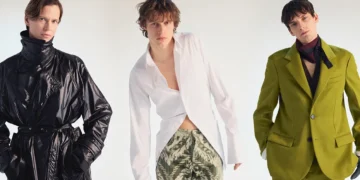



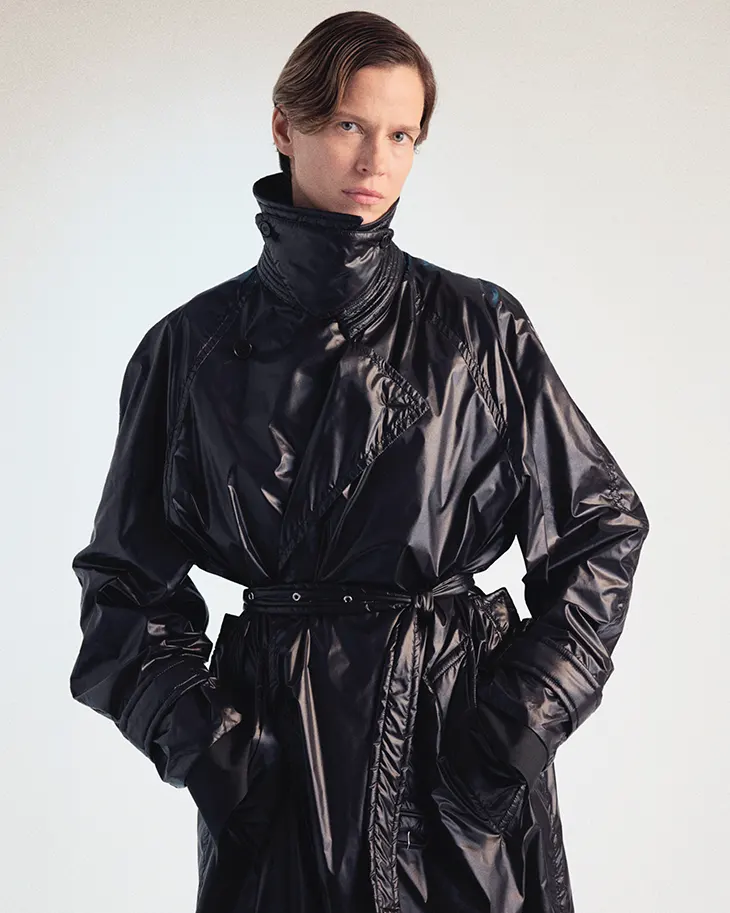
One hundred years ago, Jeanne Lanvin accomplished what no other Parisian couturier had dared. She extended her universe to encompass men. Establishing Lanvin Tailleur Chemisier at 15 rue du Faubourg Saint-Honoré in 1926, she created the first menswear offering from a couture house, forever altering the landscape of masculine elegance. For Fall Winter 2026, Artistic Director Peter Copping commemorates this centenary not with bombastic celebration but with something far more resonant: a collection that allows the Lanvin man to stand alone, fully formed, a true homme du monde.
Fall Winter 2026 Collections
The collection, unveiled today during Paris Fashion Week through a lookbook presentation rather than a traditional runway show, represents a meditation on travel, both literal and metaphorical. Copping draws inspiration from a journey Jeanne Lanvin herself undertook to Venice in the 1920s, a voyage that left indelible traces on her creative consciousness. Venice, that floating city of contradicting textures and accumulated grandeur, becomes the spiritual touchstone for a wardrobe designed for the contemporary cosmopolitan.
Archival Intimacy Near Parc Monceau
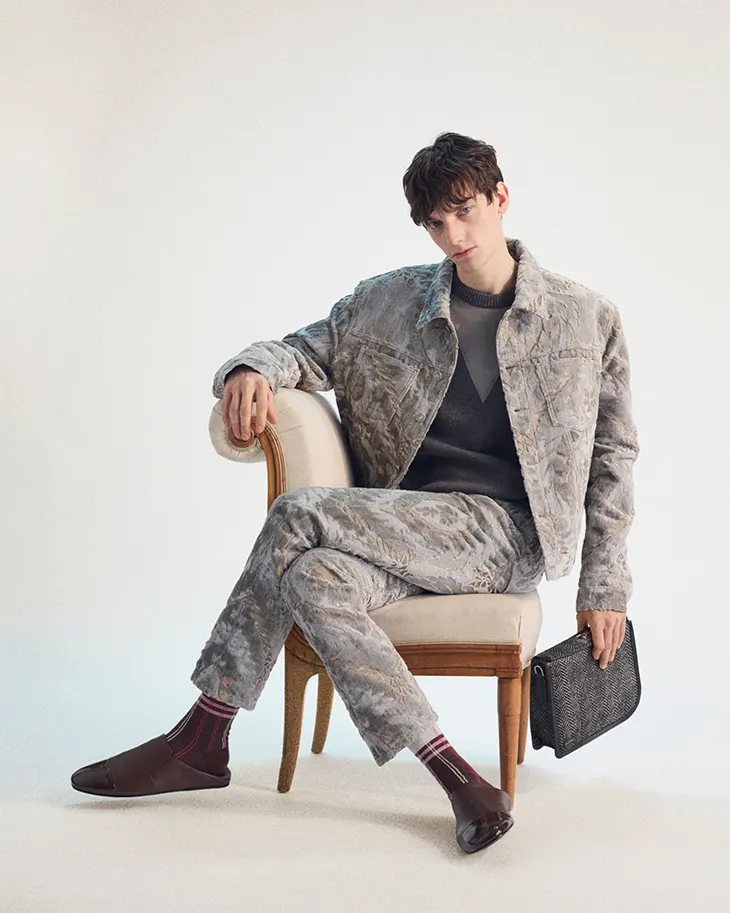
The presentation space itself serves as a narrative device. Near Parc Monceau, Copping has assembled archival décor and objects from Jeanne Lanvin’s personal office: Armand-Albert Rateau furniture, fabric-bound books of inspiration. This creates an intimate framework that collapses the distance between founder and inheritor. Rateau, one of France’s greatest Art Deco designers, created Jeanne Lanvin’s legendary private apartments between 1921 and 1925, interiors now preserved at the Musée des Arts Décoratifs in Paris. His presence here signals the collection’s commitment to the decorative arts as living practice rather than museum piece.
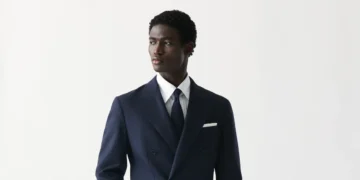
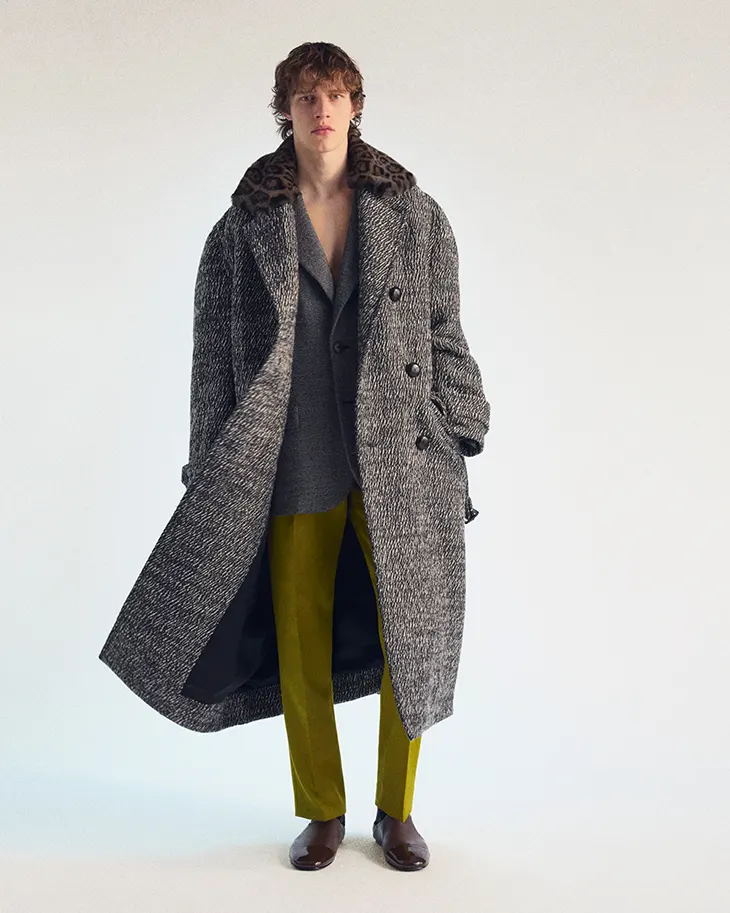
Gray flannel, that emblematic fabric of Lanvin menswear since the house’s masculine inception, receives expert tailoring throughout the collection. Copping positions it alongside jewel tones of amethyst and absinthe, colors that suggest both the stained glass of Venetian churches and the bohemian glamour of interwar Paris. The palette refuses easy categorization, much like the Lanvin man himself.
Venetian Craft, Parisian Cut
Perhaps the collection’s most remarkable gesture lies in its textile sourcing. Figured Venetian fabrics discovered within Jeanne Lanvin’s personal textile collection have been reproduced by Tessitura Luigi Bevilacqua, the original suppliers whose roots in Venetian weaving extend to 1499. This is no mere heritage play; Bevilacqua remains the only company in Italy still producing velvet on traditional eighteenth-century wooden looms. These historically significant textiles are then cut into decidedly modern forms: slim jeans and slender worker jackets contradicted with pure cotton poplin.
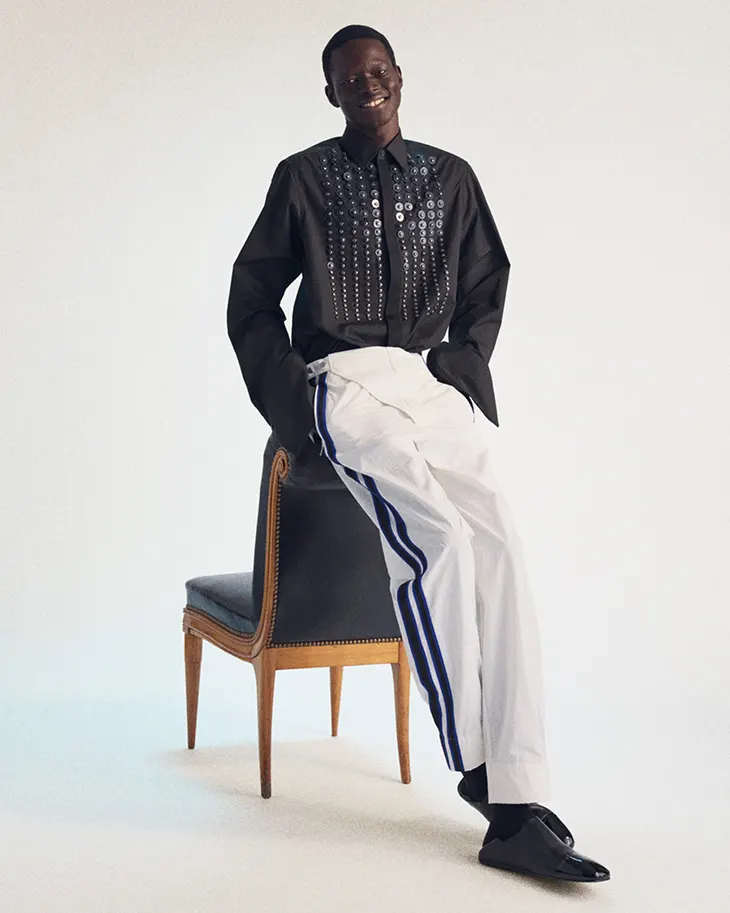
The dialogue between heritage and contemporaneity extends to Fortuny Plissé, that quintessentially Venetian technique, here cut into eased tuxedo trousers finished with a grosgrain side stripe. The juxtaposition is deliberate and knowing. Formal gesture meeting relaxed silhouette, museum-worthy textile meeting everyday wearability.
Art Deco Echoes and Unexpected Archives
Knitwear throughout the collection reflects the angular lines and graphic contrasts of Art Deco, translated into what Copping terms “a new idiom.” Cocoon coats nod to 1920s silhouettes while embroideries drawn from couture gowns migrate to evening shirts in poplin, a reminder that Lanvin’s ideal of le chic ultime bears no gender, with motifs and propositions moving fluidly between hers and his.
An unexpected presence emerges from the Lanvin archives: animalier print, that perennial signifier of louche sophistication. Copping translates these patterns into eased sportswear shapes and imprints them across shearling and faux fur, suggesting a Lanvin man comfortable with contradiction, unafraid of the decorative.
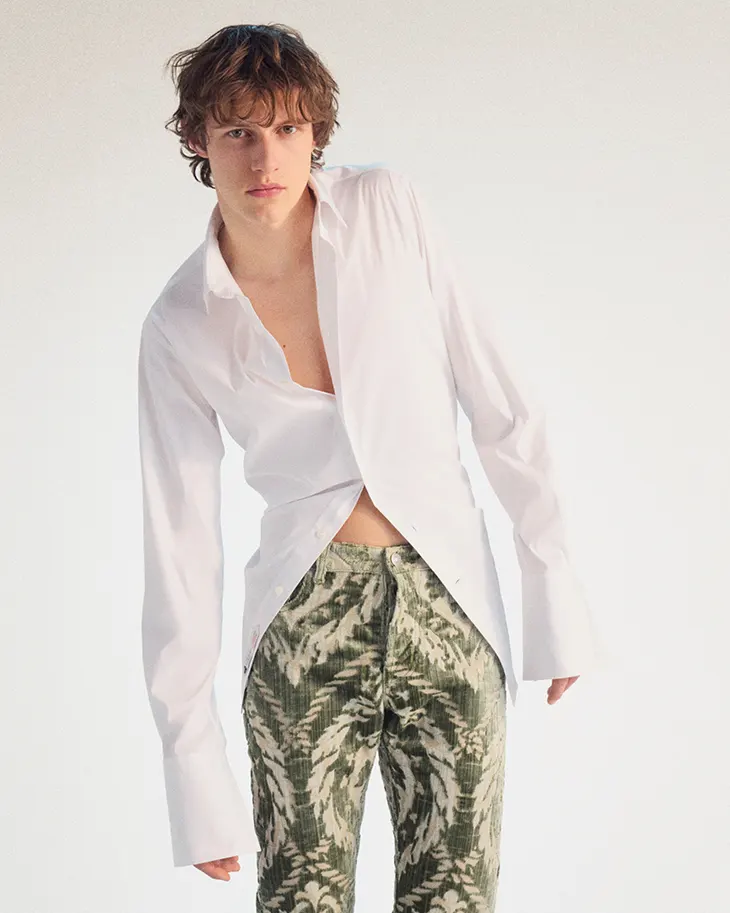
Venetian Murano glass surrenders abstracted prints, while modern nylons and denims create deliberate tension with rich textures of velvet and silk. Accessories speak to refinement and care. Gloves coordinate with knits, slippers are capped in patent and rich fabrics, crocodile patterns mark sleek brogues.
The Souvenir as Statement
A hooded sweater in Lanvin blue, that signature shade Jeanne Lanvin developed from Fra Angelico’s frescoes, pretends to be antique. It bears playful iterations of Lanvin labels, logos, and identities, implied traces of the passage of time. This garment functions as souvenir in the truest sense: not tourist trinket but meaningful memento, a celebration and recalibration of a century of Lanvin Homme.
The collection arrives at a pivotal moment for the house. Since joining as Artistic Director in September 2024, Peter Copping, whose career spans Sonia Rykiel, Louis Vuitton, Nina Ricci, Oscar de la Renta, and most recently Balenciaga’s couture atelier, has worked to re-establish Jeanne Lanvin’s concept of le Chic Ultime as the guiding principle of a newly imagined maison. This centenary collection suggests his vision has crystallized: elegance without pomposity, heritage without nostalgia, luxury grounded in craft rather than mere expense.
Discover more of Lanvin Fall Winter 2026 in our gallery:
Photography: Marie Deteneuille Styling: Joe McKenna Hair: Tom Wright Make-up: Marie Duhart Manicure: Anaïs Cordevant Models: Siegfried Blanche, Tijs Van Der Gun, Santa Valentina, Chol Mabior, Cao Chang
Discover more at lanvin.com