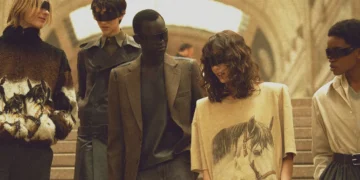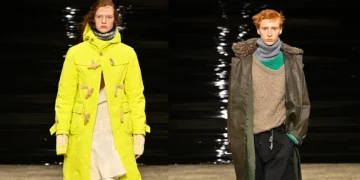



The sea has always been fashion’s most treacherous muse, unpredictable, consuming, indifferent to human ambition. For his second collection as Creative Director of KOLOR, Taro Horiuchi doesn’t merely reference the ocean; he surrenders to it entirely, emerging with a Fall Winter 2026 offering that feels less designed than salvaged from some metaphysical shipwreck.
PARIS FASHION WEEK COLLECTIONS
Drawing explicitly from Robert Eggers’ 2019 psychological horror film The Lighthouse and Herman Melville’s Moby-Dick, Horiuchi constructs a wardrobe for men caught between obsession and survival, between the pull of distant light and the certainty of drowning. It’s a bold conceptual framework, one that could easily collapse into costume or pastiche. Instead, Horiuchi navigates these dangerous waters with the precision of someone who understands that true darkness requires restraint.
Weight of Time Made Tangible
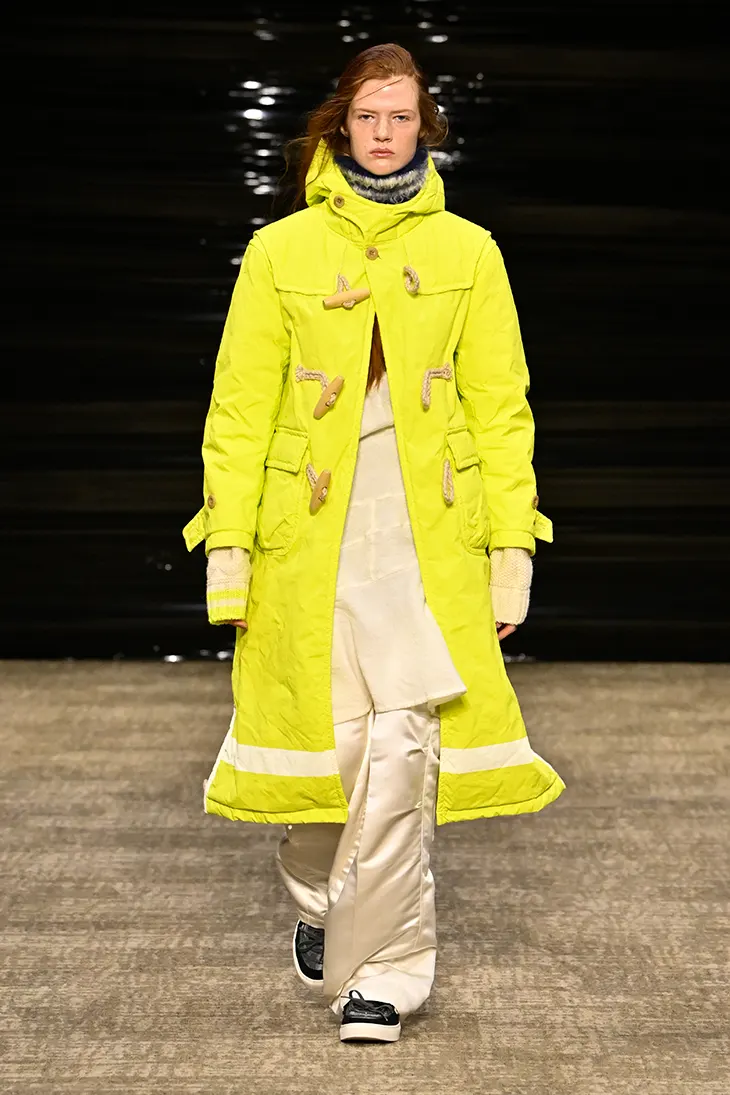
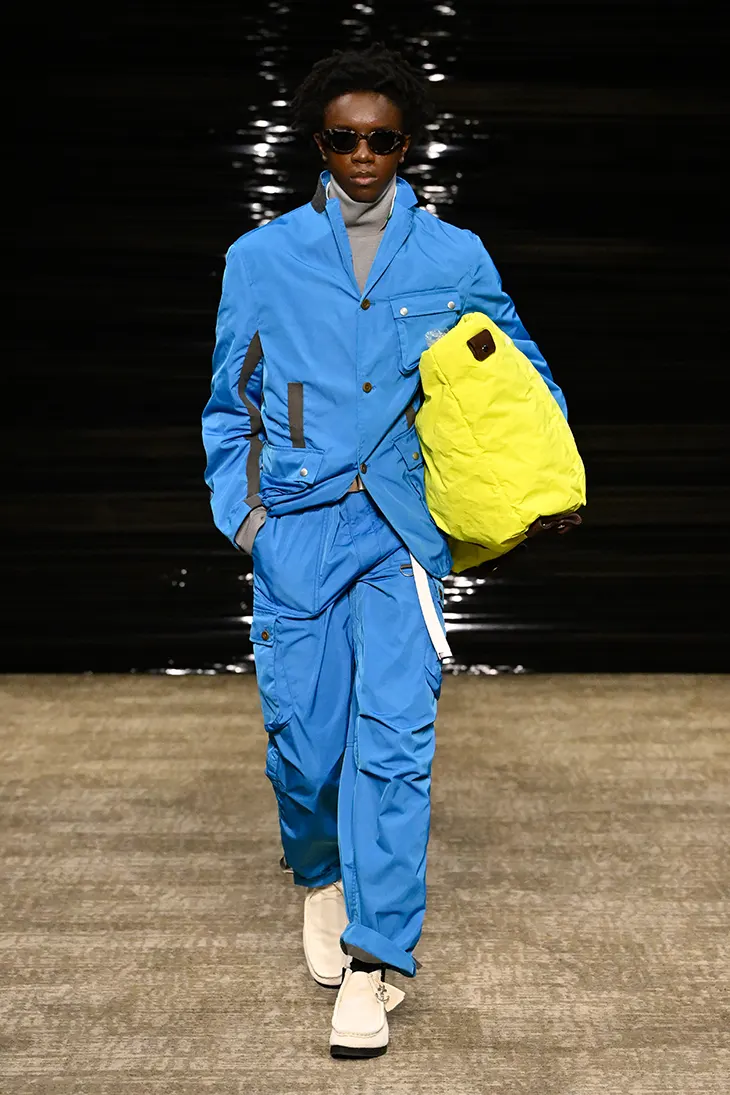
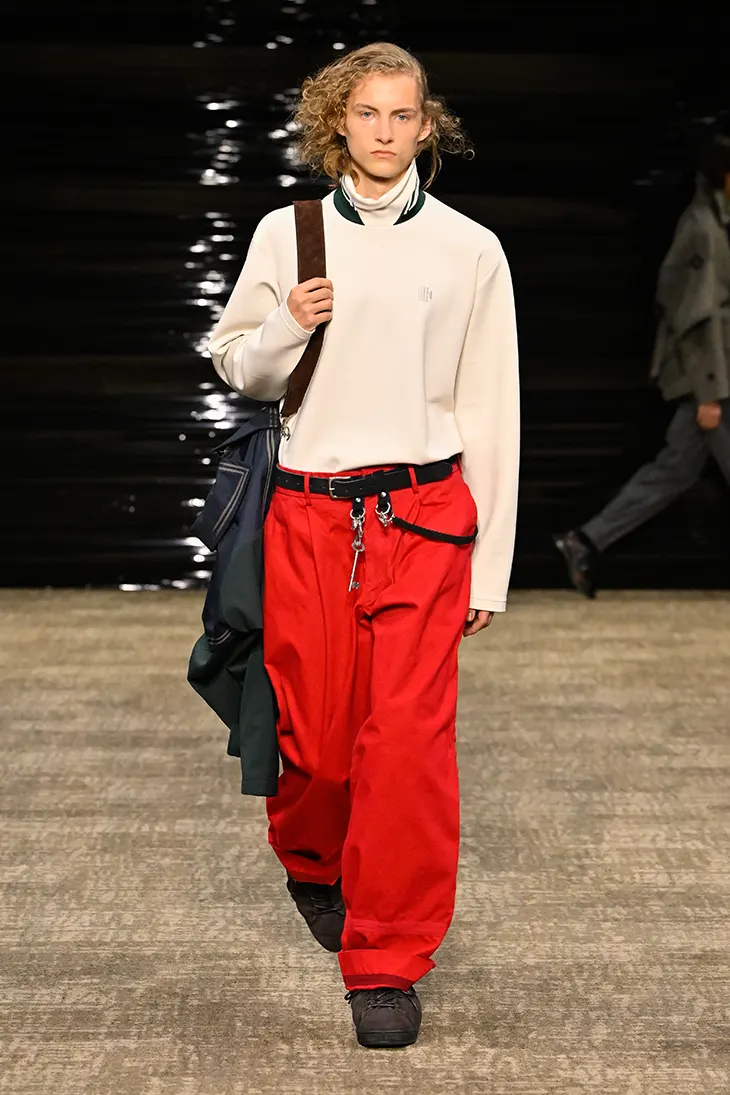
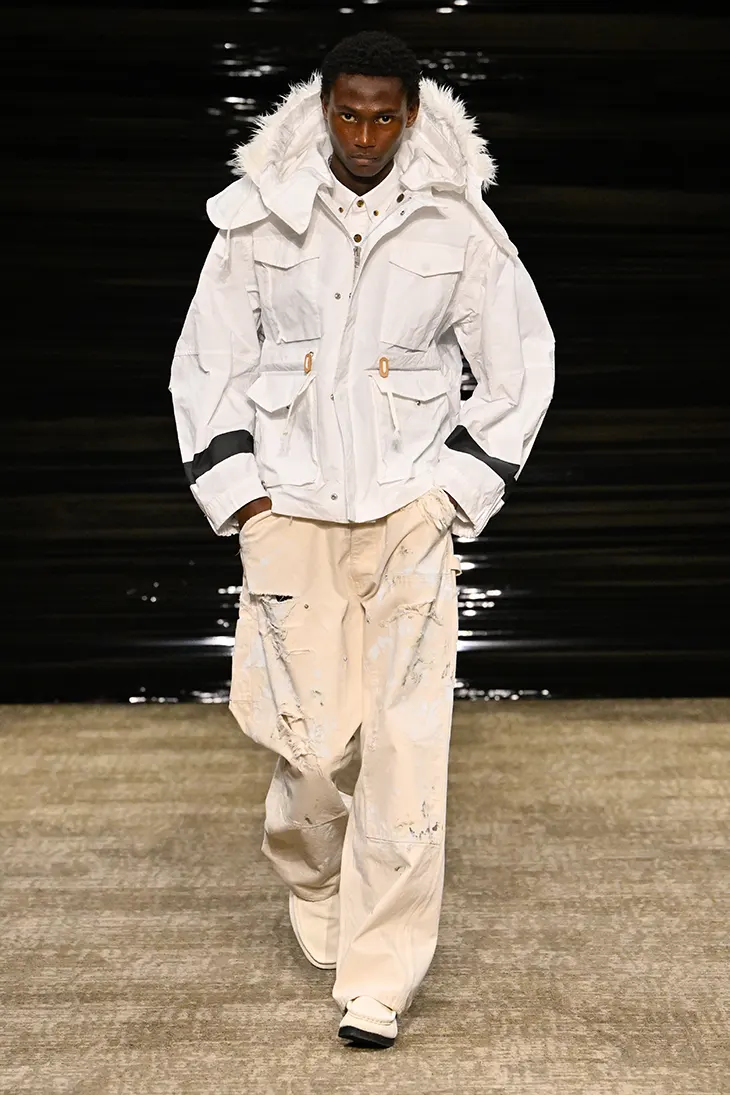
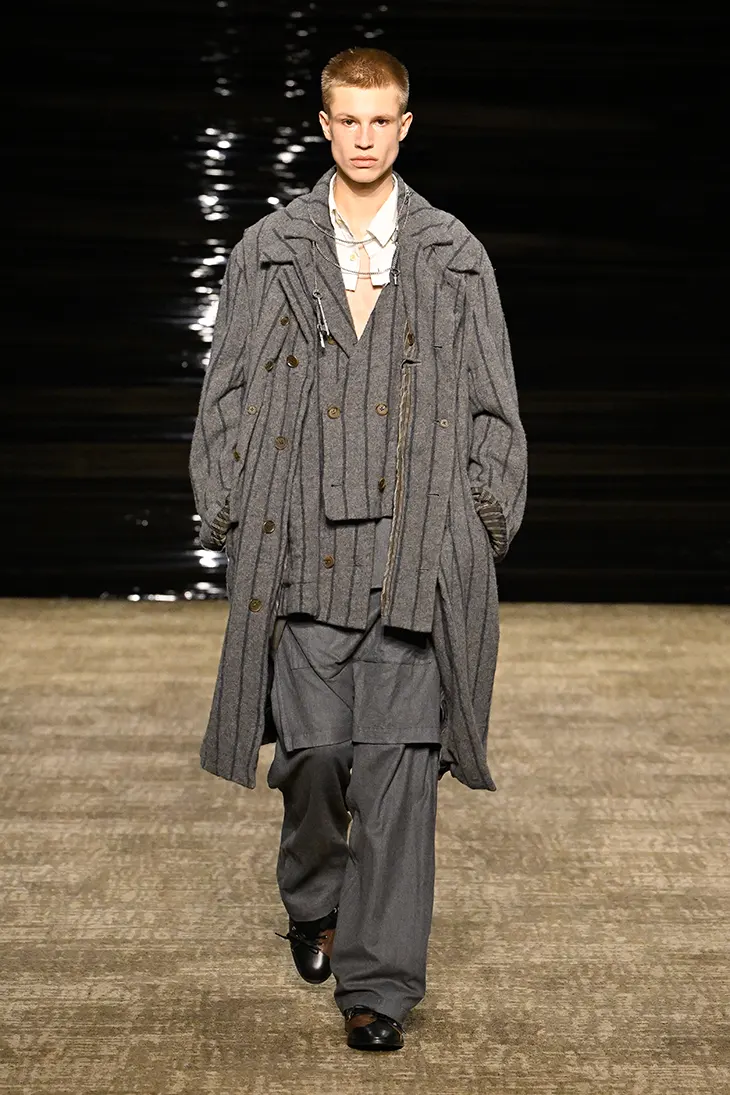
What distinguishes this collection from lesser exercises in maritime nostalgia is Horiuchi’s material intelligence. The fabrics here carry genuine archaeological weight: aged suiting with a dry, almost desiccated hand; shirts so heavily wrinkled they appear to have been worn through storms and dried stiff with salt; canvas that reads as genuinely worn rather than artificially distressed. Buttons sit deliberately misaligned, as though fastened in darkness or desperation. Knits fray at their edges, unraveling in real-time like memory itself.
These aren’t aesthetic choices made for Instagram’s benefit. Horiuchi, whose credentials include the ITS Diesel Award following his graduation from the Royal Academy of Fine Arts Antwerp, plus leadership roles at his eponymous label, th products, MUJI LABO, and DESCENTE ALL TERRAIN, brings a technical sophistication that allows him to age fabric without destroying it, to suggest decay while maintaining structural integrity. The garments look like they’ve survived something, yet they remain entirely wearable.
Cinematic References Without Costume
The collection’s debt to Eggers’ film is evident but never literal. Where a lesser designer might have sent models down the runway in fisherman’s sweaters and oilskin coats, Horiuchi abstracts the film’s visual language into something more insidious. The silhouettes suggest the 1890s setting, high-waisted trousers, layered shirting, heavy outerwear, but filtered through contemporary proportions and fabrications. Modern technical materials appear alongside period-appropriate textures, creating temporal dissonance that mirrors the film’s own fractured chronology.
This collision of eras serves the collection’s central thesis: that time moves not linearly but cyclically, that we are perpetually returning to the same fears, the same obsessions, the same desperate reaching toward light. The clothes feel simultaneously ancient and immediate, as though they could have been worn by Melville’s sailors or by someone walking through the Marais this afternoon.
Rhythm of Collapse and Resurgence
Horiuchi’s show notes speak of “a rhythm of collapse and resurgence,” and this tension animates every piece. Tailored jackets appear on the verge of dissolution yet hold their shape with unexpected authority. Layering feels accidental, garments assembled through necessity rather than intention, yet achieves a coherence that belies its apparent randomness. The overall effect suggests clothing that has been through something catastrophic and emerged transformed but recognizable.
The casting, handled by Isabel Bush of CONCRETE REP., reinforced this narrative of survival. Models moved with the weighted deliberation of men conserving energy, their expressions suggesting the thousand-yard stare of those who have seen too much sea. Stephanie Kunz’s makeup and Ramona Eschbach’s hair, both working through Total World, contributed appropriately weathered, salt-worn faces and textures that completed the illusion of men recently washed ashore.
Sound as Structural Element
Kensuke Ushio’s original composition deserves particular mention. The Japanese composer, known for his work on anime series A Silent Voice and Chainsaw Man, created a score that functioned less as soundtrack than as additional design element, waves of sound that ebbed and surged, creating the sensation of being submerged and surfacing repeatedly. Under Paolina Varenne’s show direction for KITTY EVENTS, the presentation achieved genuine atmospheric immersion, rare in an era of increasingly homogenized runway experiences.
Building on Spring Summer 2026
Having established his vision for KOLOR with his Spring Summer 2026 debut, Horiuchi now deepens the conversation. This second outing demonstrates a designer finding his footing within the house’s existing codes while pushing toward darker, more psychologically complex territory. The progression feels natural, a continuation rather than a departure, suggesting Horiuchi has a longer narrative in mind for the label.
The collection asks what we carry with us through time, what survives the storm, what washes up on distant shores still clinging to our bodies. These are not small questions, and Horiuchi doesn’t pretend to answer them. Instead, he offers garments that embody the asking, clothes for the lighthouse keeper’s endless vigil, for the sailor’s impossible voyage, for anyone who has ever been seduced by a distant light and lived to tell the tale.
Finally, Taro Horiuchi’s second KOLOR collection confirms his ability to translate complex conceptual frameworks into genuinely compelling clothes. The Fall Winter 2026 offering succeeds both as intellectual exercise and as wearable menswear, a balance that eludes many designers with far more experience. If this is what emerges from the wreckage, we should all be so lucky to survive such storms.
Discover more of the KOLOR Fall Winter 2026 collection in our gallery:
Discover the video: