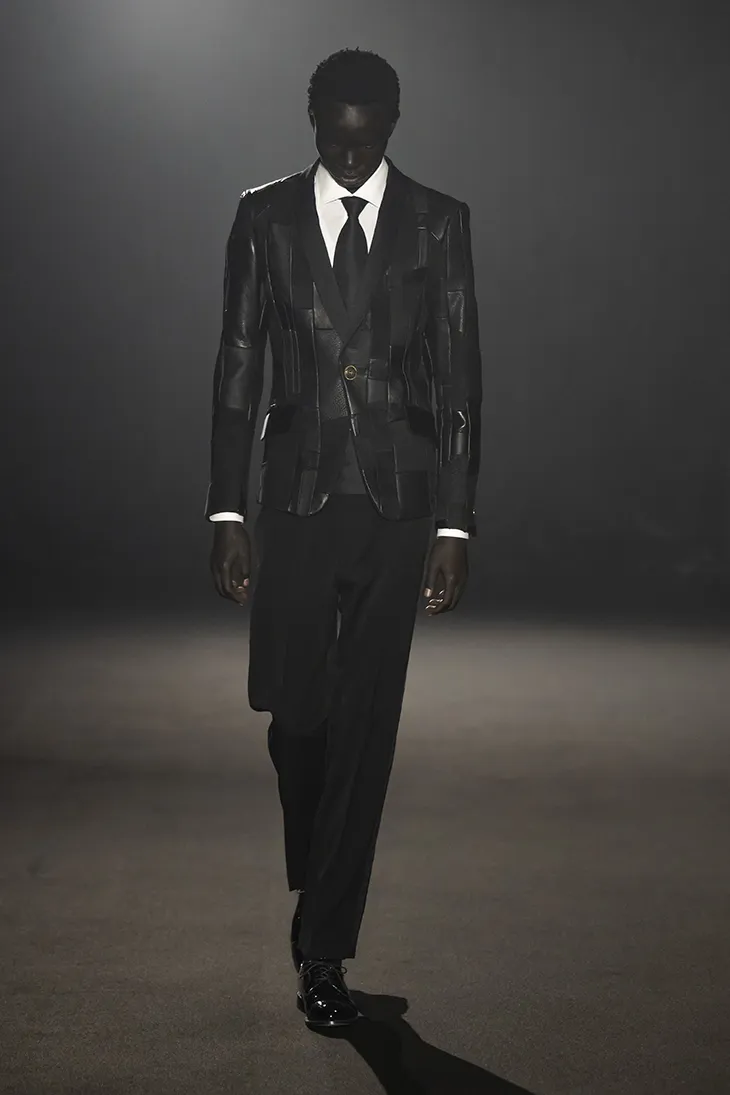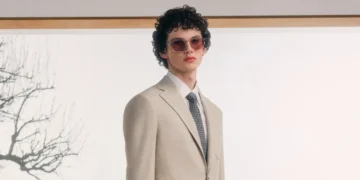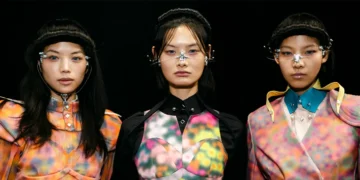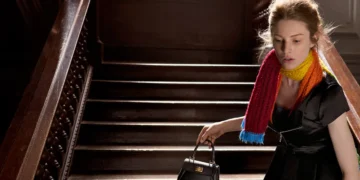



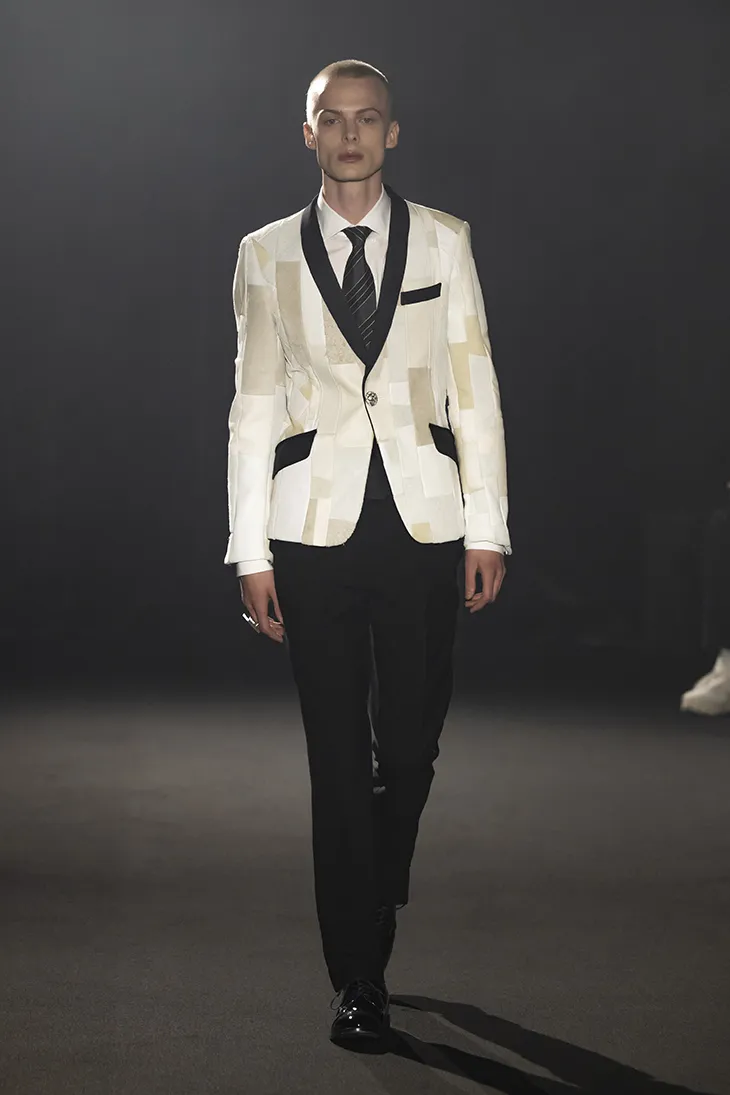
Junya Watanabe presented its Fall Winter 2026 collection, titled The Best, Dressed, during Paris Men’s Fashion Week. The collection approached dressing as more than an act of formality, using tailoring and established menswear references to propose an updated direction for the line. The show focused on refinement through structure, proportion, and context, while remaining rooted in the brand’s long-standing vocabulary.
FALL WINTER 2026.27 MENSWEAR
The presentation took place within a setting arranged to resemble a Paris sidewalk café. Tables and chairs filled the space, placing the audience close to the runway and allowing garments to appear at conversational distance. This format emphasized wear, posture, and interaction, reinforcing the idea of clothing as part of everyday presence.
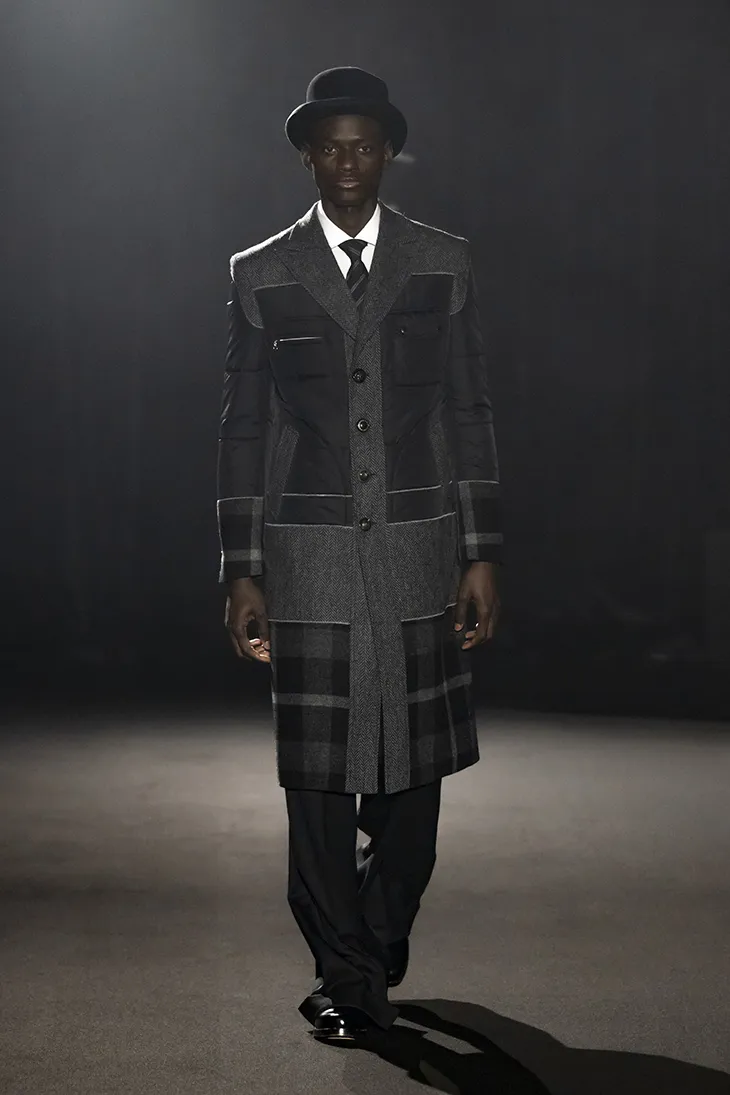
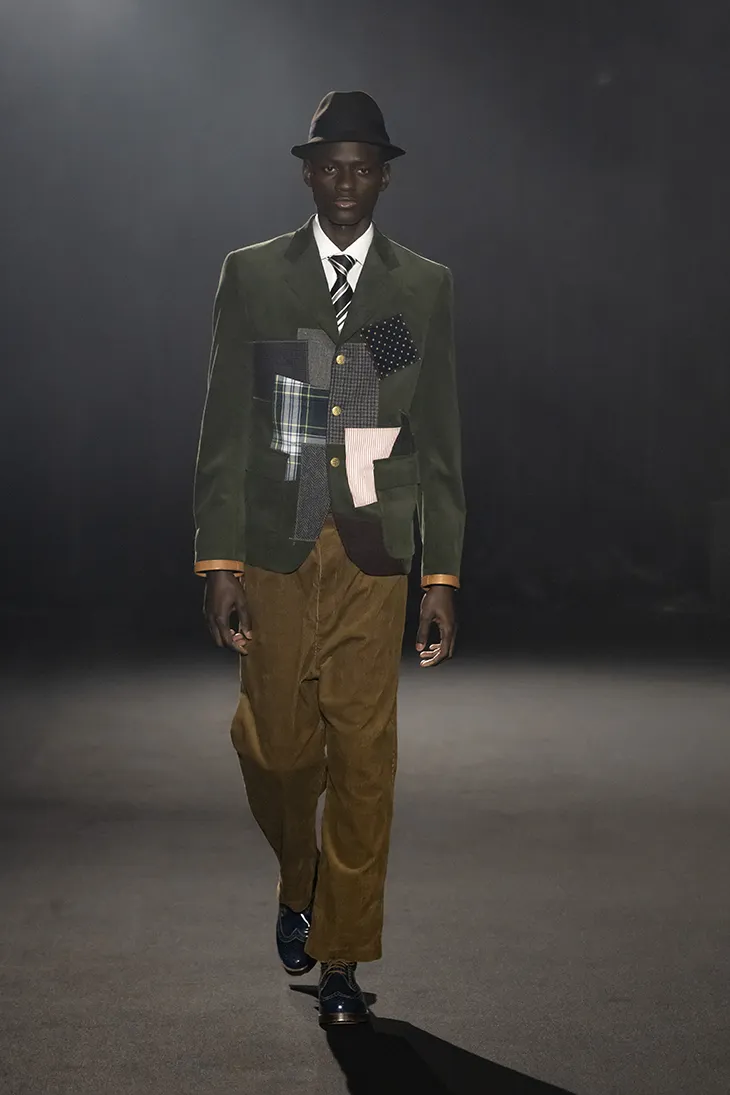
The collection centered on tailored garments drawn from classic menswear. Long wool coats, tuxedo trousers, tailored jackets, and formal outerwear formed the core of the lineup. Felt hats, narrow silhouettes, and polished shoes reinforced a composed visual language associated with mid-century dressing. The clothes referenced a period before casualwear dominated menswear, using structure and dress codes as a foundation.
Ivy League references appeared throughout the collection in the form of blazers, button-down shirts, chinos, and traditional proportions. These elements remained recognisable while undergoing subtle reinterpretation through material choices, detailing, and styling. The result presented familiar forms with renewed relevance, aligning with the collection’s focus on updating established style rather than replacing it.
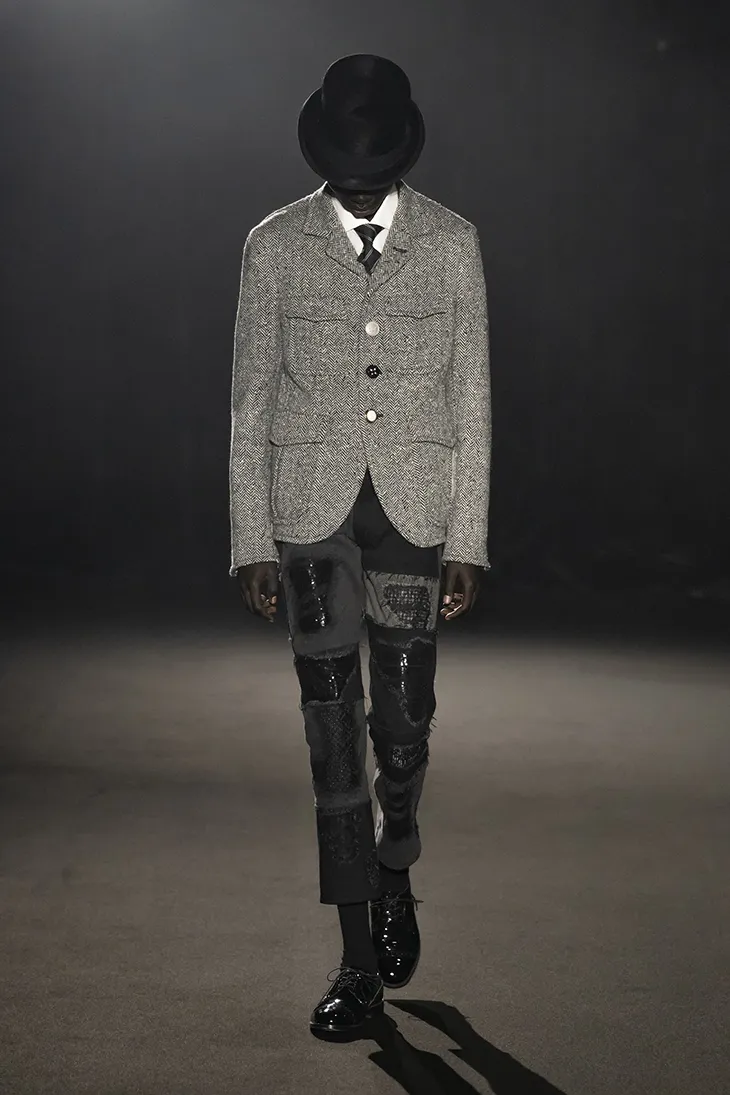
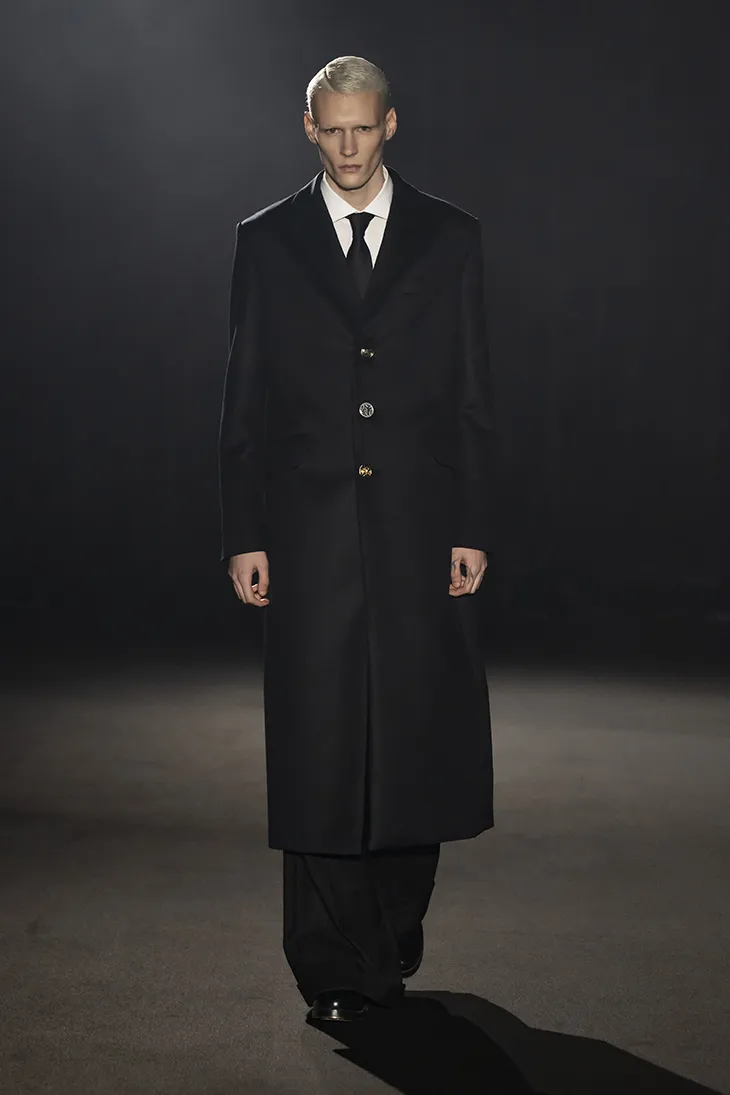
Collaborations played a visible role in shaping the collection. A partnership with Stüssy introduced embroidered graphics, including the brand’s signature motifs, applied to tailored garments. This intervention brought street-derived symbols into a formal context, creating a visual contrast grounded in shared cultural references. Denim elements developed with Levi’s added textural variation, while contributions from Spiewak introduced utilitarian construction into select pieces.
Footwear developed with New Balance appeared as hybrid designs that combined sneaker technology with silhouettes associated with dress shoes. These styles supported the collection’s overall direction by aligning technical performance with formal dressing, reinforcing the idea of adaptation within tradition.
The color palette remained restrained, relying on black, navy, grey, and camel tones. This range supported the collection’s focus on cut and form. Throughout the show, the clothes maintained a consistent tone that reflected continuity within the brand’s evolution.