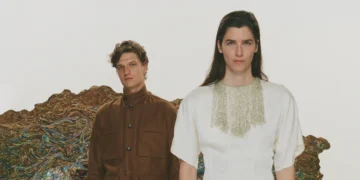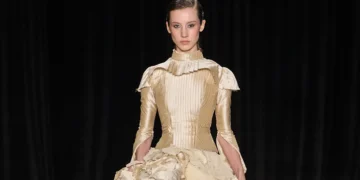



LùCHEN approaches Couture 2026 as a process of reflection and construction, positioning the garment as an active system. The collection examines how clothing takes shape through behavior. Materials collapse, stretch, resist, or adapt in direct response to the body, and these reactions generate a language of movement rooted in emotion.
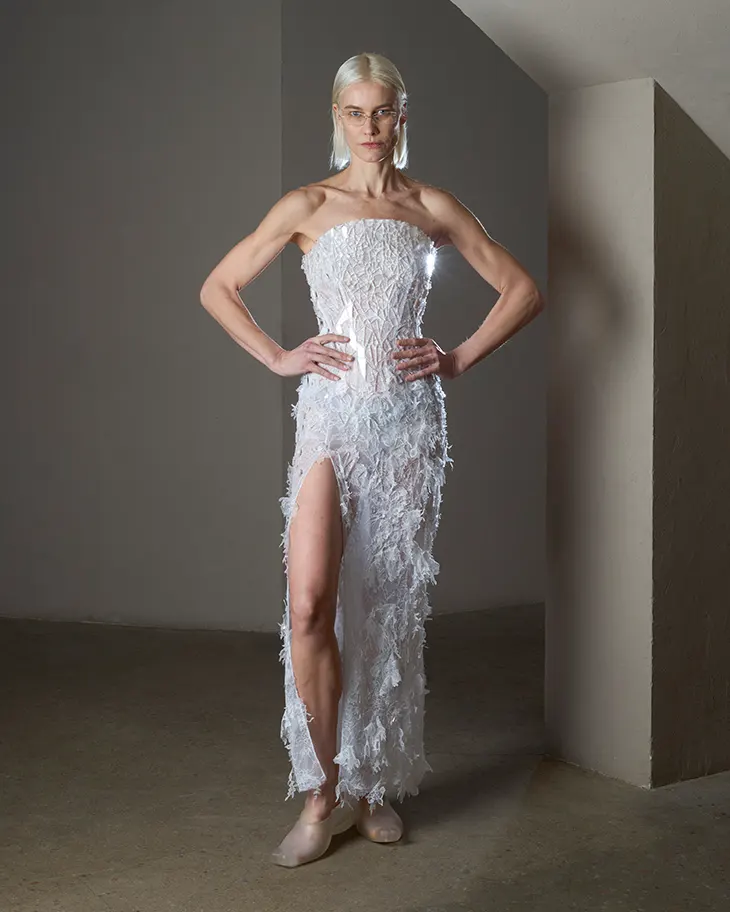
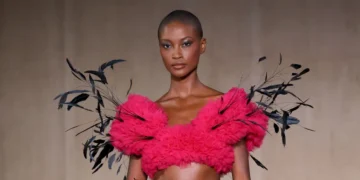
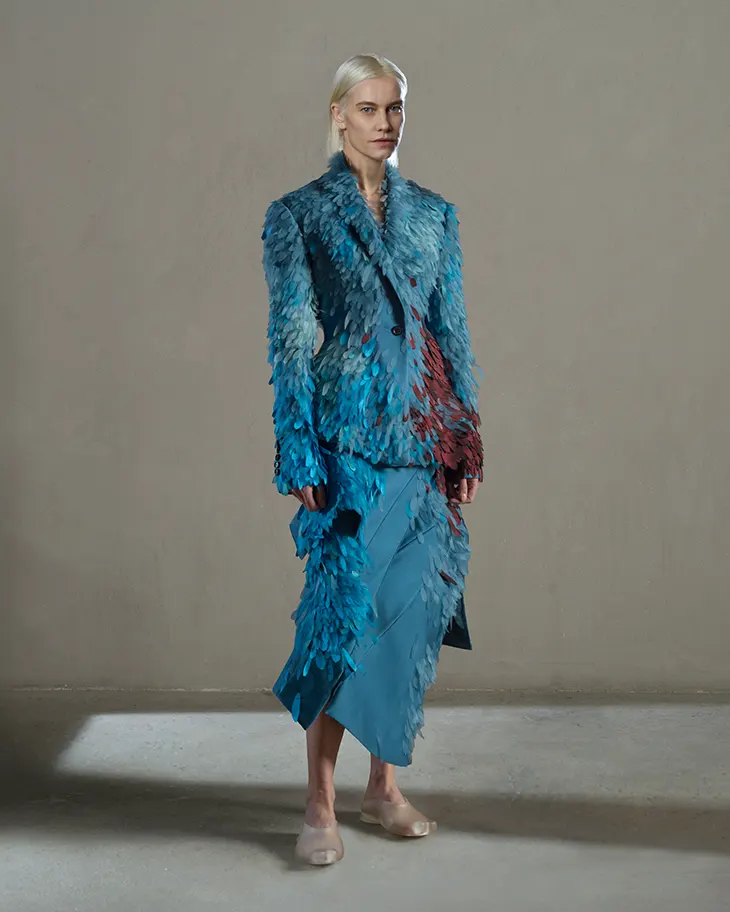
Feathers return as a central material language, continuing a thread that has appeared across previous seasons. In Couture 2026, LùCHEN expands this vocabulary with greater intention. The collection uses simulated feathers cut from reclaimed sources, including leftover fabric fragments, deadstock offcuts, and regenerated plastics. Once assembled, these fragments form a pixelated feather surface, an artificial plumage shaped through accumulation, repair, and repetition.
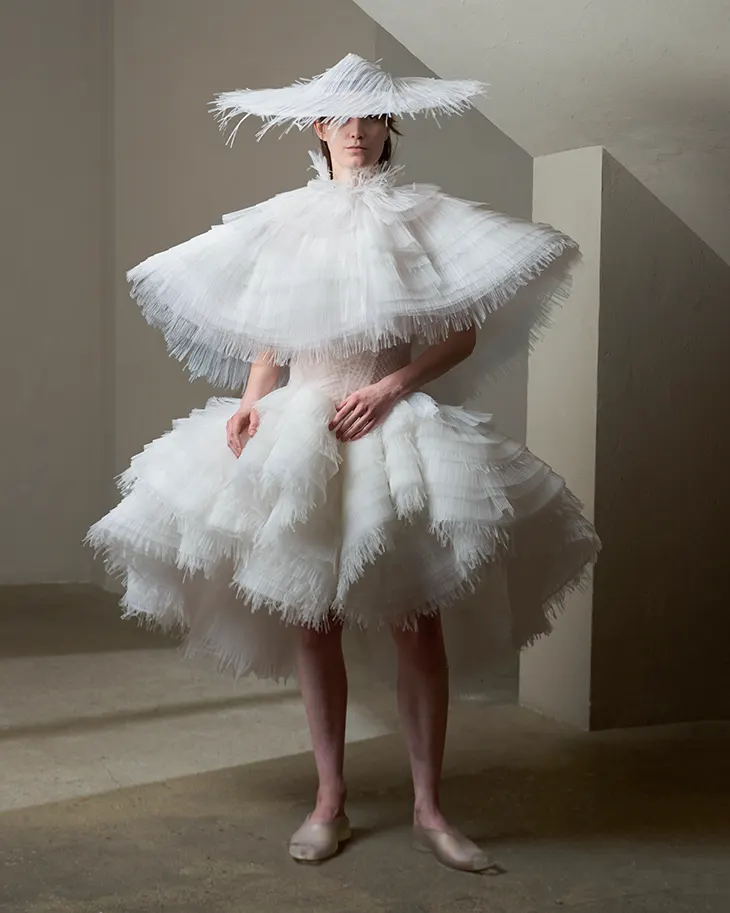
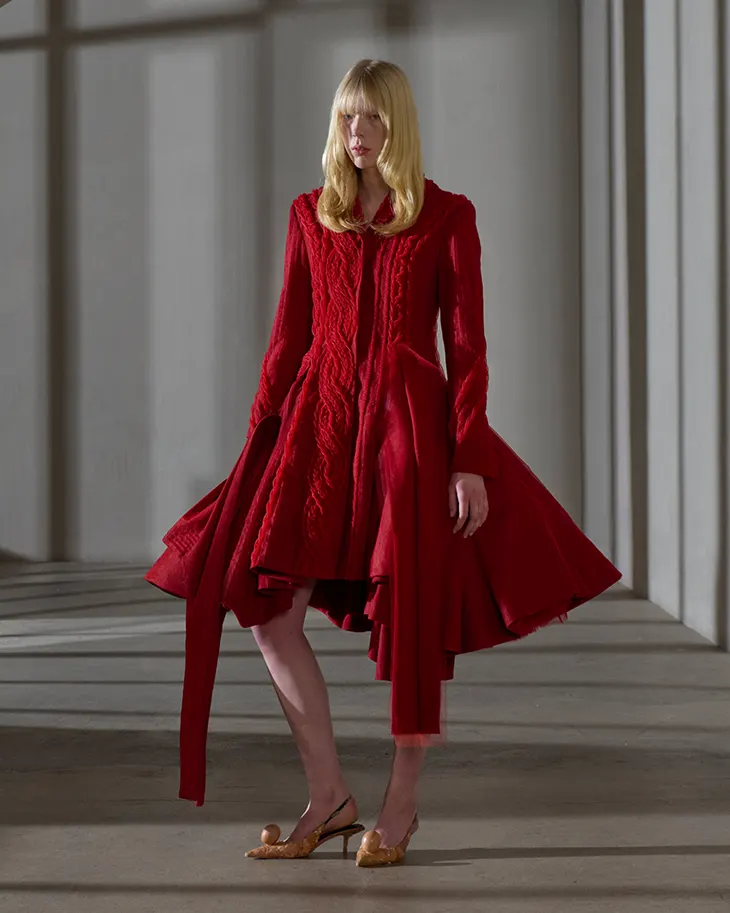
Inside the LùCHEN atelier, a growing archive of recycled materials informs this approach. Remnants from earlier collections sit alongside deadstock pieces and renewable matter gathered over time. Each fragment undergoes cutting and reshaping, retaining traces of its origin and lifecycle. When joined together, these pieces construct a larger surface that records process.
Against this constructed surface, real feathers introduce a different register. They carry immediacy and fragility, holding presence while signaling impermanence. Their physical delicacy contrasts with the durability and intention of the simulated versions. This tension between the natural and the constructed, between what passes quickly and what persists through assembly, drives one of the collection’s central questions. LùCHEN treats this contrast as a space for reflection.
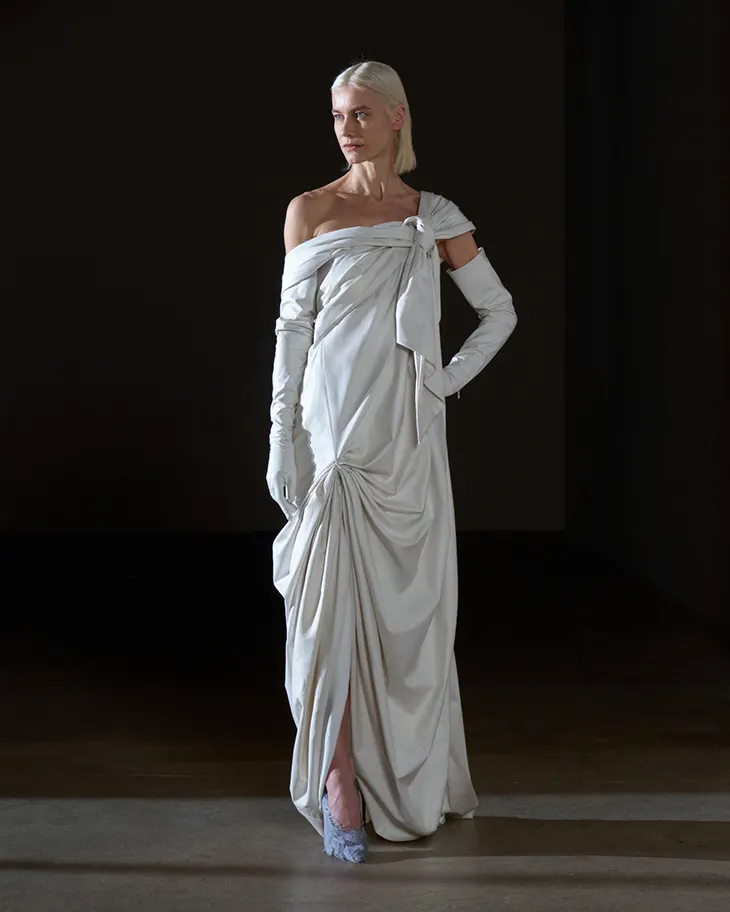
The collection uses 100 percent recycled acrylic alongside elements derived from landfill waste, including eggshells and mussel shells. Glass marbles appear as well, objects that feel slightly displaced by time and function. These materials surface as structural textures or small traces embedded within garments.
Rigid, suspended volumes hold the body in moments of stillness, creating tension through containment. Elsewhere, weight-driven drapery allows fabric to fall and shift, introducing flow through mass and movement. Forms break apart and rebuild themselves through layering and suspension. Materials respond visibly to pressure and pull, allowing motion to register on the surface of the garment. The collection remains open to accumulation, trace, and change.