



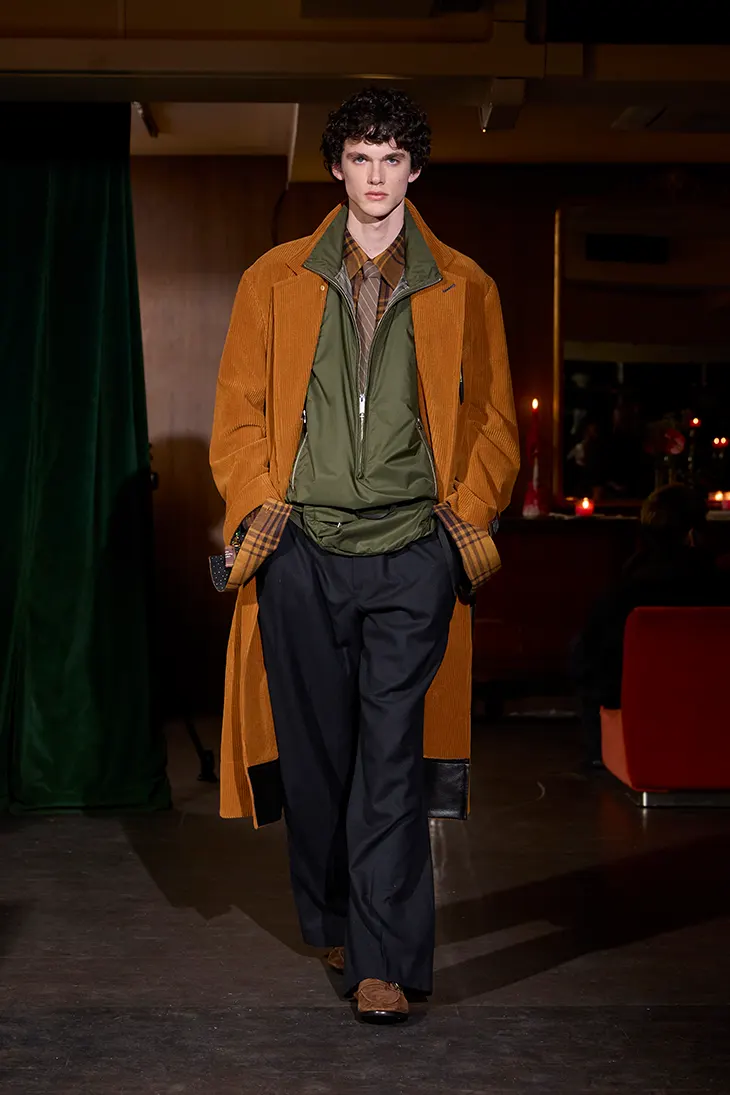
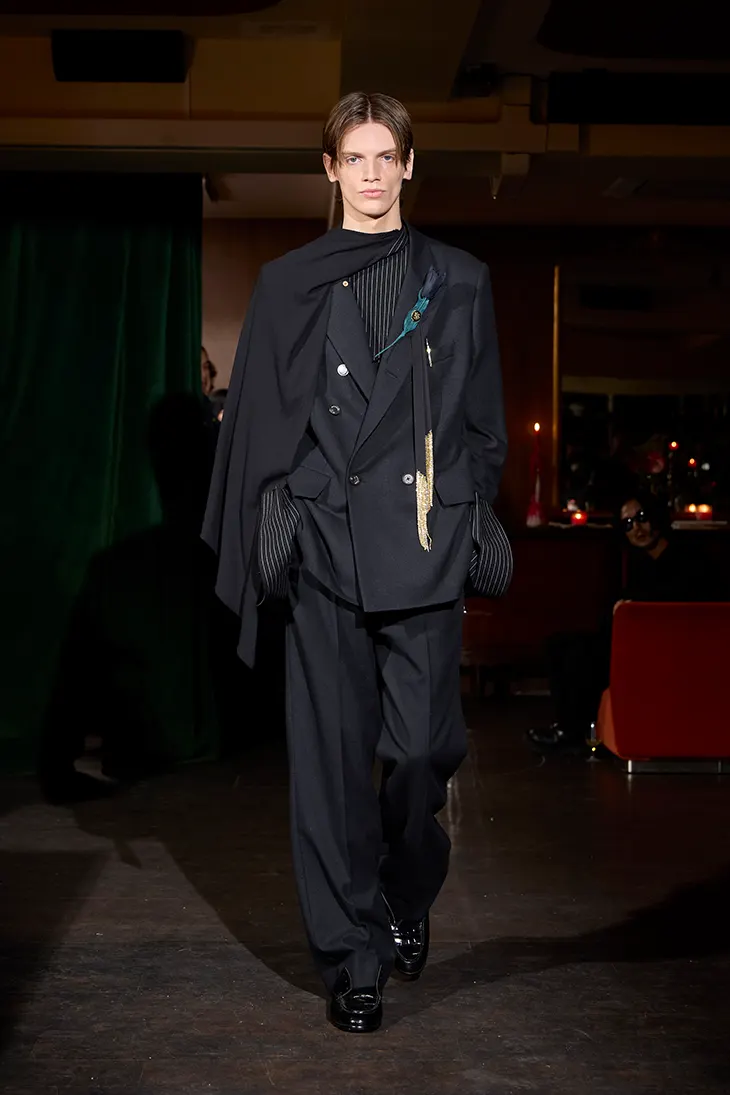
BED j.w. FORD presents its Fall Winter 2026 collection, Roman, as a study of presence within the everyday city. The image opens with a solitary figure in a long coat, its hem grazing the knees. He appears at a morning station and again at a dusk crossing, then disappears into the crowd without drawing attention. The coat carries weight without display. When wind arrives, fabric responds on its own rhythm. The figure holds a youthful sensitivity, poised near adolescence, moving through the city with a sense of resolve that requires no announcement.
FALL WINTER 2026.27 MENSWEAR
Designer Shinpei Yamagishi situates the collection within a present shaped by convenience and efficiency. Systems promise optimization and approval, yet they generate friction and contradiction. Yamagishi acknowledges participation in these systems while sensing tension against them. He describes a pull from the space between longing and lived reality. The collection avoids explanation or defense. It accepts a form of quiet resistance suited to an era that favors smoothness. Desire operates as an active force, arriving on its own terms.
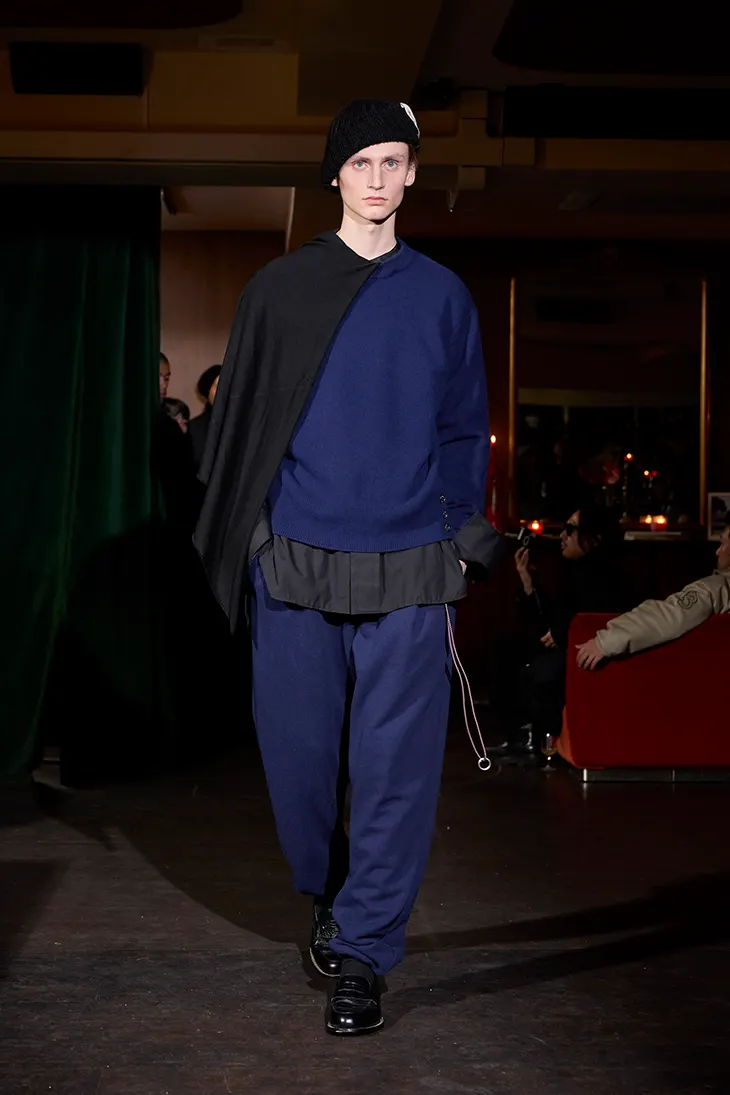
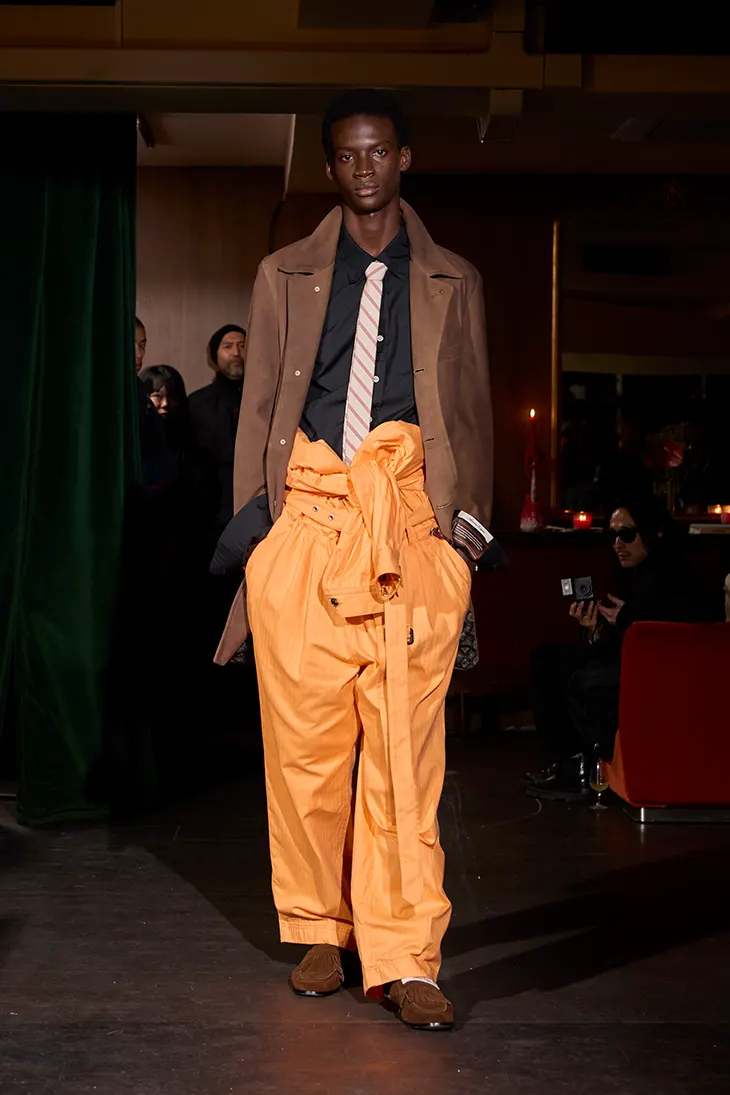
Large stoles sway with a soft cadence, registering motion as a form of expression. Classical jackets appear composed at rest, yet the wearer’s gestures leave subtle impressions beneath the shoulders. The silhouette reveals itself through movement. A hand placed into a slit-style inner pocket suggests a kimono-wearing presence without direct reference. Rubber straps at the cuffs allow sleeves to adjust freely, placing control and chance into dialogue between body and garment.
Trousers carry multiple irregular tucks, while a concealed drawstring gathers fabric according to the wearer. A gilet presents a familiar outline from a distance, then reveals deviation up close. A contrasting fabric trims the neckline, and pleats sit at the back, unseen from the front. In a moment that favors exposure, this choice to conceal functions as a quiet metaphor. Denim interlaces with silk to create a soft surface with a nap-like finish.
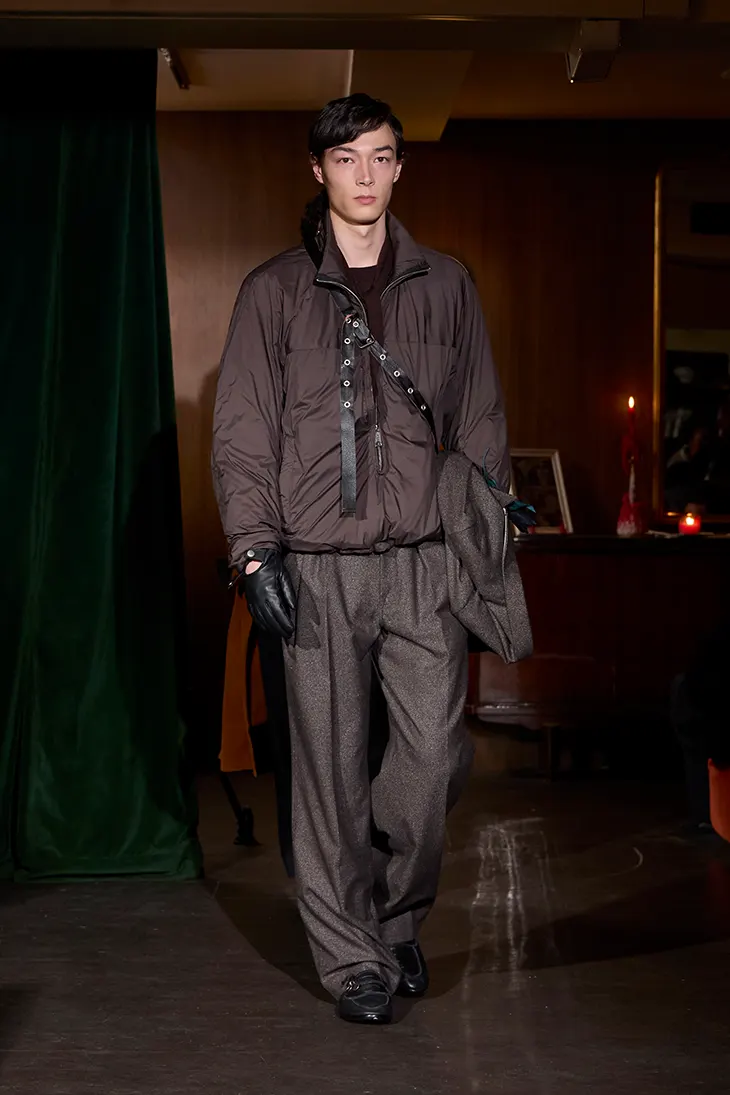
Orange recalls a sunset filtered through mist. Blacks shift away from purity, resembling lengthening shadows at dusk. Checks punctuate the range with assurance, grounding the palette in lived reality.
Yamagishi locates the idea of Roman within work shaped by human hands. He reflects on standing at a threshold, questioning whether such practices will remain a century from now. This uncertainty informs the collection’s search for another form of elegance, one that accepts repetition and return. Dreams and reality share the same space, moving in cycles that recede and arrive again.








is this really by tom ford ?