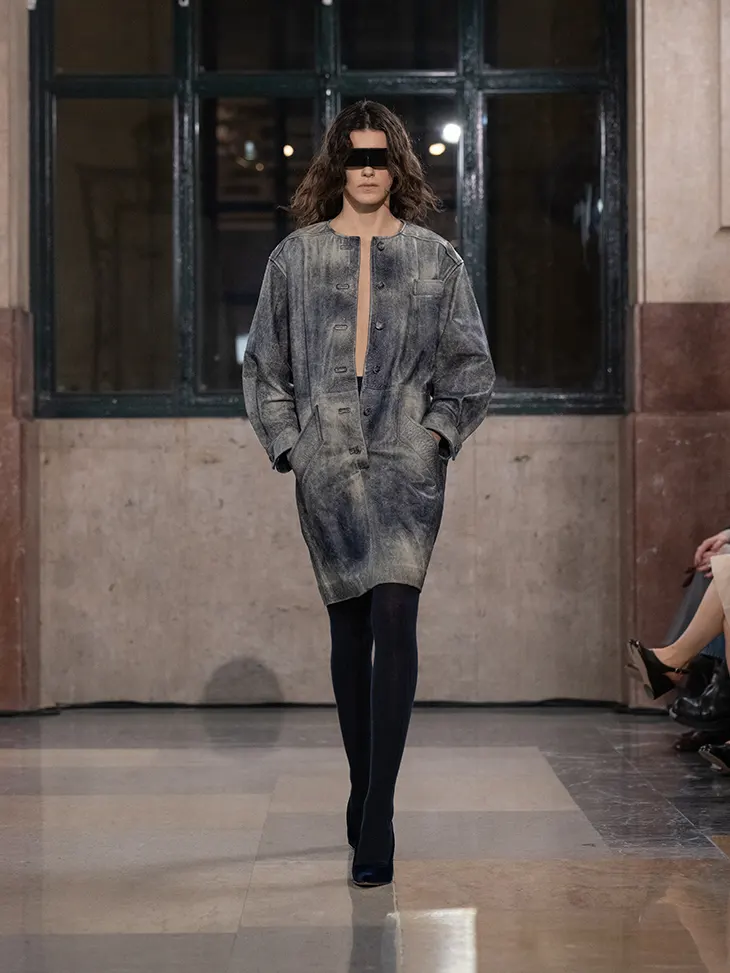



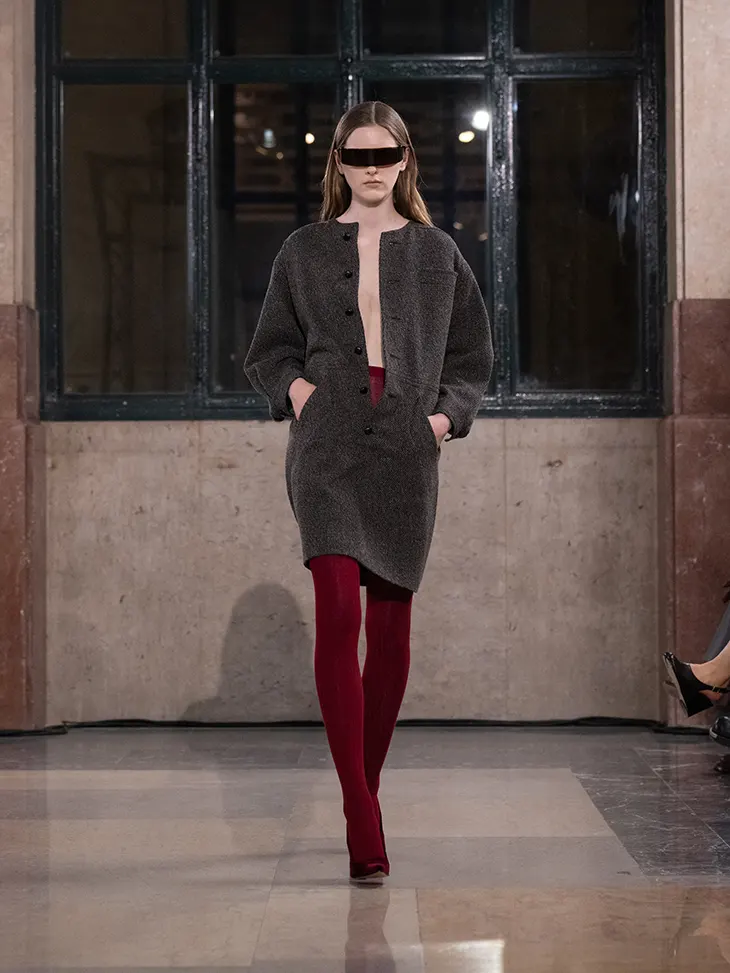
MM6 Maison Margiela presented the Fall Winter 2026 collection inside Milano Centrale, a location defined by movement, pause, and anticipation. The station offered a ready-made cast of characters, travelers in transit, figures suspended between arrival and departure. The show translated this environment into a constructed scene. Each model represented a recognizable type, someone who could disappear into the crowd or step forward with intention. The runway mirrored daily life while remaining unmistakably staged, reinforcing the tension between observation and performance.
FALL WINTER 2026 COLLECTIONS
Models concealed their eyes behind MM6 Maison Margiela sunglasses, now introduced in a wide spectrum of rainbow hues. The eyewear reinforced anonymity while introducing subtle individuality through color. This gesture reflected the collection’s central approach, where familiar garments appeared unchanged at first glance yet revealed shifts in proportion, construction, or context. The collection examined reduction and directness, focusing attention on garments themselves and the ways they can shift perception through minor structural interventions.
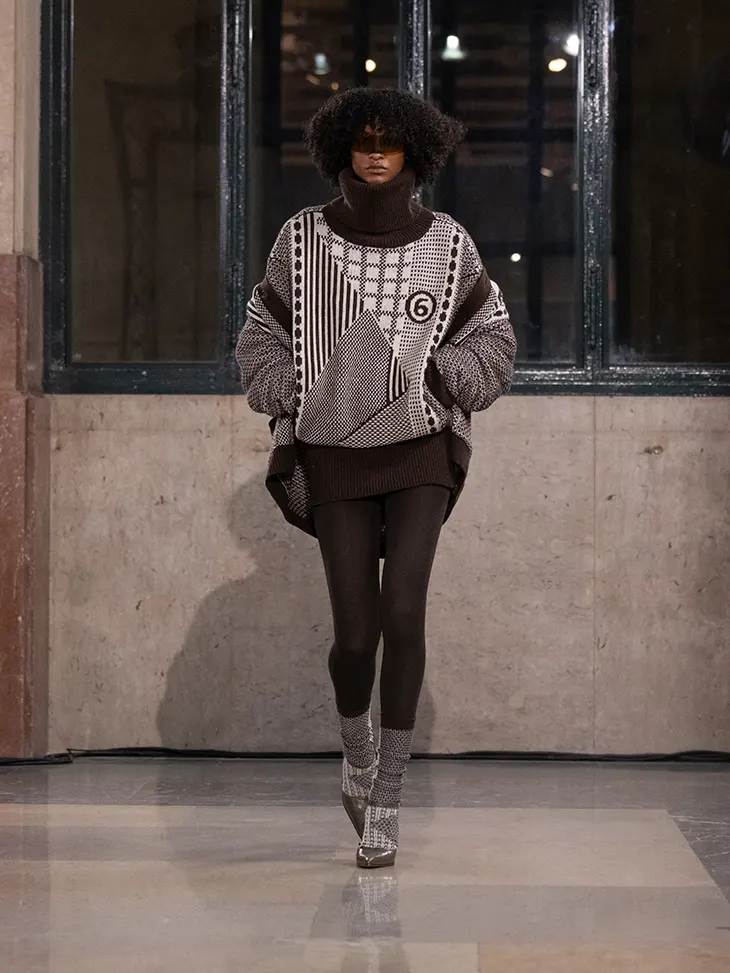
The wardrobe drew from widely recognized clothing categories. Checked shirts, denim jackets, blazers, full skirts, tracksuit tops, ski jumpers, zip-up fleece pieces, long-johns, boots, and pumps formed the core vocabulary. MM6 Maison Margiela arranged these garments in ways that challenged their expected use. A checker shirt paired with culottes or a full skirt disrupted conventional associations. A blazer worn over long-johns reframed underwear as visible clothing. A jumper appeared alone with tights, removing layering and exposing the garment’s silhouette and proportion.
Construction played a central role in altering these familiar forms. Ribbed jersey panels inserted at the back of shirts, trench coats, and jackets narrowed the body into a precise vertical line. This intervention reshaped volume without introducing excess material. Other garments underwent visible reduction, where blazers, trousers, and skirts appeared simplified from their original forms. Pulled linings emerged on the surface and invited interaction, while hems rolled upward and secured with snap fasteners introduced adjustability and motion. These gestures allowed garments to shift shape according to movement or styling choice.
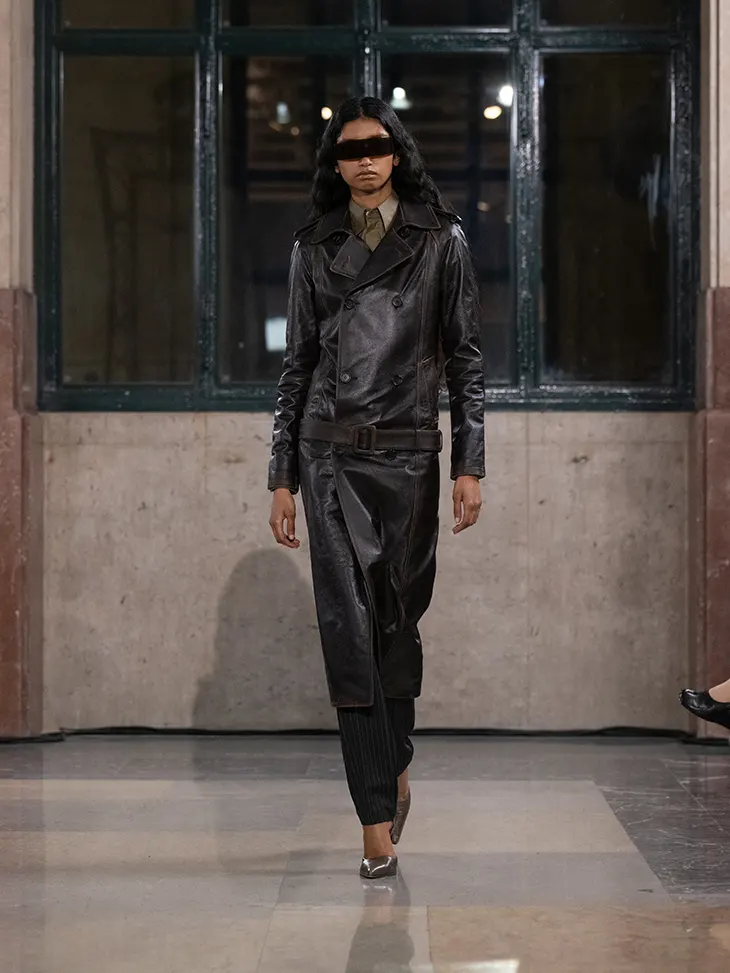
Exposed lining became a recurring element. Designers cut and integrated lining material directly into outer layers, revealing structural components normally hidden inside. This decision redirected attention toward garment construction and interior architecture. References to the 1980s appeared through silhouette and proportion, while equestrian details introduced subtle associations with utility and discipline. Each element functioned as part of a system where reduction sharpened the outline and exposure revealed process.
Accessories reinforced the narrative of transit and incompletion. Bauletto bags appeared in multiple sizes, carried as functional companions suited to travel. Jewelry introduced deliberate imperfection. Earrings remained attached to their retail display cards, suggesting objects freshly acquired or never fully claimed. Rings appeared without their central stones, presenting absence as design. These details emphasized interruption, echoing the temporary condition of station life.
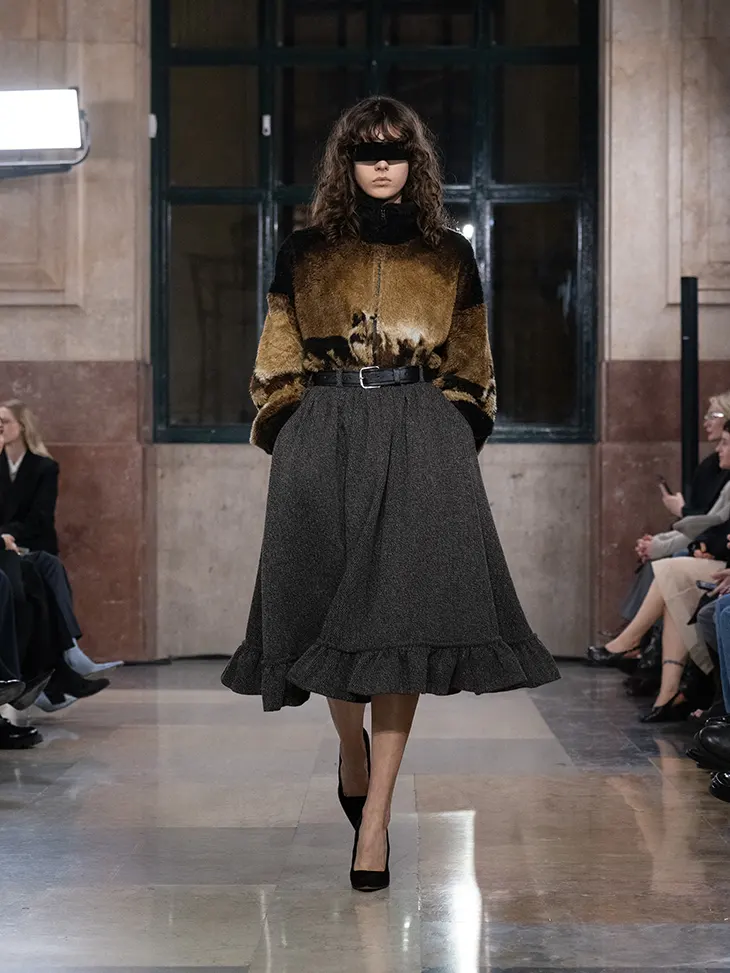
The show progressed like the continuous flow of a terminal. Each exit introduced another archetype, another interpretation of clothing stripped to its essential structure and reframed through placement and proportion. MM6 Maison Margiela used Milano Centrale to emphasize how garments circulate through daily routines, gaining meaning through repetition, adjustment, and observation.