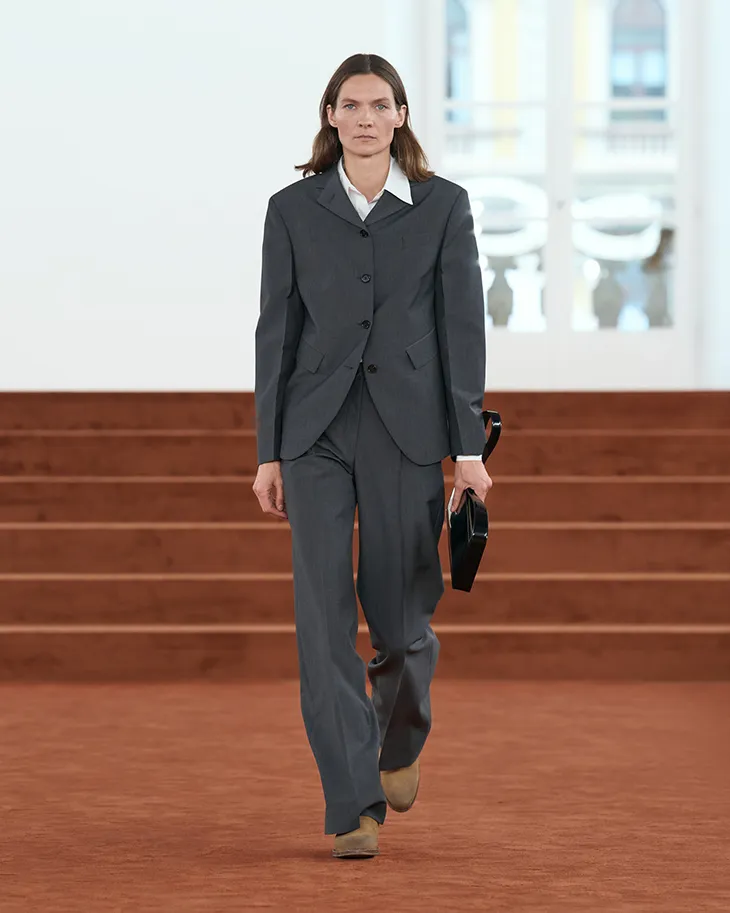



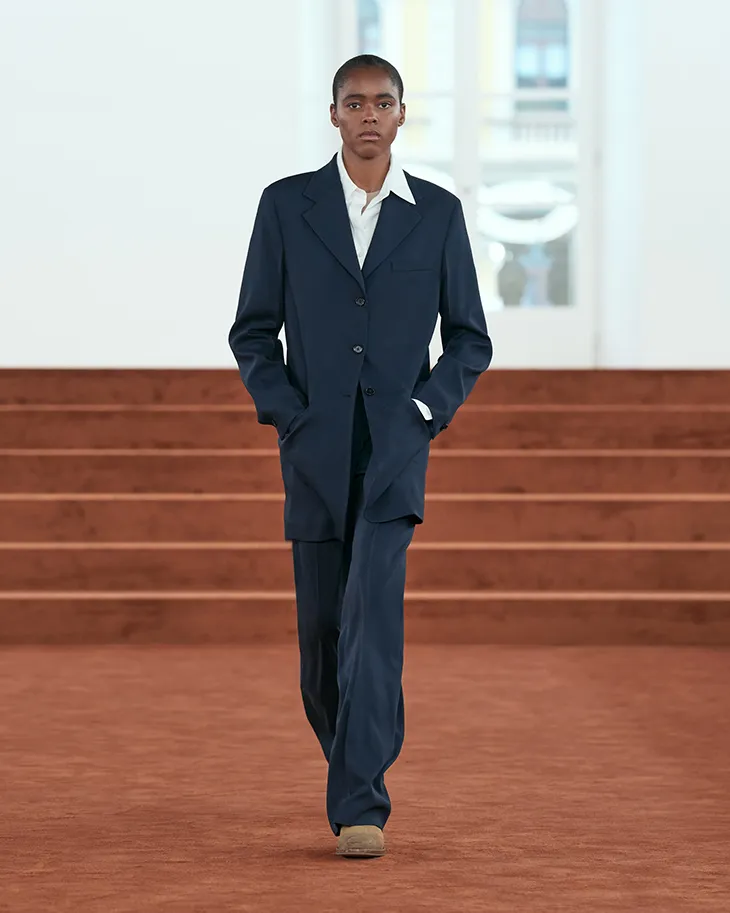
Fashion house Jil Sander unveiled its Fall Winter 2026 collection on February 25th, during the ongoing Milan Fashion Week. Designer Simone Bellotti approached the collection through the idea of home, treating it as an emotional and physical space tied to belonging, refuge, and tension. He framed Jil Sander as both a house and a home, connecting the brand’s headquarters and aesthetic codes to personal memory and lived experience. This perspective guided his second collection for the brand, shifting focus from essence toward expansion through form, volume, and contradiction. Bellotti considered home as a site shaped by comfort and unease, where familiarity coexists with disruption.
FALL WINTER 2026 WOMENSWEAR
Furniture and upholstery informed this direction. Bellotti grew up around these materials, as his father worked as an upholsterer. That background shaped his understanding of fabric, structure, and surface. He treated garments as elements that people rearrange, similar to objects inside a home. He examined how codes and visual signs operate within a fashion house, then reinterpreted or disrupted them. He approached Jil Sander’s restraint through a new lens, asking whether greater volume and curvature could still express discipline.
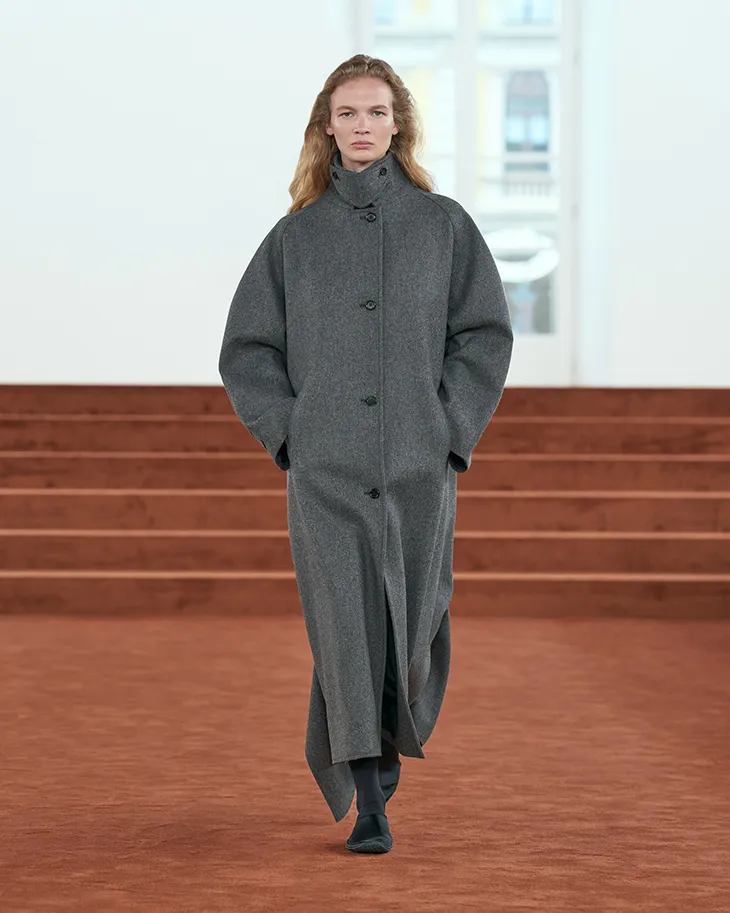
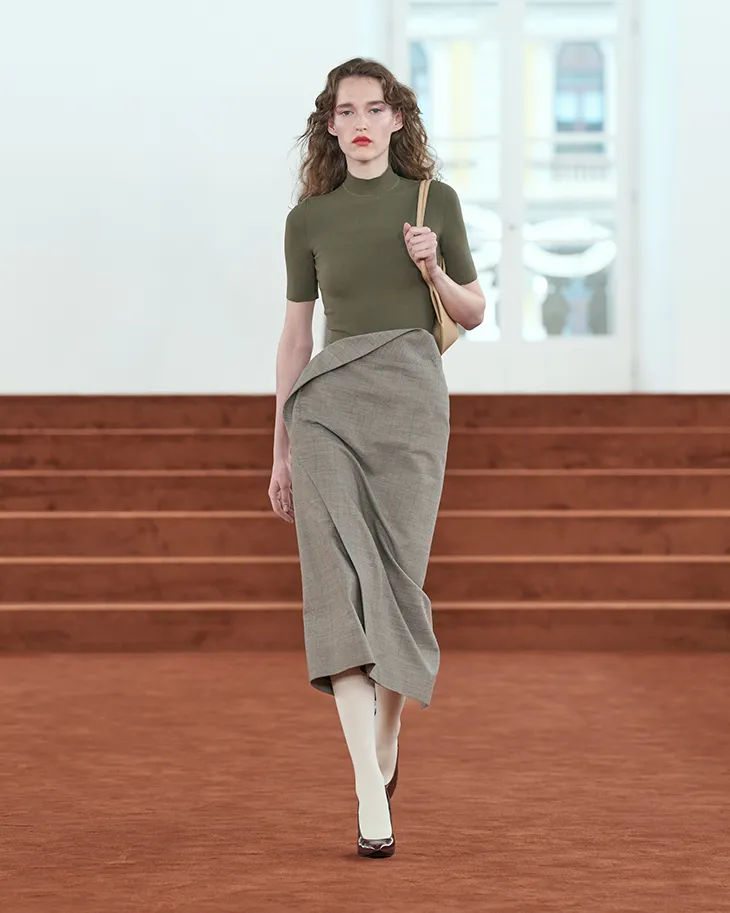
The collection introduced increased volume, curved silhouettes, and expanded fabric use. Bellotti treated addition as an equal gesture to reduction, allowing excess to carry meaning. He explored contradiction through opposing visual signals, pairing restraint with expansion. This approach shifted the brand’s familiar language toward softer lines and fuller forms while maintaining its disciplined foundation.
Color reinforced this domestic framework. Faded neutrals anchored the collection, joined by black, blue, and gray tones. These shades reflected interior environments and everyday surfaces. Fabric reacted to the body in expressive ways. Shoulder lines lifted upward, while pockets extended outward. Collars slipped toward the back or lifted away from the neckline. Extra fabric created curves, bends, and folds that shaped silhouettes in motion. Tailoring maintained vertical structure, with jackets buttoned high and coats cut with tall slits. Bar tacks secured folds, reinforcing construction details while introducing visual disruption.
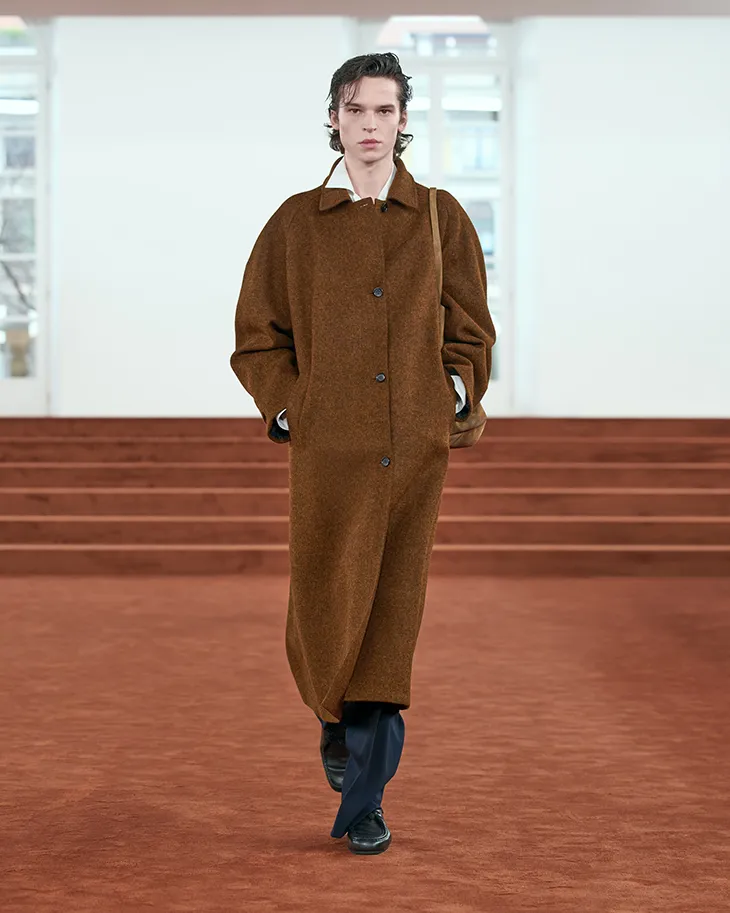
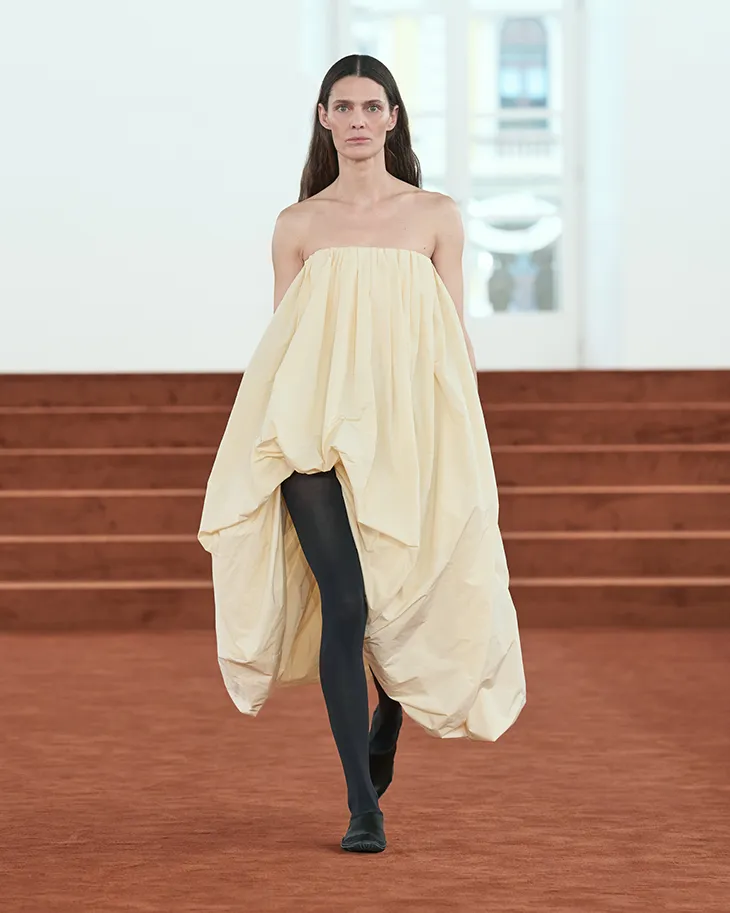
Upholstery textiles appeared throughout the collection, reshaped into garments that emphasized curvature and sculptural softness. Dresses formed cloud-like volumes, with fabric gathering and expanding outward. Coats and blazers featured high slits along the back, exposing movement and altering traditional structure. These design gestures reinforced the relationship between garment and body, treating clothing as an active form that interacts with physical presence.
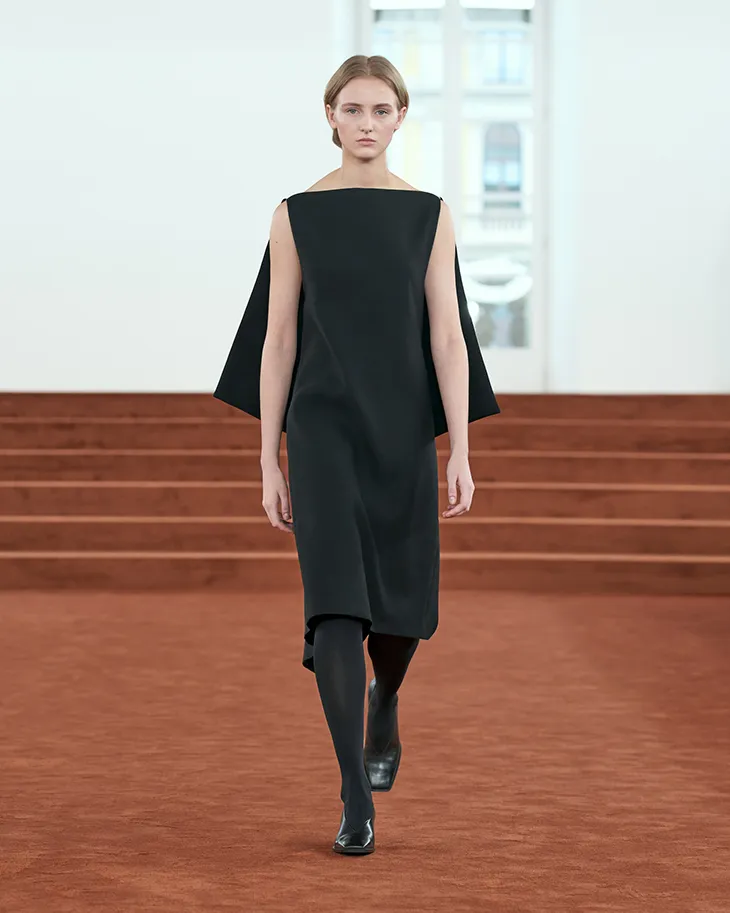
Menswear and womenswear reflected each other, reinforcing Bellotti’s interest in contradiction. Accessories extended these ideas. Shoes included exaggerated heels and unisex flats shaped close to the foot. Square-toed lace-ups and distressed suede boots expanded the footwear offering. New bags combined geometric forms with shapes that referenced the body. Sunglasses introduced a preview of an upcoming collaboration with Oliver Peoples, signaling a future extension of the brand’s accessories.