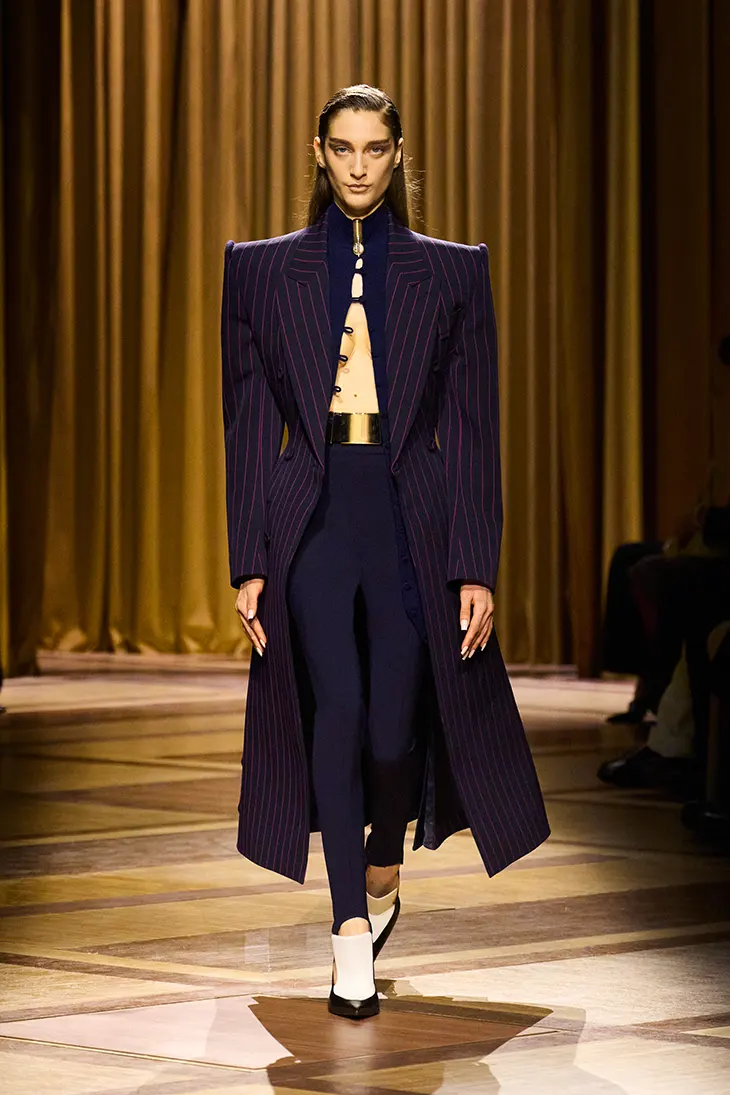



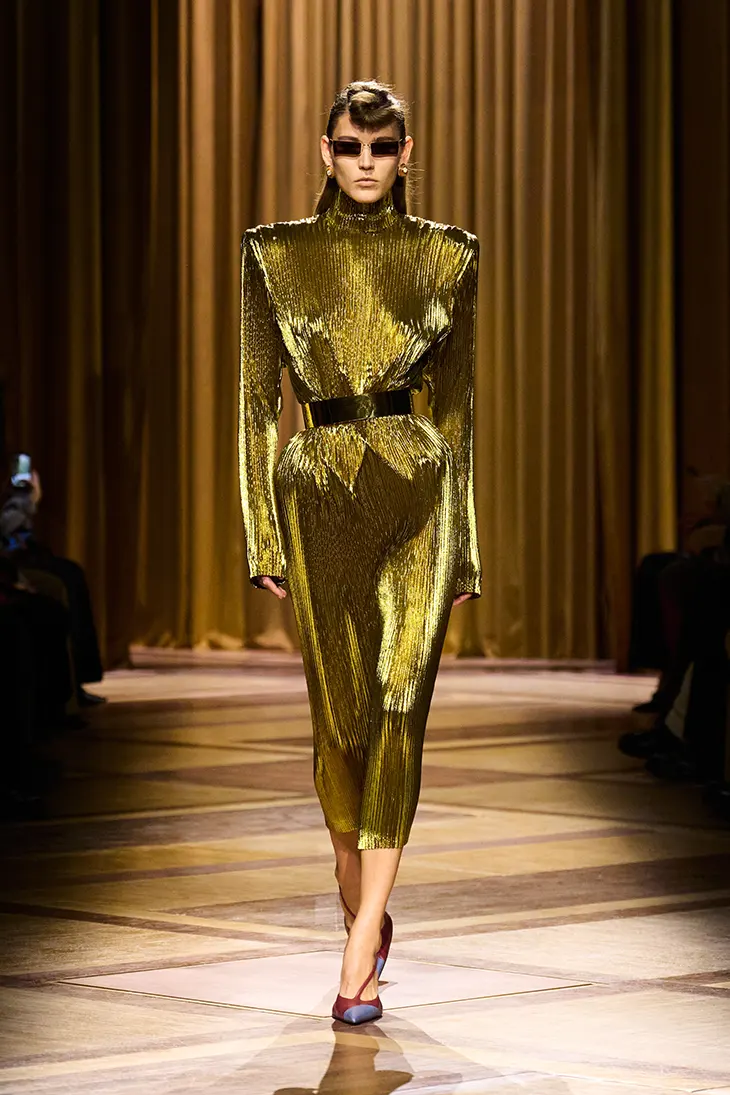
Mugler Fall Winter 2026.27 introduces The Commander, a collection by Miguel Castro Freitas that examines the visual language of power. The show forms Part 2 of A Trilogy of Glorified Clichés and focuses on power dressing as one of the defining foundations of Mugler history. Castro Freitas studies how clothing communicates authority, desire, and identity through form, proportion, and material. The collection considers power as intention and attraction that shape perception in both historical and contemporary contexts.
FALL WINTER 2026
Castro Freitas enters into dialogue with the work of Manfred Thierry Mugler. The designer revisits earlier explorations of authority and control that appeared in the historic collections Les Secrétaires and Hiver Militaire. Those references guide the conceptual structure of the season. Castro Freitas studies their visual language while considering how these ideas operate today. His approach places historical design codes within a contemporary frame that examines their continued influence.
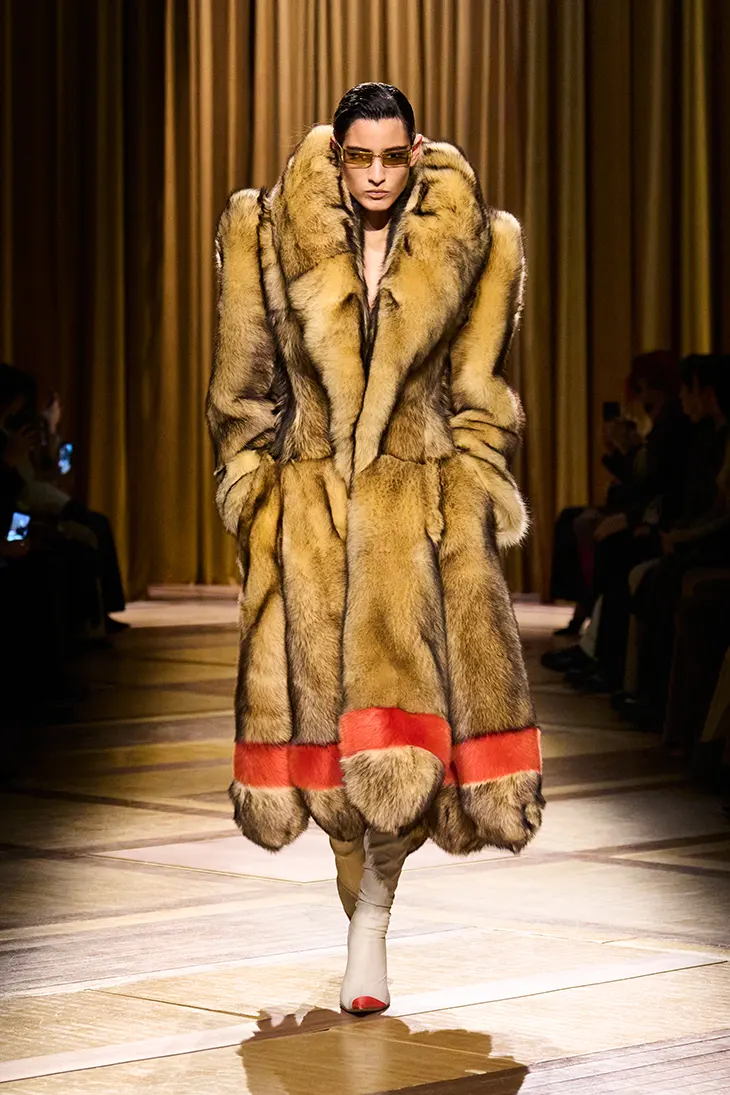
The designer addresses the political and cultural moment through the concept of personal autonomy. Castro Freitas explained the intention behind the collection in direct terms. “Ultimately, this show intends to acknowledge that self-empowerment is the most potent antidote of clarity to the oppressive forces and grey political climate that surrounds us at this very moment,” he said. “And most of all, it’s a manifesto of the highest power that we should never forget to reclaim: FREEDOM.”
The collection treats power as a fluid condition that shifts across historical references and visual codes. Military details appear alongside elements drawn from seventeenth-century aristocratic court coats. These references expand the vocabulary of authority that Mugler has explored for decades. Art deco geometry introduces another structural layer that interacts with the visual language of corporate clothing from the 1980s. Castro Freitas builds silhouettes that exaggerate this historical dialogue through defined shoulders, cinched waists, and sculpted curves. References to 1940s glamour appear within these shapes.
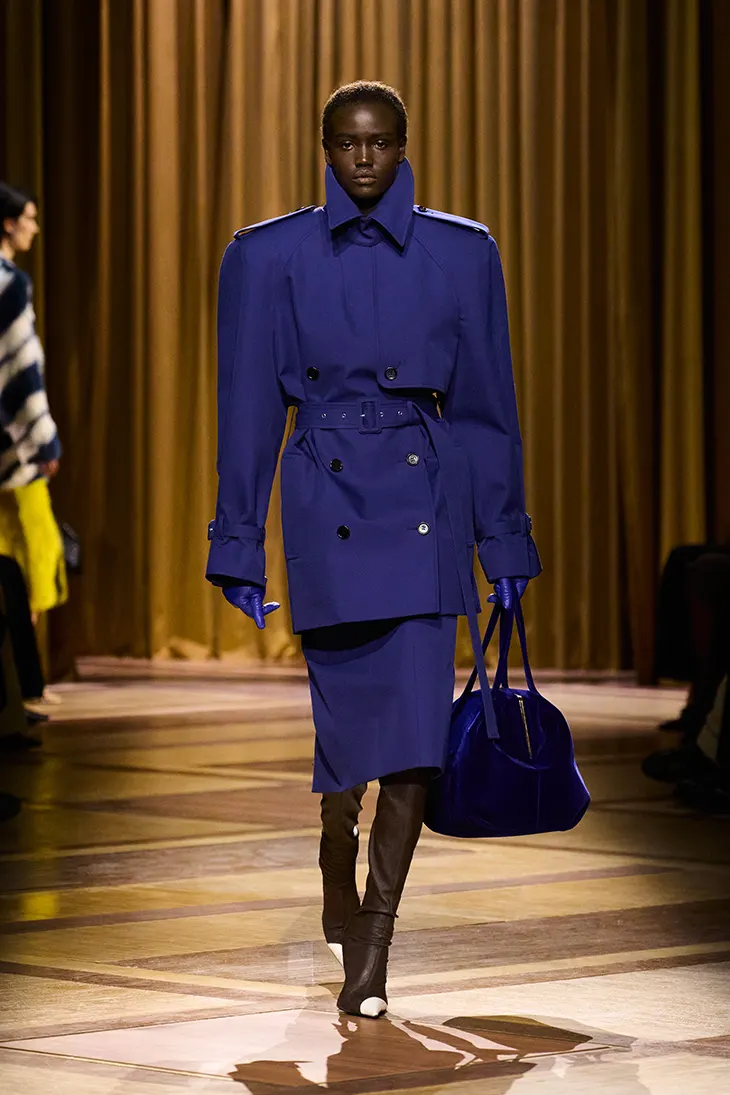
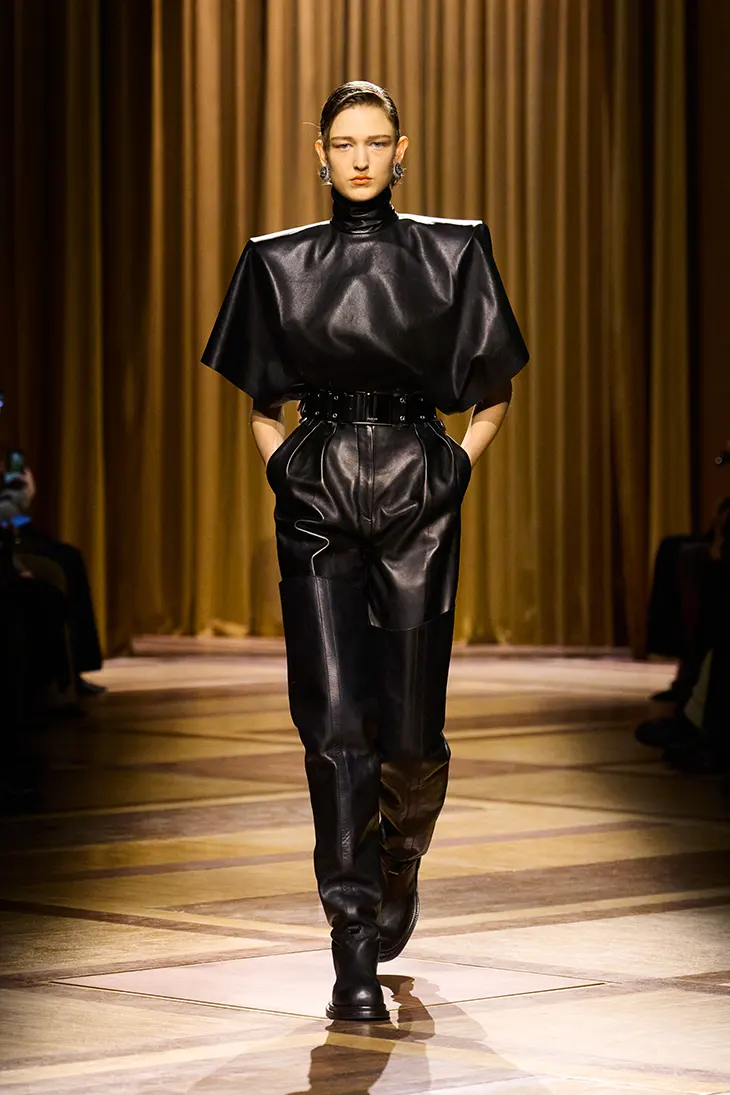
Castro Freitas draws from workwear and ceremonial dress, translating those references into garments that express personal agency. Each look studies how clothing communicates confidence through posture, shape, and proportion. The designer treats attraction, tension, and exchange as key components within the visual language of power.
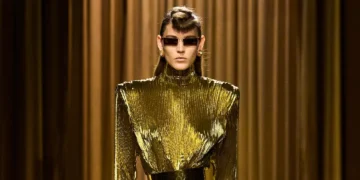
Early twentieth-century constructivism informs the clarity of the shapes. Bauhaus ideas about structure and function guide the organization of the garments. Castro Freitas develops silhouettes with careful attention to proportion and structure. Texture and color strengthen the visual authority of the pieces through vibrant shearling, printed silks, metallic leather, and lamé.
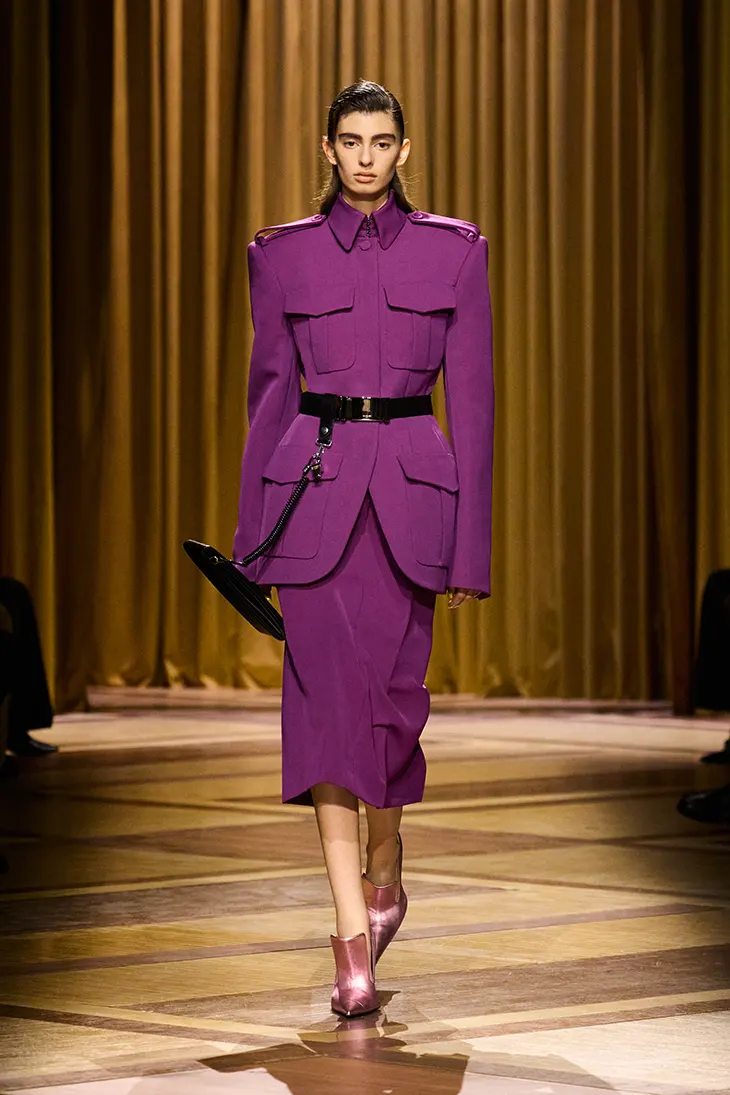
Castro Freitas approaches glamour as an expression of confidence that works through form and movement. The garments frame the body through sculpted shoulders, defined waists, and curves that emphasize posture and presence. The Aurora and Lua handbags return this season. Castro Freitas introduces seasonal briefcases that incorporate carabiner-inspired constructions.
The show took place inside the Palais de la Porte Dorée in Paris. The setting reinforced the central question raised by the collection: how clothing shapes the experience and perception of authority. The presentation examines who commands, who follows, and who yields within structures of power. Castro Freitas treats eroticism as a direct language that communicates confidence and self-possession.