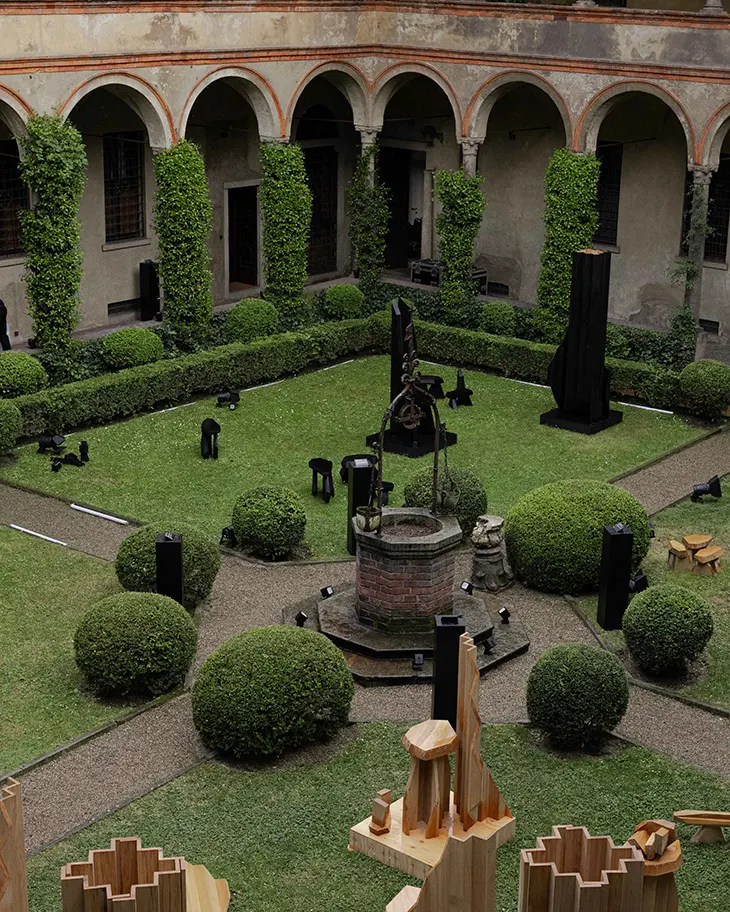



Milan Design Week 2026 takes place across the city from April 20 to 26, with Salone del Mobile.Milano held at Fiera Milano Rho from April 21 to 26, while Fuorisalone unfolds in parallel through exhibitions and installations spread throughout Milan. During this period, the city extends beyond the fair, with presentations moving into palazzos, courtyards, retail spaces, and temporary structures. These settings shape how each project is encountered, placing design within existing architecture.
EVENTS
DSCENE rounds up a selection of projects presented during Milan Design Week, focusing on installations and spatial presentations across the city. The week unfolds through a sequence of interiors and reworked locations, where objects are placed within defined settings that guide how they are read. What emerges is a set of distinct environments, each built with a clear intent, showing how design operates through presentation as much as through the object itself.
Reloaded by Diesel Living and Iris Ceramica
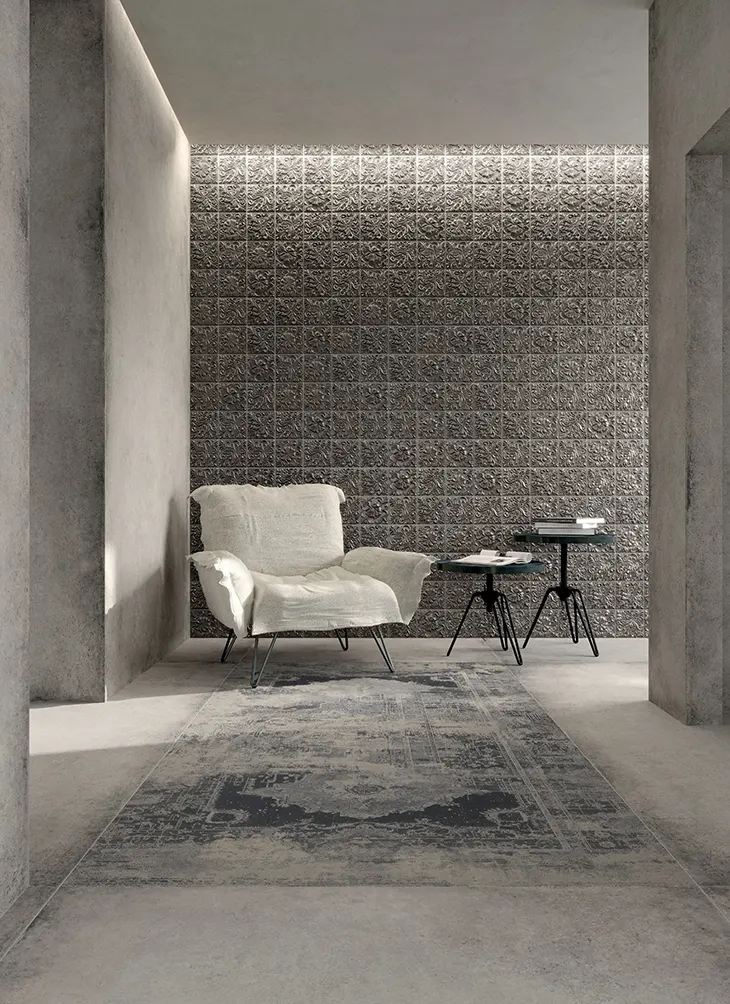
Diesel and Iris Ceramica mark ten years of collaboration with Reloaded: Diesel Living with Iris Ceramica, a new chapter that pushes their shared research into ceramic surfaces. The project introduces a collection that moves across large slabs and smaller formats, shaped through a more direct and contemporary visual language. The direction reflects an ongoing exchange between design and technology, where Iris Ceramica’s production capabilities support Diesel’s approach to surface as a form of expression.
The collection develops through two color-block compositions that combine large-scale slab production with conventional ceramic formats, building layered surfaces defined by texture and contrast. DYS Design Your Slabs technology allows each configuration to shift, giving space for variation and individual composition. Developed under the creative direction of Glenn Martens in collaboration with Controvento, the project introduces pieces such as Distressed Rug, which reworks Persian-inspired motifs through a worn, time-marked surface, and Acid Majolica, which distorts traditional Portuguese patterns into a sharper, more contemporary form.
Lightful by Bottega Veneta and Kwangho Lee
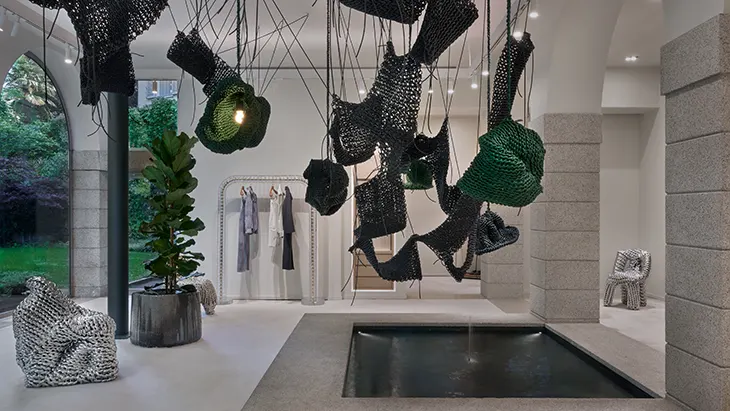
Bottega Veneta collaborates with Kwangho Lee on Lightful, a site-specific installation presented at the house’s Via Sant’Andrea store, with additional activations across Milan. The project centers on a suspended woven structure, developed through Lee’s ongoing material research and reworked using Bottega Veneta leather fettucce. Produced in black and green tones selected by Creative Director Louise Trotter, the light sculptures introduce illumination into the artist’s process, shaping organic forms through the interaction of woven material, light, and shadow.
Lightful marks the third collaboration between Bottega Veneta and Lee under Trotter’s direction, following earlier projects that included the Summer 2026 show space and the exhibition Weaving the World The Language of Intrecciato in Seoul. The development of the installation brought Lee to the brand’s atelier in Montebello Vicentino, where the house’s leather craftsmanship continues to define its identity. His practice draws from traditional weaving, basketry, and chilbo enamelling, extending across materials such as metal, marble, and found elements. Within this context, Lightful positions weaving as both a technique and a point of contact, aligning Lee’s experimental approach with Bottega Veneta’s long-standing focus on how material is shaped and built.
Objets Nomades by Louis Vuitton at Palazzo Serbelloni
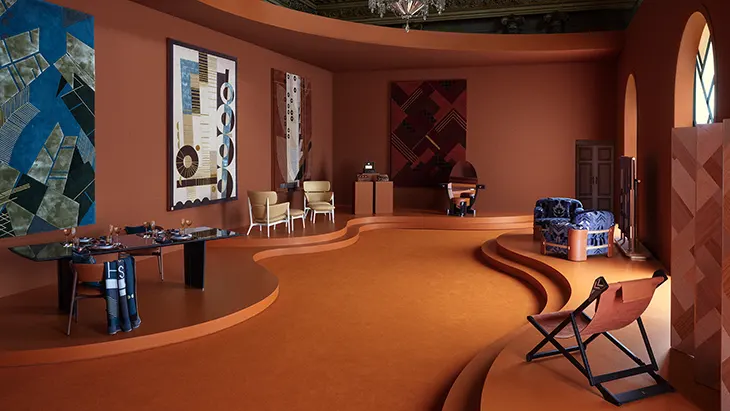
Louis Vuitton presents its latest Objets Nomades collection inside Palazzo Serbelloni, placing new works alongside historic trunks within a sequence of rooms that trace a clear line from Art Deco to contemporary design. The exhibition opens with a reference to Pierre Legrain, whose work sets the tone for the entire presentation. Archival material, including early trunks, signed illustrations, and travel objects from the house’s heritage collection, appears within a scenography that recalls a 1920s train carriage.
Each room builds a distinct environment through color, material, and scale. A large Tikal rug anchors a sequence of interiors that move through drawing, dining, and library settings, bringing together pieces from past and current Objets Nomades collections. Furniture, textiles, and objects extend into dedicated spaces that highlight both archival references and recent collaborations, including works linked to Charlotte Perriand and contemporary designers such as Marc Newson, Patrick Jouin, and Cristian Mohaded. In parallel, the Via Montenapoleone store presents key trunk pieces, including the stained-glass Malle Courrier Lozine Maison de Famille and the reimagined Malle Lit, reinforcing the house’s ongoing focus on mobility, construction, and precision across both historic and current formats.
Reference Library by Apartamento and Jil Sander
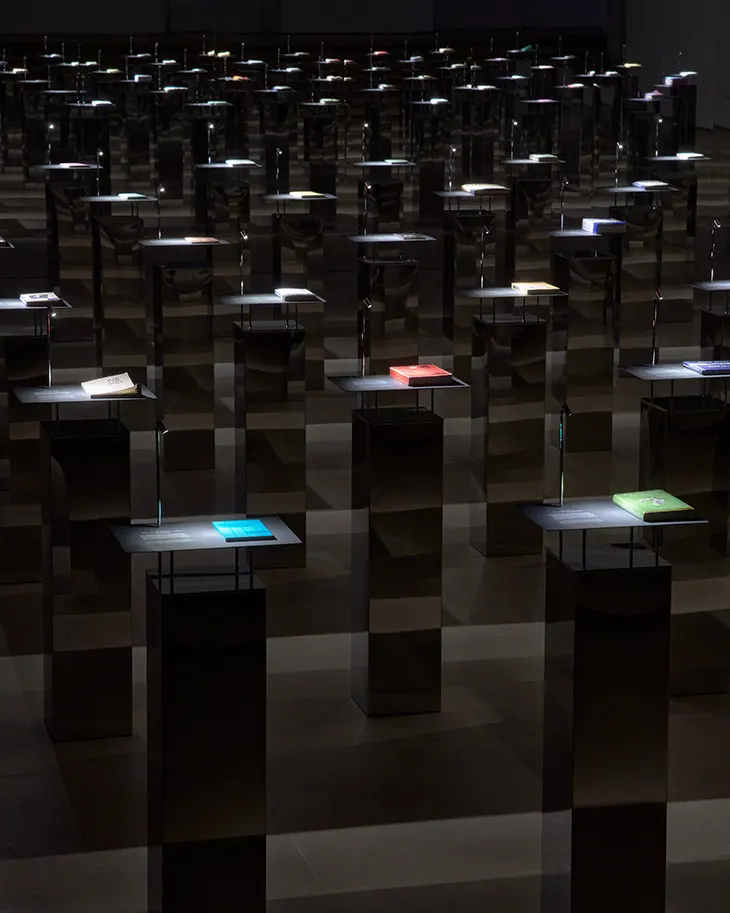
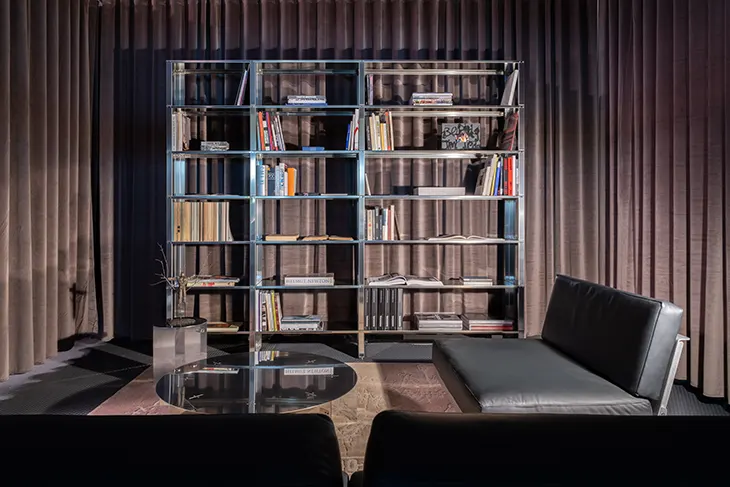
Apartamento and Jil Sander present Reference Library as a focused reflection on reading, collecting, and the quiet impact of books. The exhibition gathers 60 titles selected by a wide range of contributors, including writers, designers, artists, and filmmakers, each offering a personal point of reference. These choices move beyond recommendation and form a layered network of influence, where individual taste builds a broader cultural map. Installed inside the Jil Sander showroom in central Milan, the project frames the book as a physical object that carries memory, association, and intention.
The installation, designed by studioutte, structures the space through rows of chrome lecterns under focused reading lights, with mirrored surfaces extending the visual field. Visitors enter in timed intervals and receive white gloves, a detail that shifts the act of handling each book into something deliberate. The books remain in place, available to read within the space, while the gloves stay with each visitor as a trace of the experience. Simone Bellotti, Creative Director of Jil Sander, references The Baron in the Trees by Italo Calvino, pointing to its central character’s distance as a way to see more clearly, while Marco Velardi, co-founder of Apartamento, frames the collaboration as a shared position on objects that hold meaning through use, attention, and time.
Prada Frames In Sight
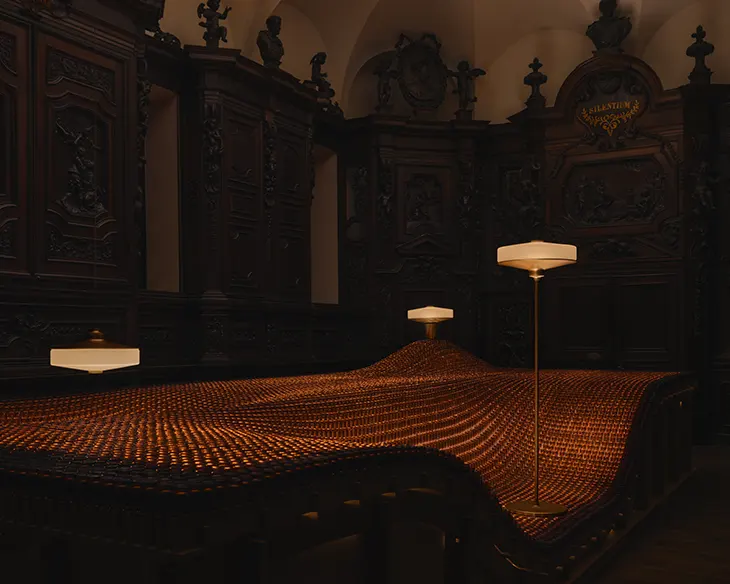
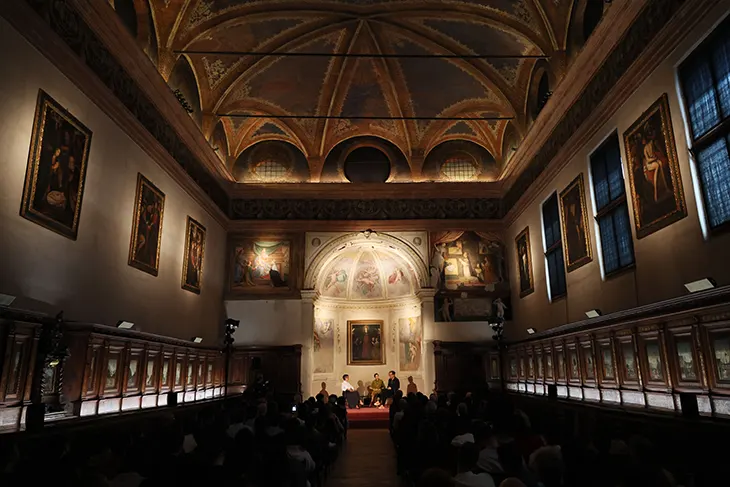
Prada continues its annual Prada Frames symposium, curated by Formafantasma, with the fifth edition titled In Sight. The initiative positions itself around research and dialogue, focusing on ideas instead of product, and bringing together perspectives from design, culture, and society. This year’s theme examines image-making as a central condition of contemporary life, where representation often replaces direct experience. The symposium treats the image as a force that operates across cultural, political, and material dimensions, raising questions about authorship, truth, and the systems that shape visibility.
Through a series of lectures and conversations, the program addresses how images circulate, how they influence perception, and how they rely on infrastructures tied to resource extraction, energy use, and labor. The setting at Santa Maria delle Grazie places the discussions within a historical architectural context, with sessions held in the Sacrestia, attributed to Donato Bramante and decorated with sixteenth-century works by Domenico Morone and Francesco Morone. Guided visits extend the experience beyond the talks, while a final evening program combines selected discussions with a music performance, opening the symposium to a wider audience.
Ralph Lauren Home Presentation
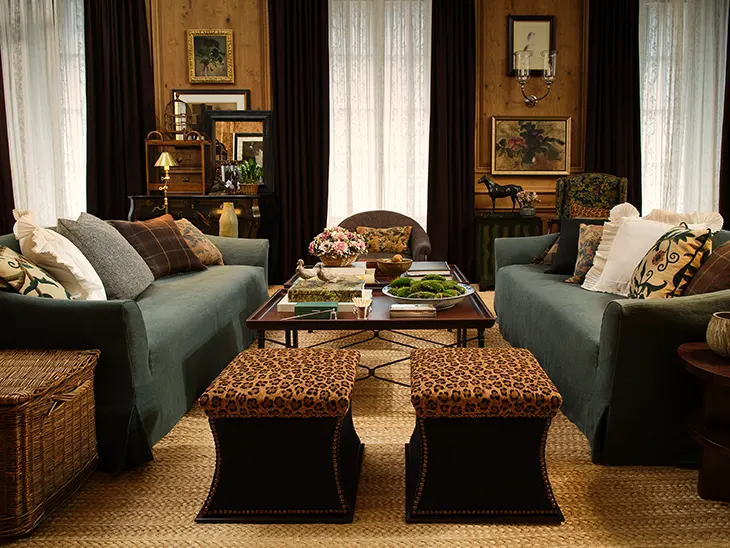
Ralph Lauren activates its Via della Spiga flagship through an immersive presentation of its Fall 2026 Home collection, transforming the space through a nautical setting that references the atmosphere of a yacht. The façade and interiors shift into a coastal environment, extending into Ralph’s Bar, where materials, color, and spatial details build a continuous experience shaped around sport and lifestyle. At the same time, Ralph Lauren confirms the opening of its first standalone Home store in Milan on Via della Spiga, set for Fall 2026.
The presentation unfolds through two environments, Saddlebrook and Sterling Square, moving between a countryside residence and a city penthouse. Each setting introduces a distinct approach to interiors, from layered compositions built through material and texture to more structured spaces informed by Art Deco references. Introduced in 1983, Ralph Lauren Home positioned interiors within a broader vision of living, and this installation continues that direction by shaping a unified experience that connects fashion with the way people live.
The Paper Log: Shell and Core by Issey Miyake and Ensamble Studio
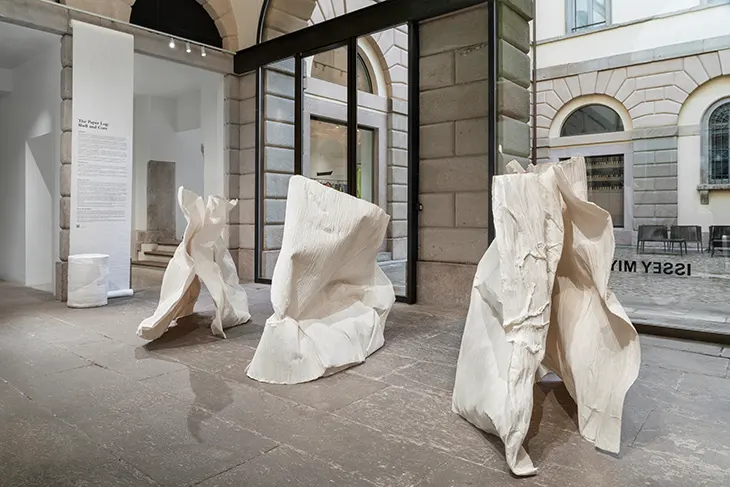
Issey Miyake presents The Paper Log: Shell and Core at its Milan store, a project conceived by Satoshi Kondo in collaboration with Ensamble Studio. The installation develops from compressed rolls of pleated paper, originally used in the garment-making process, and reconsiders them as a material with further potential. These cylindrical forms, shaped through the mechanics of pleating, become the starting point for a study that shifts them from industrial byproduct into objects and structures with new presence.
The installation unfolds through two parallel directions. Shell introduces sculptural pieces formed by peeling and shaping the paper into fixed, suspended compositions, while Core presents functional prototypes including seating and tables developed through treatments that alter the material’s density and surface. Throughout the space, these contrasting approaches are arranged to emphasize the tension between softness and structure, holding traces of the material’s origin while allowing it to take on a new role within a spatial and architectural context.
Loro Piana Studies Chapter I: On the Plaid
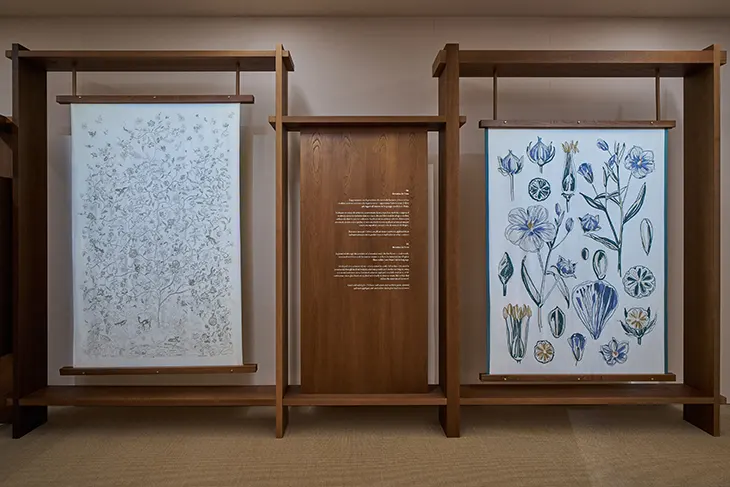
Loro Piana presents Studies, Chapter I: On the Plaid at its Cortile della Seta headquarters, focusing on the plaid as a defining object within the house’s interior vocabulary. The project traces its role back to the mid-1980s, when plaids and scarves marked its earliest finished products. From the start, the plaid served as a space for experimentation, where material research and weaving techniques developed through precision and control. Studies introduces a long-term framework built through individual chapters, each examining a single object or function through the lens of process.
The installation unfolds as a passage structured around twenty-four plaids, each treated as a standalone study. Variations in construction, pattern, and finish map out a wide range of technical approaches within one category. Fiber and yarn appear alongside the finished works, grounding each piece in their material origin while making the production process visible. Techniques such as embroidery, appliqué, handloom weaving, needle punching, patchwork, and screen printing shape each result, working across materials including Vicuña, Baby Cashmere, Cashmere, The Gift of Kings®, Royal Lightness®, linen, Wish wool, and Pecora Nera wool. Archival motifs return in updated compositions, while each plaid is produced on request, placing the object within a system of precision, variation, and controlled individuality.
Corolle Lamps by Dior Maison
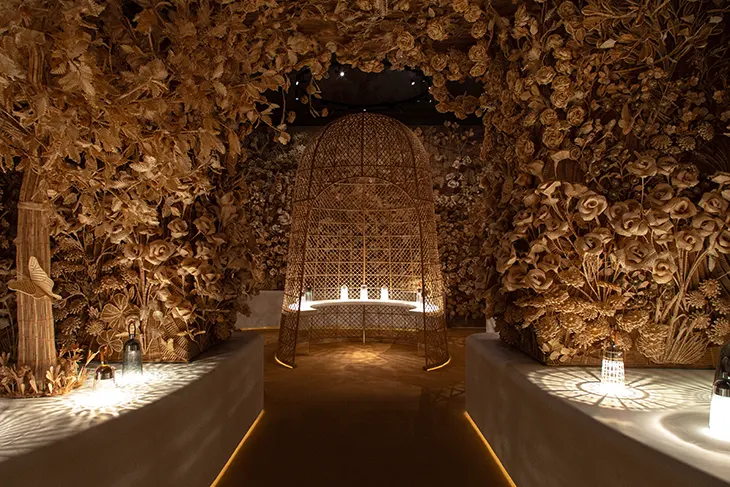
Dior Maison introduces the Corolle lamps designed by Noé Duchaufour-Lawrance, presented within Palazzo Landriani in the Brera district. The collection draws from the Corolle line of the 1947 New Look by Christian Dior, translating its defining silhouette into a series of nomadic lighting pieces. Set within a historic interior, the installation places the lamps within a context that connects design heritage with contemporary production.
The scenography references the gardens of Villa Les Rhumbs in Granville, reinterpreted through an environment shaped by Korakot Aromdee and Vasana Saima. This setting introduces a layered visual framework where organic and graphic elements interact with the objects on display. The installation frames the lamps within a constructed landscape that emphasizes their form and presence.
Tomato Chair by Chloé and Poltronova
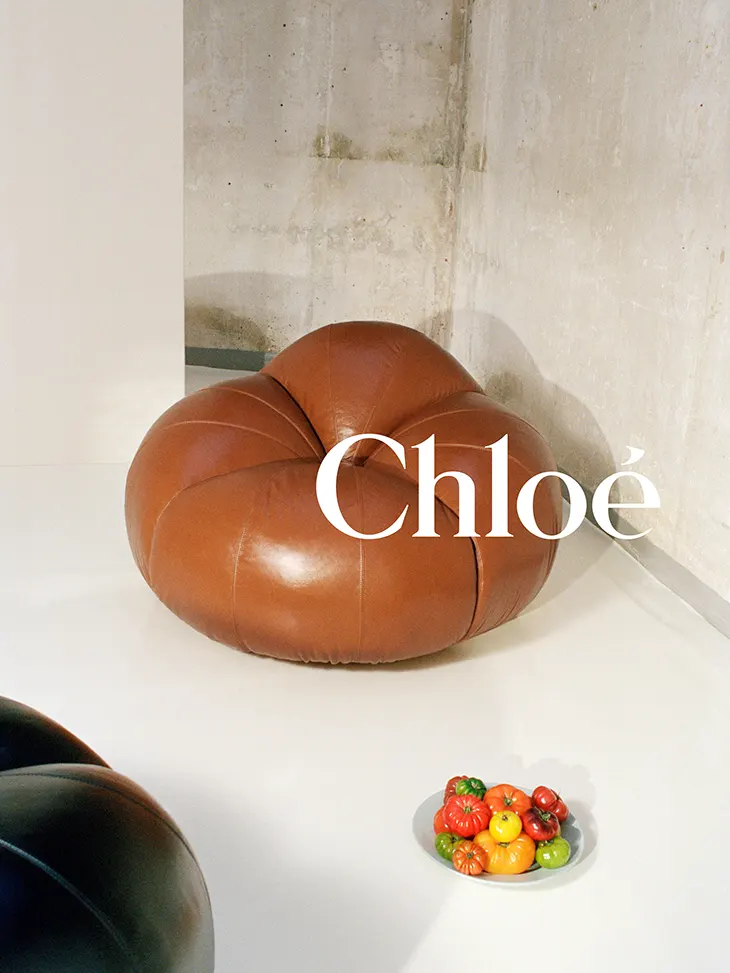
Chloé, under the direction of Chemena Kamali, revisits the Tomato chair in collaboration with Poltronova, bringing back a design originally created in 1970 by Christian Adam. The project returns to a moment defined by experimentation and cultural shift, where the chair proposed a different relationship between body and object through its soft, rounded structure. Its form rejects rigid geometry, instead shaping a presence that feels instinctive and grounded in physical experience.
The re-edition remains close to the original while introducing updated production methods, presented as a limited made-to-order series. Crafted in naturally tanned leather, the chair appears in four tones that clarify its sculptural shape through surface and material. Within Chloé’s broader direction, the project extends beyond fashion into a spatial and domestic context, where objects reflect a way of living defined by ease and a direct connection to form.
Size Matters by La DoubleJ
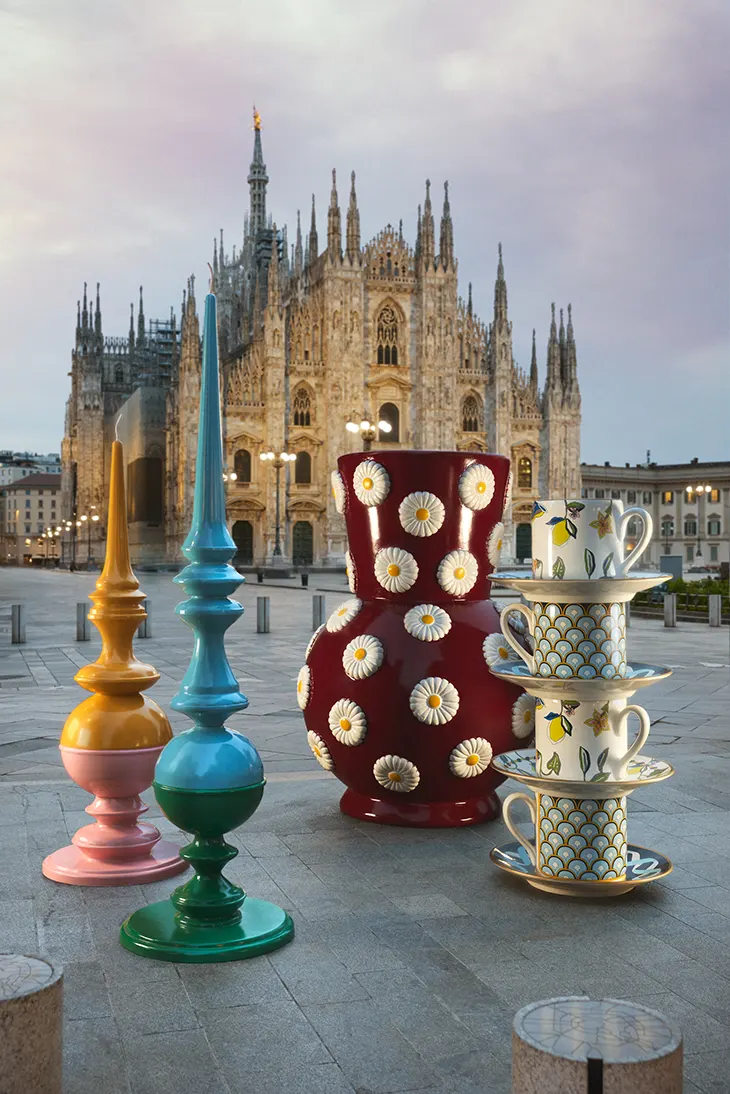
La DoubleJ transforms its Via Sant’Andrea flagship with Size Matters, an installation that explores scale through a surreal, immersive setting. Inspired by Les Valeurs Personnelles, the space reworks familiar domestic objects into oversized forms, shifting perception through proportion. Central to the installation are large-scale homeware sculptures crafted by Luca Bertozzi, translating everyday pieces into exaggerated forms that redefine their presence within the store. The intervention extends to the storefront, developed in collaboration with Max Siedentopf.
The installation coincides with the launch of the Al Fresco collection, marking the brand’s expansion into outdoor living. The new line introduces pieces designed for exterior settings, including poufs, folding tables, and porcelain elements drawn from the Fiesole collection. Within the transformed space, these objects sit within a broader environment, while visitors can take a set of pins and a mini magazine tied to the Mini Maxi concept.
Heimtextil with Patricia Urquiola and Alcova Milano
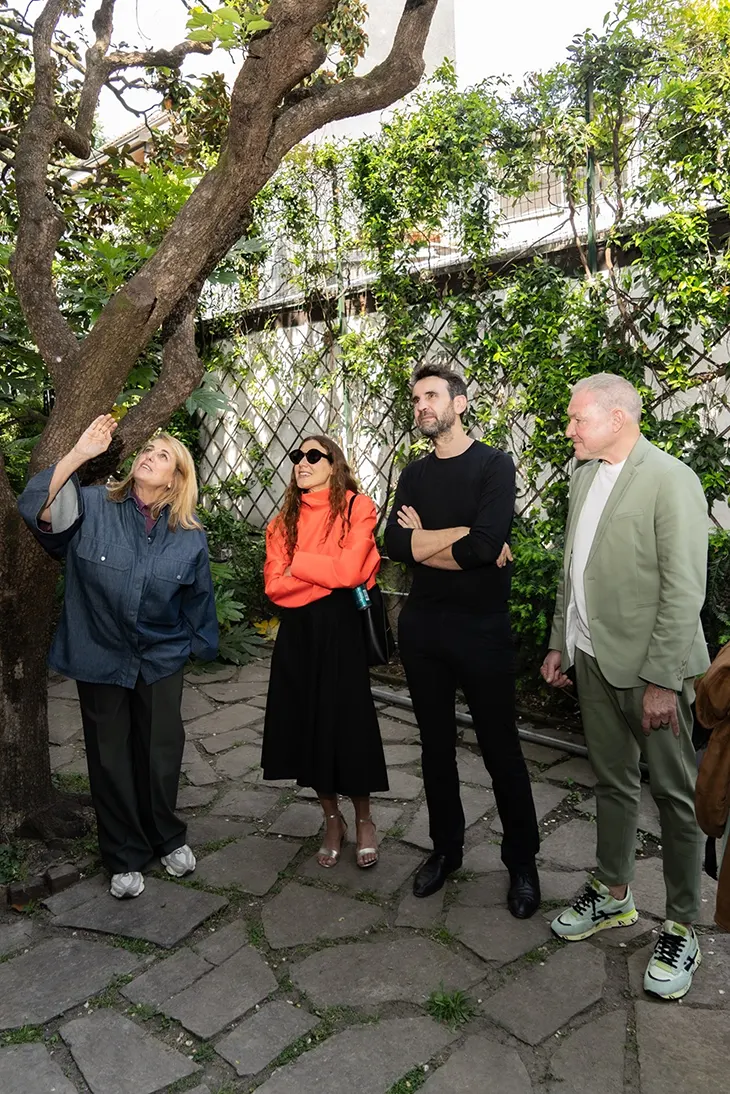
Heimtextil honored global partners Patricia Urquiola and Alcova Milano at Milan’s Villa Pestarini during Milan Design Week 2026. The event showcased Heimtextil’s recent collaborations with Urquiola and Alcova, positioning textiles within a broader interior context where material, structure, and layout define how space is formed and experienced. The partnerships reflect Heimtextil’s ongoing direction, where textiles are treated as integral components of design.
Patricia Urquiola’s contribution examines textiles as active systems shaped by structure, texture, and technology. Her installations approach material as something that can influence movement and interaction within a space. This direction continues her recent work, where textiles respond to gesture and presence through integrated tools, extending their role beyond static application into a more responsive and evolving function.
Common Ground by Gabriella Khalil and Ege
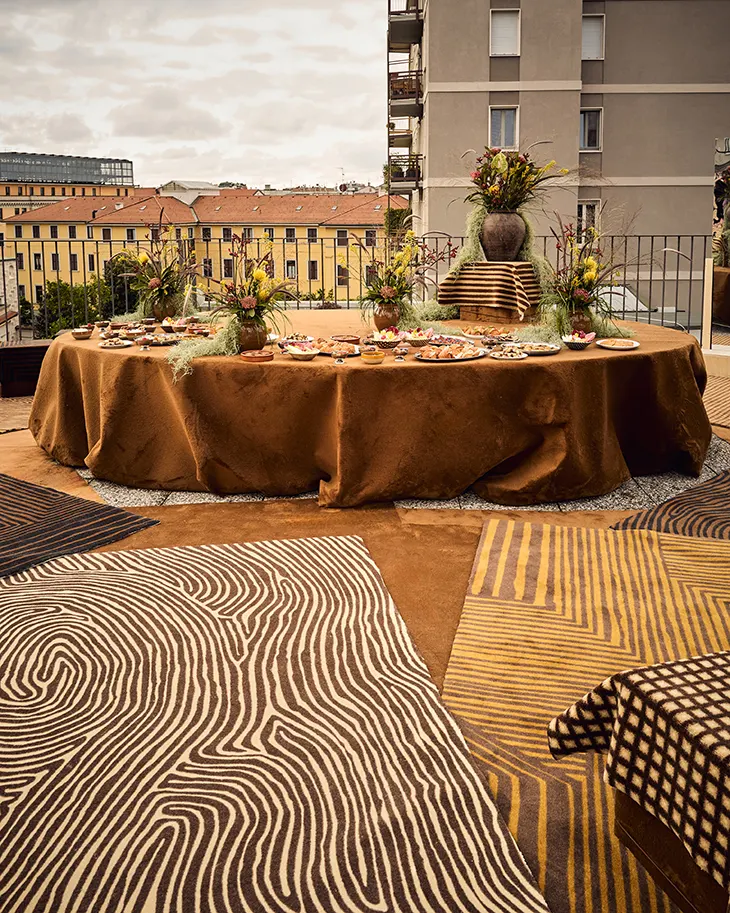
Gabriella Khalil and Danish carpet manufacturer Ege present Common Ground, a new collaboration introduced through an exhibition set on the rooftop of Convey. The project takes place within a mid-century building designed by Ottavio Cabiati and Luigi Brambilla in 1958, now serving as a base for design brands and creative exchange. The rooftop installation frames the collection within a constructed environment, where carpets define the space.
The collection focuses on graphic patterns and a restrained palette built around cream, chocolate, and black tones. Designs titled Ribbon, Imprint, Swell, and Maze use line as a central element, directing movement across the surface. Each rug is produced in 100 percent wool and includes integrated acoustic backing, available in standard sizes, custom formats, broadloom, and tile. The project introduces the collection to a wider audience, marking its first availability to consumers.
ALPI Wood Surfaces by Piero Lissoni and Yabu Pushelberg
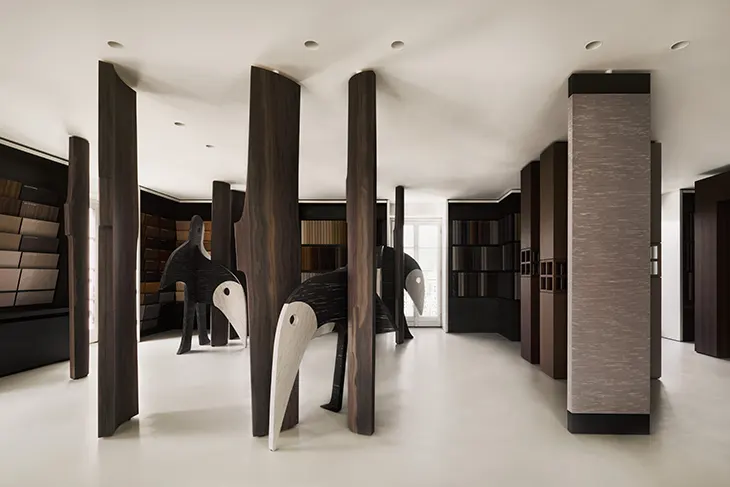
ALPI continues its research into wood surfaces through new collections developed with Piero Lissoni and Yabu Pushelberg. The project brings together two distinct approaches, one grounded in structure, the other more atmospheric and expressive. At the Salone, Lissoni’s stand unfolds through a sequence of spaces that present variations in rhythm and composition, while the downtown showroom introduces a more immersive setting shaped by contrasting visual directions.
The new collections treat veneer as a surface capable of transformation. Yabu Pushelberg’s Aurora and Birch explore color and pattern through layered tones, while Lissoni’s Xilo Acacia and Microline focus on structure and tonal depth through controlled treatments. The presentation extends to the Sensory Landscape exhibition at Palazzo Bovara, where ALPI contributes to a sequence of rooms designed to engage spatial perception through the interaction between natural and constructed elements.
CASA NM3 Modular Domestic Landscape
NM3 presents CASA NM3 at its Via Carlo Farini space, shaping a domestic installation structured through four rooms. Movable partitions define the layout, referencing the historic Velvet and Silk Café by Ludwig Mies van der Rohe and Lilly Reich, where textiles replaced solid walls to organize space. This approach introduces a flexible environment where architecture remains implied, allowing each zone to shift through use and perception. Within this framework, NM3 furniture forms a quiet interior, where objects maintain a balance.
The installation also introduces updated versions of the NM25 and NM26 systems, now developed with doors and drawers and conceived as fully modular structures. Kitchens, desks, and additional elements extend this system, expanding its use across different areas of the home while maintaining a consistent formal language. Rugs by cc-tapis define each space on the floor, while partner contributions introduce personal objects that add another layer to the setting. CASA NM3 frames furniture as a functional base for daily life, where design supports routine through a clear and adaptable approach to construction. Read more on ArchiSCENE for a closer look at the project.
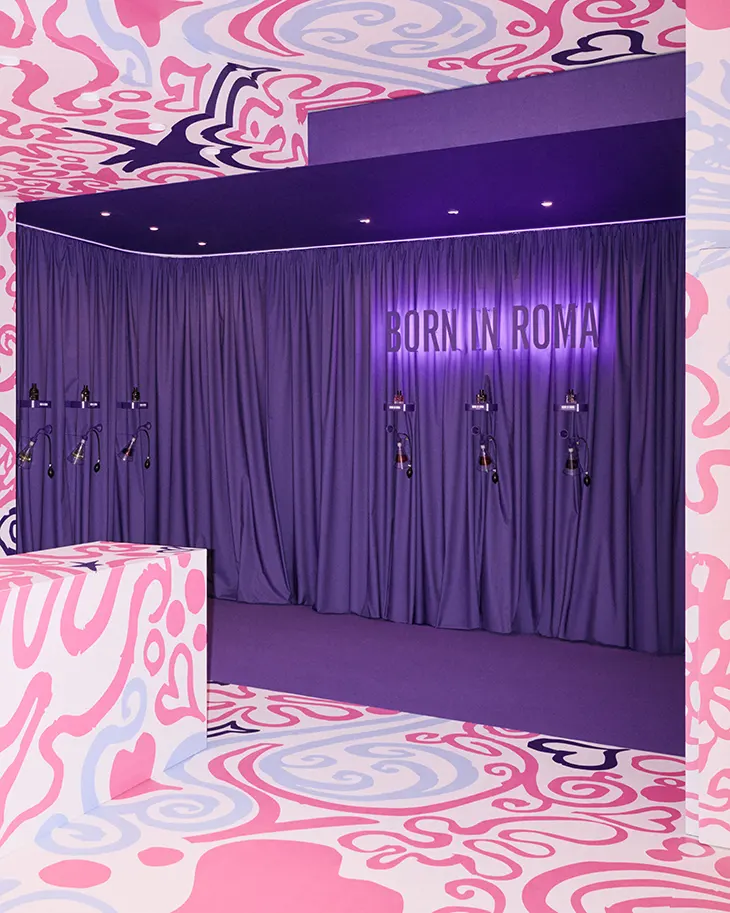
Valentino Beauty Pop-Up with Tabboo!
Valentino Beauty collaborates with Tabboo! on an immersive pop-up installed in Porta Nuova, where the artist’s graphic language defines the entire space. Located at Spazio Capelli between Piazza Gae Aulenti and Corso Como, the installation introduces a setting shaped through color, pattern, and surface, translating Tabboo!’s visual identity into a temporary environment. The project centers on the presentation of Born in Roma Purple Melancholia, a fragrance duo that frames melancholy as a source of creative energy.
Inside the space, Valentino Beauty structures a sequence built around scent and atmosphere, where the visual intervention guides the experience. Dedicated stations focus on the composition of the fragrances, presenting their olfactory structure through a direct and sensory approach. The installation positions the product within a constructed environment that connects visual expression with scent, shaping a temporary setting defined by contrast, intensity, and a controlled use of color.