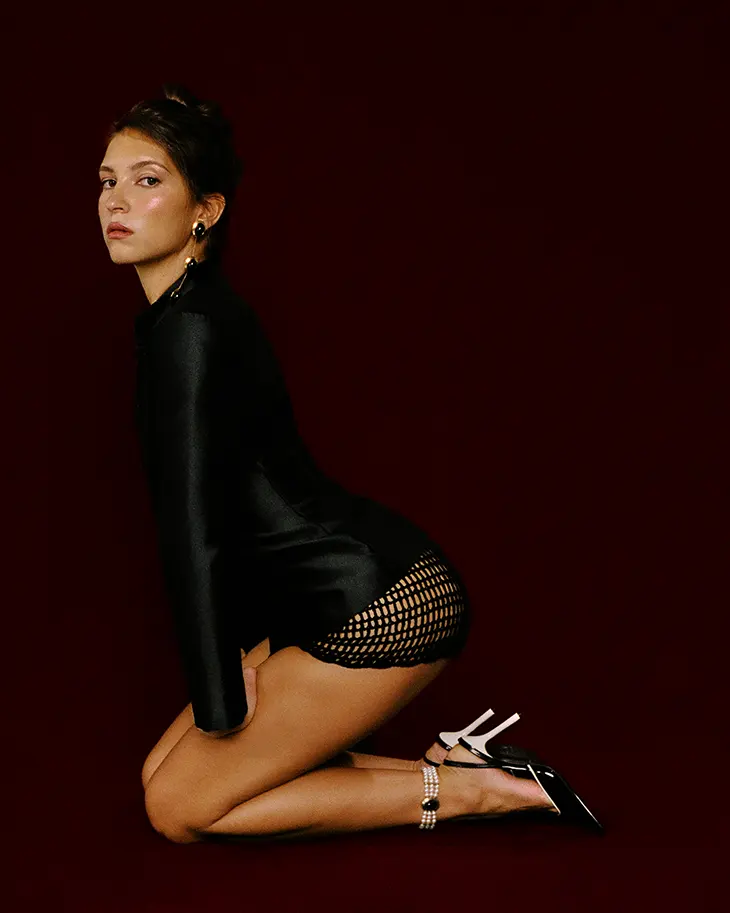



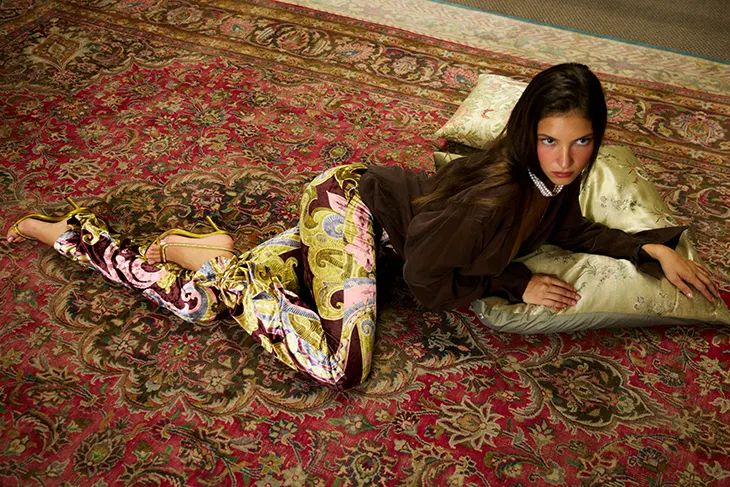
Kiana Ghavidel builds her namesake label through a focused approach to form, material, and detail, shaping a line of footwear that draws from Persian heritage while remaining grounded in contemporary design. Handcrafted in Italy, each piece reflects a controlled balance between simplicity and expression, where clean silhouettes carry subtle, jewelry-like elements that bring texture and light into focus. The brand moves with intention, favoring clarity over excess and allowing individuality to emerge through small, deliberate gestures.
INTERVIEWS
For DSCENE Magazine, Editor Katarina Doric speaks with Ghavidel about the path behind the label and the ideas that continue to shape it. She reflects on her early move to New York to study footwear design, her time in Milan refining technical knowledge, and the influence of growing up in Iran surrounded by craftsmanship, pattern, and visual detail. The conversation explores her evolving muse, the role of duality in how women dress, and the way each shoe begins with a specific moment in mind. Through this exchange, Ghavidel outlines a design language that remains personal, precise, and steadily unfolding.
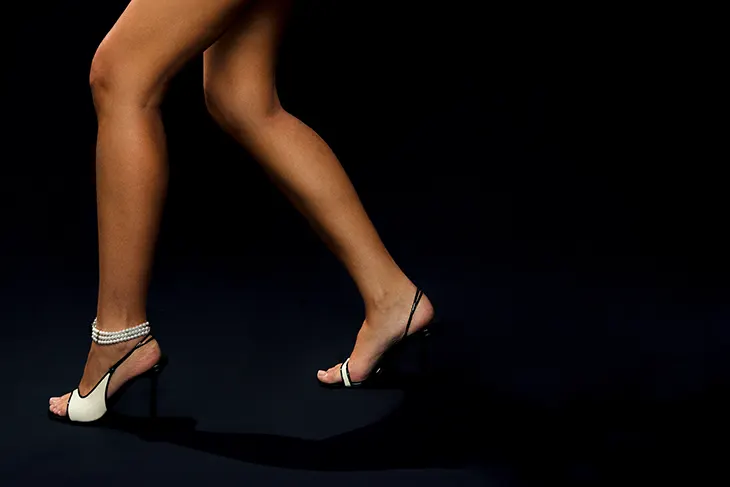
Was there a specific moment that pushed you to launch your own footwear label? – There wasn’t one loud moment. The idea of having my own shoe brand was always somewhere in the background, I just didn’t expect it to happen this early in my life. That’s part of why I first moved to New York to study footwear design and later moved to Milan to attend a school that was much more technical. Living in Italy and being so close to the craftsmanship and seeing how shoes are actually made, the construction, the materials, and the precision behind every detail made me fall in love with footwear in a much deeper way and also gave me the space to reflect on what I wanted to build and the kind of work I wanted to dedicate myself to long term.
I didn’t start this brand to fill a gap, I started it to express a point of view.
What gap did you see in the luxury shoe market that made you feel your voice was necessary? – To be honest, I didn’t feel there was an obvious gap waiting to be filled. The luxury market is incredibly saturated. Every day there’s a new silhouette or a new concept. I never thought my brand was here to fix something that was missing. For me, it wasn’t about filling a void. It was about expressing a perspective. I wanted to create shoes that feel simple in structure, not over-designed or complicated in the shape of the heel, but elevated through playfulness in materials, line, texture, and almost jewelry-like details. I’m very drawn to controlled simplicity with clean shapes that still allow for moments of sparkle and personality. I love the idea that shoes can sometimes act as your jewelry, the sparkle you choose instead of earrings or a necklace. Sometimes you decorate the ear or the neck, and sometimes that moment of shine can happen on your feet.
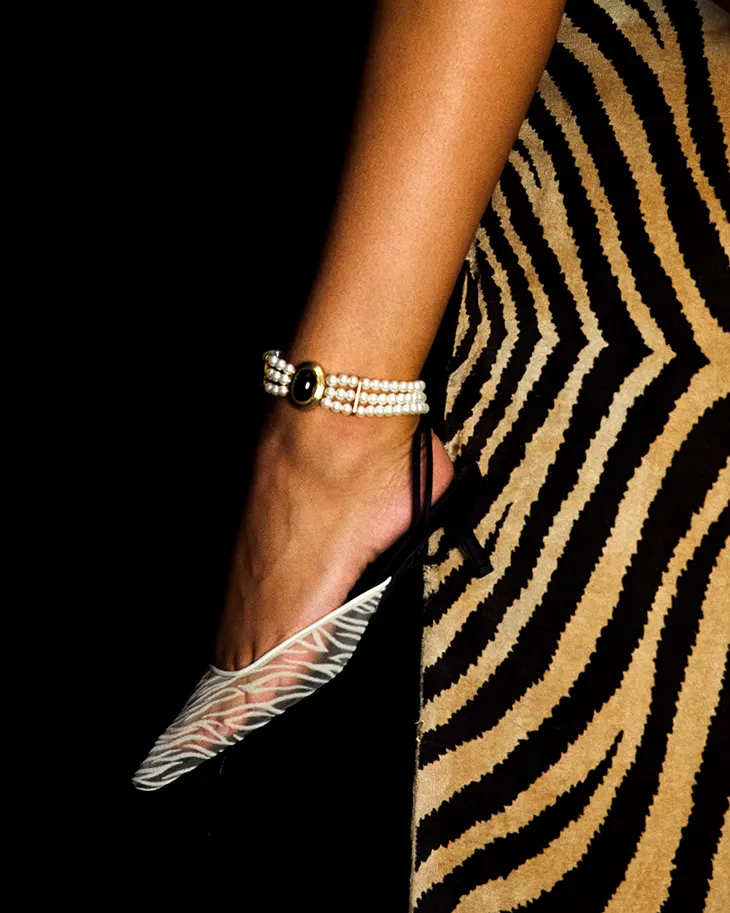
Who is your muse today? Is she a real woman, a memory, or a character you continuously refine? – My muse isn’t one specific woman, it’s more of a character that evolves over time. We’re never just one thing. In many ways, I’m inspired by the women I see around me and how they move through different moods and identities. One day you might feel in your most feminine energy; another day more relaxed, even a little tomboyish.So the woman I design for isn’t fixed. I’m very inspired by the idea that a woman can express different sides of herself depending on the moment or the period of life she’s in. She’s someone who enjoys that duality, one day elegant and expressive, the next effortless and understated. I like the idea that the same pair of shoes can live in different moments and versions of her life. That sense of duality inspires me a lot.
The woman I design for is never fixed, she shifts between moods, identities, and moments.
Which women inspire you the most, whether from your personal life or from culture? – Honestly, my mother has been my biggest influence. Her style in her twenties and thirties continues to inspire me today. When I was a child, maybe six or seven, I used to wonder why she dressed so simply. She wore jeans, sneakers, or simple boots and heels, and her hair was always short, almost like a Sharon Stone haircut. Compared to many of the other women around us in Iran, her style felt very different. She didn’t wear bold jewelry or bright colors, and nothing about it felt loud. I remember even questioning it as a kid. But as I grew older, I realized how modern her style actually was. Looking back now, the way she dressed in Iran felt very much like the effortless minimalism of the ’90s outside of Iran, almost as if she were living somewhere else outside of Iran, even though we had never left the country at that time. I think a lot of that influence came from the fashion world she followed so closely. We didn’t have many fashion channels or media available to us in Iran, but an Italian program called TV Moda, hosted by Jo Squillo, was constantly playing in our house. I remember her staying up late watching the shows and sketching coats, skirts and shirts in a small notebook. What I love the most is that even though her style was simple, she always chose one small element in her outfit to shine. Sometimes it was a belt with a subtle stone detail, or sometimes a decorative pocket on her jeans or a special collar on a shirt. Nothing was ever excessive, but there was always a quiet moment of sparkle. That balance between simplicity and a single striking detail continues to influence my designs today. Because we didn’t always have access to the brands or clothes she admired, she would buy fabrics, especially satin, and have pieces made by seamstresses, which is probably where my love for satin comes from.
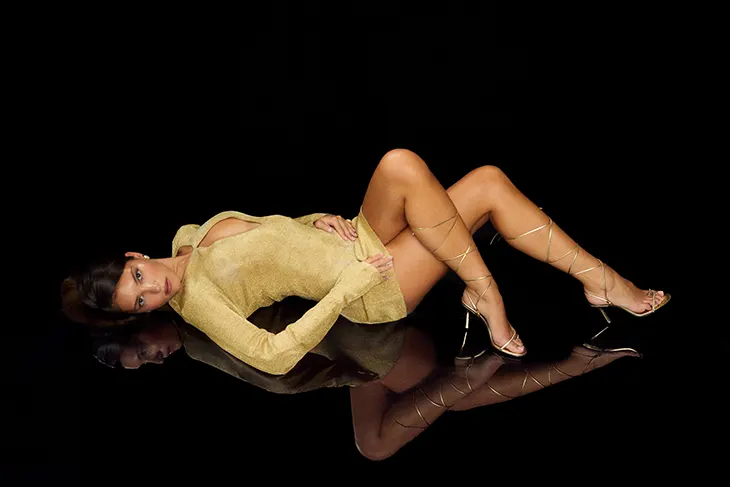
Growing up, who did you look up to creatively? Were there designers or artists who shaped your early taste? – Growing up in Iran meant being surrounded by an incredibly rich visual world. From a very young age you notice the details, the architecture, the intricate patterns of Persian rugs, the chandeliers, the colors, and the craftsmanship that exists in so many everyday objects. There is a long history of ornamentation and artistry in Persian culture, and that kind of beauty stays with you. In many ways it can feel very maximalist. There is so much decoration and attention to detail and texture. As a designer, I think my instinct has been to translate that richness into something more restrained, simple silhouettes and clean lines, but with moments of sparkle, texture, or jewel-like details. One Iranian artist whose work has inspired me deeply is Monir Shahroudy Farmanfarmaian. The geometry, the mirrors, and the way her work plays with light and reflection is incredibly powerful. There is both structure and ornament in her art and that balance between precision and decoration resonates a lot with the way I approach design.
I like the idea that one pair of shoes can exist across different versions of a woman’s life.
You reference the ’90s often. What is your favorite ’90s fashion piece that you return to again and again? – It’s not one specific item. I’m generally drawn to the simplicity and sensuality of the ’90s and early 2000s. I was born in the late ’90s, so my connection to that era mostly comes from images, fashion magazines, runway archives, and the visual culture I grew up seeing around me. Many of the elements that stayed with me from those images continue to appear in my designs today: satin, jewelry-like details, clean lines, and a certain understated sensuality. That balance between minimal structure and a touch of glamour is something I always come back to.
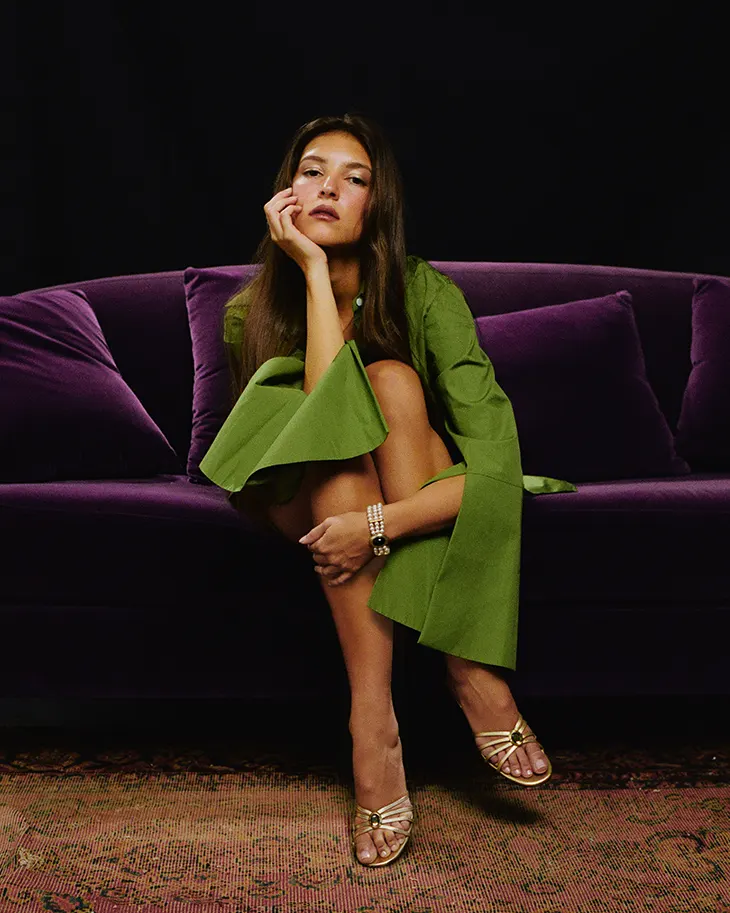
Is there a specific ‘90s brand or designer that continues to influence your aesthetic? – I’ve always been inspired by the contrast between Tom Ford’s sensuality at Gucci in the ’90s and Miuccia Prada’s intellectual minimalism. One celebrates glamour and confidence, while the other explores restraint and quiet sophistication. That tension between sensuality and simplicity is something I’m constantly drawn to in my own work. In many ways, I’m interested in allowing those two worlds to coexist, where both sensuality and restraint can live together.
Growing up in Iran, you are surrounded by beauty in detail, pattern, and craftsmanship.
How does your Persian heritage inform your sense of glamour and femininity? – Iran is an incredibly visual culture. From architecture to Persian rugs, mirror work, colored glass windows, and chandeliers, there is a deep appreciation for beauty and craftsmanship, and it often lives in the details. But the Iran I grew up in was very different from the images you see from earlier decades. I was born after the revolution, so the reality of everyday life wasn’t the same as the photographs you see from before that time. Because of that, many of us stayed connected to that part of our culture and heritage through images, family stories, and old videos. Seeing how women dressed, how they carried themselves, and the elegance they had created formed a kind of visual memory of femininity for me, even though I didn’t personally live in that era. Women in Iran are often pushed to express parts of their identity more privately, behind closed doors. But what I’ve always found powerful is that Iranian women never stop expressing themselves. Despite the pressures they face, they continue to express their opinions, their individuality, and their sense of beauty. That resilience is incredibly powerful and inspiring. I think growing up around that gave me a very particular understanding of femininity and glamour. For me, glamour isn’t about excess, it’s about how a small detail, a texture, or a moment of sparkle can transform something simple.
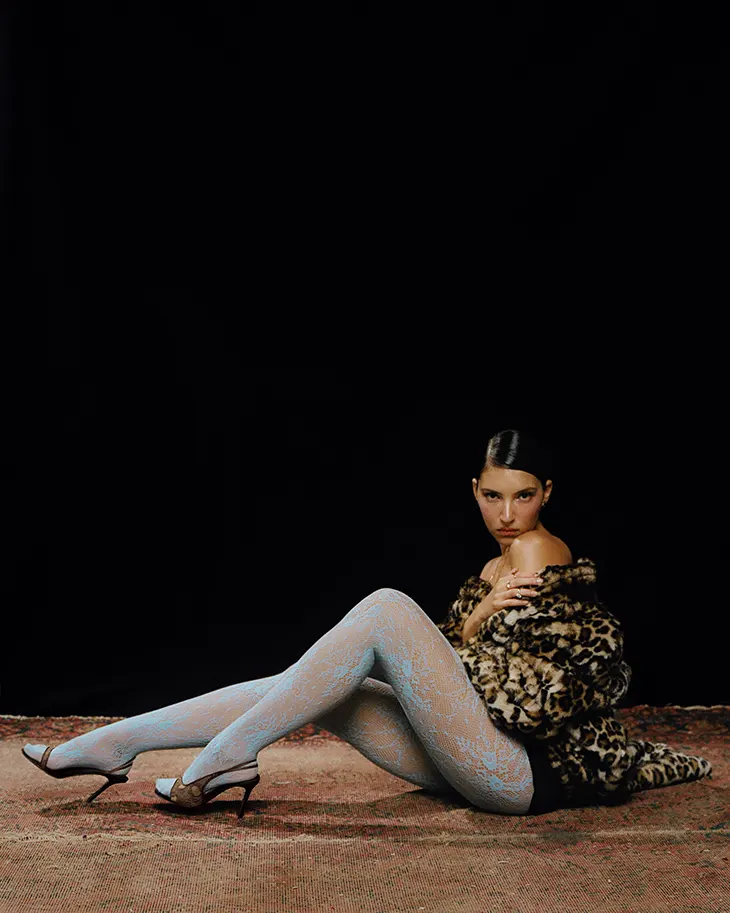
When you design a new shoe, do you picture a specific moment where it will be worn? – I almost always imagine a very specific moment. I picture the outfit, the atmosphere, the lighting, even the perfume, the whole scene becomes very clear in my head. Most of the time I’m imagining a woman, sometimes even a very specific one, wearing the shoes in different moments of her life, across different days, weeks, or months. I like the idea that the same pair of shoes can move through very different situations. That sense of versatility is really important to me when I design. I love when a shoe can adapt to different moods and moments in a woman’s life.
For me, glamour isn’t about excess, it’s about how a small detail can transform something simple.
What does success look like for you at this stage of the brand? – At this stage, success means building a brand with a clear point of view. The brand launched just over a year ago, so defining and communicating that perspective is something we’re continuously developing. Ultimately, I want the brand to grow slowly but intentionally, creating timeless designs that don’t go out of style and that women return to over time. I want the shoes to feel like forever pieces and not something that fades away in the back of a closet once a trend passes. Seeing someone wear the shoes in their own way and make them part of their life is incredibly meaningful to me.