


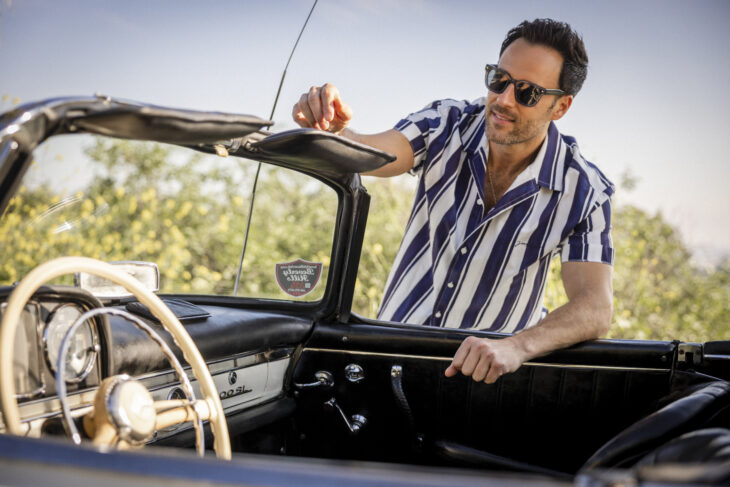
In an era dominated by electric vehicles and autonomous driving, there exists a counterculture of collectors, celebrities, and design enthusiasts who believe the soul of automotive design lives in the past. At the center of this movement is Alex Manos, founder of Beverly Hills Car Club (BHCC), one of the largest European classic car dealerships in the United States.
Housed in a 140,000 square-foot, BHCC has become the trusted destination for Hollywood’s most discerning collectors: Justin Bieber, Jason Momoa, Tyler, the Creator, and Snoop Dogg, among others. The dealership has handled landmark transactions including Michael Jordan’s 1996 Mercedes-Benz S600 Lorinser and Miles Davis’s 1980 Ferrari 308 GTS – cars that carry not just mechanical prestige, but cultural significance.
VISIT DSCENE CARS PAGE
With over 2,000 five-star reviews, 60+ employees, and a rapidly growing digital presence that has earned recognition from Old Cars Weekly as “one of the coolest collector car dealerships in the country” and from GQ among “The 9 Best Car Accounts to Follow on Instagram,” Manos has transformed how classic cars are discovered, valued, and collected in the digital age.
His collection spans Porsche, Jaguar, Aston Martin, Rolls-Royce, and Bentley, with 80% of inventory devoted to European marques. But beyond the numbers and the celebrity clientele, Manos is a design curator, someone who understands that classic cars represent timeless craftsmanship in an age of mass production.
DSCENE Editor In Chief Zarko Davinic spoke with Alex Manos about design philosophy, the intersection of celebrity culture and car collecting, the future of vintage luxury, and what separates a car with soul from a mere object.
How important is design in what you do at the Beverly Hills dealership? – Design is everything. When you walk into our dealership, you’re entering a carefully curated space. The building itself is part of the experience: brick walls that we sandblasted, exposed wood beam ceilings, concrete floors stripped back to their raw state. It creates that vintage feel. Then the way we lay out the cars, you come through a small door and it opens into this vast space filled with vehicles. It’s not just about displaying cars; it’s about designing the home of the cars.
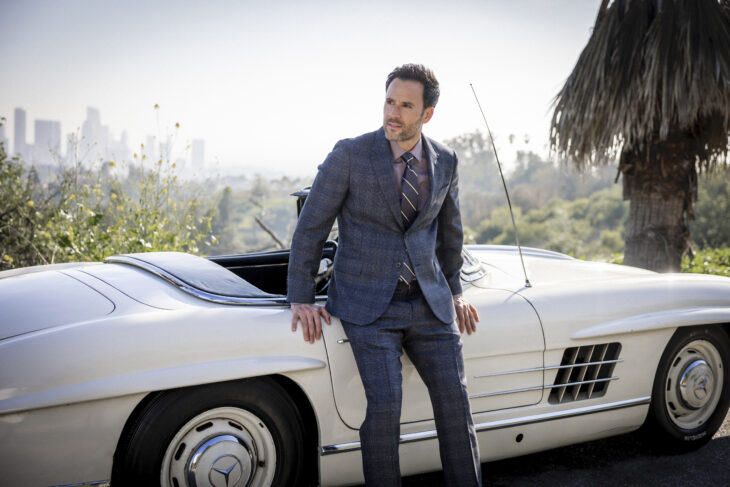
How do you organize the collection aesthetically? – We organize our collection across different showrooms: one for Porsches, one for Mercedes, a British section. Within each space, we intentionally mix colors so you never see the same palette twice. A Bahama yellow next to an arena red, then a guards red, then a midnight blue. It has a vibe to it, like a handful of M&Ms or Skittles.
Why do you gravitate toward European car design? – The shape of European cars is just correct. I started with American classics, all that power steering, air conditioning, electric windows, that big American statement. But over time, I became drawn to the European aesthetic. An Alfa Romeo from the 1950s or 1960s has no power windows, yet the shape is so sleek, so sporty. You can’t deny that design language has aged beautifully.
How important is celebrity ownership when you’re acquiring a car? – Celebrity ownership is a bonus. I’m primarily searching for the right car regardless, but if Michael Jordan owned it, my interest increases significantly. With the Ferrari 308 I acquired, the Miles Davis connection was a surprise that came during the negotiation. The previous owner mentioned it casually, and suddenly the deal became non-negotiable.
Compare a 1958 Corvette to a Tesla. There’s no passion, no emotion. When you sit in that Corvette, you smell the leather. When you turn it on, there’s power, emotion, energy. You drive it and experience the smells, the aroma, the vitality. A Tesla? You don’t even know if it’s on.
How do you prove provenance? – Proving provenance is straightforward with cars. Every vehicle purchased in America comes with a title registered in the state where it’s kept. The title shows the owner’s name and the car’s year, make, and model. For the Miles Davis car, I have copies of previous paperwork showing he was the registered owner. It’s much simpler than art authentication.
What’s the difference between a preservation-class car and a fully restored car? – A preservation-class car ideally remains untouched, in its original condition as it left the factory, or with minimal deterioration. A fully restored car is the opposite extreme: you can change almost everything, recreate the car as it came from the factory new.
When you do a full restoration, what freedoms do you have as the owner? – When you do a full restoration, you have complete freedom as the owner. You want to paint it pink? You can. Tiger-print interior? Go ahead. But I always recommend restoring the car to its original specifications, the original color, original interior, because that’s the right thing to do. That said, not everything in life is about money. If an owner wants a cheetah-print interior and that makes them happy, there’s nothing wrong with that.
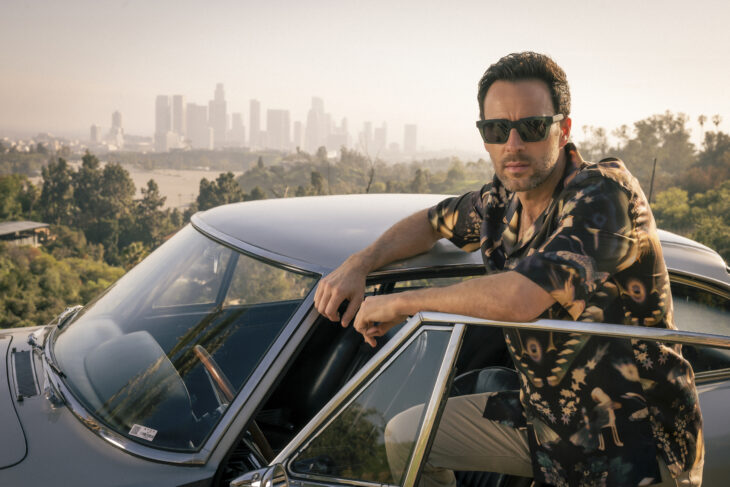
What do you think modern luxury cars are missing compared to classic cars? – Compare a 1958 Corvette to a Tesla. There’s no passion, no emotion. When you sit in that Corvette, you smell the leather. When you turn it on, there’s power, emotion, energy. You drive it and experience the smells, the aroma, the vitality. A Tesla? You don’t even know if it’s on.
Can you give an example of that sensory connection? – A friend recently sat in a 1990 Porsche and said, “My god, it still smells the same as it did in the 90s.” That smell transported him instantly. It’s like encountering someone who’s worn the same cologne for twenty years, two seconds and you’re back there. Modern cars lack that flavor. They’re just objects.
How much do you think cultural influence shapes what people want to collect? – Everything we experience shapes us. When you see classic cars everywhere, on Instagram, in TV shows, in movies, it influences what people want. The classic car market is hotter than it’s ever been because people want to feel culture. You can’t feel culture in an EV.
Everything we experience shapes us. When you see classic cars everywhere, on Instagram, in TV shows, in movies, it influences what people want. The classic car market is hotter than it’s ever been because people want to feel culture. You can’t feel culture in an EV.
Why do you think classic cars keep appearing in media? – In nearly every show now, somebody is driving a vintage car. People watch what excites them and engage with what gives them a good feeling. Those cars give people good feelings.
Why do you share your collection online? – We share our collection online to keep car culture alive. It’s important that people remember what’s out there, that they can teach their kids and the culture continues. By bringing this respect back to design, we’re also addressing something bigger: the furniture industry, the car industry, they both push constant replacement. But timeless designs never go out of style.
What’s the connection between classic cars and timeless design? – A mid-century house is cherished now more than ever. A classic car lasts for decades, passed down through generations. That’s what’s important.
Do you have plans to expand beyond the dealership? – One of my dreams is to curate a traveling exhibition of the collection. A design museum show that could move from place to place. The challenge is that cars are big, unlike art pieces you can pack in containers. But at the dealership, we have 650 cars—500 on the website right now—so if we did an exhibition, we’d want it to be big.
Demand for vintage luxury has only increased, even through difficult times. While everyone drives cars that drive themselves, people are drawn more than ever to stand out. If ten guys are driving an EV, the cool kids want to be the eleventh guy driving a 1975 Porsche 911. That makes a statement about who you are.
How do you see vintage luxury evolving in the digital age? – Demand for vintage luxury has only increased, even through difficult times. While everyone drives cars that drive themselves, people are drawn more than ever to stand out. If ten guys are driving an EV, the cool kids want to be the eleventh guy driving a 1975 Porsche 911. That makes a statement about who you are.
Will future EVs become collectibles? – It’s hard to say. They’re like robots, like old phones that end up on a shelf collecting dust before you throw them away. A design needs soul to survive decades. And that’s what separates timeless cars from the rest.