


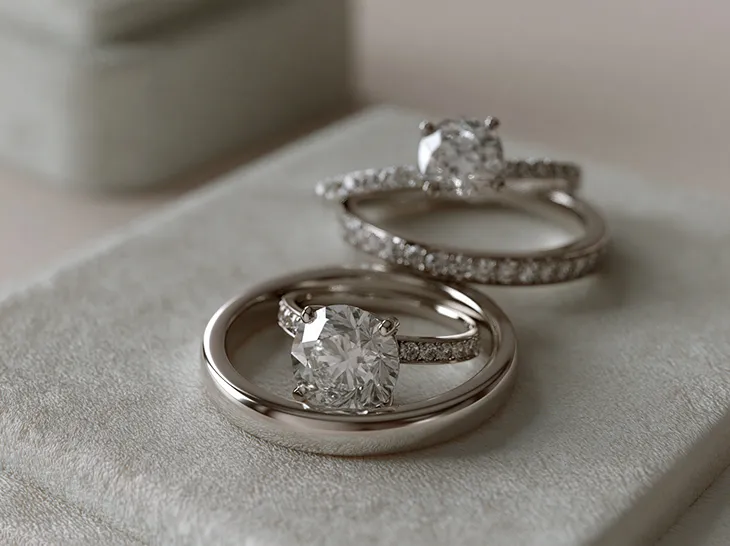
The lab-grown diamond market is at an inflection point. In October 2025, the Gemological Institute of America fundamentally changed how it grades lab-grown diamonds, abandoning the traditional 4C framework (color, clarity, cut, carat weight) in favor of a new “Premium” and “Standard” rating system. Simultaneously, prices for lab-grown diamonds have plummeted 74% over the past three years, while major brands like De Beers quietly shuttered their retail lab-grown line. For buyers exploring engagement rings, this volatility matters. It signals a maturing market where the narrative around lab-grown diamonds is shifting from novelty to commodity, and where transparency about trade-offs is more important than ever.
Market Inflection: Why Certification Suddenly Matters
Until recently, lab-grown and natural diamonds were graded by the same standards. That changed in October 2025 when the GIA introduced a new assessment framework specifically for lab-grown diamonds. Instead of receiving color and clarity grades like their natural counterparts, lab-grown diamonds are now assigned either “Premium” status (which requires D color, VVS clarity or higher, excellent cut and polish) or “Standard” status for stones that don’t meet those benchmarks. Stones that fall short receive no grade at all, and these are just the first steps in grading your lab-grown diamond engagement rings.
The shift has created two competing certification systems. The International Gemological Institute (IGI), which controls approximately 65-70% of lab-grown diamond certification, continues to issue traditional 4C grades for lab-grown stones. This divergence matters for pricing and perception. A 1-carat lab-grown diamond graded by IGI using the conventional 4C scale may command a higher perceived value than the same stone graded by GIA under the new “Premium/Standard” framework, even if the quality is identical. For buyers, this means certification choice directly impacts resale expectations and pricing anchors.
Real Cost Advantage (And Its Limitations)
The financial case for lab-grown diamonds is straightforward: a 1-carat stone costs roughly $1,000, compared to $5,000-$20,000 for a natural diamond of comparable quality. That’s a 70-90% discount. Over the past three years, this advantage has widened as lab-grown prices have dropped 74%, driven by supply expansion from producers in Surat, India, and China. Production efficiency gains (particularly in Chemical Vapor Deposition, or CVD, which can grow larger stones in 3-4 weeks) have commoditized the market.
Lab-grown diamonds are legitimate stones with real advantages for the right buyer. But they’re also a commodity product in a volatile market. The 74% price drop over three years and GIA’s certification overhaul suggest the market is still finding its equilibrium.
But here’s the caveat: that cost advantage evaporates if you ever sell. Natural diamonds retain approximately 25-50% of their purchase price on the resale market. Lab-grown diamonds retain roughly 5-10%. Some retailers offer fire-sale prices or refuse buybacks altogether. There is no established secondary market for lab-grown diamonds. No auction houses. No certified resale channels. If an engagement ring needs to be sold, whether due to life changes or financial pressure, a lab-grown diamond will recoup substantially less than a natural one.
This is not a misconception. It’s a hard market reality that many lab-grown marketing materials downplay.
Durability and Authenticity: What the Science Actually Says
Lab-grown and natural diamonds are chemically identical. Both rank 10 on the Mohs hardness scale. Both are carbon crystals with the same optical and physical properties. A trained gemologist with a loupe cannot reliably distinguish them without advanced laboratory testing like spectroscopy or X-ray luminescence. This indistinguishability is a selling point for lab-grown (the stone looks identical), but it also creates consumer anxiety: “How do I know what I’m actually buying?“
The answer is certification. A GIA or IGI report proves origin and quality. Without one, you’re trusting a retailer’s word. For engagement rings, always insist on independent certification from either lab, regardless of whether you choose natural or lab-grown.
Sustainability Narrative Is Complicated
Lab-grown diamond marketing often emphasizes environmental benefits. Pandora, which stopped sourcing mined diamonds in 2021, claims its lab-grown stones have a 90% lower carbon footprint than natural diamonds. Other brands like VRAI and Diamond Foundry advertise 100% renewable energy production. These claims sound compelling, but they’re largely unverified.
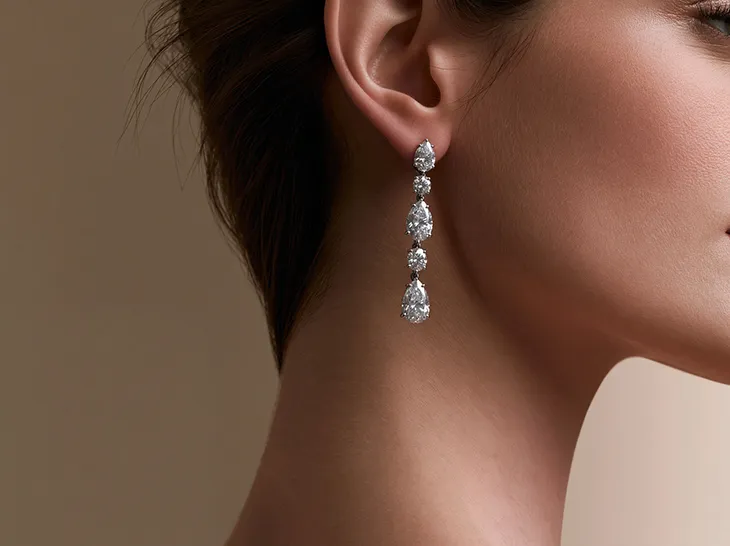
The reality is murkier. Lab-grown production is energy-intensive, requiring significant electrical input over weeks of growth. A Trucost study (cited by S&P Global, 2019) estimated lab-grown production at 511 kg of CO2 per carat, though this varies widely depending on energy source and production method. Mined diamonds also carry environmental costs: mining operations impact ecosystems, labor conditions can be exploitative, and the industry has historical ties to conflict zones. Neither category has a clean environmental bill of health. The Harvard Business Review has warned explicitly against lab-grown greenwashing: “Without impact data transparency, none of laboratory-grown diamond producers should make claims of sustainable practices.”
If environmental responsibility matters to you, look for independently verified certifications (like SCS-007 standards for sustainable practices). Marketing claims without third-party audits should be treated skeptically.
Why Major Brands Are Retreating
As a clear example, De Beers‘ decision to close Lightbox in May 2025 is telling. Lightbox was De Beers’ retail lab-grown line, launched in 2018 with fixed pricing ($600-$900 per carat) to disrupt the market. Seven years later, the company shuttered it. Industry analysis suggests De Beers couldn’t compete on price against open-market lab-grown producers from Surat and China. The margin had compressed too far. Rather than compete, De Beers refocused on natural diamonds and mining assets. This signals that even major players view lab-grown as a commoditized, low-margin business with limited differentiation.
For buyers, this matters because it suggests lab-grown diamond prices may continue to fall, and brand loyalty offers little protection.
Who Lab-Grown Diamonds Actually Serve
Lab-grown diamonds make sense for specific buyer profiles:
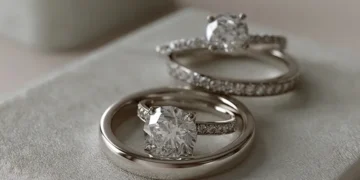
Budget-conscious couples who prioritize affordability and are comfortable with minimal resale value. A $1,000 lab-grown engagement ring can look identical to a $15,000 natural stone to the naked eye.
Millennials and Gen Z who weigh affordability and environmental messaging equally. De Beers’ 2026 research found that 8% of Gen Z diamond buyers prefer lab-grown (versus 11% who prefer natural and 5% who prefer other options). It’s growing, but it’s still a minority position.
Buyers who plan to keep the ring indefinitely and have no resale concerns. If the stone is never leaving your finger, resale value is irrelevant.
Buyers prioritizing ethical sourcing who are skeptical of mined diamond origins. Note: This is a reasonable concern, but verify sustainability claims independently before accepting them at face value.
Bottom Line: Ask the Right Questions
Finally, if you’re shopping for a lab-grown diamond engagement ring, prioritize clarity of sourcing over marketing narrative. Ask your retailer:
Is the diamond certified by GIA or IGI? What exactly does the grading report say? If it’s GIA-certified lab-grown, understand that the “Premium” or “Standard” designation is different from the 4C system. Does the retailer offer any buyback or resale program? What would that look like? Can they verify the energy sourcing or carbon footprint claims they’re making? Do they have independent third-party audits to back up sustainability statements?
Lab-grown diamonds are legitimate stones with real advantages for the right buyer. But they’re also a commodity product in a volatile market. The 74% price drop over three years and GIA’s certification overhaul suggest the market is still finding its equilibrium. Buy with eyes open to the trade-offs, especially resale value, rather than to the marketing narrative alone. Browse for more jewellery stories on DSCENE.