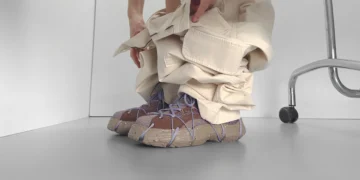



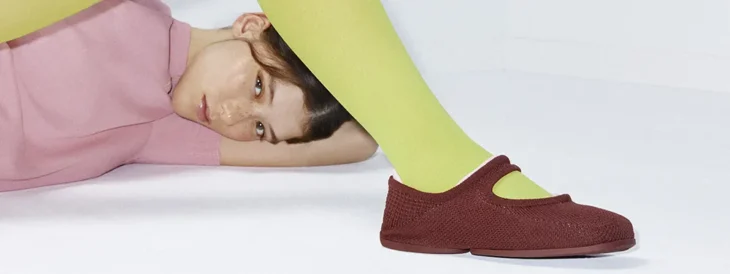
Camper approaches summer footwear through two designs that place choice, comfort, and circular thinking at the center: ROKU and Right Niko. ROKU brings the brand’s modular innovation into a sneaker built from six interchangeable recycled parts, while Right Niko debuts this season in two styles, the ballerina and the Mary Jane, with two exchangeable components. Together, they create perfect summer companions for movement, travel, and everyday wear, giving the user shoes that can shift with mood, setting, and personal style.
FOOTWEAR
The idea behind ROKU begins with a simple question: what if a shoe could last longer because the wearer could change it? Camper developed the concept over three years, moving from sketches and prototypes to a final product that rethinks how footwear is built, worn, repaired, and eventually recycled. Named after the Japanese word for “six,” ROKU consists of six separate parts that can be assembled and disassembled without glue. The result is a shoe that reduces waste, extends product life, and gives the wearer a direct role in its design.
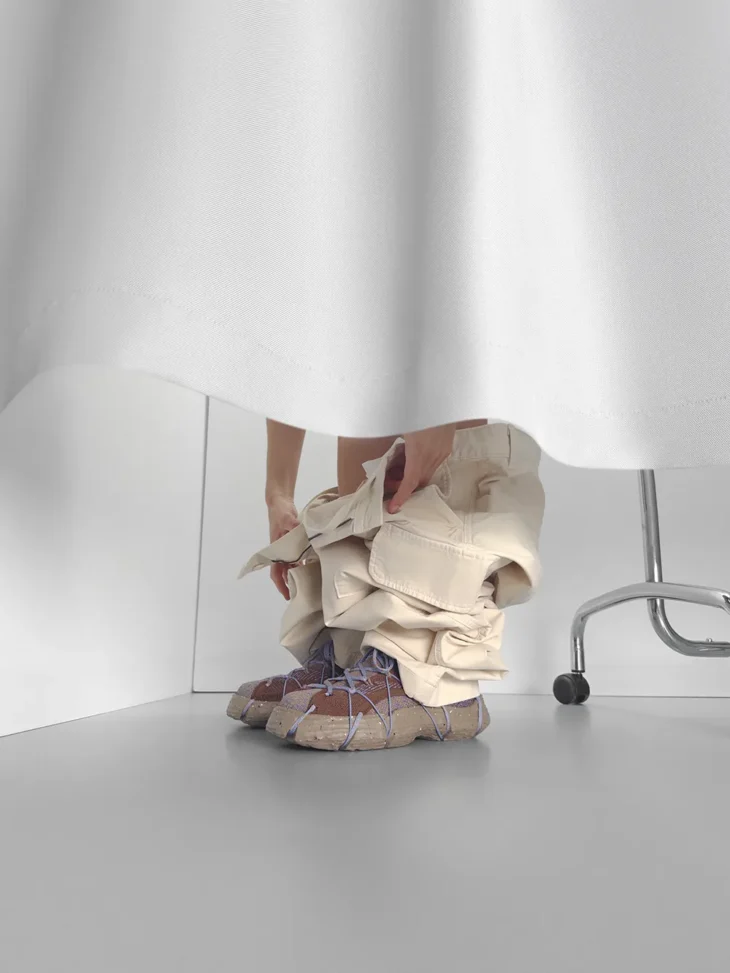
ROKU draws from Camper’s Wabi, the brand’s minimalist shoe first launched in 2000. Wabi used simplified processes and a humble design language inspired by Japanese minimalism, and it became one of Camper’s most sustainable products. ROKU takes that foundation further. It keeps the idea of simplicity, but adds a technical system built around circularity. Each element has a purpose. The upper, inner sock, footbed, outsole, laces, and cord work together as a lightweight modular structure that can be repaired, replaced, customized, and recycled.
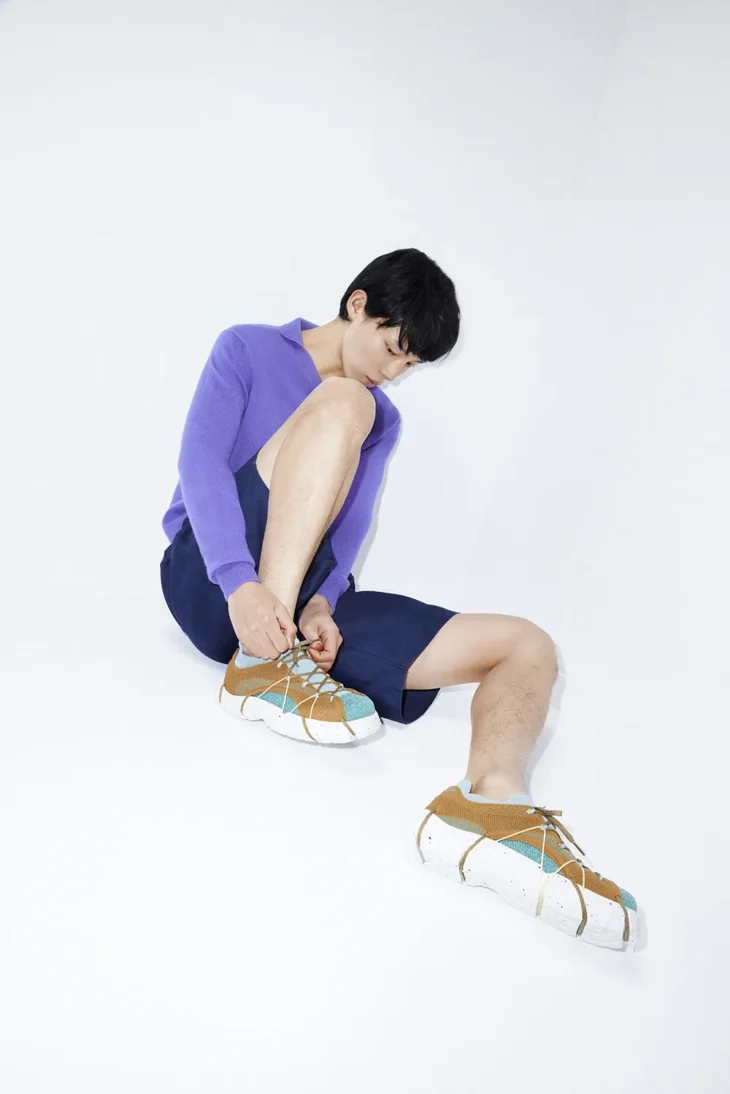
This construction gives ROKU its strongest summer quality: adaptability. The shoe can move from city streets to weekend travel, from casual mornings to long days outside, without feeling fixed to one look. Its interchangeable parts allow users to build different color combinations and refresh the shoe without replacing the whole pair. With new colorways expanding the line, Camper opens up a wide range of possible combinations, turning the shoe into a personal system rather than a finished object.
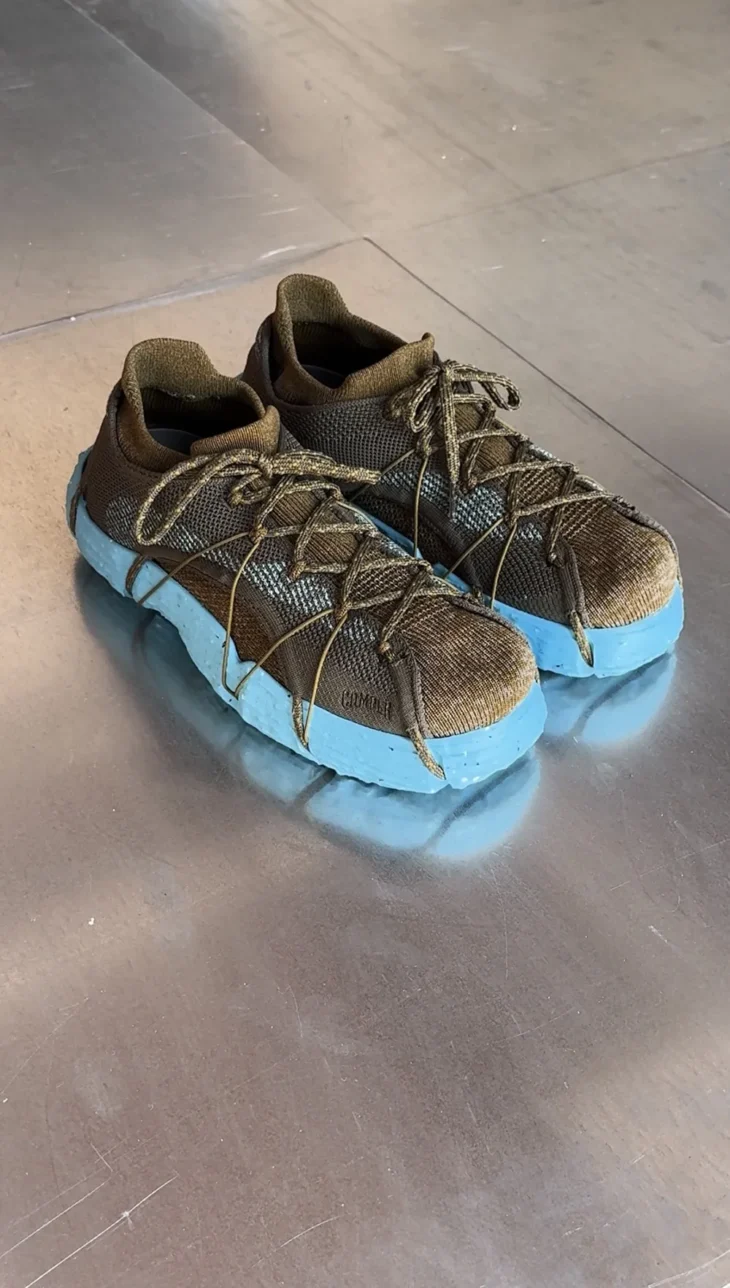
ROKU also responds to a larger problem in footwear. Many shoes leave wardrobes not because they fall apart, but because people get bored of them. In a fashion system driven by rapid trends and constant newness, product fatigue creates waste. ROKU challenges that cycle by allowing change to happen within the same object. Instead of buying another shoe, the wearer can replace a part, alter the color, repair damage, or rebuild the design. This makes customization practical rather than decorative.
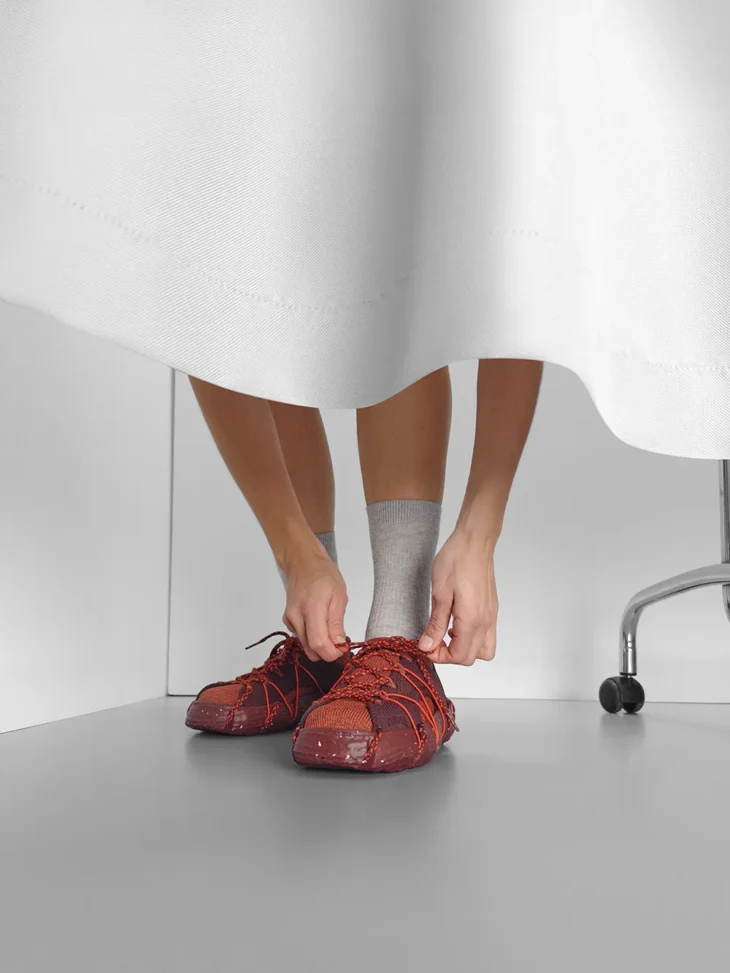
The material choices follow the same logic. ROKU uses recycled components, including recycled PET for cords, laces, uppers, and inner socks, as well as recycled EVA in the footbed and outsole. The outsole, made with XL EXTRALIGHT® EVA, was designed with recycling in mind and can be ground down to support new material use. Camper also integrates a QR code experience that offers instructions, traceability, and information on the product’s lifecycle. The shoe becomes easier to understand, not only easier to wear.
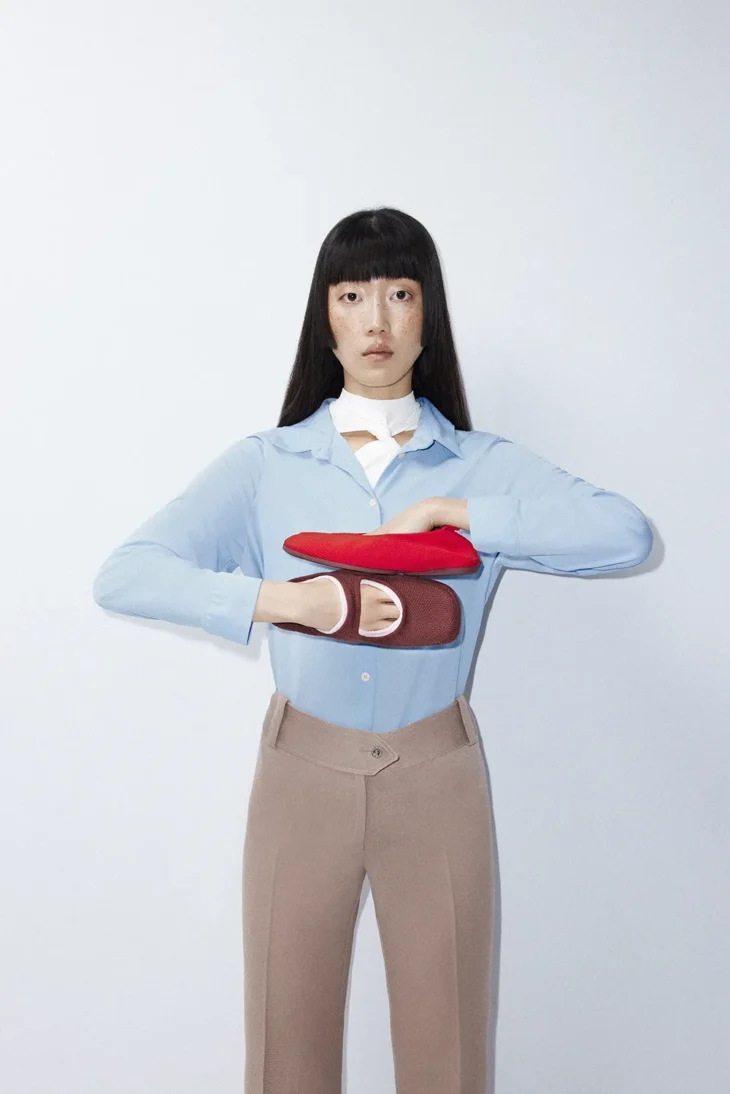
Right Niko continues this modular direction through a different form. Inspired by Camper’s Right Nina, the brand’s soft and flexible take on a ballerina, Right Niko combines feminine simplicity with the innovation introduced by ROKU. It is named after the Japanese word for ‘two pieces,’ reflecting its two-part construction. The shoe consists of an engineered upper and a midsole and outsole unit, designed without glue or stitching. The wearer can switch upper styles and colors by inserting the outsole into the upper structure, creating different looks from one base.
Where ROKU feels more technical and sneaker-driven, Right Niko brings modularity into a softer everyday silhouette. It keeps the lightness, comfort, and flexibility associated with Right Nina, but adds a new layer of function. The shoe supports different moods and occasions, making it especially relevant for summer dressing, when ease and versatility matter most. It can feel casual, polished, playful, or minimal depending on the chosen upper and color combination.
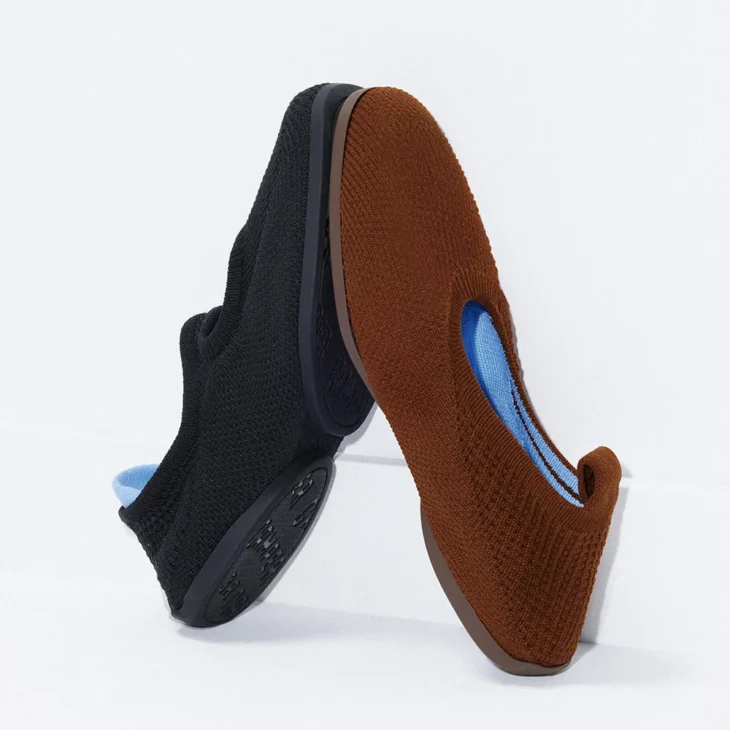
Right Niko also deepens Camper’s focus on circular materials. Its upper is made from textile-to-textile recycled yarn, sourced from unwanted garments and textile waste, helping reduce dependence on recycled plastic bottle streams. Its dual-density TPU outsole unit uses one material in two forms: softer expanded TPU for cushioning and harder compact TPU for durability. Because the unit remains mono-material, it can be more easily recycled at the end of its life.
Together, ROKU and Right Niko show how Camper uses design to answer both style and sustainability. These shoes do not ask the wearer to choose between comfort and responsibility, or between practicality and self-expression. They make the act of changing, repairing, and extending a product part of the design itself.
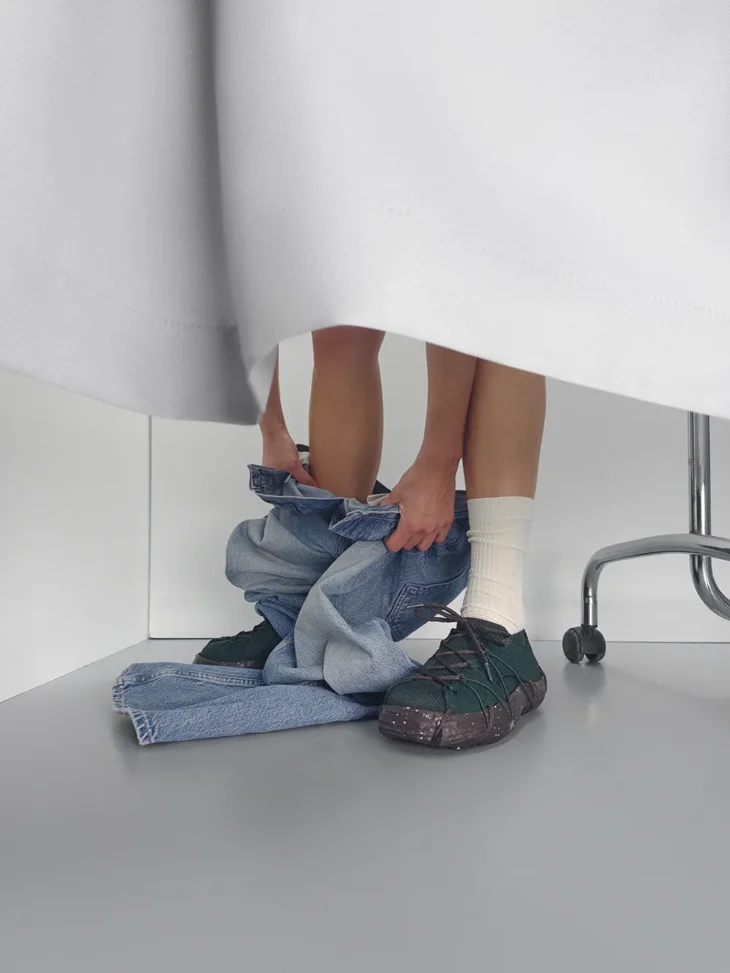
For summer, that idea feels especially strong. Footwear needs to be light, comfortable, adaptable, and ready for movement. Camper answers with two concepts that travel well because they are built to evolve. ROKU and Right Niko are not only shoes for the season. They are systems for living with less waste, more choice, and a more personal relationship with what we wear.
For customers in Serbia, Camper ROKU is available at the Camper store in Galerija, in all Fashion & Friends stores in Belgrade, Novi Sad, Kragujevac, Pančevo, Čačak, and Niš, as well as on the Fashion & Friends website and mobile app.





camper has truly stepped up its game. I am loving the collabs and new drops!
Roku is very cool! Love also all the design parts where you can change parts camper design team is not asleep 😴❤️
so upset these are sold out in camper stores around me. really loving the concept behind Camper Roku and the whole assembling parts in ways you want is a fantastic idea. great fan of the brand here.