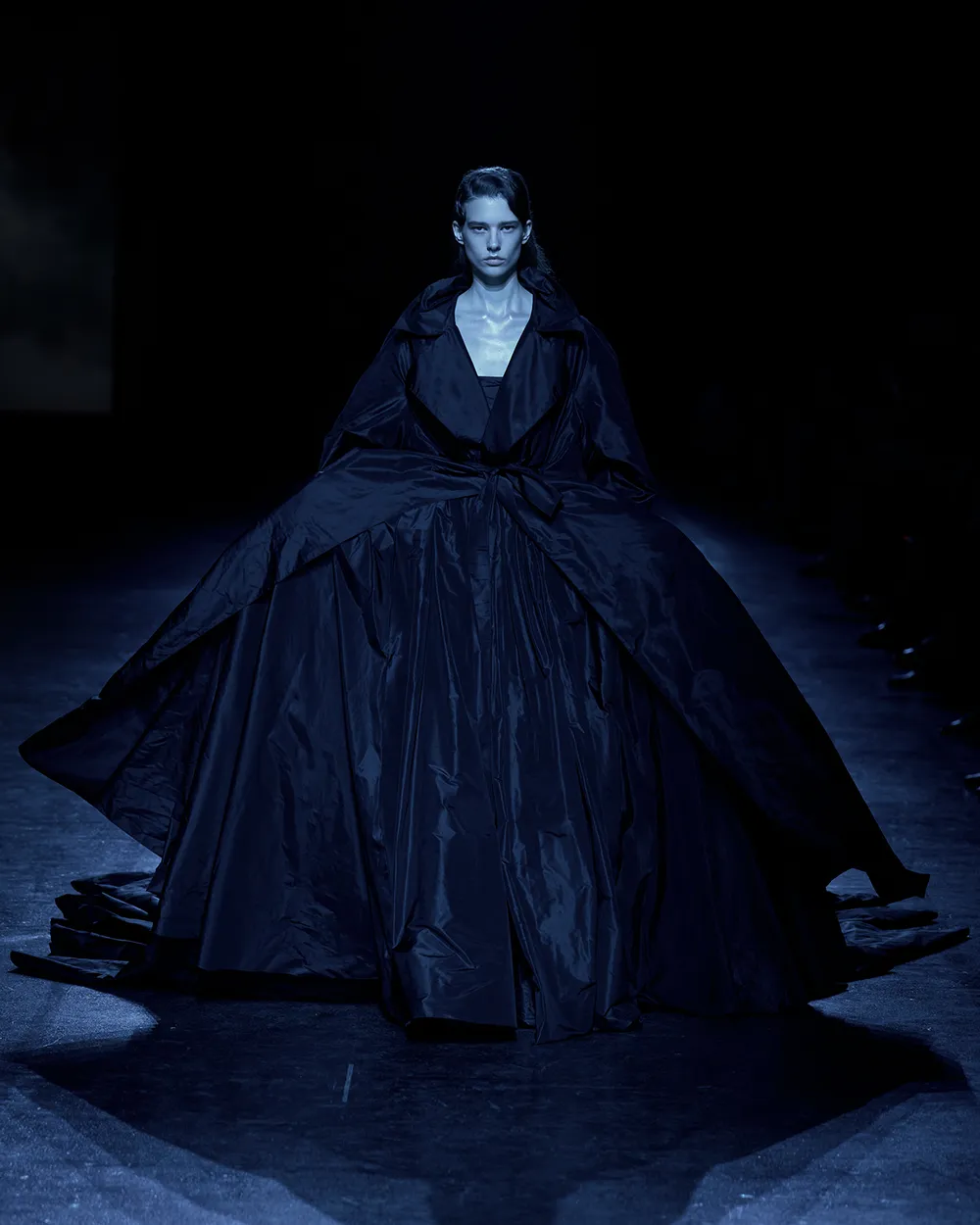



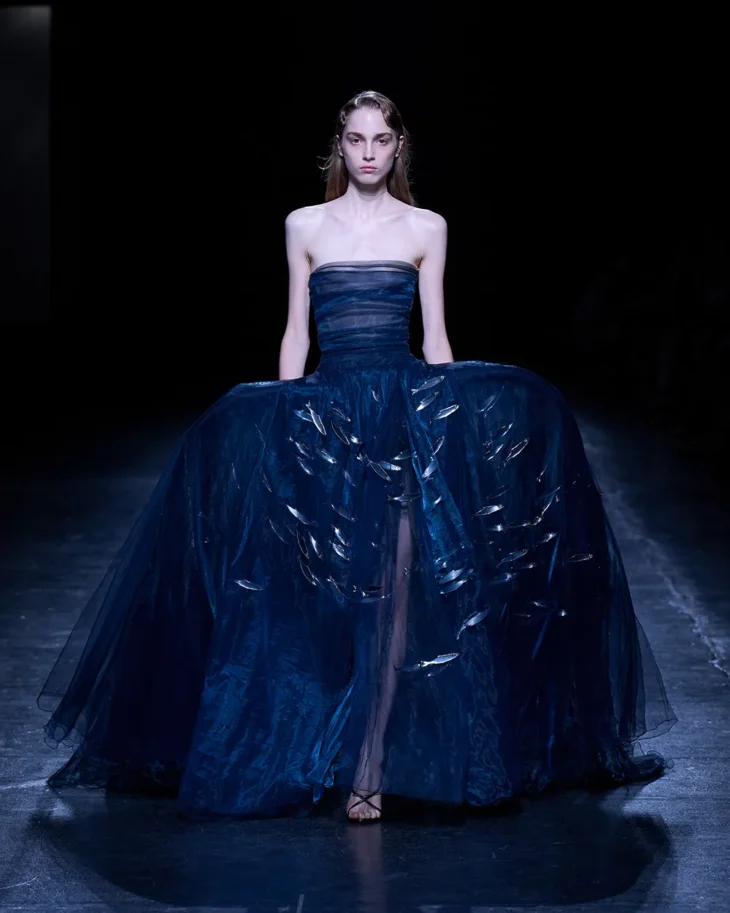
Olivier Theyskens introduces Boloria with Le Monde Flottant, a Spring Summer 2027 collection built around instability, memory, and the beauty of the fleeting moment. The title translates as “the floating world,” suggesting a state without fixed ground, where histories overlap and perspective shifts. For the debut of a new house, the idea feels fitting. Boloria begins with movement, not certainty.
SPRING SUMMER 2027
The name Boloria comes from a genus of butterfly, and that sense of transience runs through the collection. Fashion appears here as something present and fragile, made to exist intensely before it changes form. Theyskens uses that idea to shape an identity rooted in disappearance and trace, in clothes that seem to carry memories even as they belong to the present.
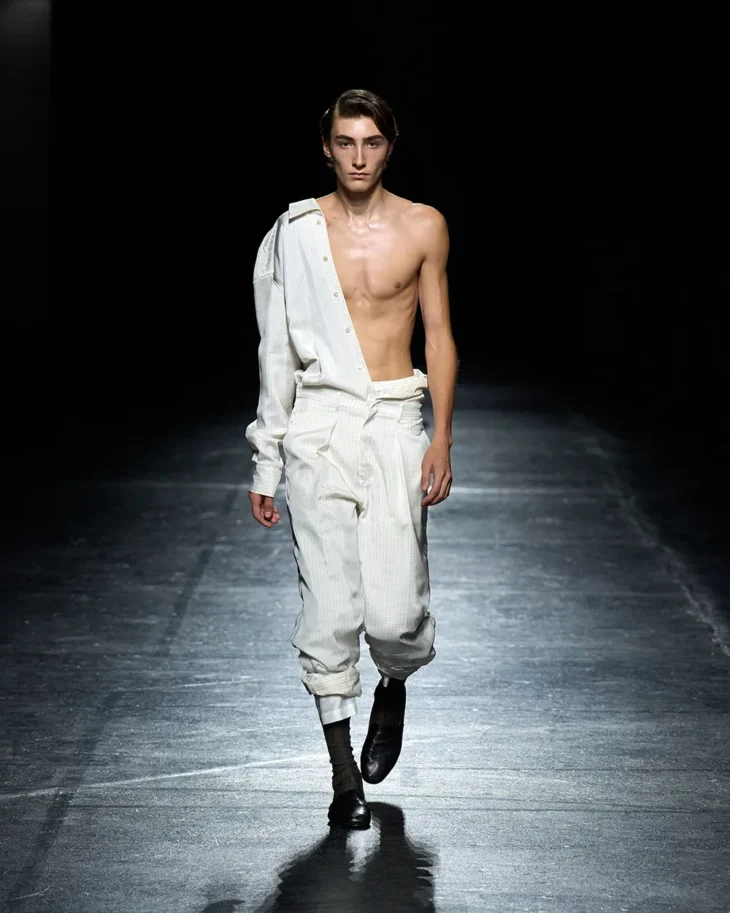
The collection imagines silhouettes for all genders, building the idea of a permanent wardrobe through pieces that move between dream and reality. Theyskens works with the conscious and unconscious, allowing garments to feel both narrative and wearable. There is a suggestion of patrimony, a past that may or may not have existed, filtered through Belgian landscapes, muted color, and a restrained emotional atmosphere.
Construction carries much of the meaning. Contemporary forms hold older values: linings, tailoring gestures, reversible elements, and careful work in cloth. The interiors of garments become part of the exterior language, pointing to an almost forgotten sense of artisanship. These details give the collection a quiet pulse, linking present design with methods that feel inherited.
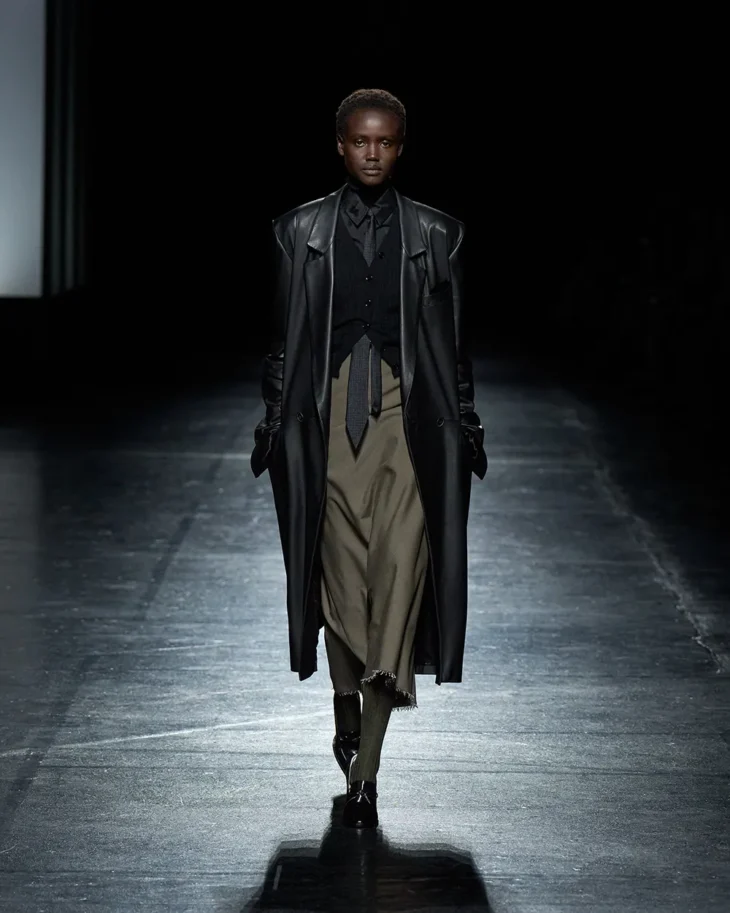
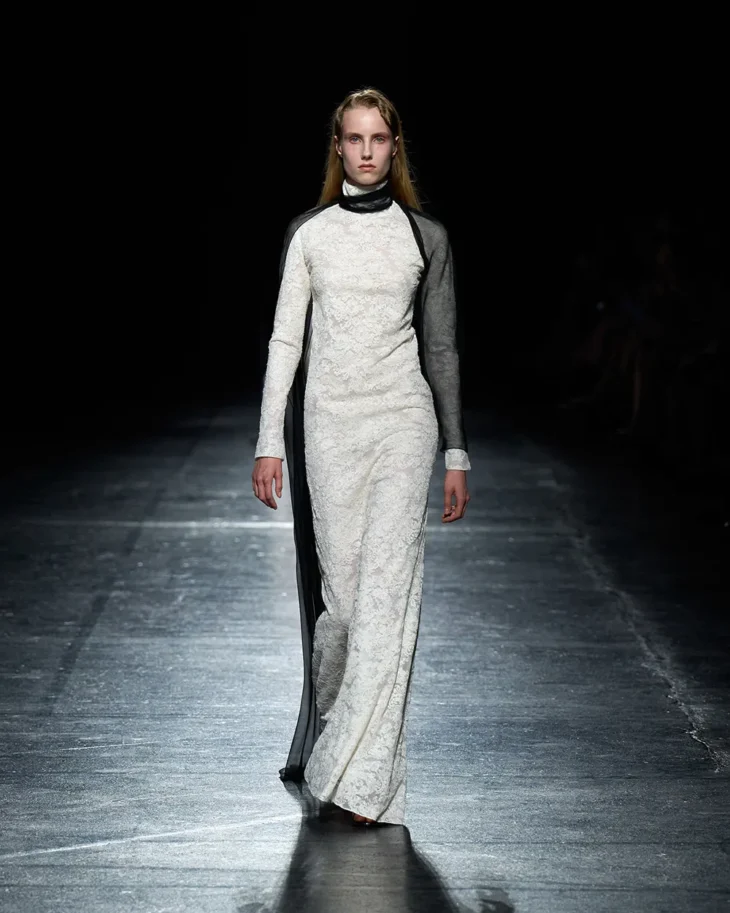
The palette draws from the muted colors of the flatlands, creating a soft and atmospheric visual field. Fine wool, cashmere, silk charmeuse, delicate silk lace, and soft cottons give the clothes weight without heaviness. The materials feel noble, but the effect avoids display. Theyskens uses fabric to create mood, tension, and intimacy.
Proportion plays a central role. Silhouettes appear elongated and attenuated, with bias cutting used across flou and tailoring. Evening dresses, trousers, and jackets shift around the body with languid movement, creating a sense of architecture softened by memory. The clothes hold sensuality through drape rather than exposure, suggesting bodies through fabric rather than defining them directly.
As a debut, Le Monde Flottant does not announce Boloria through spectacle. It establishes a language of atmosphere, craft, and quiet instability. Theyskens gives the house a world that feels suspended between past and future, tangible and intangible, structure and dream. Boloria begins as a floating image, but one with a clear emotional weight.