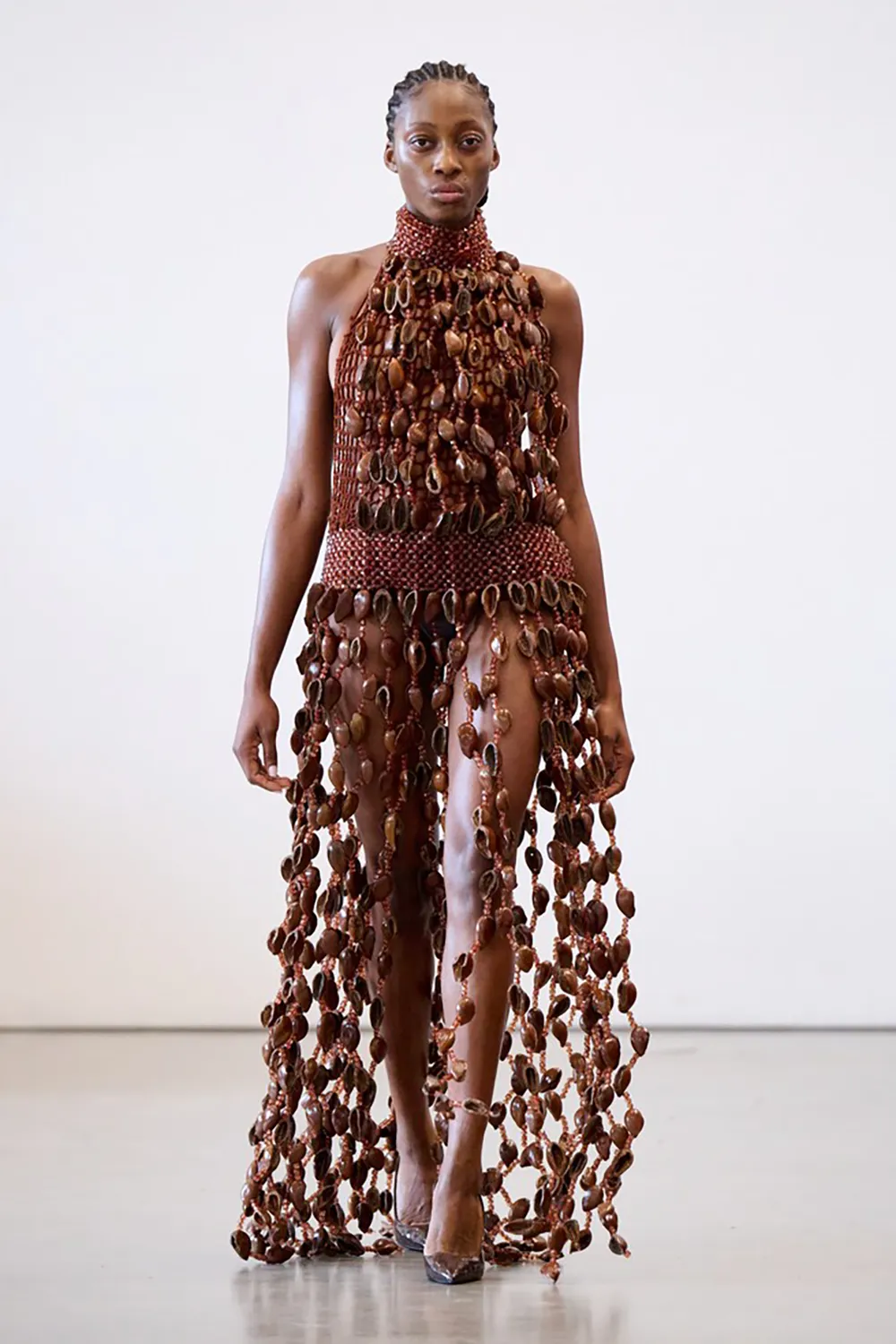





For Spring Summer 2027, Fruché presents KLEG, a collection that turns body image, self-perception, and human difference into its central language. The title comes from Nigerian Pidgin, where “K-leg” refers to knock knees, while also describing something considered dysfunctional or “not quite right.” Fruché takes that everyday phrase and redirects it, using it as a starting point for a collection that treats imperfection as identity, memory, and beauty.
SPRING SUMMER 2027
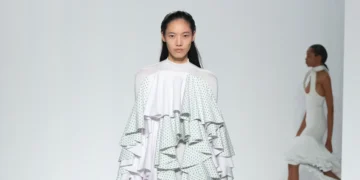
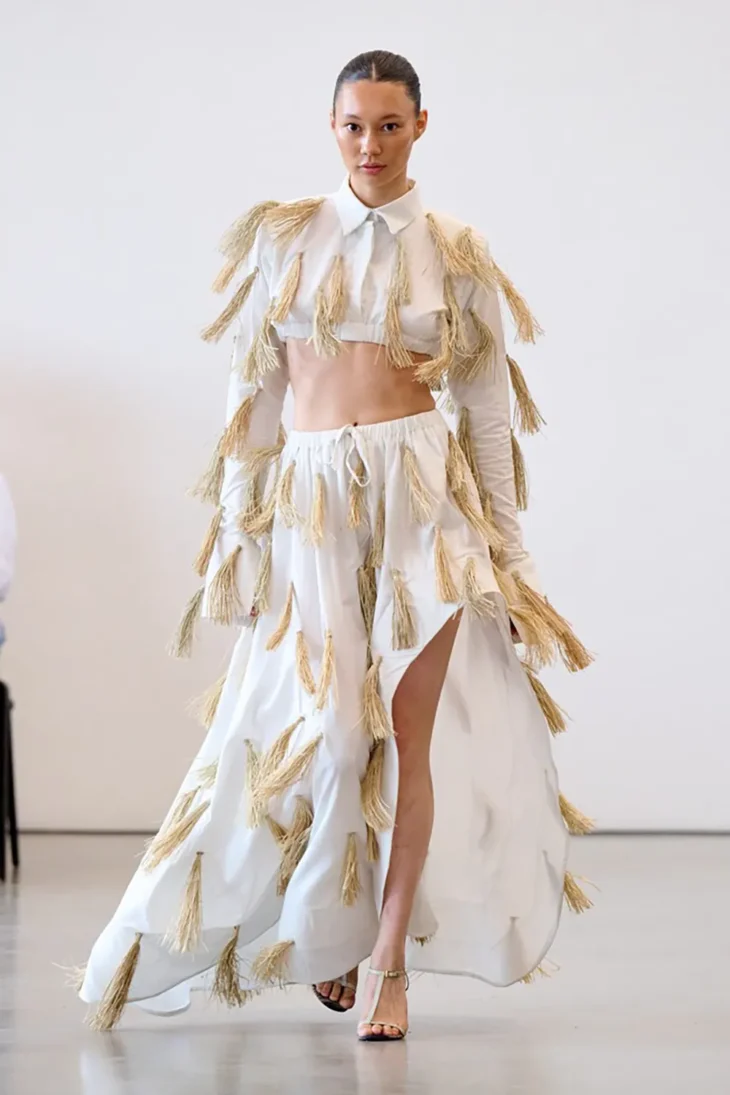
Creative Director Frank Aghuno begins from a personal place. While developing the collection, he returned to the memory of school years, a time when uniforms created a sense of belonging and the body carried less self-conscious weight. Gingham, widely used for school uniforms across Nigeria, becomes one of the collection’s key references. Fruché transforms the familiar textile through intricately woven Aso Oke and locally resist-dyed Adire, bringing childhood memory into contact with Nigerian craft.
The silhouettes reject symmetry and idealized proportion. Distortion, exaggerated shapes, and irregular lines reflect the body as it exists, marked by scars, bumps, tribal marks, bow legs, knock knees, broad noses, full lips, prominent ears, receding hairlines, and every other feature people often learn to conceal. KLEG does not soften these references. It builds around them, asking why the body must submit to a narrow idea of perfection.
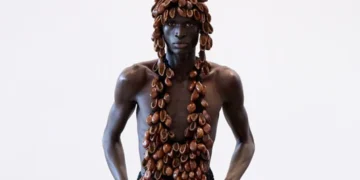
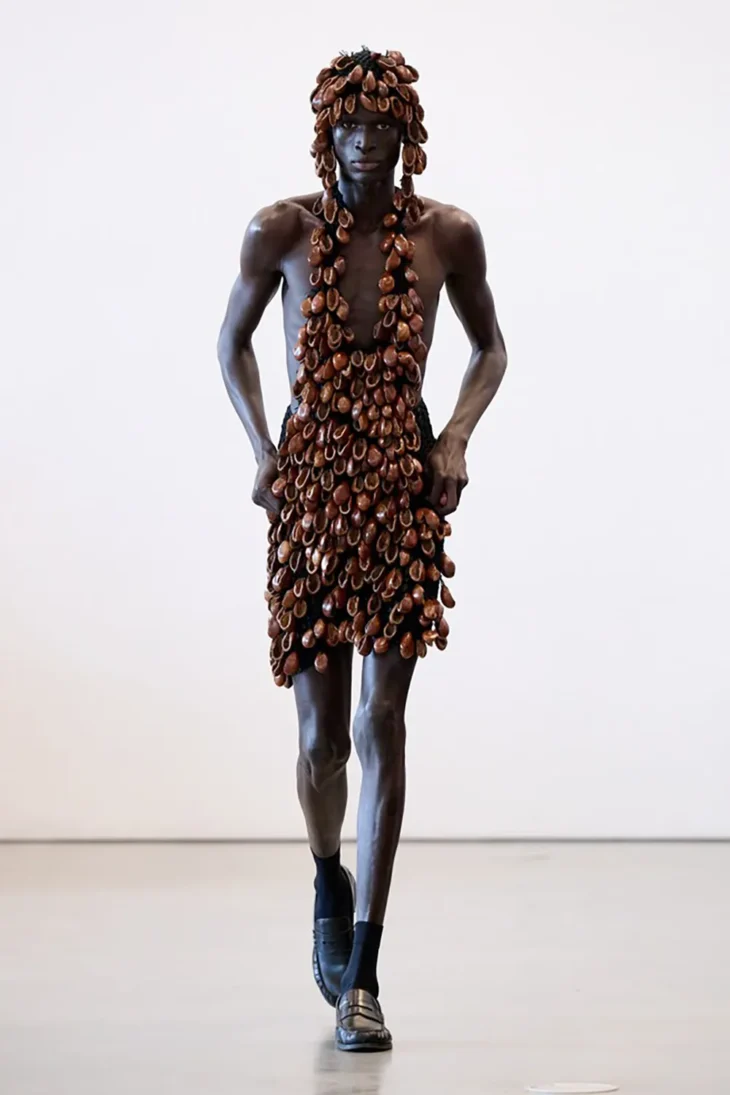
Traditional Nigerian artistry gives the collection its structure. Fruché draws from precolonial craftsmanship, wood carving, beadwork, hand-woven Aso Oke, Adire, and wooden chimes worn by cultural dancers. These techniques move through the collection as contemporary wearable art, treating the body as both surface and archive. The result connects past and present without turning heritage into decoration.
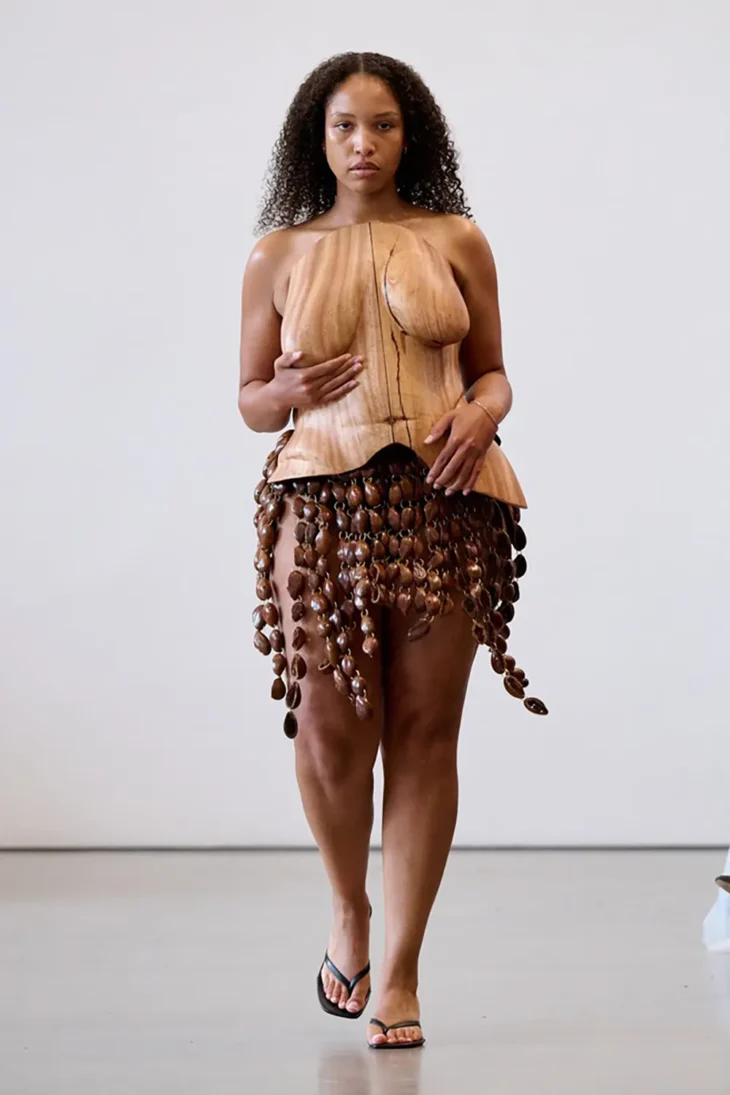
Collaboration plays a major role. Nigerian artist Fredrick Aghuno of Dricky Stickman hand-painted diverse bodies onto silk and Funtua cotton canvas woven in Katsina. Artists and sculptors Emmanuel Opeyemi and Oluwalere Israel Adewale created a hand-carved wooden bodice and sculptural hats, pushing the collection further into the space between fashion and art. Fola Olopade of Ile Olopade contributed crochet pieces, while Nigerian filmmaker and musician MAUNROH created music inspired by personal journeys with body image.
The accessories deepen the theme of memory and play. Emerging Nigerian brand Dukun created fabric origami hats inspired by childhood paper crafts, including hats, boats, airplanes, and windmills. Sustainable Nigerian leather brands Afora Official, Kiing Daviid, and Renaissance by Janet designed footwear that reinterprets the classic Nigerian school shoe through a contemporary lens.
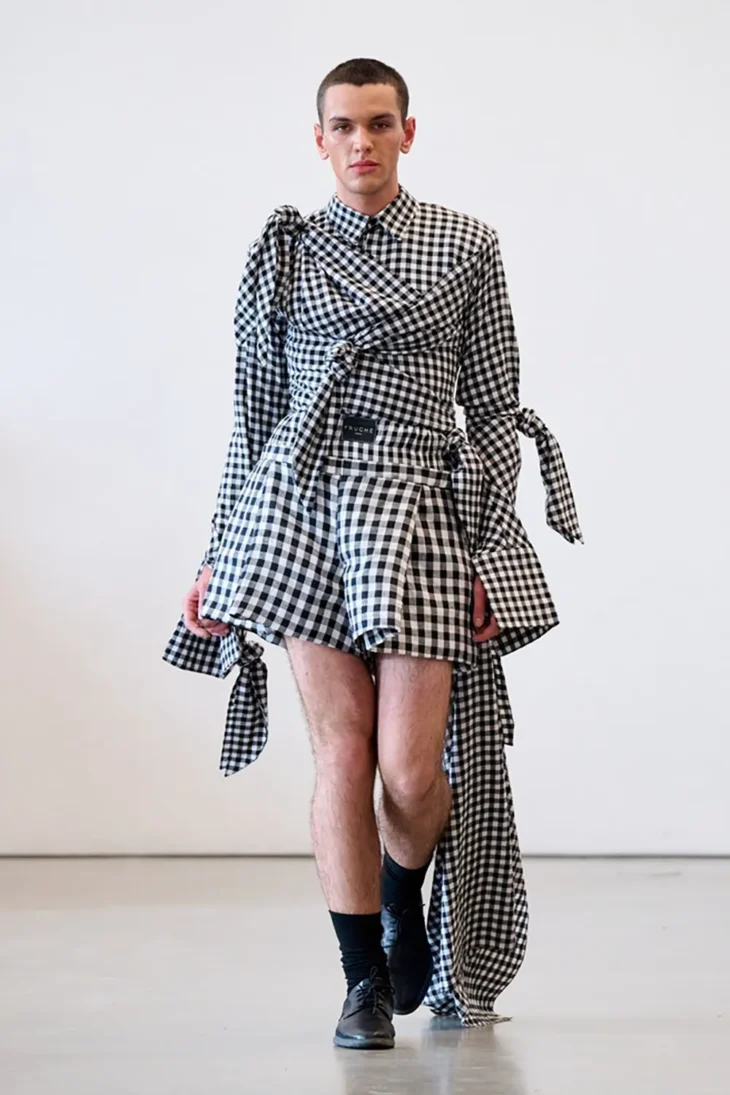
KLEG avoids the easy language of empowerment and instead builds a full visual system around difference. Fruché looks at the body as a record of life, family, culture, adolescence, insecurity, survival, and joy. Every mark and asymmetry becomes part of that record. Through craft, memory, and sculptural form, the collection proposes beauty as something lived rather than corrected.