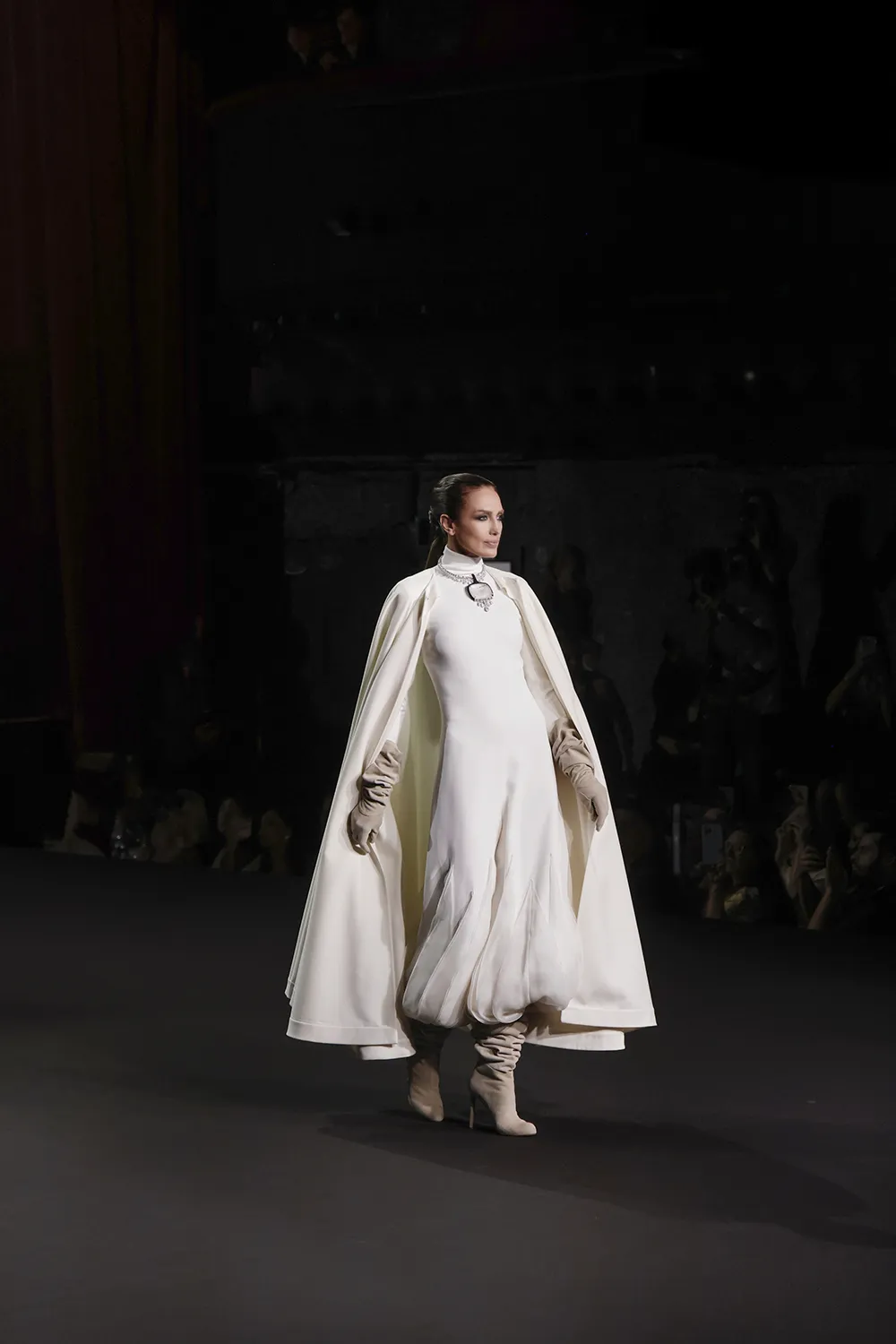



Stéphane Rolland dedicates his Haute Couture Winter 2026/27 collection to Dalida, tracing the singer’s passage from Cairo to Paris through thirty-three silhouettes shaped by light, emotion, and stage presence. Presented at L’Olympia on July 7, 2026, the collection draws from the venue where Dalida’s story became inseparable from French music history, using couture as a language of memory rather than costume.
COUTURE COLLECTIONS
Rolland approaches Dalida as a living force in the contemporary imagination. Born Iolanda Cristina Gigliotti in Cairo to Italian parents, she carried Mediterranean, Eastern, French, and Italian influences into an artistic identity that crossed borders. The collection responds to that complexity, translating her tension between strength and vulnerability into silhouettes that appear both controlled and emotionally exposed.
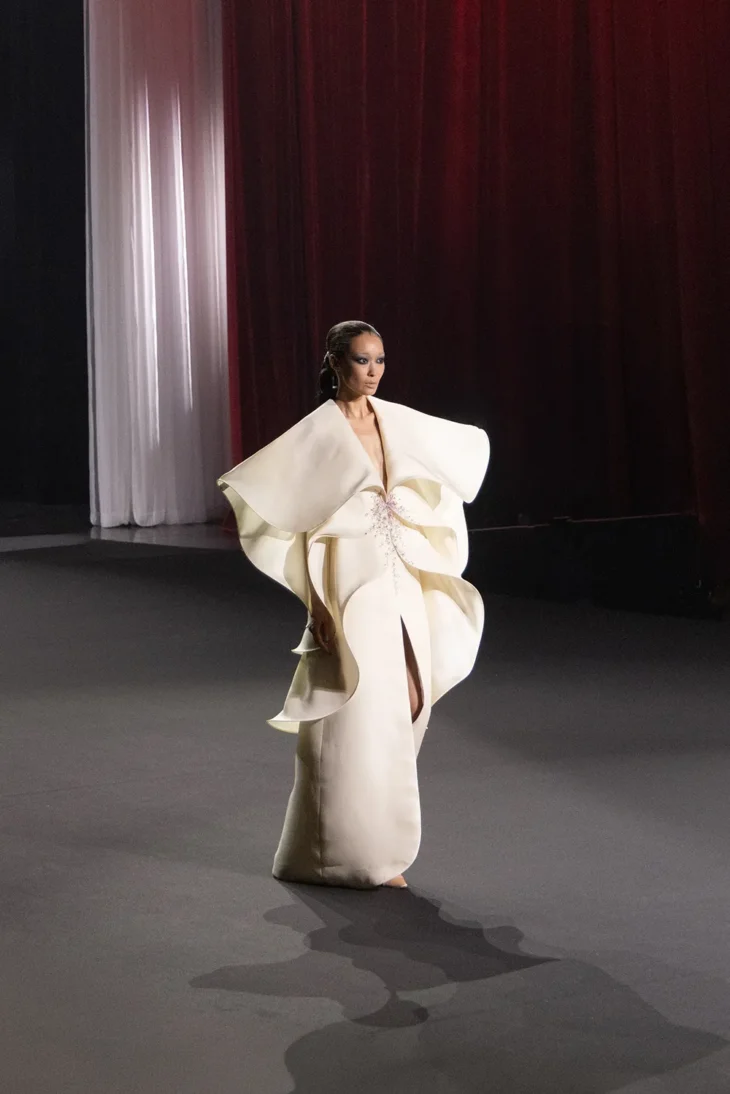
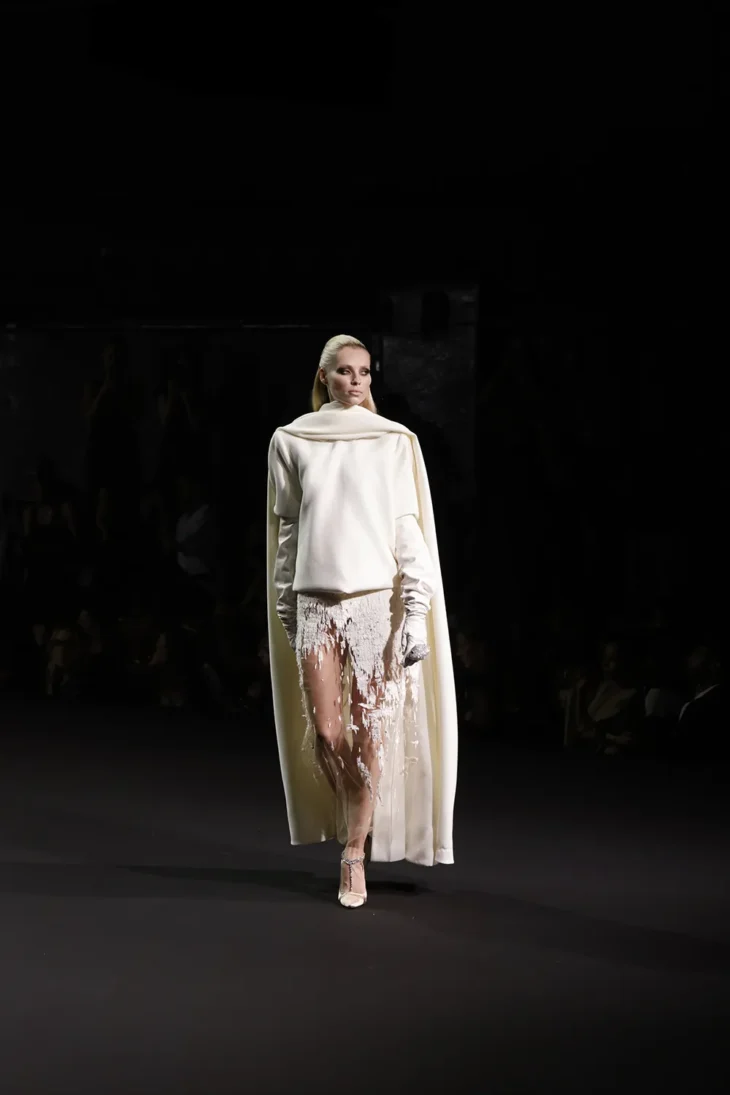
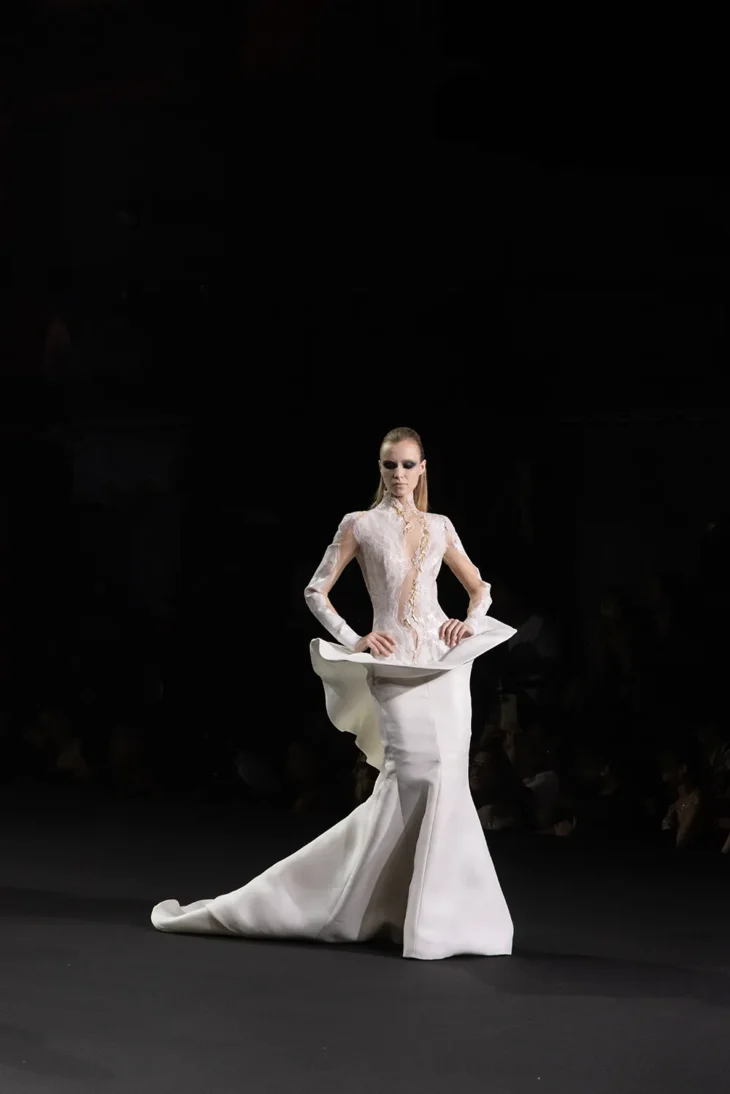
White dominates the opening passages like an unwritten page. Crêpe, gazar, chiffon, organza, and satin give the collection an almost weightless quality, allowing volumes to move between appearance and disappearance. Dresses take on the softness of breath, while capes create a sense of presence around the body. Long pareos, coats, trapeze lines, and fluid gowns build an image of freedom without losing Rolland’s architectural precision.
The Olympia remains central to the collection’s rhythm. Rolland looks to the verticality of performance, the moment when a singer steps into light and fills the room before saying anything. Several silhouettes carry that same stage tension, advancing with clean lines, sweeping volumes, and controlled drama. Some looks feel like melodies, others like pauses, creating a couture recital rather than a linear runway narrative.
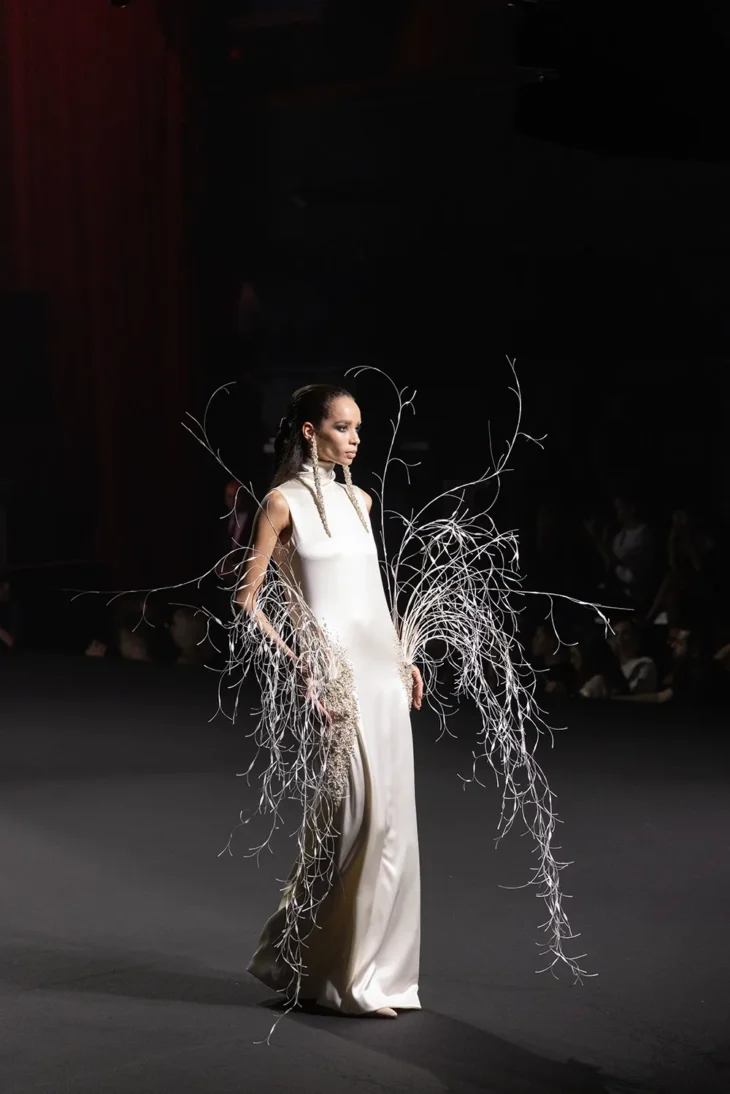
Embroidery gives the collection its emotional charge. Agates, crystals, diamonds, mother-of-pearl, porcelain, rock crystal, onyx, silver, and gold silicone appear as fragments of feeling rather than surface decoration. A maxi trapeze dress in silk gazar embroidered with terracotta agate and gold silicone brings warmth into the white story, while a “Waves” dress in white silk gazar embroidered with silver and crystal turns movement into light. Elsewhere, distressed tweed, pleated chiffon, ostrich feathers, satin macramé, and openwork crêpe add texture without disrupting the collection’s restraint.
As the show develops, the palette deepens. Red enters through “Olympia” velvet, followed by black, ivory, silver, and mineral tones. A long backless tuxedo jacket in black grain de poudre embroidered with rock crystal sharpens the mood, while openwork tailored dresses and feathered constructions bring a darker theatricality to the later passages. The shift feels deliberate, like a song gaining intensity while keeping control of its voice.
Rolland also draws from the era’s lyricists, including Jacques Brel and Léo Ferré, and their ability to turn love, solitude, desire, and longing into direct emotional language. That influence gives the collection its strongest quality: sincerity. The clothes do not attempt to recreate Dalida’s wardrobe or reduce her to an archive image. They search for a sensation, the feeling of a performer whose elegance came from both fragility and force.
With Dalida, Orient to Paris, Stéphane Rolland creates a couture tribute built on atmosphere, discipline, and emotional clarity. The collection turns memory into movement and stage light into fabric, allowing Dalida’s presence to pass through white organza, red velvet, black tailoring, crystal, and silence.