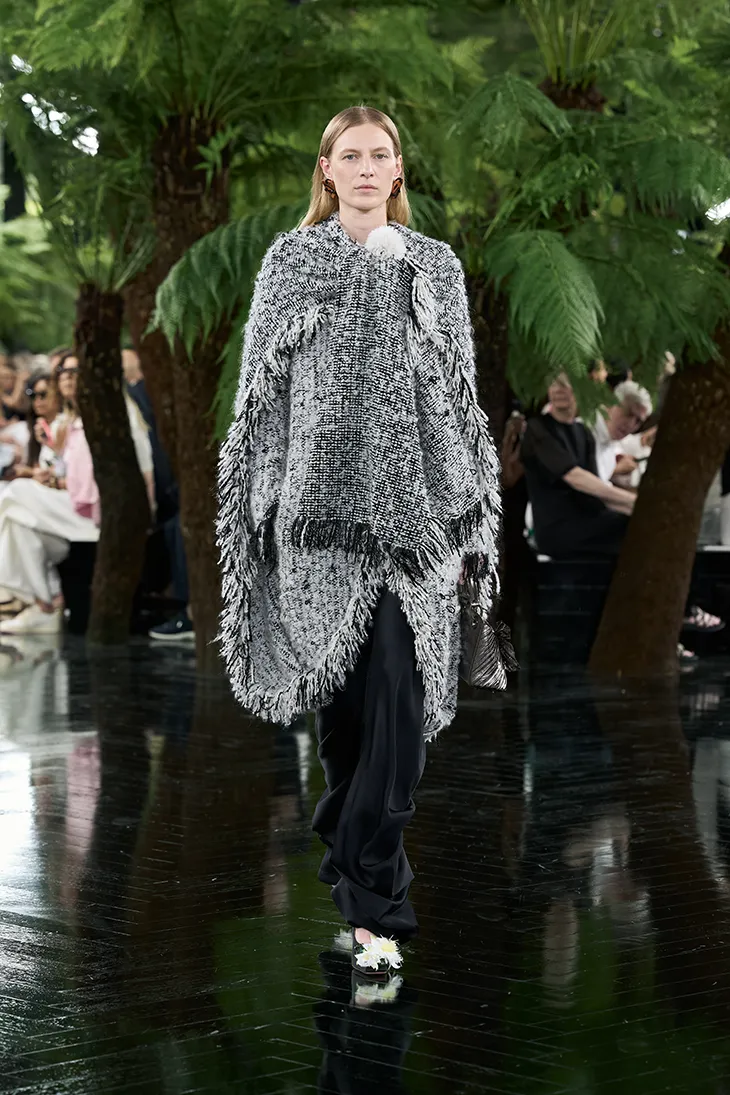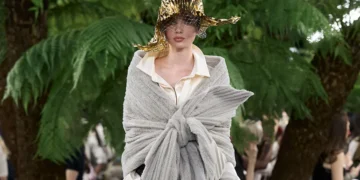






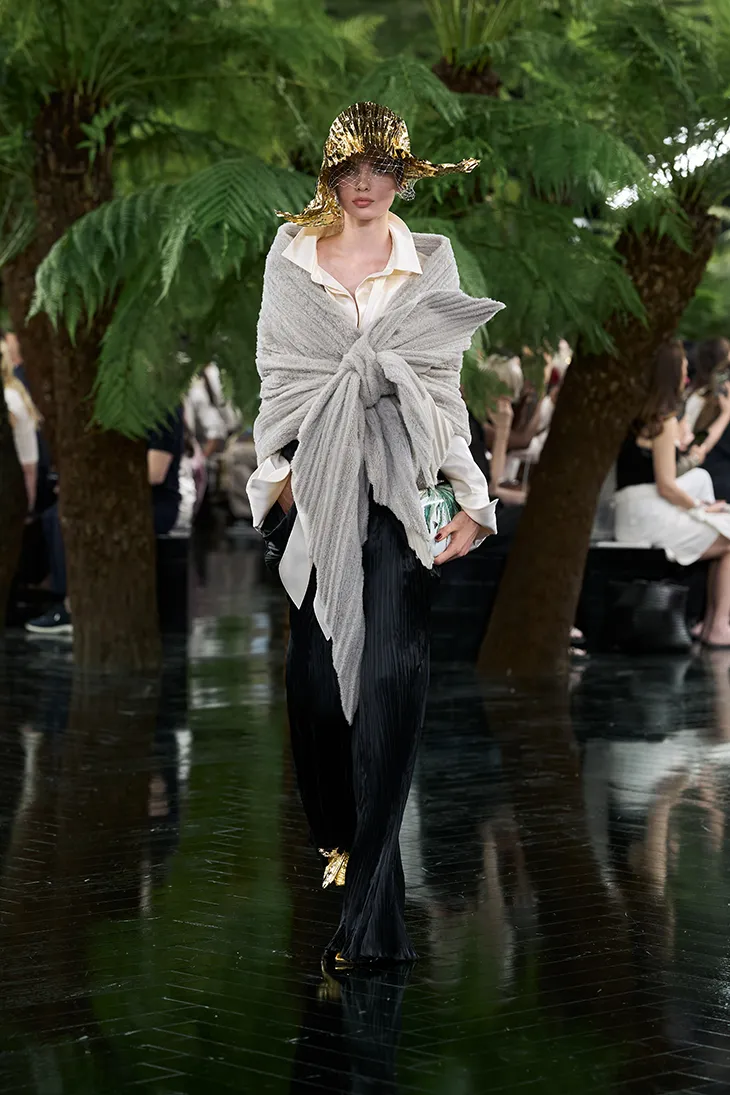
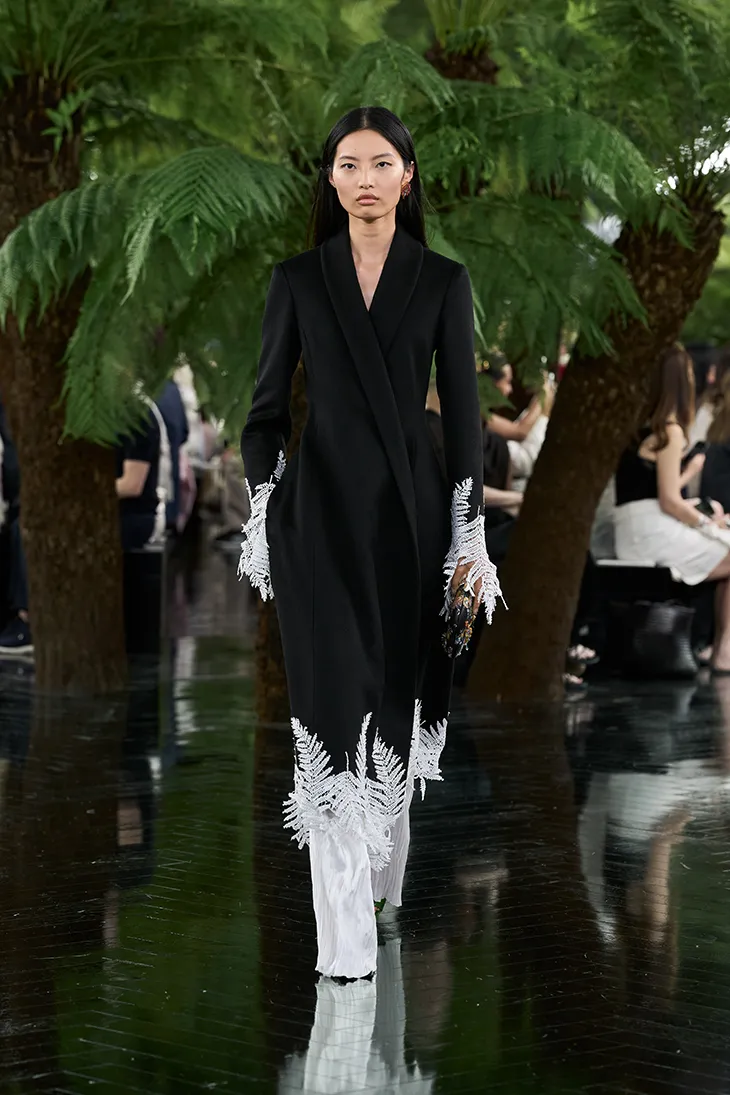
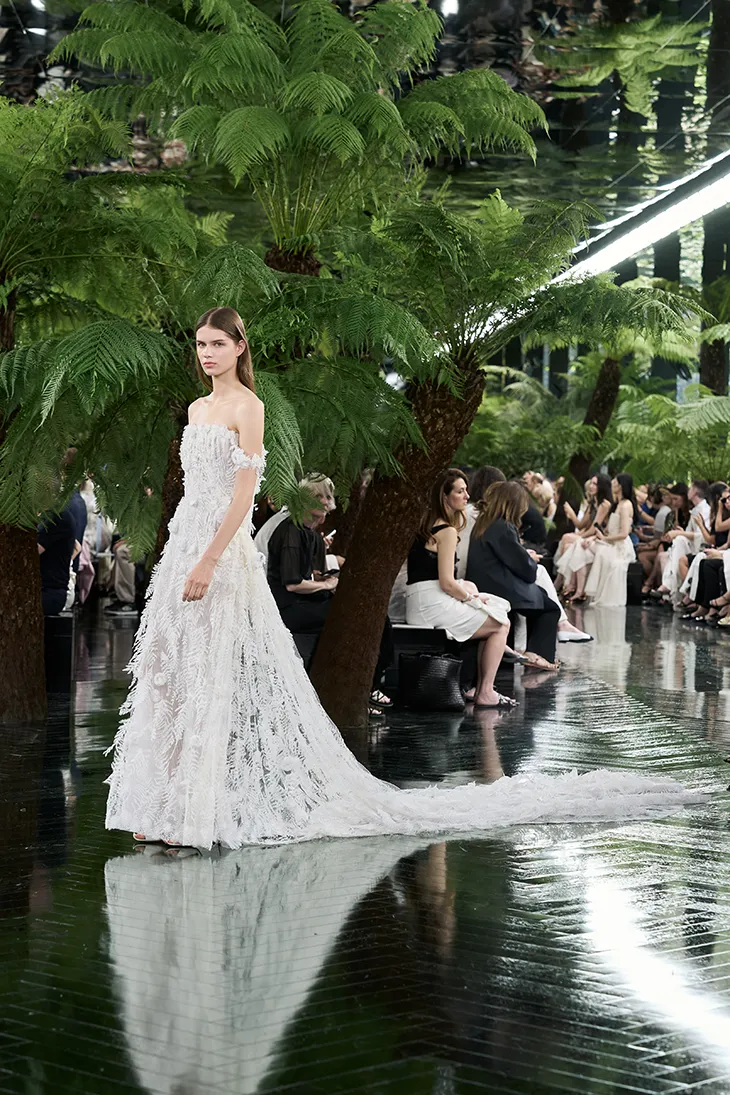
Luxury house Dior presented its Haute Couture Fall Winter 2026-2027 collection in Paris on July 6, with Jonathan Anderson taking the work of American sculptor Lynda Benglis as his starting point. The collection treats couture as a laboratory, echoing Benglis’ own idea of the studio as a place of experiment. From that premise, fabric, surface, gesture and form become the collection’s main fields of research.
COUTURE COLLECTIONS
Benglis often begins with flat materials, then turns them into sculptural forms through knotting, pleating or moulding. Anderson draws a parallel with couture, where fabric gains volume and definition on the body. The collection builds on that shared language through hand-plissé, knotting and draping. These gestures give the garments a physical link to sculpture, while the ateliers study the surface qualities of Benglis’ work in metallic, iridescent, encrusted and paper-like fabrics. Soft silver netting creates the illusion of chicken wire, bringing a familiar industrial reference into couture technique.
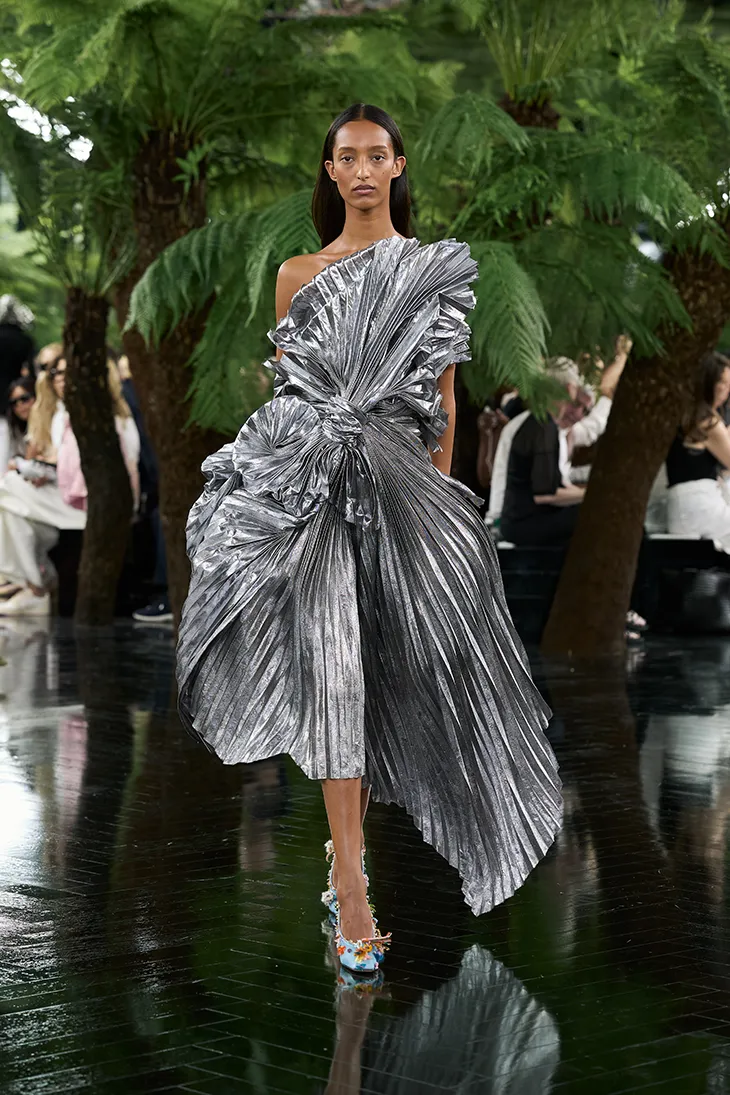
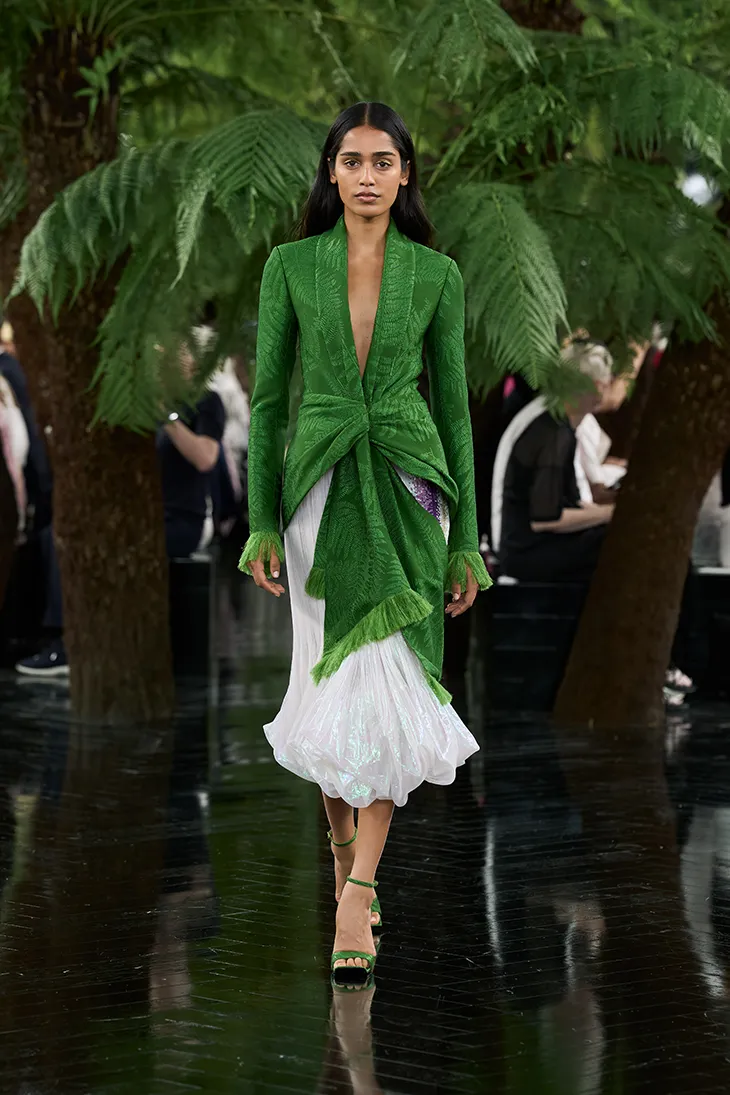
Ahmedabad in Gujarat, India, also guides the collection through Benglis’ long relationship with the city. Her Peacock series, begun in the late 1970s, came from the birds she saw during her stay at the Sarabhai family estate in Ahmedabad. Dior translates that reference into brightly coloured floral and beaded embellishments. The result connects the artist’s visual memory of India with couture craft, using ornament as a direct response to sculpture, place and material.
Anderson’s research into Benglis’s Ahmedabad work also leads him to Indian craft, especially the 18th-century tradition of chintz. These finely woven cottons, often hand-painted or block-printed, shaped European decorative arts in lasting ways. Dior uses antique fragments of chintz and indiennes sourced from a specialist dealer on Petit Dîner and mini Lady Dior bags. This choice brings historical textile work into the accessories, where rare fragments gain a new life in couture objects.
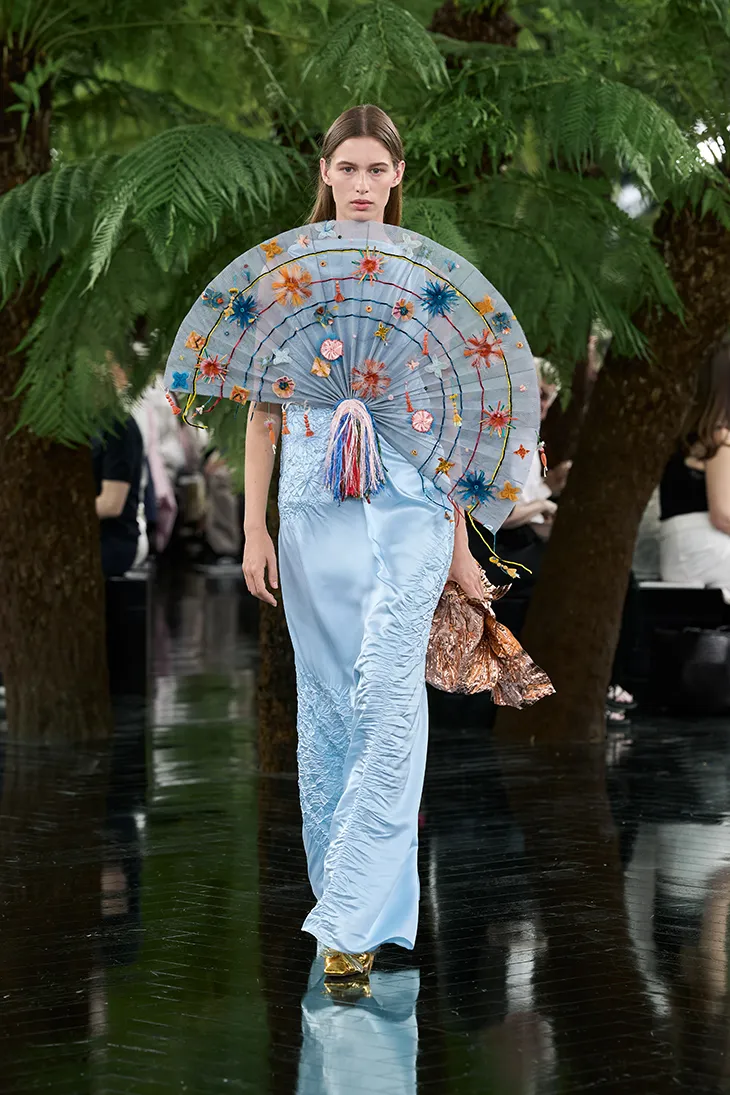
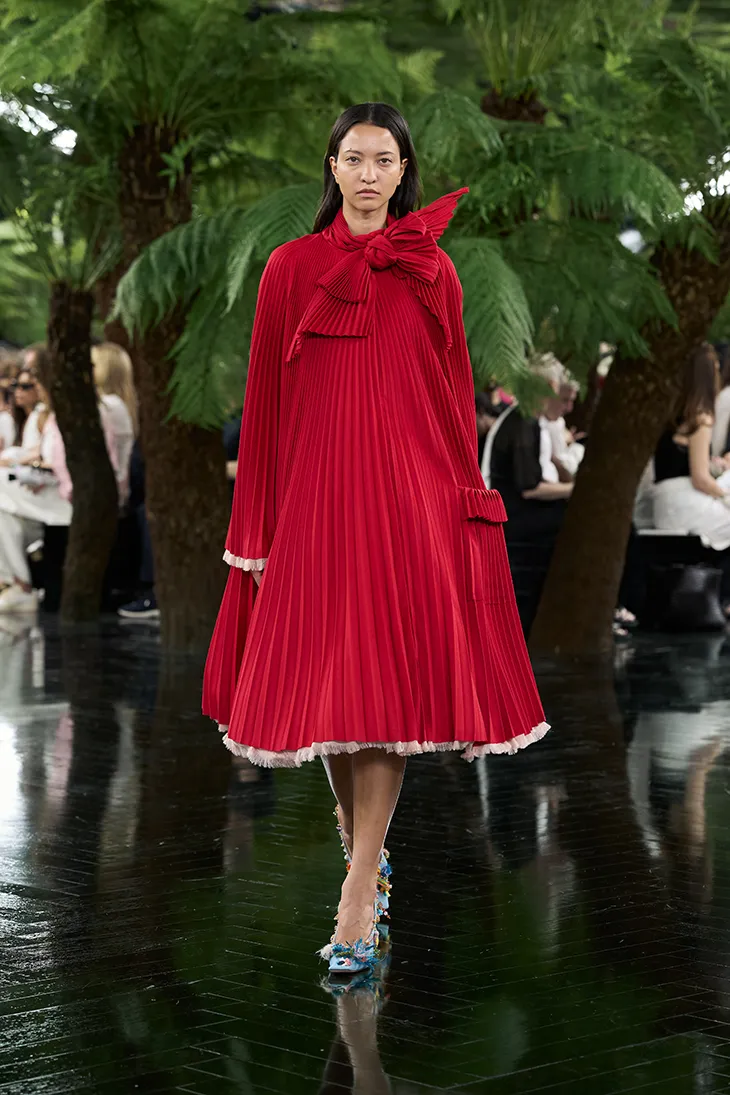
The collection also links Ahmedabad with Santa Fe, New Mexico, where Benglis keeps a home and studio. Anderson studies the contrast between the relative abundance of Gujarat and the arid climate and crystalline air of Santa Fe. Floral elements and the color range in the collection refer to both settings, bringing their visual qualities into garments, bags, shoes and jewellery.
The bags echo the garments through mother-of-pearl inlays, passementerie and shimmering leathers. Dior continues the Dior Anthology series inaugurated last season, using 18th-century Indian chintz and indiennes on the Petit Dîner and mini Lady Dior. Four shapes come from a collaboration with Benglis: the Dior Cigale in metallic plissé, a sculptural Dior Bow, a new Lady Dior and a Petit Dîner with a bow inspired by the artist’s forms.
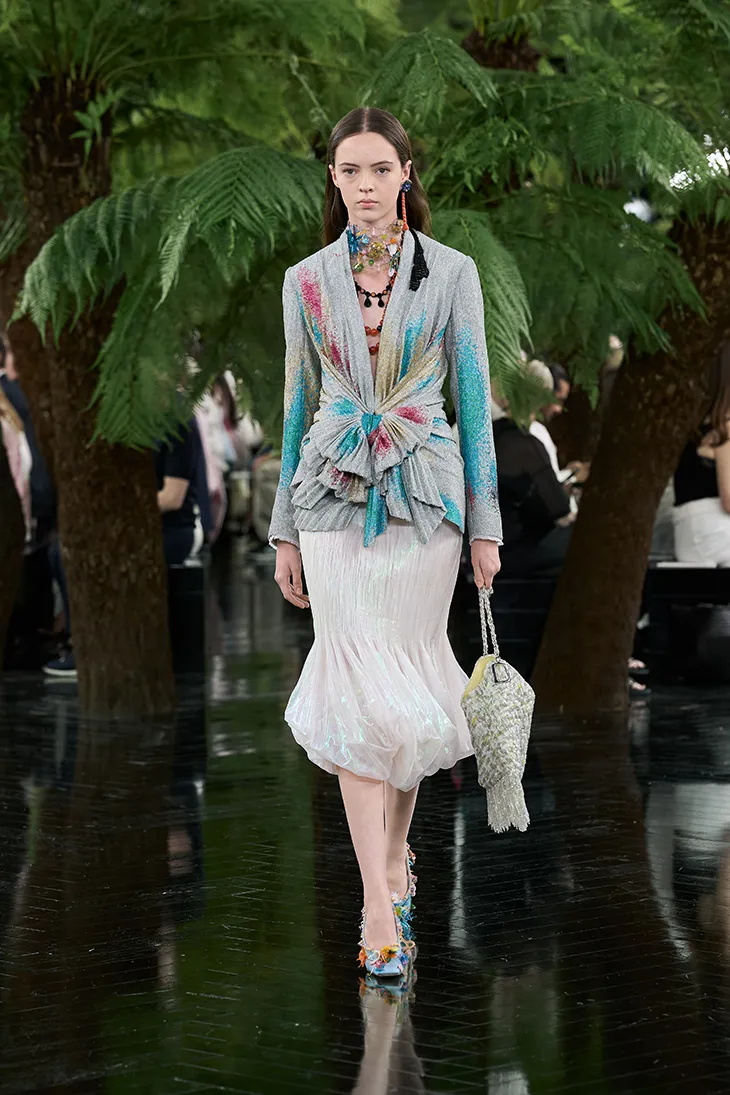
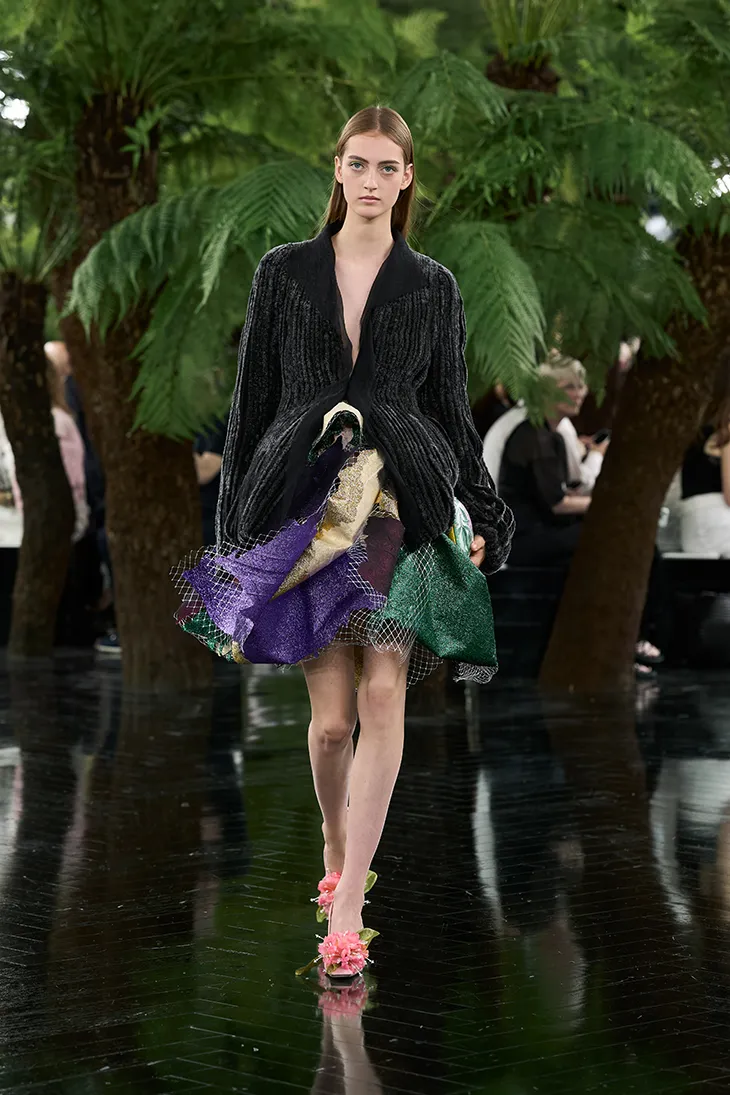
The shoes take their cues from sparkle, sheen and lattice overlay, echoing the surfaces and materials of Benglis’s art. Satin colour-block pumps carry elongated square toes, and Dior repeats that silhouette in styles embroidered with irregular paillettes, micro-sequins and beads. Floral embellishments add volume, while ornaments inspired by Benglis’s Peacock series appear on sheer pumps. Other styles feature pleated metal bows, linking footwear to the sculptural gestures found in the collection.
Artisans in France and India, including Jaipur in Rajasthan, create the jewellery. They thread mother-of-pearl, rock crystal and carved green onyx onto tasselled cords, with green onyx recalling traditionally symbolic emeralds. Another version uses black onyx, haematite and carnelian beads. Rare antique Indian textiles inform floral motifs in richly hued micromosaics, while necklaces of graduated discs simulate terracotta surface effects. Dior also interprets Benglis’s Peacock series directly through embroidered elements on sterling silver wire made in Paris.
Dior extends the project with Grammar of Forms at the Musée Rodin show space from July 7 to 12. The exhibition brings together pieces from the new haute couture collection, Dior archive creations and artworks by Lynda Benglis, including works shown in France for the first time. On July 7, the exhibition opens from 2pm to 6.30pm, with last entry at 5.45pm. From July 8 to July 12, it opens daily from 10am to 6.30pm, with last entry at 5.45pm.