


Fashion campaigns are shaped long before the camera reaches the set. Before a single image is made, creative teams move through mood boards, sketches, product references, set ideas, and written briefs, building the direction piece by piece. AI 3D prototyping adds another layer to that stage, giving teams a way to test scale, product placement, spatial relationships, lighting direction, and set proportions while the idea is still open to change.
At this point in campaign development, the value is practical. A loose concept can become a visual draft that can be reviewed, adjusted, and compared with other options. Instead of discovering too late that a product feels lost in the frame or that a set element takes over the image, the team can study those relationships while the campaign is still being shaped.
Why Early Visualization Matters
Mood boards remain central to fashion campaign development because they gather references, suggest atmosphere, and establish direction. Their strength comes from openness. A mood board can suggest whether a campaign should feel intimate, architectural, cinematic, raw, polished, or product-led, while still leaving space for interpretation.
That openness can also leave practical details unresolved. A reference image may communicate the right feeling, but it rarely explains how a handbag should sit within the frame, how a sculptural prop should relate to the model, or how much space a set needs to work. A 3D study gives those choices a visible form, turning a general direction into something that can be examined more closely.
Testing Product Hierarchy
AI 3D prototyping becomes useful when a campaign needs to decide what should carry the image. In product-led campaigns, the balance between the garment, accessory, model, set, and surrounding objects can change the entire reading of the frame.
A handbag may need more negative space to register clearly. A shoe may require a lower angle or cleaner surface. A fragrance bottle, watch, or piece of jewelry may need stronger control of scale so it does not disappear inside a larger set idea. In other cases, the clothes should remain central, and the objects around them need to support the mood without taking over.
These choices affect how quickly the viewer understands the campaign. AI-assisted 3D tools can support this stage by helping generate rough objects, environments, or visual references more quickly. An image to 3D workflow can also turn an existing reference into a more useful planning study before the concept moves into detailed production.
From Approval to Assets
Once a direction starts to form, the prototype can help with approvals. Fashion campaigns often pass through several decision points before a shoot moves forward. A visual draft gives those discussions a more specific base than written notes alone. If the product needs more presence, the frame can shift. If the set feels too heavy, the structure can become lighter. If the composition lacks focus, the hierarchy can change while the idea still has room to move.
The same study can also help plan the campaign beyond the hero image. A single direction may need to work as a full campaign shot, product crop, vertical social format, campaign film frame, ecommerce detail, and retail visual. Each format changes how the image needs to behave. A set that works in a wide frame may lose its effect in a crop. A product that feels balanced in a full image may need a closer composition for ecommerce.
This makes early testing useful beyond the first concept. It helps show whether the idea has enough flexibility to support different assets without losing its identity. The campaign can then move forward with a clearer sense of what needs to be built, shot, adapted, or simplified.
Extending Beyond the Campaign
Finally, AI 3D prototyping can also connect campaign planning with the digital side of fashion. Once a product or object exists as a 3D study, the same visual thinking can inform ecommerce presentation, virtual showroom material, AR try-on concepts, product previews, or internal development references.
That gives the prototype a role beyond the first campaign draft. It can help a brand understand how an item reads as an object, how it might appear in a digital selling environment, and how the same idea can travel from image-making into product presentation.
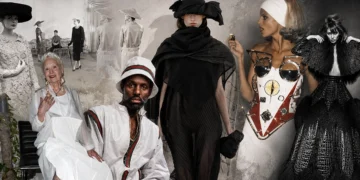
All images from Digital Footprint by Takahiro Ogawa for DSCENE Magazine – see full story here.