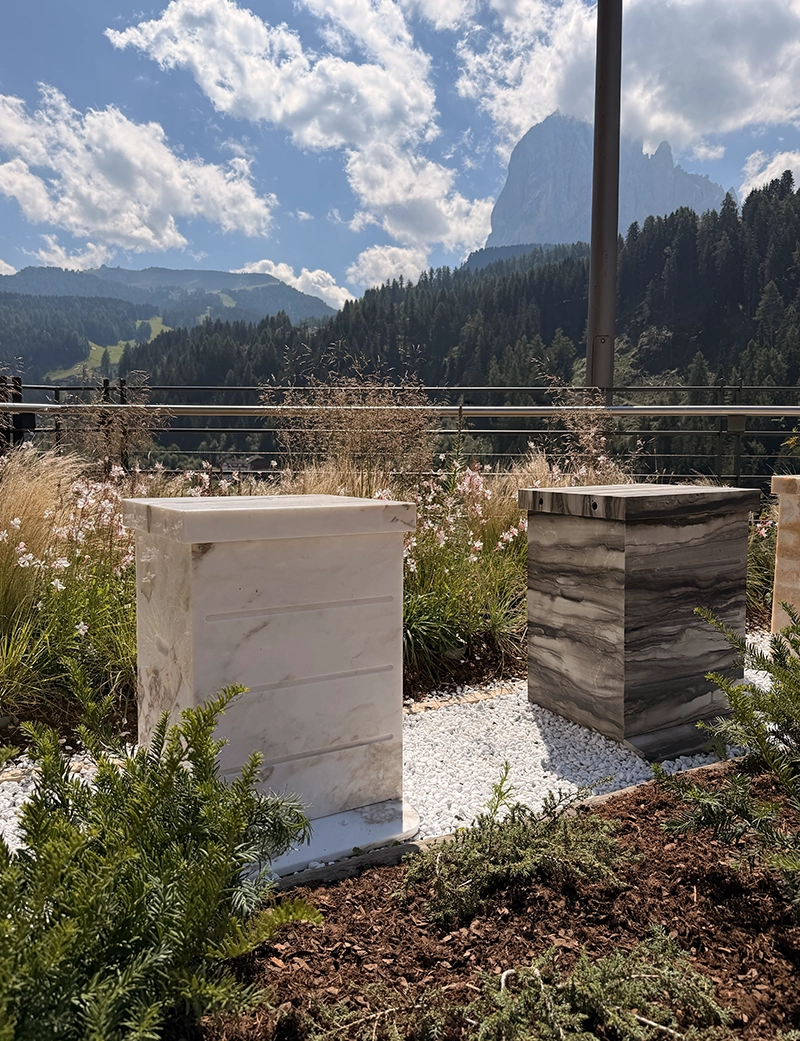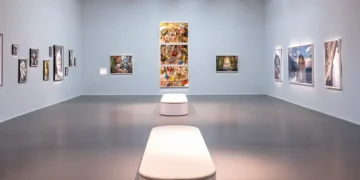



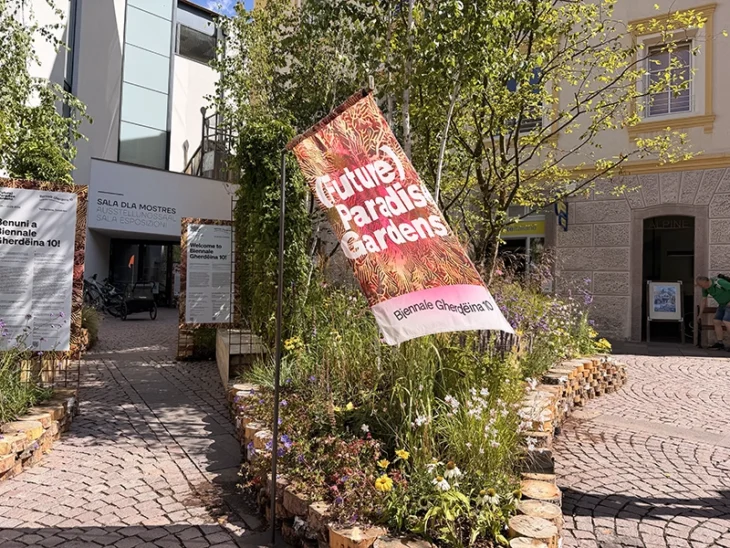
Contemporary art biennials often compete through scale, spectacle and international visibility. Biennale Gherdëina follows a more focused path. Set in Val Gardena, among the towns, forests and mountain structures of the Dolomites, the exhibition connects artistic practice with a location that shapes every part of the experience. Its tenth edition, titled (Future) Paradise Gardens, confirms the biennial as one of the most distinctive events on the European art calendar.
ART
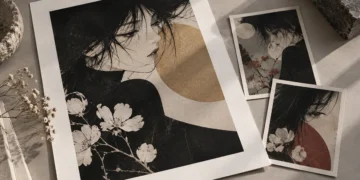
Curated by Samuel Leuenberger, Biennale Gherdëina 10 brings together 23 artistic practices in Ortisei, S. Cristina and Pilat. The participating artists include Giulia Cenci, Lydia Ourahmane, Álvaro Urbano, Augustas Serapinas, Bosco Sodi, Evelyn Taocheng Wang, Walter Niedermayr, Alice Bucknell and Dorota Gawęda and Eglė Kulbokaitė. Their projects enter into direct contact with the valley, its residents, its architecture, its rituals and its long relationship with wood.
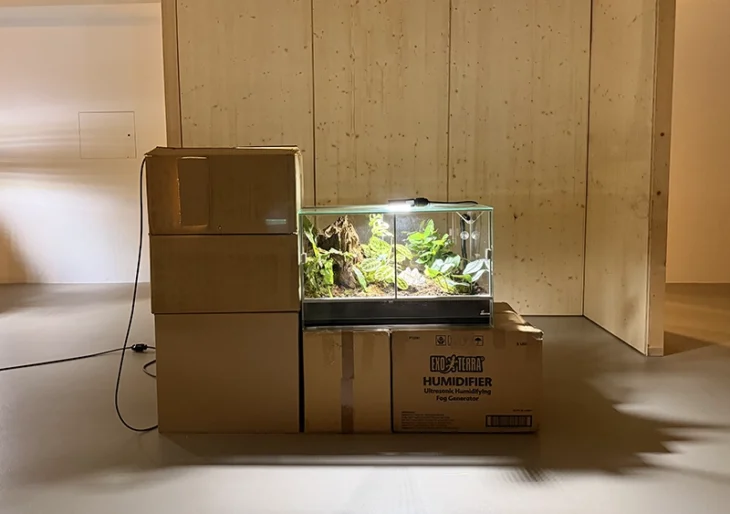
The location gives the exhibition an identity that larger institutional events often struggle to establish. Val Gardena does not function as scenery placed behind the artworks. The valley directs how visitors encounter them. Indoor venues, public spaces and sites within the mountains create different rhythms of attention. Visitors experience the biennial through proximity, walking, weather and changes in altitude. Art becomes connected to the physical conditions surrounding it.
Leuenberger’s curatorial concept begins with the garden as a human construction. In the mountains, that idea gains particular urgency. Short growing seasons, exposure and unpredictable weather limit any assumption of complete control. The garden becomes a place shaped by adaptation, responsibility and continuous care.
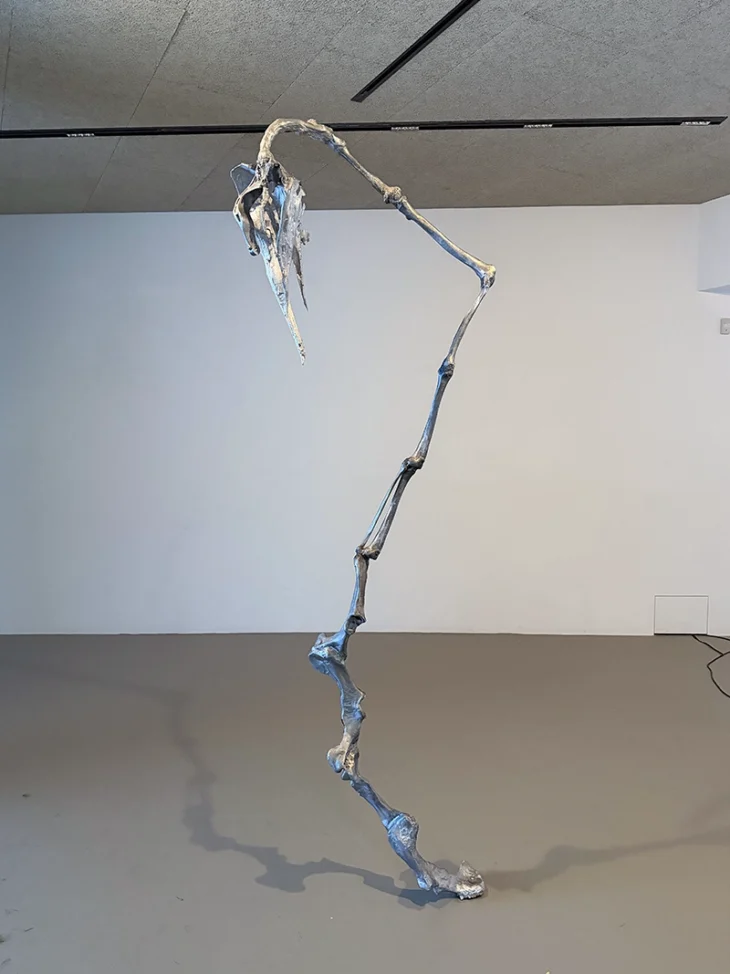
(Future) Paradise Gardens develops this idea through six related themes. Commoning considers food cultivation, sharing, preservation and collective care. Divine Love and Growth examines the garden as a site of spiritual development and contemplation. The Violent Garden addresses colonial systems, botanical power and humanity’s control over other forms of life. Queer Ecology considers diversity and fluidity within ecological systems. Other sections explore botanical classification and the garden as a space for reflection, poetry and creative thought.
These themes give the exhibition a clear structure without forcing every artist into the same conclusion. Leuenberger allows each project to respond to the valley through its own materials, methods and questions. This approach produces a curatorial framework that feels precise while remaining open to uncertainty.
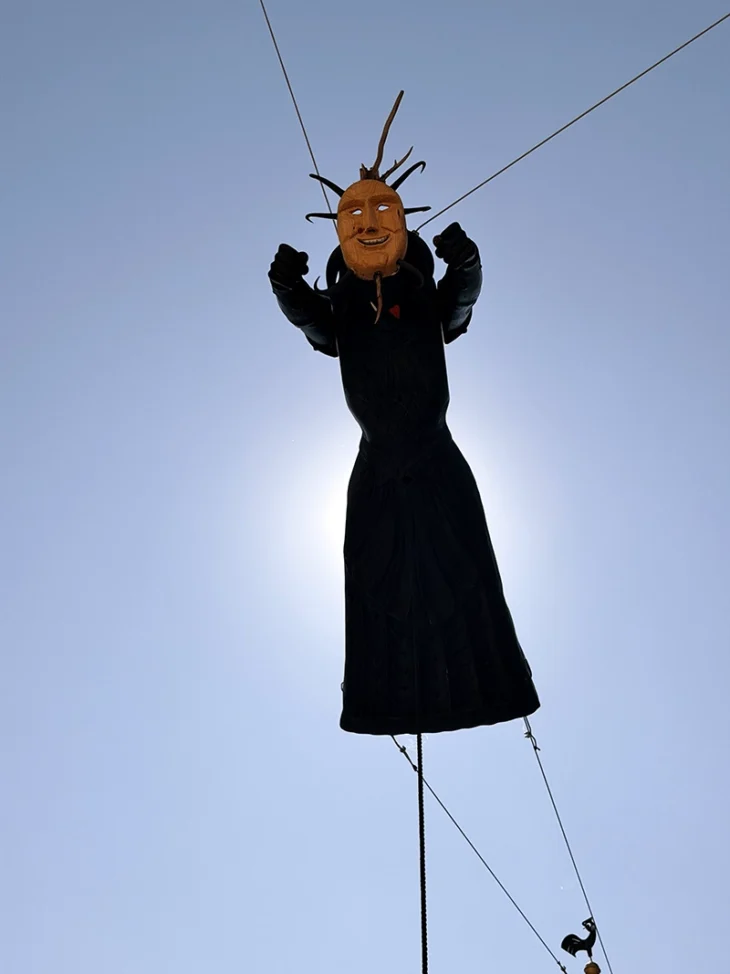
The biennial also benefits from its close relationship with local production. Many works take shape on location through collaborations with Val Gardena artisans, particularly those connected to the area’s woodworking knowledge. These partnerships prevent the exhibition from feeling temporarily inserted into the region. The artists work with existing skills, materials and histories, creating projects that belong specifically to their setting.
That sense of place separates Biennale Gherdëina from events that could occur in almost any city or exhibition hall. Its venues require attention to scale, distance and context. A work encountered in Ortisei carries a different charge from one discovered in Pilat or S. Cristina. The biennial asks visitors to experience the valley as part of the curatorial proposal.
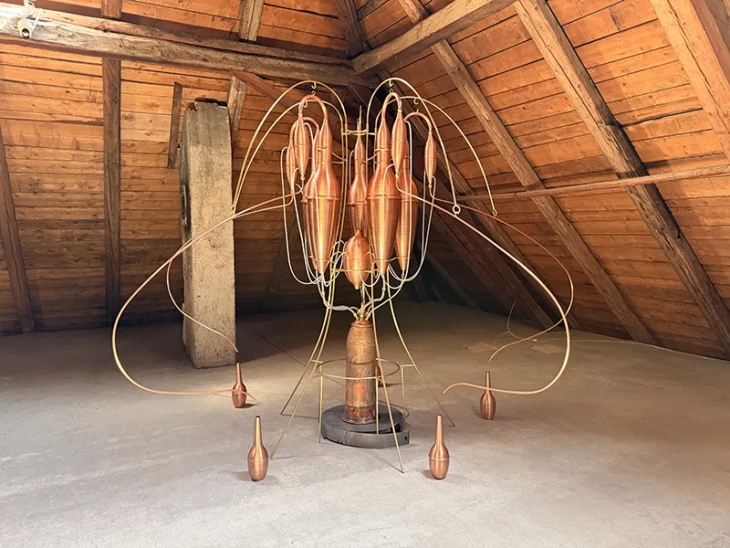
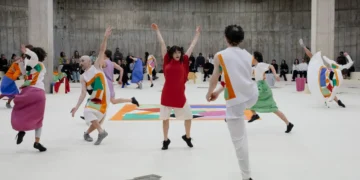
The public program extends this approach through workshops, open ateliers, a summer solstice trekking event, a percussion concert and a catalogue presentation. These events allow the biennial to develop over time and invite different forms of participation from residents, families and visitors.
The tenth edition suggests that Biennale Gherdëina no longer needs to compete through size. Its strength comes from curatorial clarity, an exceptional setting and a serious engagement with the communities and environments that host it. (Future) Paradise Gardens does not offer an idealised retreat. It treats the garden as a contested place where beauty, control, care and responsibility remain closely connected.
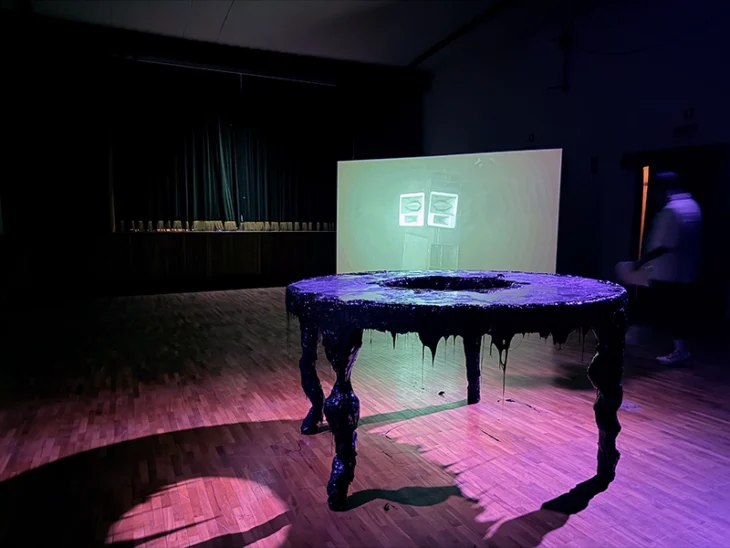
Is Biennale Gherdëina the next big thing? Its tenth edition makes a convincing case. The biennial offers something increasingly rare: an exhibition that could exist only where it takes place.