


A woman makes a decision about her body. Almost immediately, someone arrives to explain why the decision was never really hers. This contradiction has followed feminism for decades, and Lena Dunham’s announcement that she became a mother through surrogacy has brought it into unusually sharp focus.
DORIC ORDER
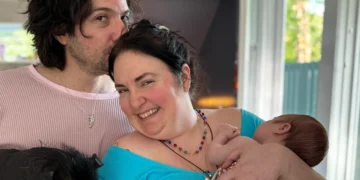
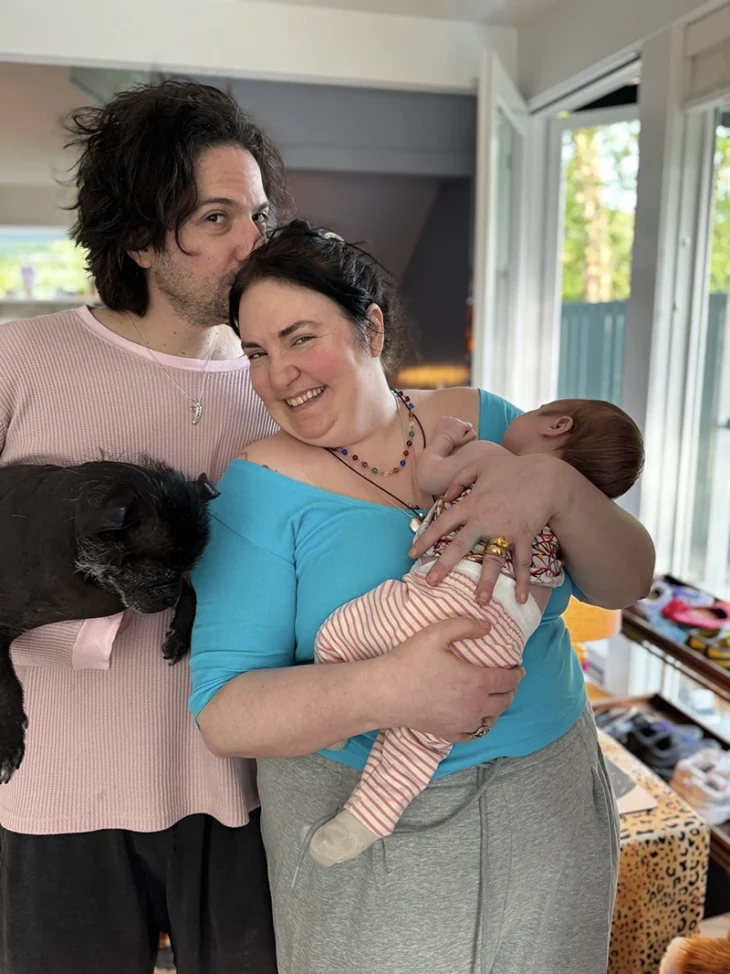
Dunham and her husband, Luis Felber, welcomed their daughter through a surrogate after a long and publicly documented history of reproductive illness. Dunham underwent a hysterectomy at 31 following severe endometriosis and later experienced an unsuccessful attempt at IVF. Writing for Vogue, she described meeting the woman who would eventually carry her daughter, following the pregnancy and attending the birth.

The response online quickly escaped the boundaries of one celebrity birth announcement. Surrogacy became the subject. So did capitalism, class, motherhood and the ownership of the female body. Critics described the practice as reproductive exploitation. Some compared it to The Handmaid’s Tale. Others argued that wealthy women effectively purchase reproductive labor from women with fewer economic options.
These questions deserve serious consideration. Pregnancy involves physical risk. Economic inequality affects the conditions under which people make decisions. An industry concerned with reproduction requires legal and ethical scrutiny. Yet something strange happens when this legitimate structural critique encounters an individual woman. She disappears.
A woman makes a decision about her body. Almost immediately, someone arrives to explain why the decision was never really hers.
We do not publicly know the economic circumstances of Dunham’s surrogate. We do not know why she decided to become a surrogate, how she understood the experience or what role compensation played in her decision. Dunham has kept her identity private. Yet thousands of strangers appear remarkably confident that they understand this anonymous woman’s relationship with her own body. She becomes the exploited woman. And once we have given her that identity, we no longer need to hear from her.
There lies the contradiction. For generations, feminism has fought against systems that denied women authority over their bodies. Yet contemporary discussions of female autonomy sometimes carry an unexpected condition: we respect a woman’s choice when we approve of what she chooses.
A woman can choose cosmetic surgery, and we may explain that beauty standards made the decision for her. She can monetize her sexuality, and we may conclude that the male gaze made the decision for her. She can abandon a career for motherhood, and we may decide that patriarchy made the decision for her. She can carry a pregnancy for another person, and capitalism becomes the true author of her decision.
We respect a woman’s choice when we approve of what she chooses.
Any of those analyses can contain truth. No choice exists outside society. Money, gender, family, desire and necessity influence us constantly. But influence and absence of agency are different things.
If a woman must make a decision untouched by economic necessity, cultural expectation or social pressure before we recognize it as genuinely hers, then female autonomy becomes an impossible condition. Nobody possesses such freedom.
Surrogacy makes the problem particularly uncomfortable because labor and the body become inseparable. Money cannot remove pregnancy’s physical demands. Consent cannot erase economic inequality. Those realities deserve examination. The reverse is equally important: inequality does not automatically erase consent.
This is why comparisons to The Handmaid’s Tale feel particularly inadequate. Margaret Atwood’s Gilead derives its horror from reproductive coercion. Women lose authority over their bodies. Their capacity to choose has been deliberately destroyed. To use that image for every surrogacy arrangement assumes the conclusion before asking the essential question: did this woman choose?
Perhaps she did under financial pressure. Perhaps she found the experience meaningful. Perhaps both are true. Human beings routinely inhabit contradictions that political arguments would prefer to keep separate. The internet has little patience for such ambiguity.
It wants victim and oppressor, buyer and commodity, empowerment or exploitation. A wealthy celebrity and an anonymous surrogate provide an almost irresistible arrangement of characters. Real women are less convenient.
A woman can participate in a system we criticize and retain agency within it. She can make a decision we would never make. She can choose something that troubles us. She can even make a bad choice. Female liberation has to include that possibility.
Otherwise, we quietly replace one prescribed version of womanhood with another. The obedient woman of the past gives way to the correctly emancipated woman of the present: independent in approved ways, sexual in approved ways, maternal in approved ways, economically motivated only when we consider the work acceptable. That is still a prescription.
None of this requires us to declare surrogacy inherently empowering. The industry can and should face questions about compensation, medical protection, coercion and inequality. Calling something a choice should never end an ethical discussion. Calling something exploitation should not end it either.
View this post on Instagram
The reaction to Dunham reveals how easily concern for women can become authority over women. We become so determined to identify the forces acting upon a woman that we forget she is herself a force: thinking, deciding, negotiating and capable of understanding circumstances we find objectionable.
Perhaps Dunham’s surrogate would describe her experience as empowering. Perhaps she would describe it as work. Perhaps she would use language neither side of this argument expects. We do not know and that uncertainty should matter.
A woman’s autonomy cannot depend upon whether we like what she does with it. Otherwise, it was never autonomy at all.
There is something dangerous about a feminism that speaks endlessly about women while becoming increasingly certain it does not need to hear from them.
A woman’s autonomy cannot depend upon whether we like what she does with it.
Otherwise, it was never autonomy at all.