


I have been going to Dolce&Gabbana shows for more than 15 years. My second show ever was this house, after my first, Burberry under Christopher Bailey, where artificial rain engulfed the runway. Dolce&Gabbana was a different experience from the start. Glamour here runs in the same code season after season, yet the code is rich and thrilling rather than repetitive.
You always go to the same location, and you often sit with the same people from one season to the next. I usually sit between Angela and Alisson, we usually talk about the dread of 10 days in Paris on our next stop. It becomes a party within the fashion week cycle. The house may or may not realize it, but that familiarity is a big part of why we keep coming back. This time Domenico Dolce and Stefano Gabbana took us back to Sicily. We have been there before in their work, but this time the show brought the island into the room. At the famous Metropol cinema, the runway palazzo that has long been the house’s home was transformed into a Sicilian residence, with LED screens simulating a warm late-summer breeze.
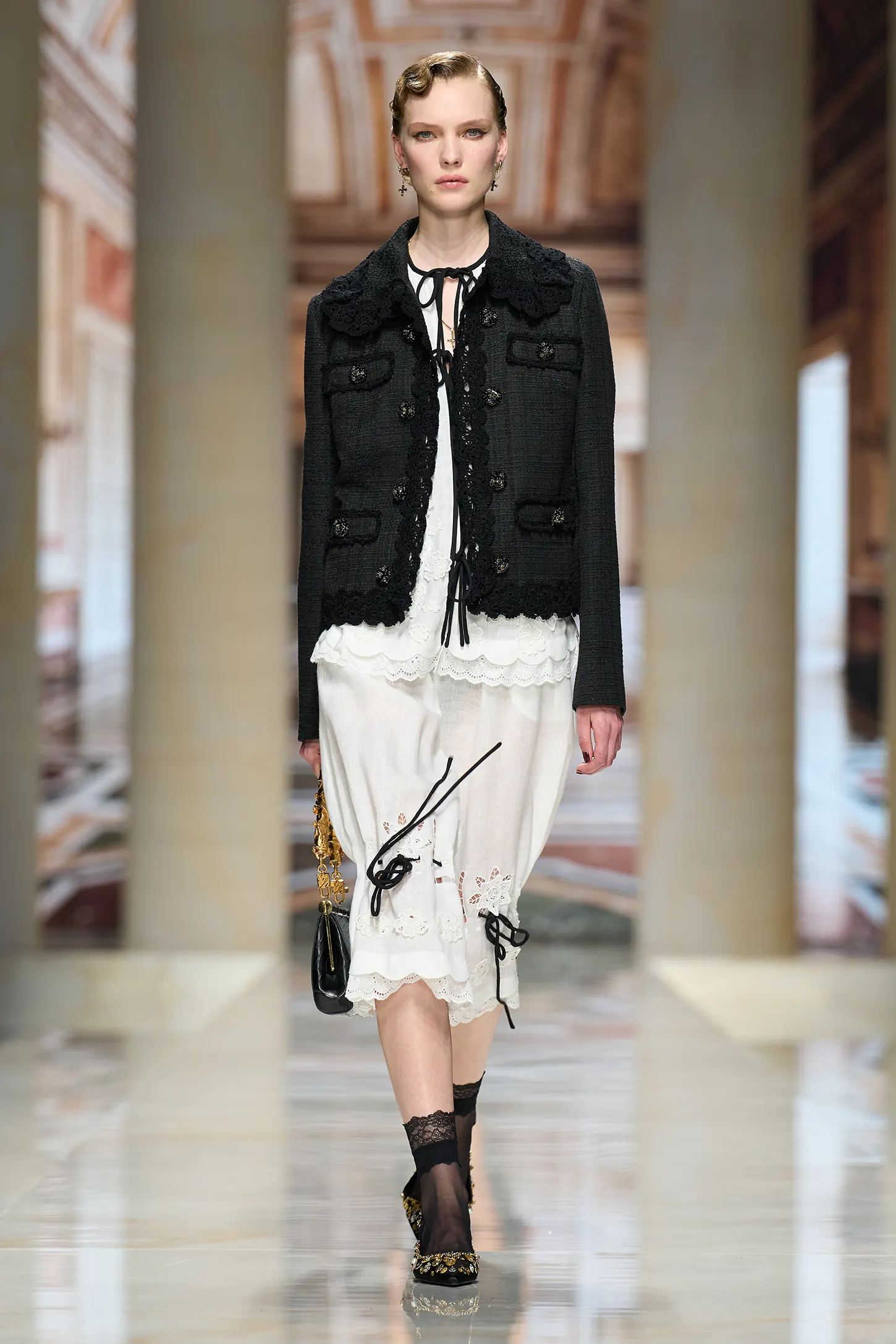
The collection is built on the house’s own inheritance. As the brand writes, “Identity lives in perpetual motion: framed by the past, transformed in the present, it foregrounds the future.” For Spring Summer 2027, Dolce&Gabbana digs into its distinctly Sicilian heritage, applying disruption as a force for transformation. The result is a new character within the family: informed by inheritance, shaped by instinct, and animated by individuality.
“Stravaganza Siciliana” looks to the family palazzos of Sicily, where identity has accumulated over generations. Within these baroque interiors, clothes, jewels, textiles and objects are preserved, inherited and reinterpreted so they can be passed down once more. A grandmother’s jacket, an aunt’s jewel, an old trousseau, embroidered linen, lace and upholstery all carry the traces of lives already lived.
RELATED: Dolce&Gabbana Men for Fall 2026
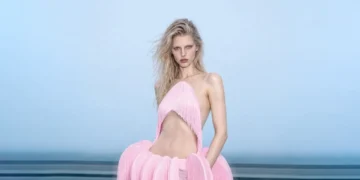
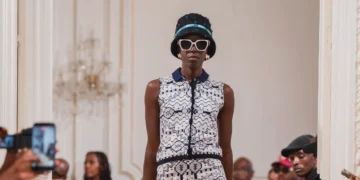
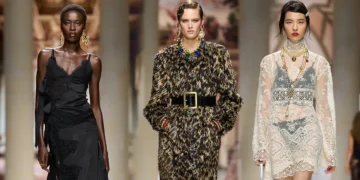
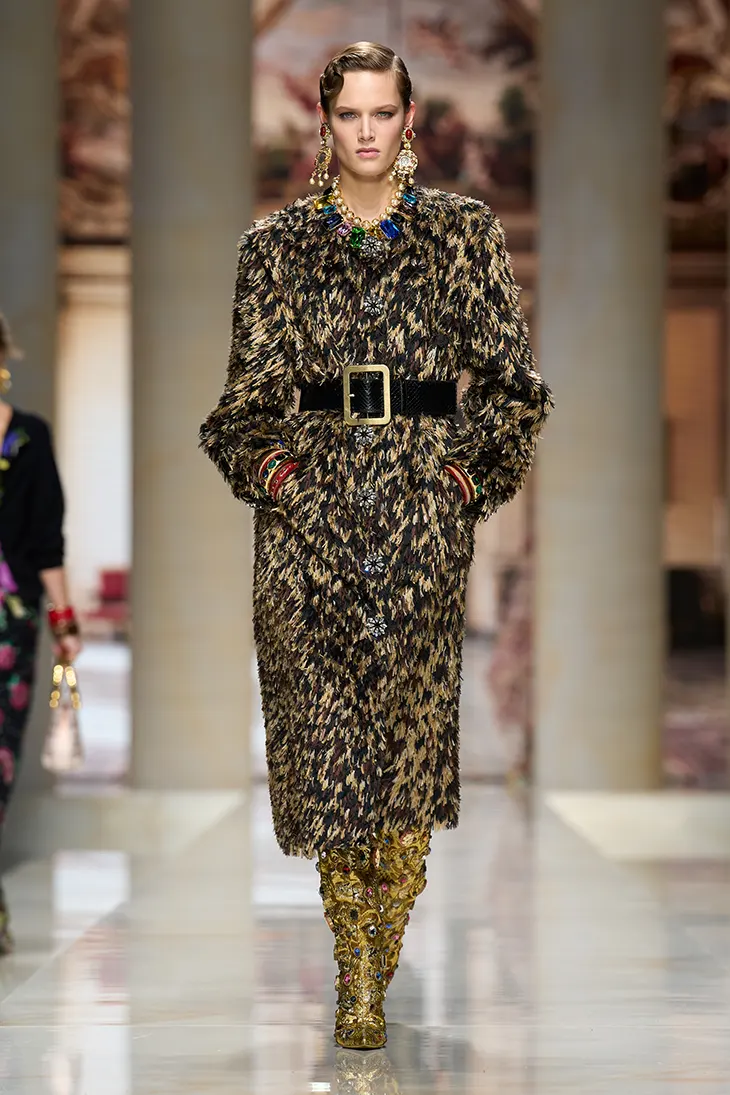
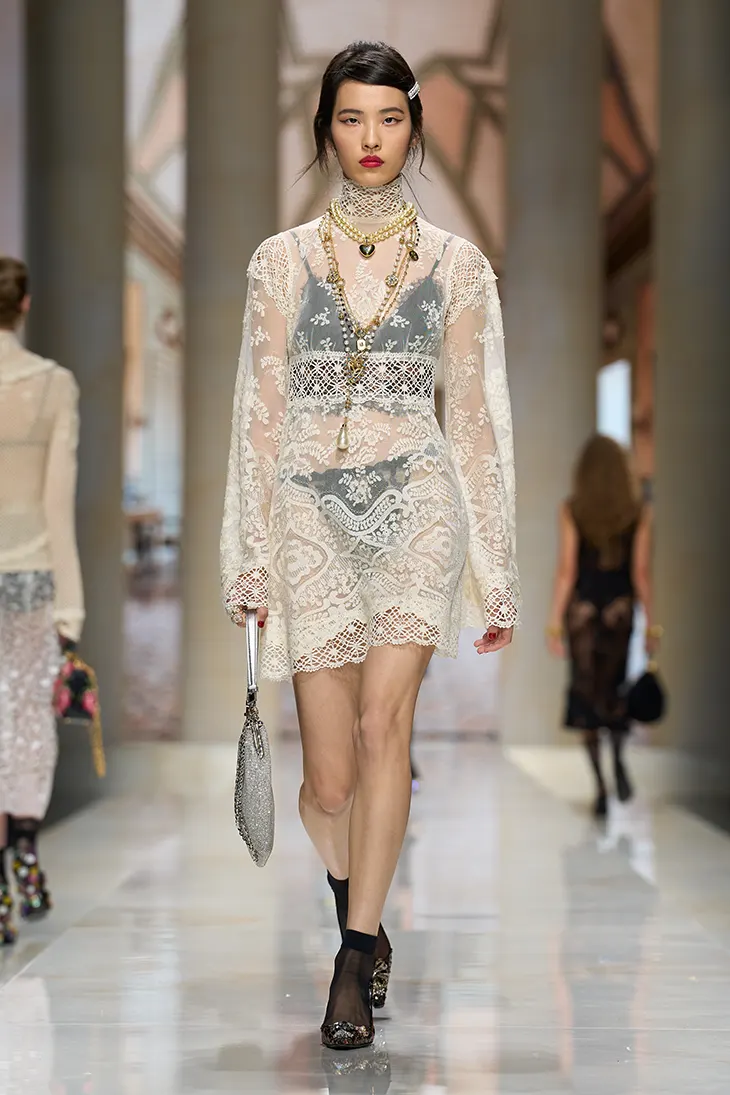
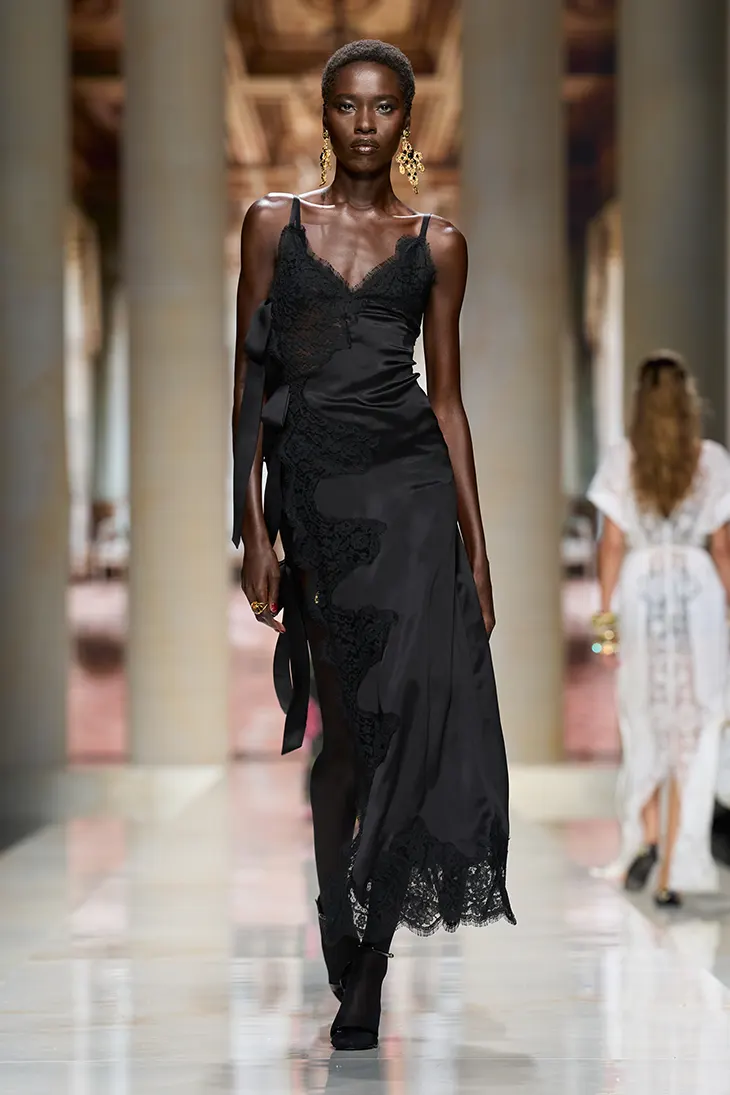
The stravaganza gives the collection both attitude and structure. Historically tied to performance, spectacle and festival, here it becomes a way of dressing in which different eras, materials and registers mix in total freedom. Pastel lace meets leopard, brocade and upholstery are drawn into dresses and jackets, lingerie appears beneath precise tailoring, and miniskirts rise against decorum. Jewelry accumulates across the body: pearls, crosses, cameos, coral, brooches, stones and talismans. Instead of reverence, every handed-down reference is brought into the present with joyful abandon.
The palazzo, the crucible of the family, becomes the wardrobe. Damask, passementerie and furnishing fabrics move from the interiors of the house onto the body, and chandeliers and heirlooms seem to light the jewelry and accessories. The effect echoes Lampedusa’s Palermo, where continuity and transformation coexist in exquisite tension.
Leopard is one of the collection’s core motifs, and its meaning has shifted across Sicilian history. It appears in the Roman mosaics of the Villa Romana del Casale at Piazza Armerina as part of an imagery of power, attraction and spectacle. Centuries later it acquired a distinctly Sicilian resonance through Lampedusa’s Il Gattopardo. Here, the leopard enters a contemporary dialect of sensuality, irony and excess. The fashion is exactly what we want from Dolce&Gabbana. The trends of the season are absorbed into the brand’s DNA and become a wardrobe of timeless pieces. Even from any seat at the Metropol, you could see the level of detail and craftsmanship the house is known for.
Finally, while the brand moves through turbulent times, like many in the fashion industry, it remains loyal to the territory it knows best. For many of us, going to a Dolce&Gabbana show with Domenico and Stefano feels like coming home. Next season, we would happily accept cake and tea at the Sicilian home.
Discover more of the collection in our gallery: