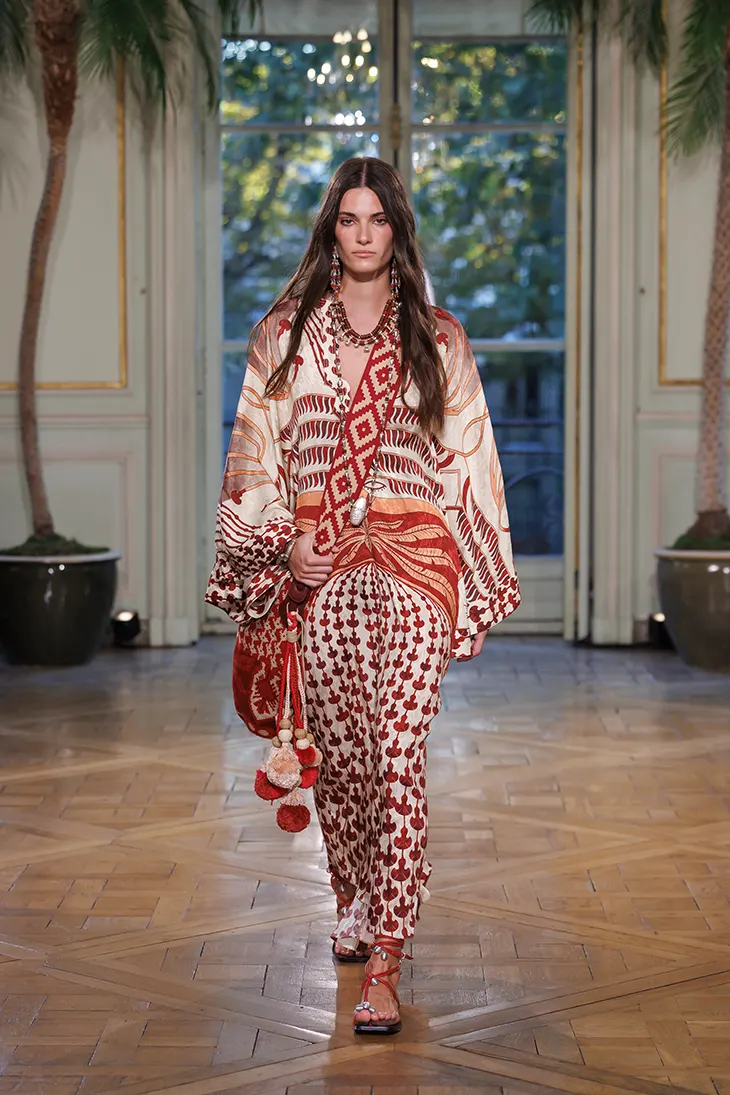



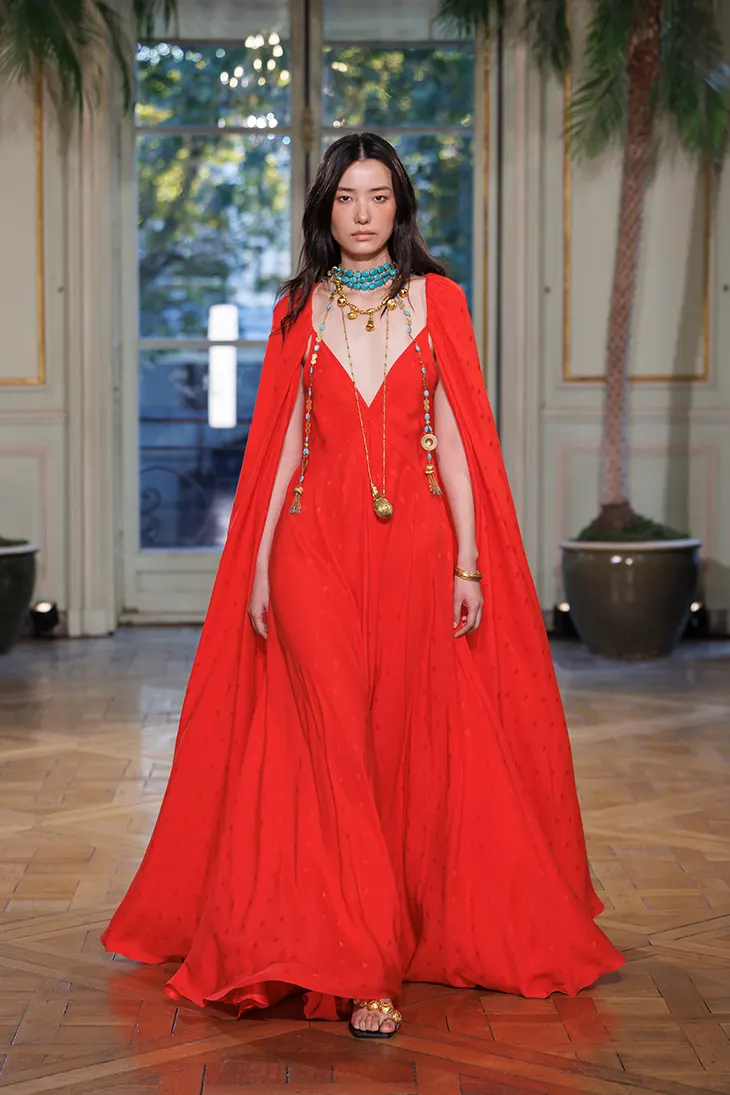
Johanna Ortiz presented her Spring Summer 2027 collection at the Maison de l’Amérique latine in Paris, using the season to examine what passes from one generation to the next and how those inherited ideas continue through clothing, objects and gesture.
SPRING SUMMER 2027
The Colombian-born house has spent more than two decades building its creative language around Latin America, drawing from its biodiversity, light and approach to everyday life. For SS27, Ortiz turns that perspective inward and asks what people carry within them from one generation to another.
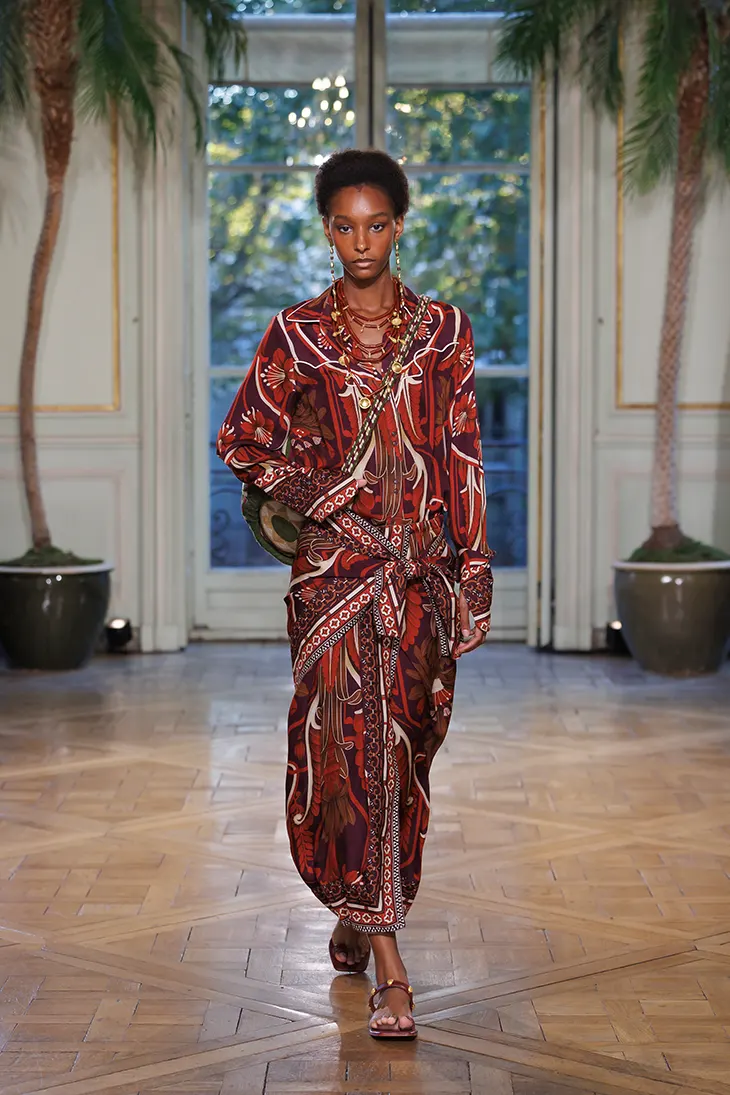
The Paris venue gives that idea a direct setting. Located on Boulevard Saint-Germain inside the Hôtel de Varengeville and Hôtel Amelot de Gournay, the Maison de l’Amérique latine has worked since 1946 to strengthen cultural ties between Latin America and France. Its long connection with Latin American writers, painters and musicians gives the collection a setting shaped by exchange and memory.
Ortiz begins with objects that carry practical and cultural meaning. The collection references the carriel from Jericó, traditionally used to carry essentials through the mountains of Antioquia, the Wayuu mochila, and baskets made from iraca palm in Nariño. She does not reproduce these objects directly. She studies the knowledge behind them, particularly the way function, memory and technique can remain present as forms change.
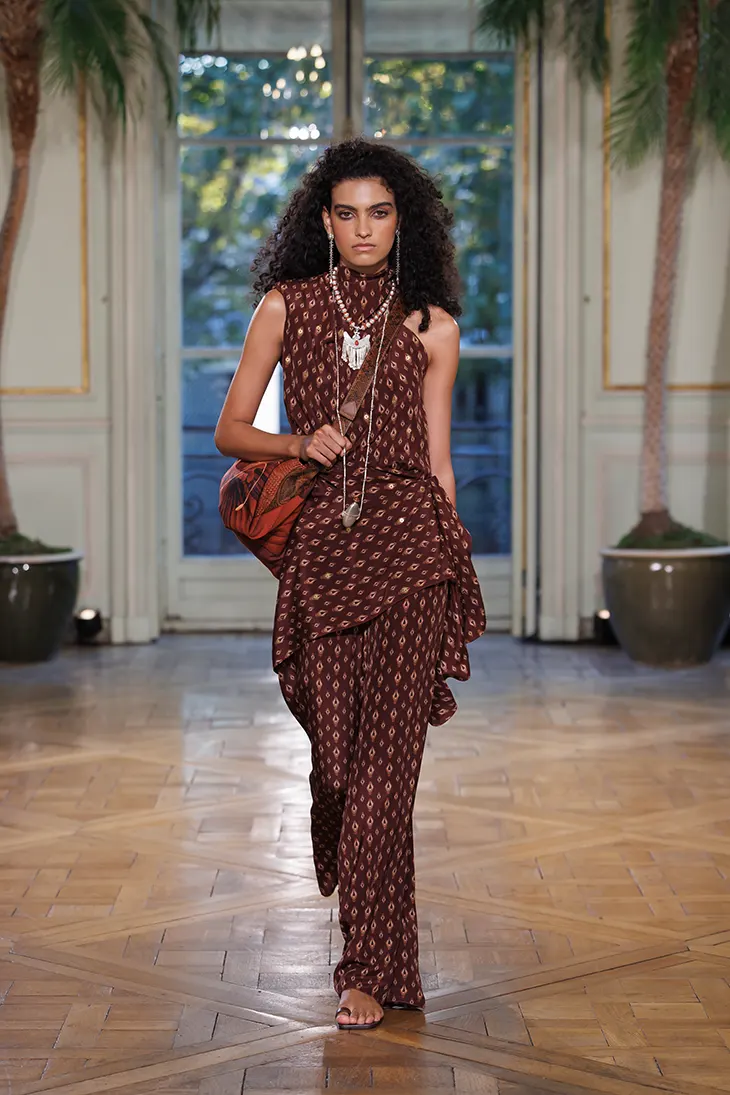
That thinking extends to silhouette. Ortiz became interested in the way the body reacts when it carries something: a lowered shoulder, gathered fabric, shifting weight and a hand pulling material toward the body. These gestures informed the proportions of the collection.
Fabric becomes the starting point. Cloth wraps, gathers and falls from one shoulder, creating shapes that depend on the wearer. Generous volumes appear beside pieces held close to the body. Panels open while walking and fringe follows movement, allowing the body to complete the garment.
Pattern and color draw from the confidence Ortiz sees across Latin American dress, with particular reference to Maya clothing. Stripes, checks, woven geometry, embroidery and intense color appear together without rigid separation. Prints meet florals and geometry, while the palette draws from the visual range Ortiz associates with Latin America, from the jungle to the páramo.
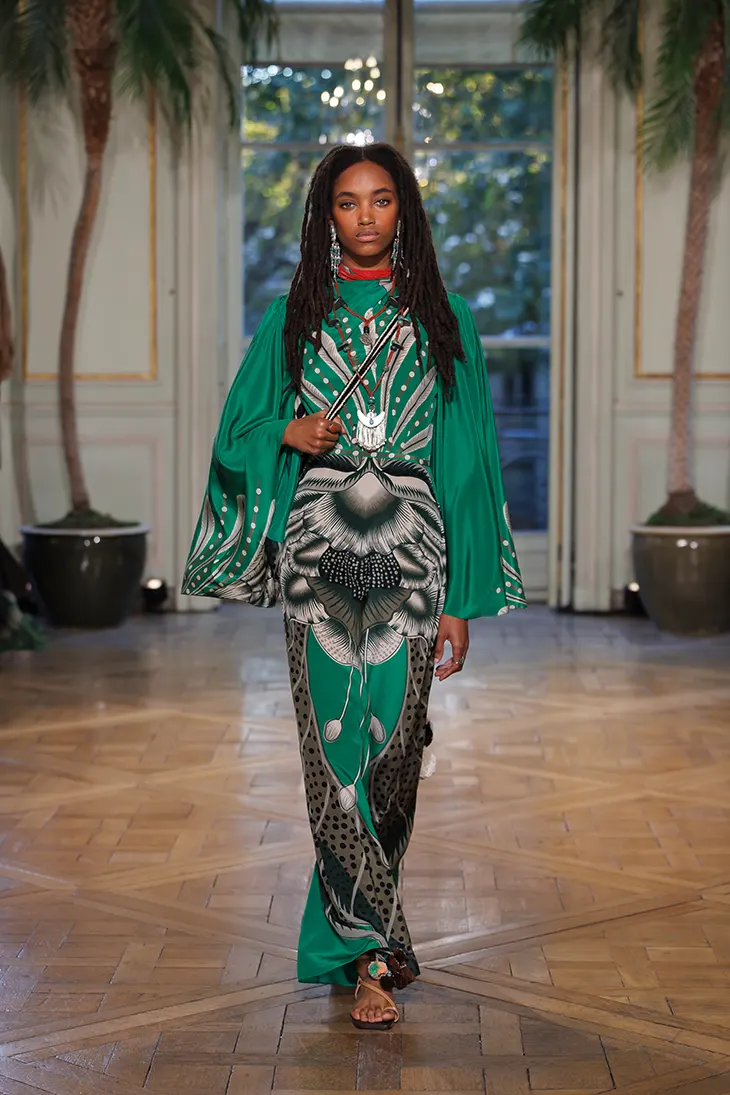
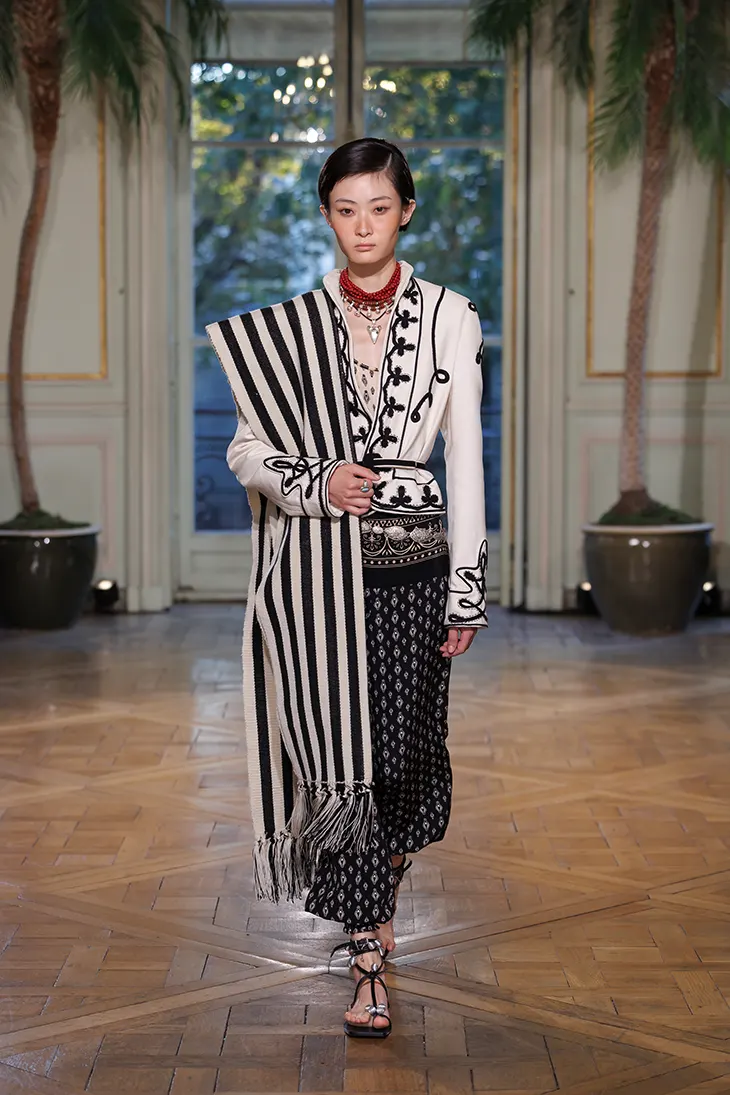
The collection treats those references as instinctive knowledge carried forward through generations. Ortiz focuses on how techniques, gestures and ways of combining color can survive without remaining fixed in their original form.
Two collaborations extend that approach. Guanabana, founded by Almudena Espinosa, translates Johanna Ortiz prints into Wayuu weaving for a series of exclusive bags inspired by the mochila. Wayuu artisans in Colombia handweave each piece, creating individual variations across the series. Paraguayan designer Mar Filártiga, through her brand Mar, contributes woven pieces created with local weavers and artisans. These additions bring more texture and movement into the collection while maintaining its focus on Latin American making traditions.
Spring Summer 2027 considers inheritance as something active. Ortiz looks at what remains through memory, instinct, technique and physical gesture, then allows those elements to change through print, proportion and the body.