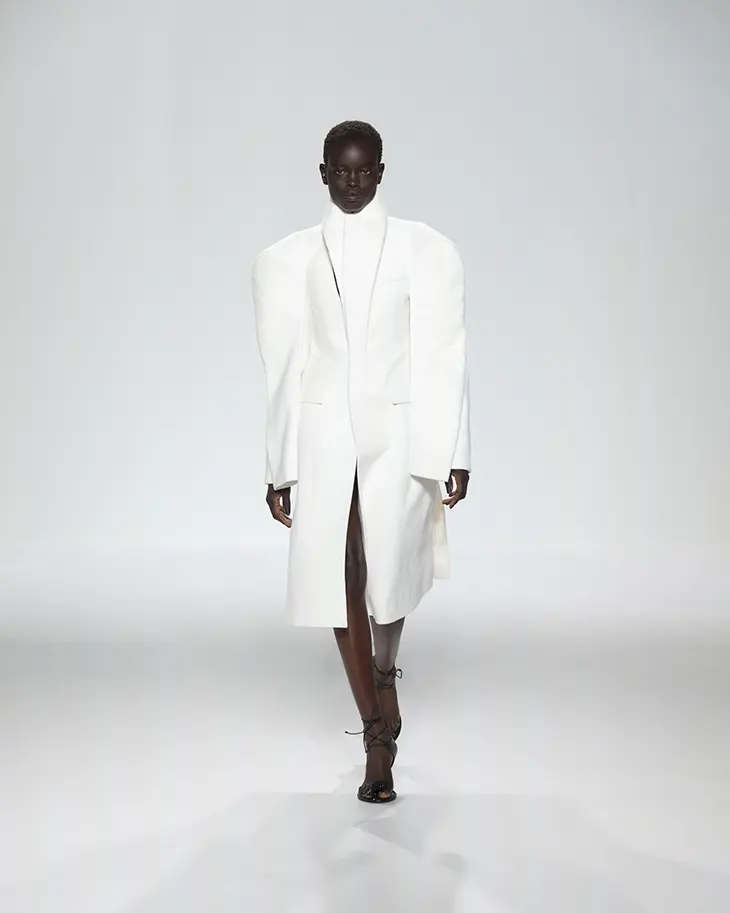



Jean Paul Gaultier Spring Summer 2027 sees Creative Director Duran Lantink push curiosity, intuition and contradiction through a collection where Dutch folklore meets precise tailoring and radical proportions. After completing a full calendar of shows for the house, Lantink continues to encourage his team to follow ideas that create excitement, even when the results resist straightforward logic.
SPRING SUMMER 2027
That attitude connects directly with his view of Jean Paul Gaultier. Lantink embraces combinations that can feel unexpected, using the house archive alongside ideas developed through his recent couture and ready-to-wear collections. For SS27, he adds traditional Dutch clothing and prints to that vocabulary.
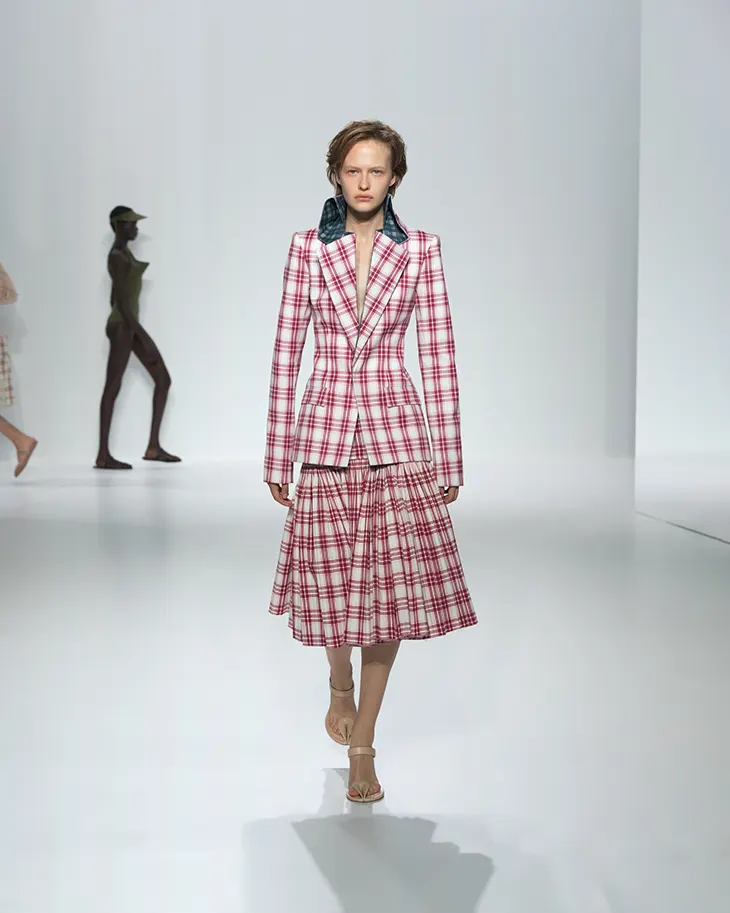
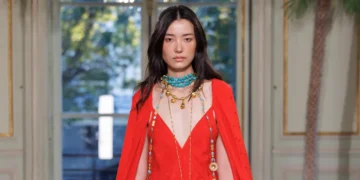
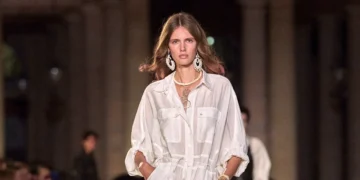
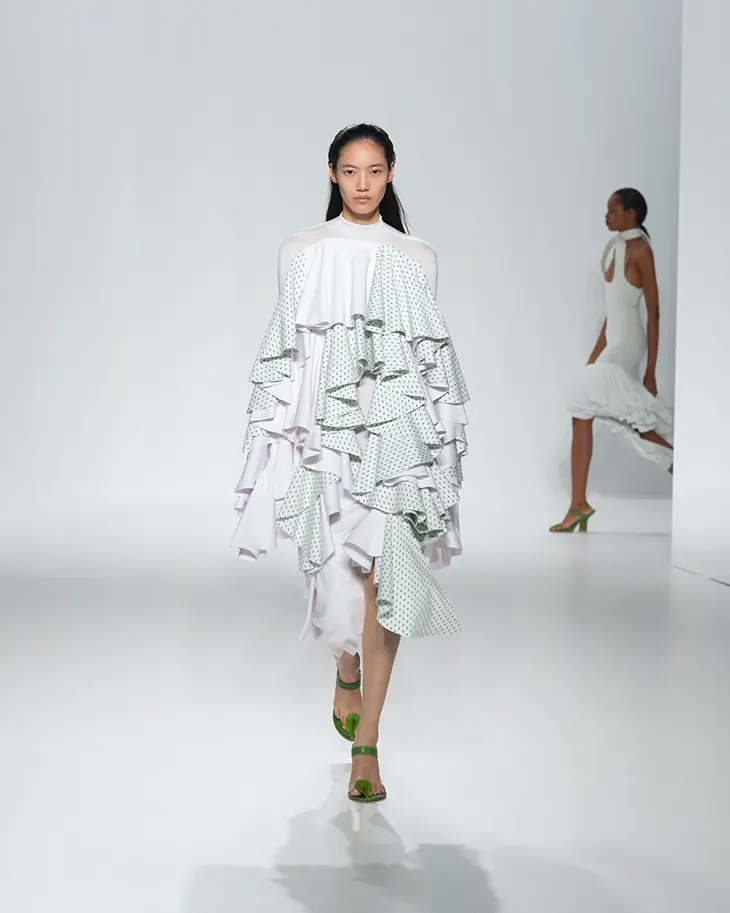
Checks, tartans and floral motifs retain much of their original graphic character, with subtle adjustments that sharpen their colors for 2027. A folkloric mood runs throughout the collection, joined by what Lantink describes as a witchy 1980s Ibiza influence. Ruffles introduce light movement, while a cape dating from around 1900 returns in lightweight cotton.
Bells embroidered across jeans, skirts and coats create sound as the clothes move. One printed and perforated leather dress hangs from the head and swings around the body like hair, extending Lantink’s interest in changing familiar relationships between clothing and anatomy
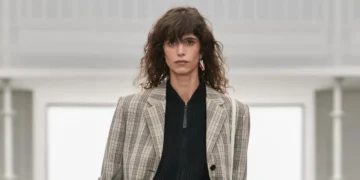
Tailoring takes a more architectural direction. Jackets introduce a new forward-leaning shoulder, supported by carefully placed armholes that control the silhouette. One multi-check blazer features a lapel folded four times into a harmonica-like construction. Trench coats, field jackets and cargo trousers bring utilitarian forms into the collection, while leather cone bras appear underneath other garments.
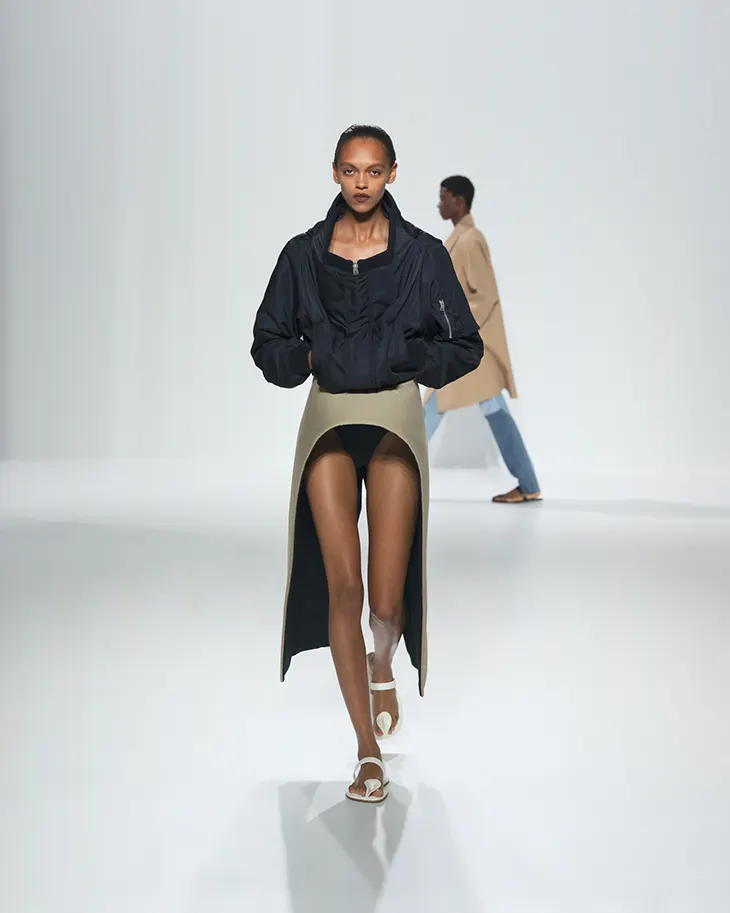
Lantink also develops the square neckline previously explored in denim during his recent couture collection. For Spring Summer 2027, the shape appears on a mackintosh coat and bomber jacket, establishing it as a recurring Jean Paul Gaultier detail.
Accessories follow the collection’s interest in altered proportions and found references. Vintage jewelry receives a polished finish. Several hats draw from an archival photograph of Farida Khelfa, who appears wearing what resemble stockings filled with balls across her head.
Footwear continues to grow as a category for the house. New sandals take their shape from the negative space of a flip-flop or tabi shoe, extending Lantink’s interest in objects that look familiar from one angle and unfamiliar from another.
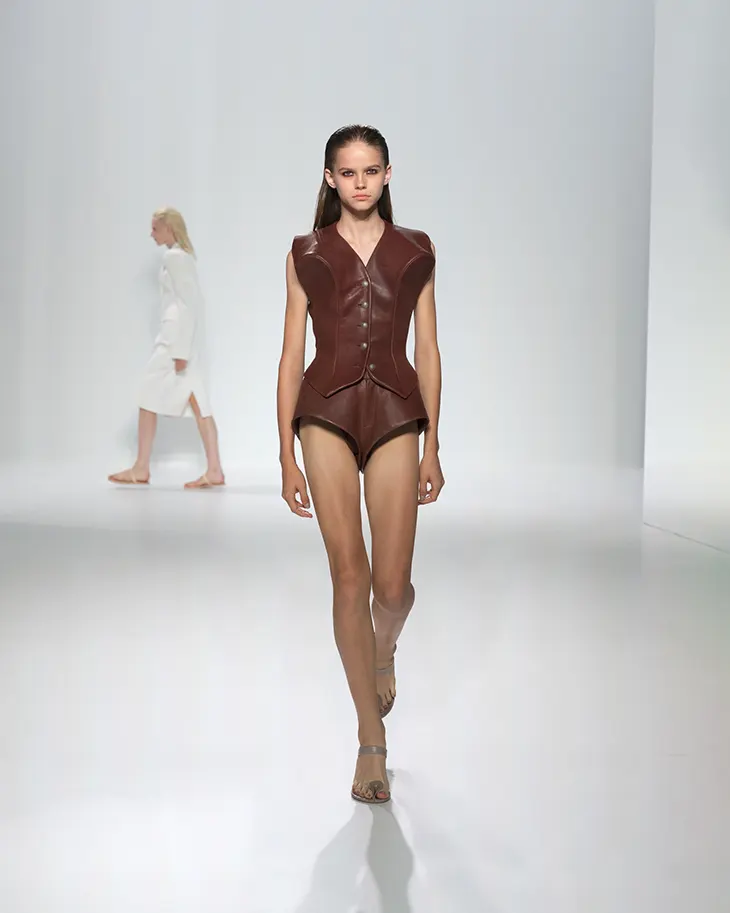
The collection’s title, Multidimensionality, also determines how Lantink stages the show at Palais de Tokyo. He approaches clothing from several viewpoints during fittings and pays particular attention to the three-quarter angle. Mirrors placed throughout the venue multiply those perspectives, allowing viewers to see garments from changing directions while introducing the visual disorder Lantink enjoys.
Music follows the same instinctive logic. Lantink repeatedly listened to Tikitaka, a track by an obscure German act from the 1990s that Dazion remixed in 2019. He discovered the track on YouTube before learning that Dazion, like him, grew up in The Hague.
Across Spring Summer 2027, Lantink treats contradiction as a productive tool. Traditional Dutch references, utility clothing, archival Gaultier ideas, sharp tailoring and unusual accessories coexist through intuition. His underlying idea remains simple: people need different clothes for different moments because nobody exists as a single fixed version of themselves.