


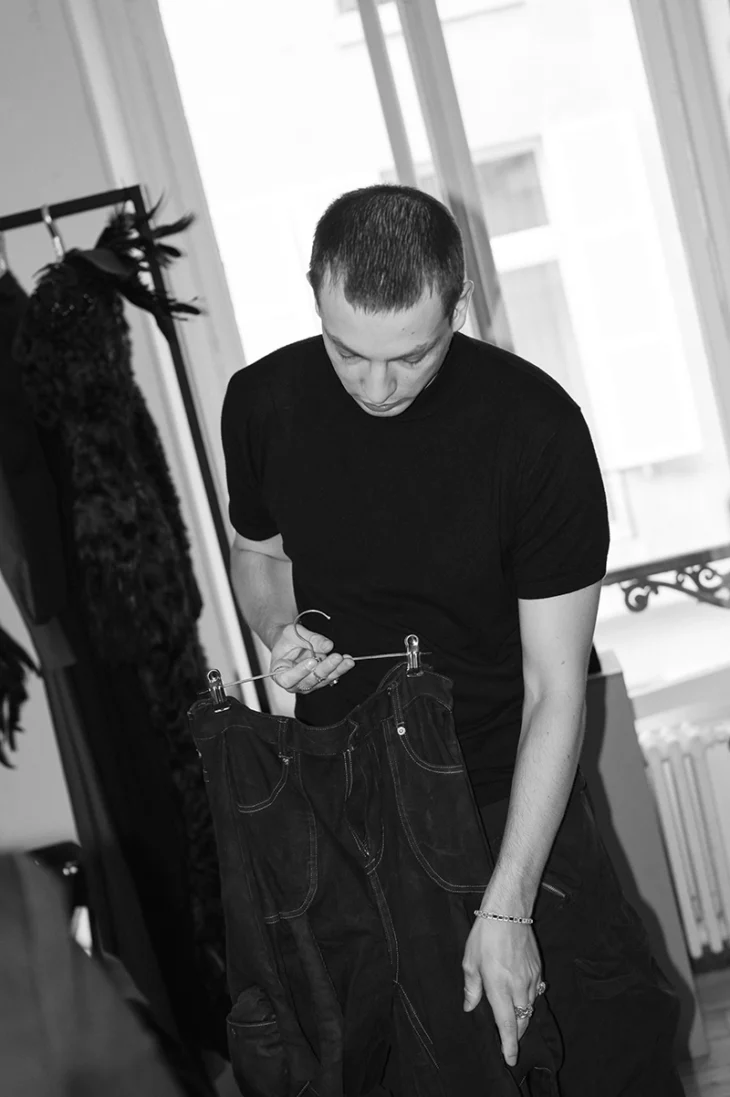
Marlon Ferry has heard his work described as looking like AI. It is an understandable response to clothes that seem to negotiate their own anatomy, extending the body into unfamiliar shapes while retaining something strangely organic. Their apparent impossibility is part of the attraction. Yet Ferry’s ambition depends on their physical existence: the imagined form must eventually become something a person can inhabit.
INTERVIEWS
“My ultimate goal is always to create it in real life and make people experience it in real life,” he tells us.
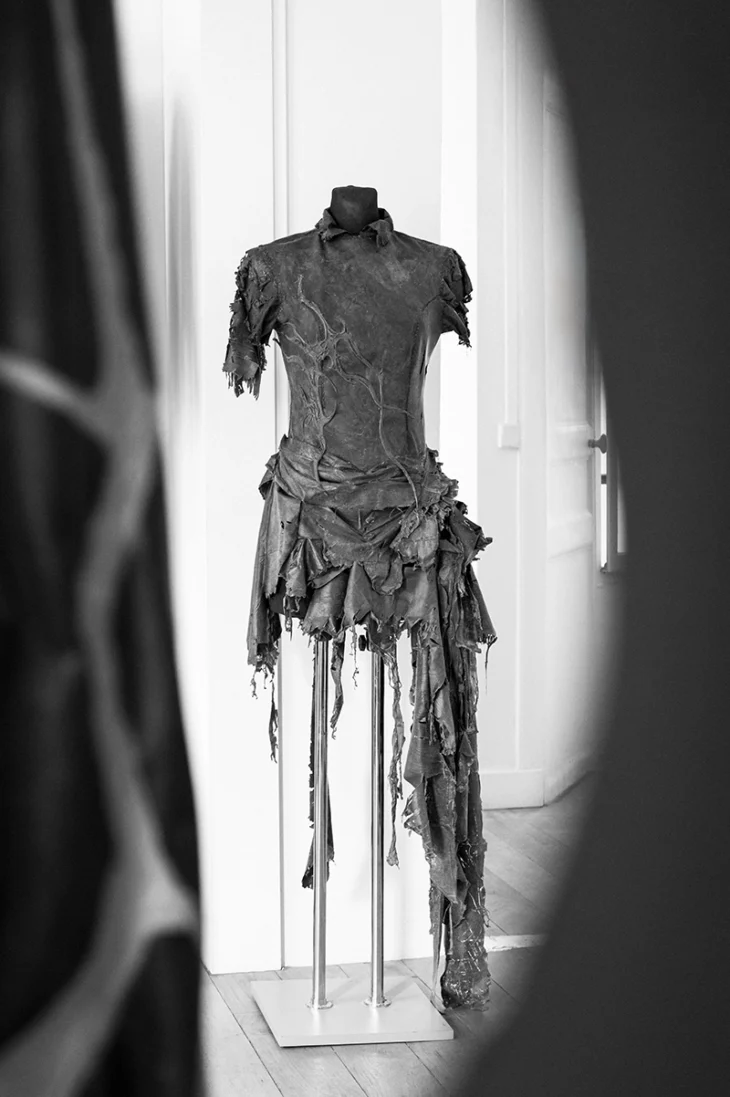
That passage from digital possibility to bodily experience places Ferry within an emerging conversation around couture. Virtual reality and 3D modelling expand what he can construct, while tailoring and painstaking material experimentation give those propositions substance. His practice suggests an avant-garde increasingly fluent in the technologies of its time, with a continued appetite for the slow, intimate labour of making.
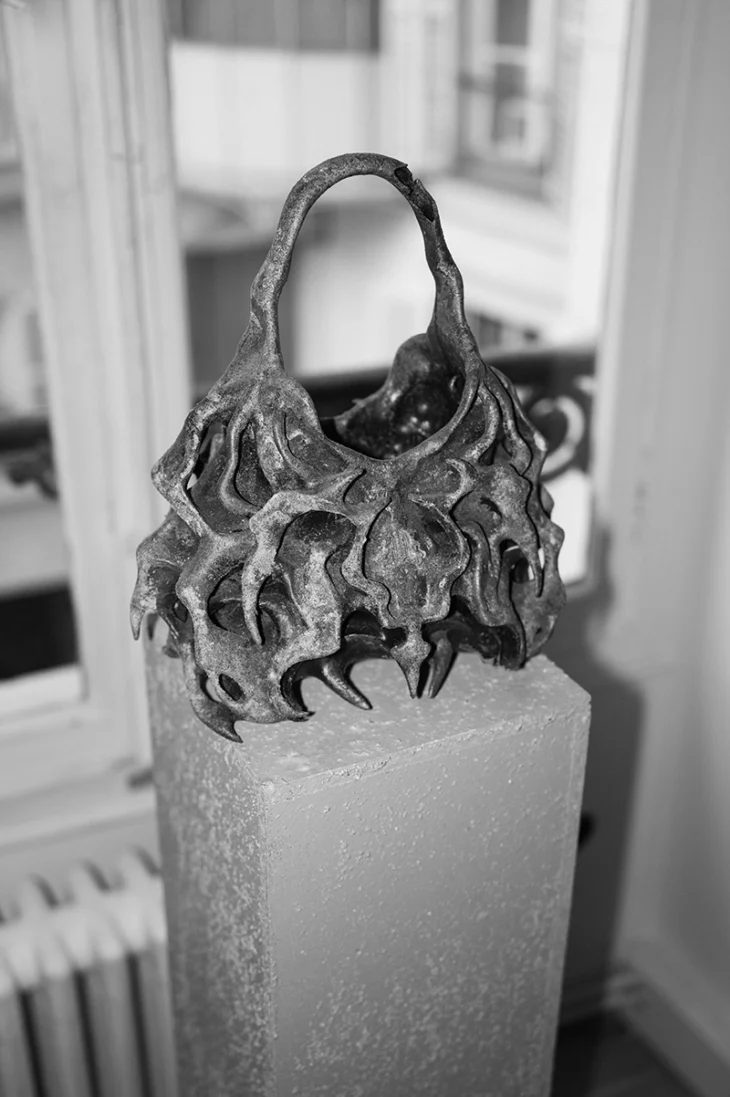
Based in Berlin, Ferry established his independent atelier in 2024, following an internship at Iris van Herpen and a master’s degree in fashion design. The background offers a useful point of entry into his work, where experimental construction develops through a close relationship between craft and technology. But when asked where a collection begins, he describes something less technical: observation.
“What comes first is observation and just a natural curiosity about the surroundings,” he explains.
What is happening in the world, and what troubles him within it, becomes the basis of a narrative. Colour, shape and silhouette follow. The process gives his unfamiliar forms a connection to the present, even when they appear to belong to another reality.
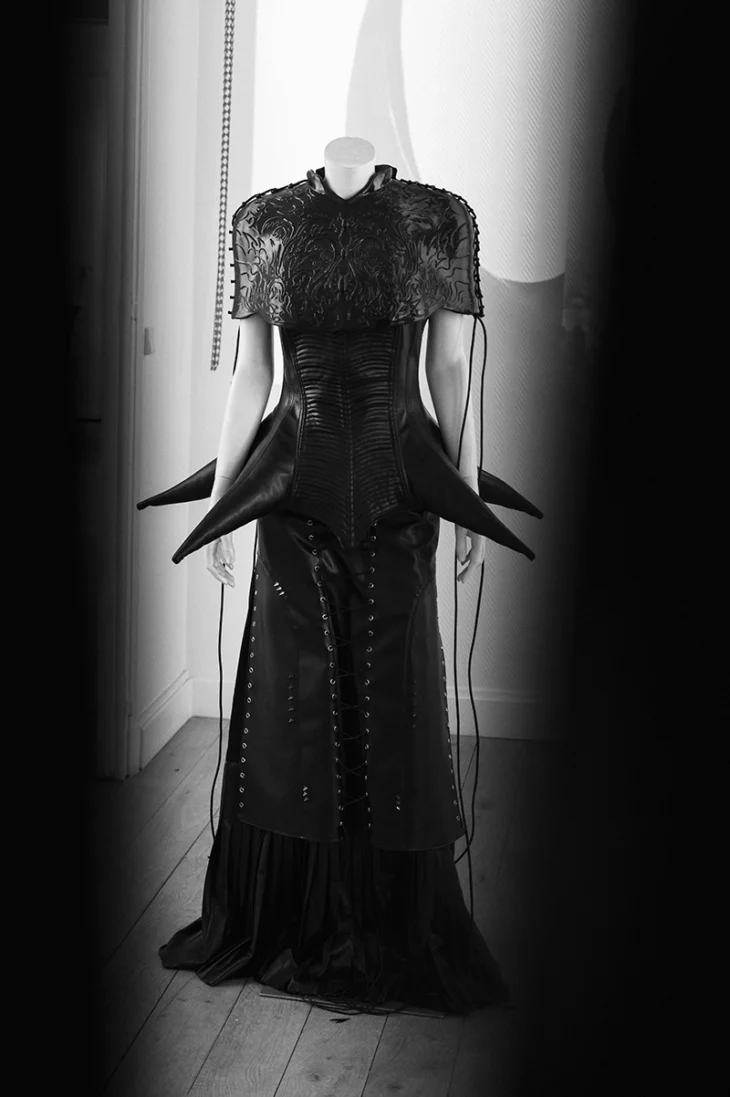
Across the collections discussed in our conversation, from Augmented Virtuality and Liminality to Artifacts of Uncertain Transformation and The Harbingers, Ferry describes an ongoing investigation. Each body of work carries something forward: a technique, an unresolved idea, a possibility worth pursuing.
“I always kind of hook the story, and also the techniques, to the previous work,” he says.
There is discipline within that continuity. Experimentation takes time, and an independent practice cannot pursue every possibility with equal intensity. Ferry has become increasingly selective about what deserves development. “I always want to take it one step further,” he explains. An idea too close to something already achieved is usually rejected. Progress becomes a matter of recognising when a familiar method can produce an unfamiliar result.
The silhouette is where this thinking becomes particularly tangible. Working with virtual-reality glasses and 3D scans of models, Ferry sculpts directly around a digital representation of the body. He describes the result as “virtually hand-sculpted,” a phrase that neatly complicates the assumed distance between technology and touch. Gesture remains part of the process, even when its immediate material is virtual.
Technology also has different jobs within the atelier. While 3D modelling is central to his creative work, Ferry says his current use of AI is more concerned with research and administration. These distinctions matter. Grouping every digital tool under the same futuristic label obscures the decisions, skills and physical work involved in bringing a garment into existence.
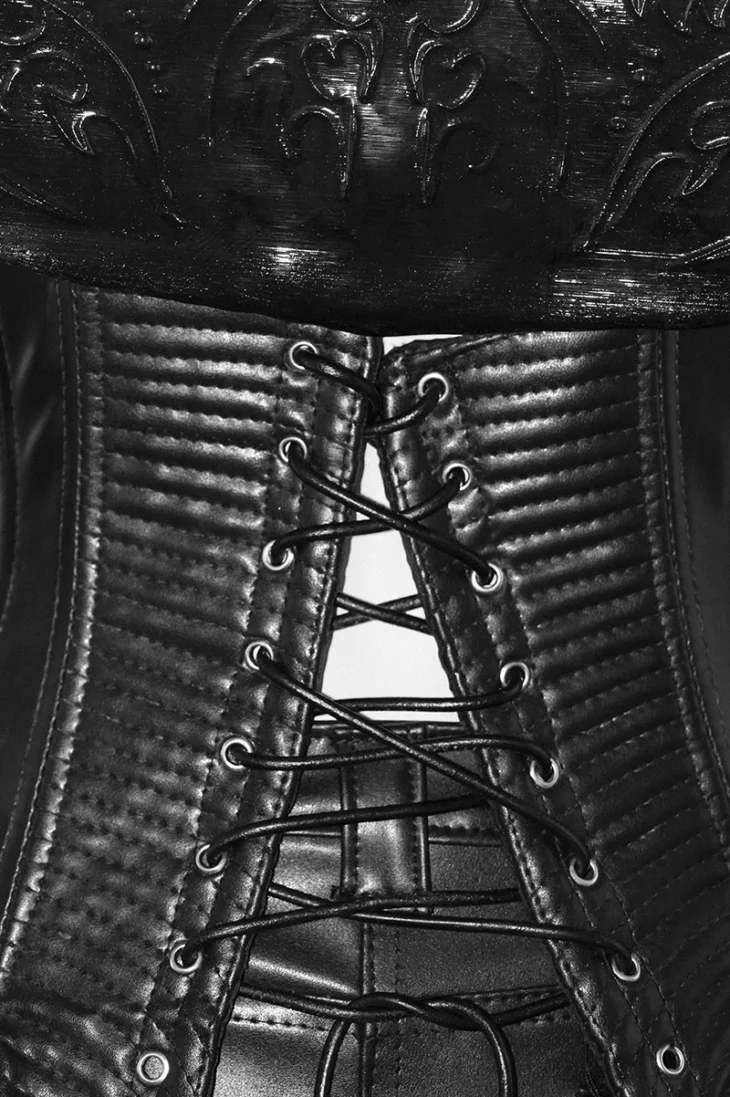
His enthusiasm becomes especially concrete when the conversation turns to materials. Latex is a current favourite, developed through reliefs and ornamental textures. Leather sits alongside silk chiffon and the fluidity of traditional dress fabrics. Each offers a different way of negotiating the body, allowing structure and softness to coexist within his broader language.
“What’s really interesting for me is this tension where you can’t tell anymore if it’s artificially made or if it’s something natural,” he says. “I really like to play with this contradiction.”
Nature and historical armour both enter that vocabulary. Their influence helps explain the sense of protection, ceremony and transformation that runs through his work. In Trinity, his Fall 2025 collection presented at Tresor Berlin, these concerns extended into an exploration of body, mind and soul, connecting human experience with nature and the machine.
For all its speculative qualities, there is a distinctly romantic understanding of couture beneath Ferry’s practice. Asked about that sensibility, he locates it in the relationship formed through making.
“Designing couture in general is just a really romantic process because you put so much handwork and passion into it,” he says. “Each look is kind of its own little project.”
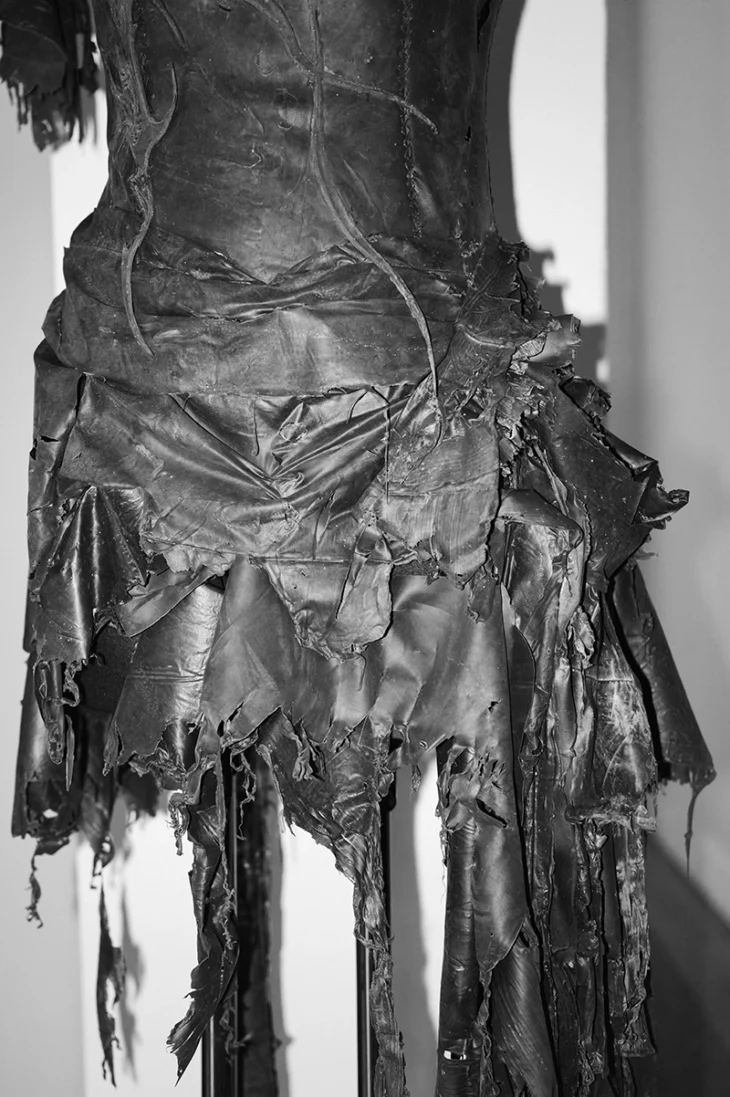
The remark brings his work back to a recognisable human scale. Behind an extraordinary silhouette lies sustained attention: experiments that fail, materials that resist, decisions about what to retain and what to abandon. The emotional investment becomes part of the garment’s character.
It also informs Ferry’s understanding of disruption. He is interested in questioning what society accepts as normal, including the familiar relationship between clothing and the body. The gesture can be subtle. Its force lies in making another possibility available to the imagination, then giving it a physical form.
“I try to build a universe that we can experience as a collective society,” he says, “where identities dissolve and the human body is elevated to the next level.”
For Ferry, the future of couture takes shape through that encounter. A body enters a garment, and the familiar outline begins to change.
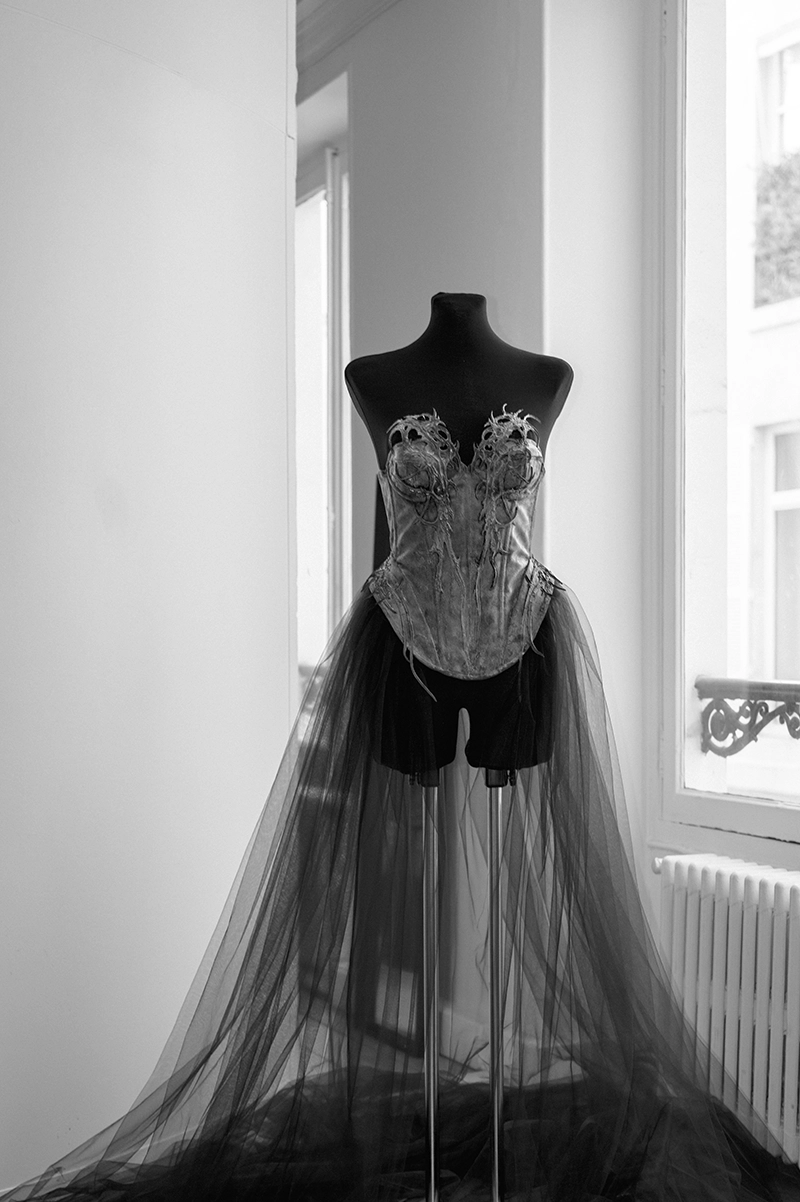
Text by Louise Daniel
Photo by Jessie Lee