


Over the past decade, A24 has quietly rewritten how film merchandise operates. Long before Marty Supreme entered the conversation, the studio treated apparel and objects as cultural extensions rather than promotional leftovers. That strategy built a foundation where merchandise could circulate on its own terms, valued for design and context instead of logo size or reach. Marty Supreme now arrives as a clear result of that thinking.
As the film approaches its Christmas Day release, its presence feels unmistakable despite a relatively narrow promotional footprint. The campaign avoids the industry’s current instinct toward saturation and instead relies on visibility, scarcity, and association.
This approach departs from the dominant studio marketing model, which often prioritizes reach through an expanding web of licensed partnerships. Large-scale campaigns typically rely on volume and repetition, spreading film branding across multiple product categories to maintain constant visibility. Marty Supreme takes the opposite route. The campaign narrows its focus, building momentum through a single garment and a small set of carefully timed moments.
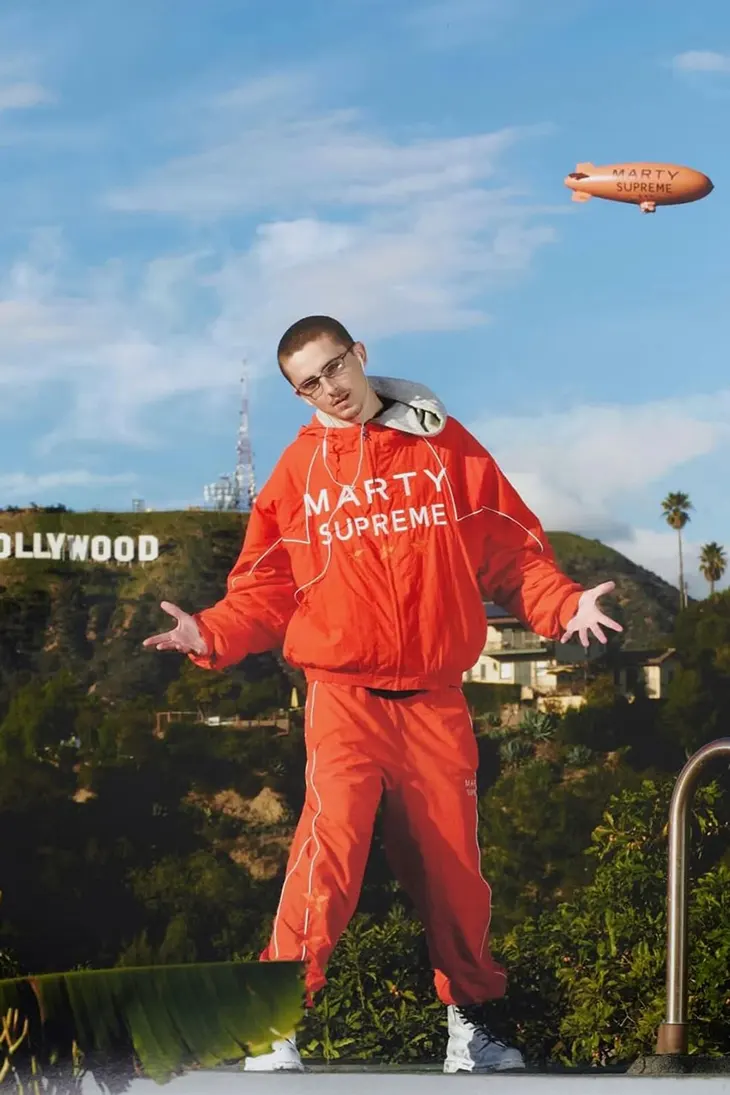
That recognition comes primarily through Timothée Chalamet, who plays lead character Marty Mauser. Across press appearances, street sightings, and promotional material, Chalamet appears consistently in Marty Supreme jackets. The repetition builds familiarity, turning the jacket into a visual shorthand for the film. Merchandise pop-ups timed with the promotional tour reinforce demand, drawing fans hoping to secure the $250 USD windbreaker.
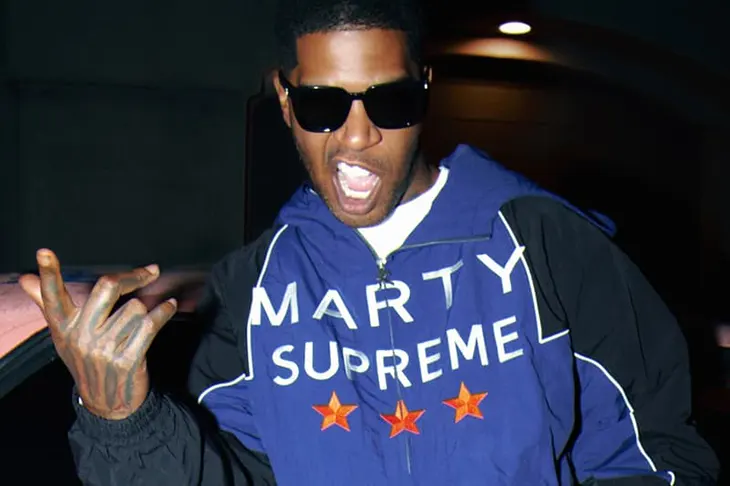
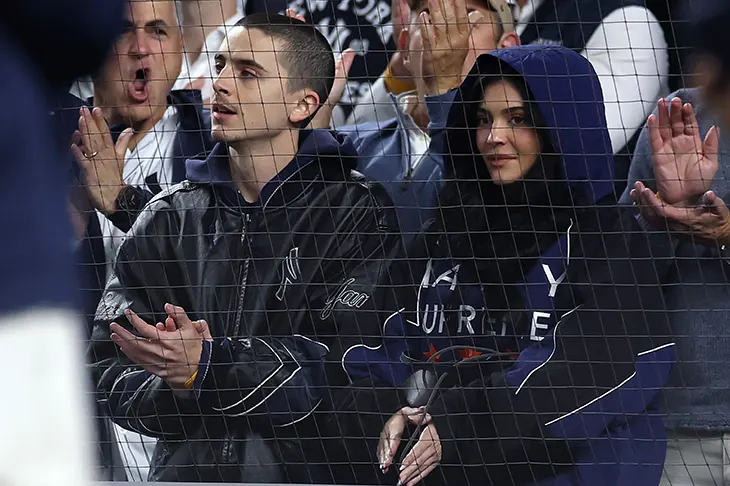
Chalamet’s public appearances already circulate through paparazzi imagery and online reposts. The campaign leverages that existing infrastructure rather than constructing a new one. The jacket itself, designed by Los Angeles label Nahmias, enters conversation through wear, not advertising.
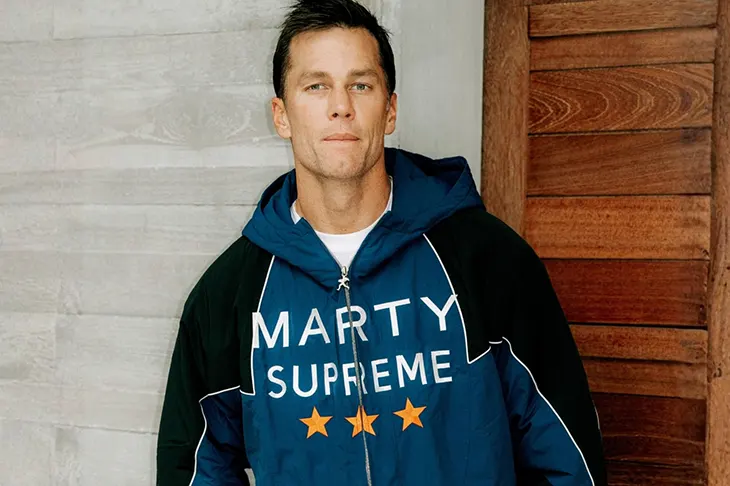
The windbreaker releases in multiple palettes, including versions inspired by the flags of Mexico and Brazil. After Chalamet debuted a black-and-blue version in a promotional clip, the jacket appeared quickly on Kylie Jenner and Kendall Jenner. That moment expanded visibility without increasing supply. Soon after, figures ranging from Kid Cudi to Tom Brady and Misty Copeland appeared in the same piece.
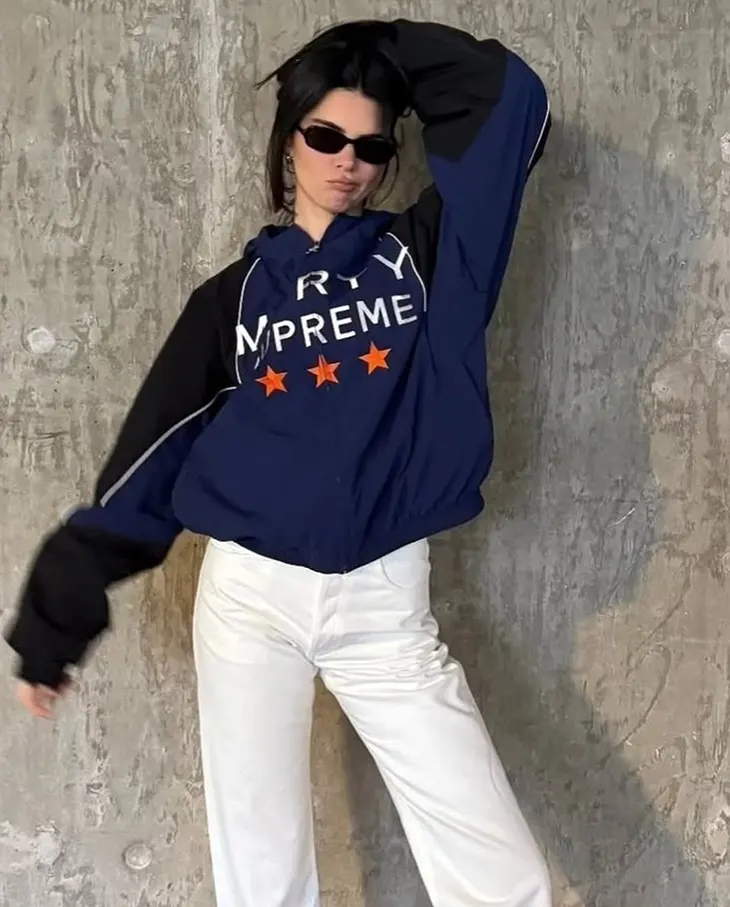
The move aligns with A24’s established approach to merchandise, where limited collaborations operate as cultural extensions rather than broad promotional tools. Marty Supreme shows how far a limited strategy can travel. With controlled supply and visible wearers, the campaign builds value.