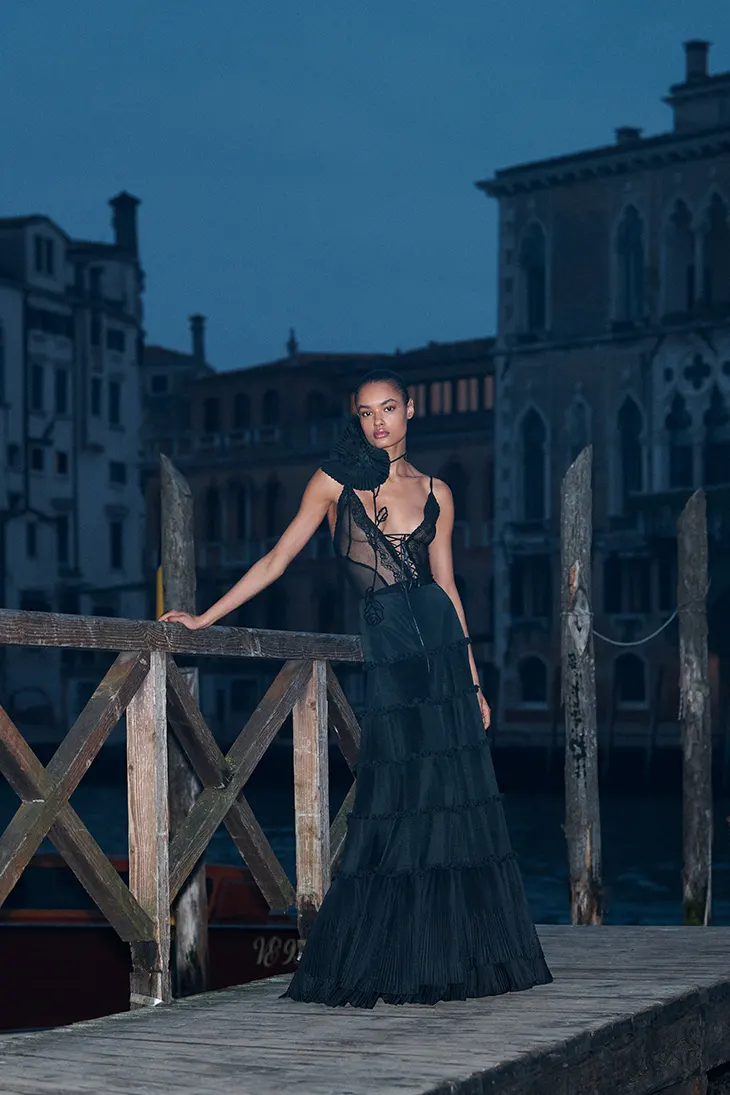



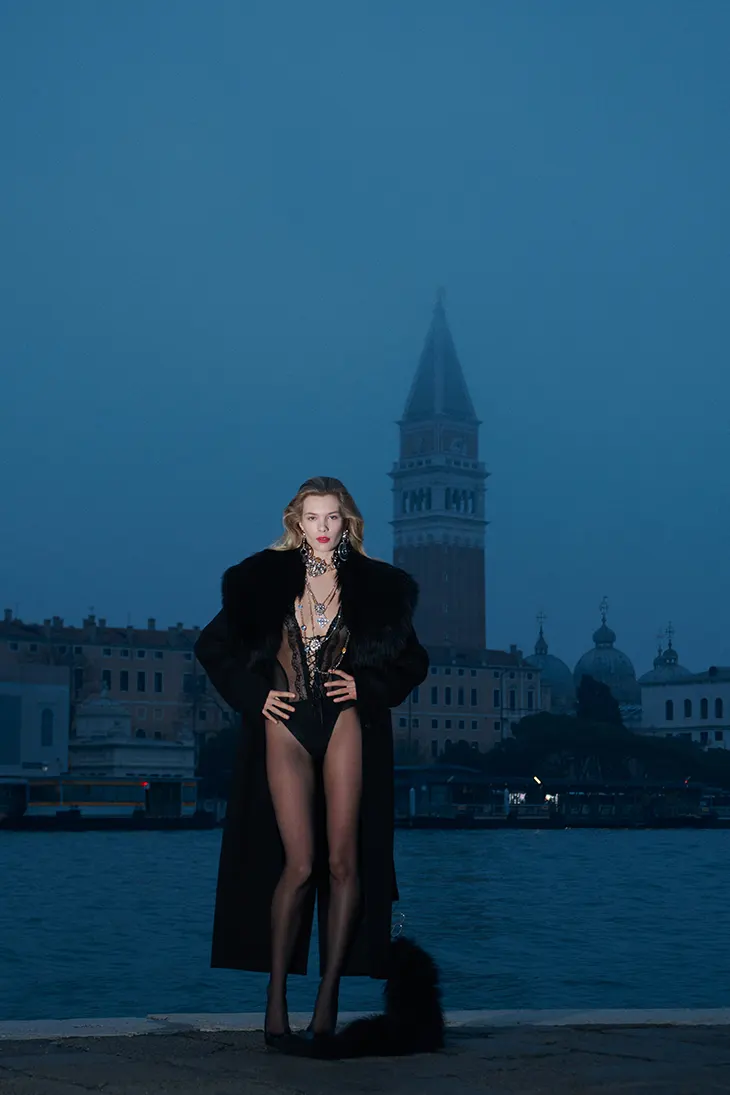
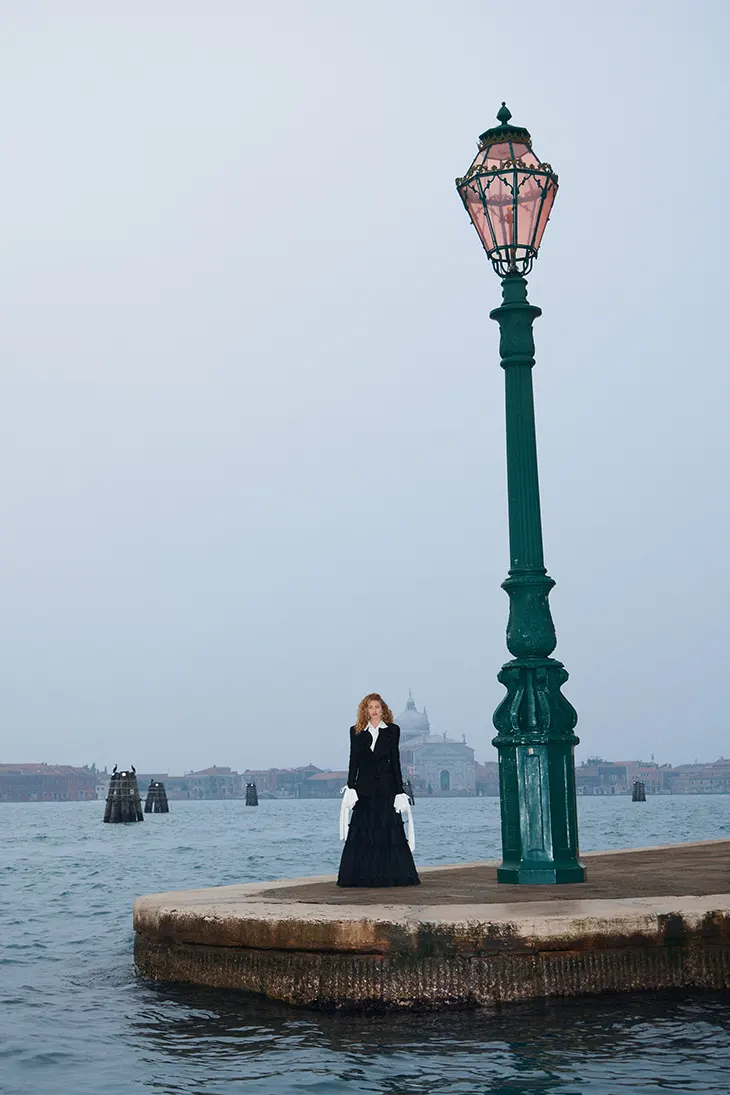
Blumarine Pre-Fall 2026 opens in Venetian nights imagined as a charged fiction shaped by secrecy, excess, and ritual. For this season, Creative Director David Koma turns to nocturnal mythology as he continues his focused study of dark romanticism. Venice enters the collection as a cinematic reference filtered through the house’s photographic past, including collaborations with Helmut Newton and the Fall Winter 1992 campaign photographed by Albert Watson in the city.
Color sets the emotional register. Red, lavender, and pale blue recall historical Venetian dress, while black sharpens every silhouette. The palette draws from costume history without nostalgia, using contrast to heighten tension across the collection. Masks, lions, and roses form a recurring symbolic language that anchors the clothes in place and memory.
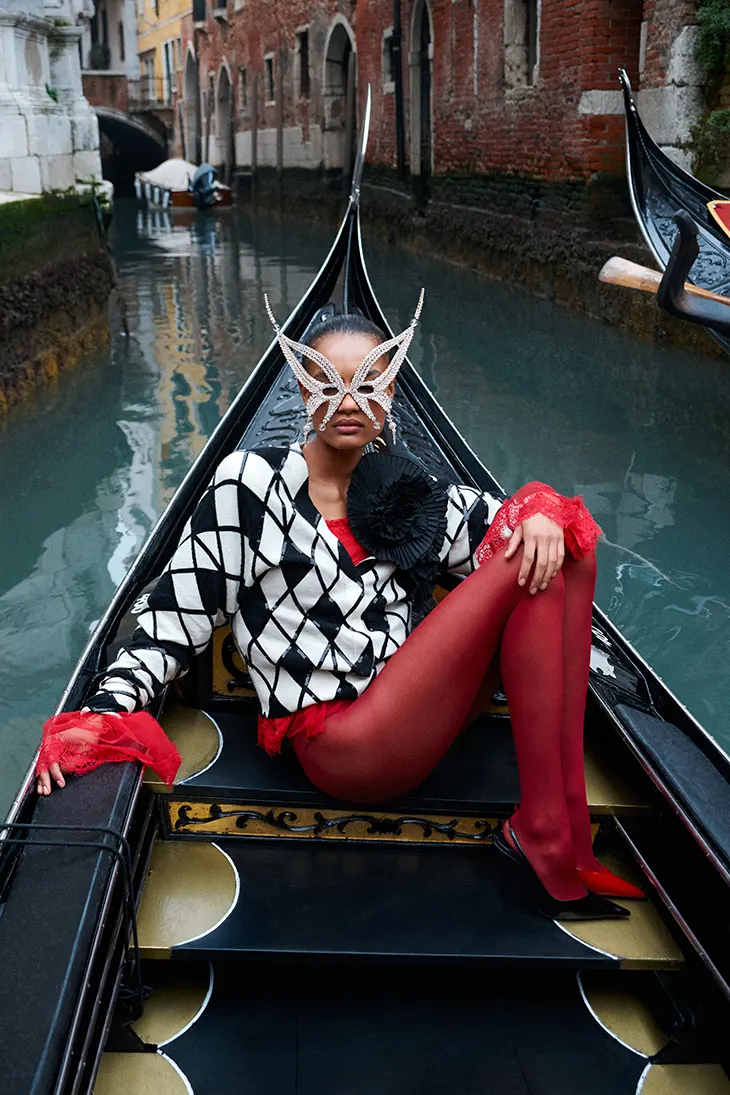
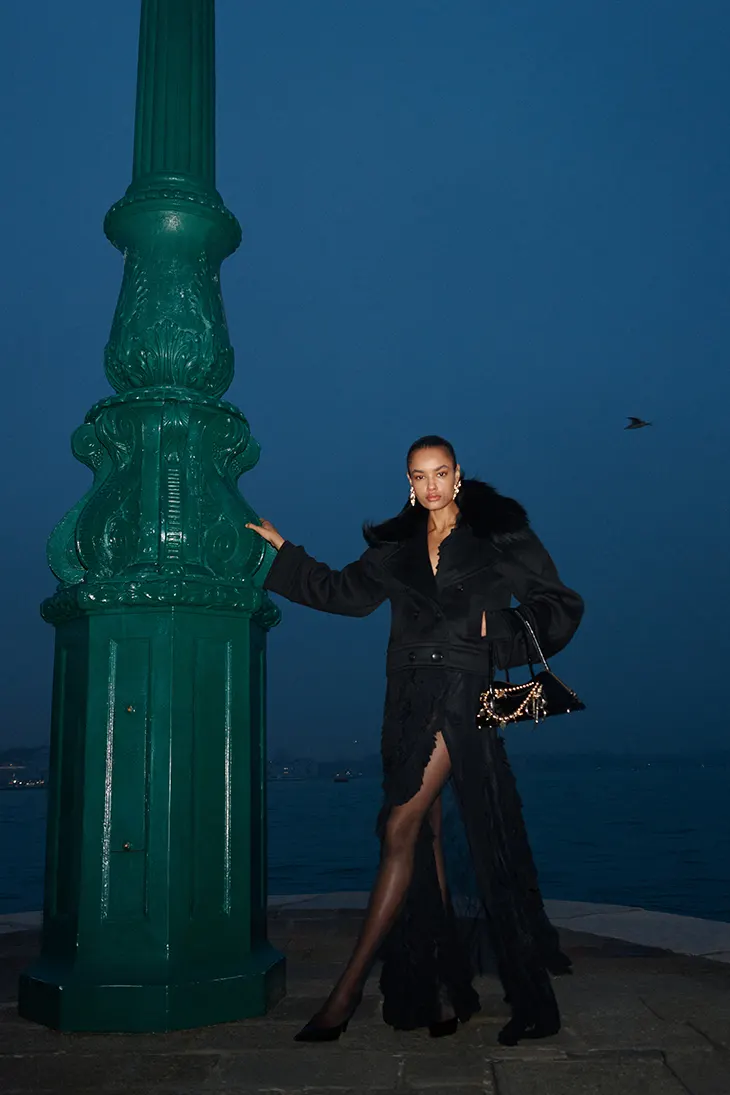
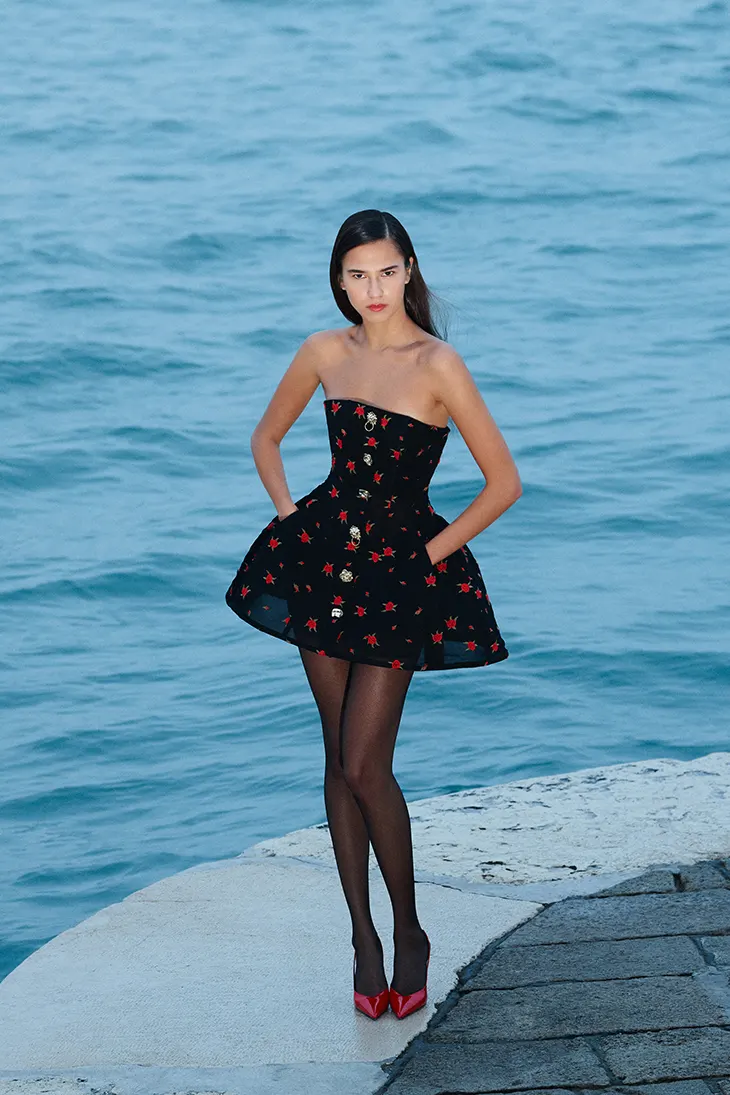
Georgette dominates the opening looks. Mini dresses and bustiers bonded to crinolines take on architectonic shapes, printed and finished with rose-and-thorn motifs and metal hardware shaped into lions, masks, and roses. The same motifs extend across fluid georgette dresses in long and short lengths, offered in three color variations. A crinoline-bonded georgette dress carries thread-embroidered micro-roses, echoed in slip and long dresses that also appear in leopard print.
Poet dresses arrive in structured crepon with Chantilly lace inserts, layered with integrated shoulder capes. Taffeta halter dresses, skirts, shirts, and a full skirt covered in three-dimensional roses suggest Venetian ballrooms through volume and surface. Chantilly lace dresses, skirts, and blouses paired with crêpe de chine plissé inserts introduce an intimate, boudoir-like tension. Embroidered lace dresses and blouses cut at the center expose the body with deliberate precision.
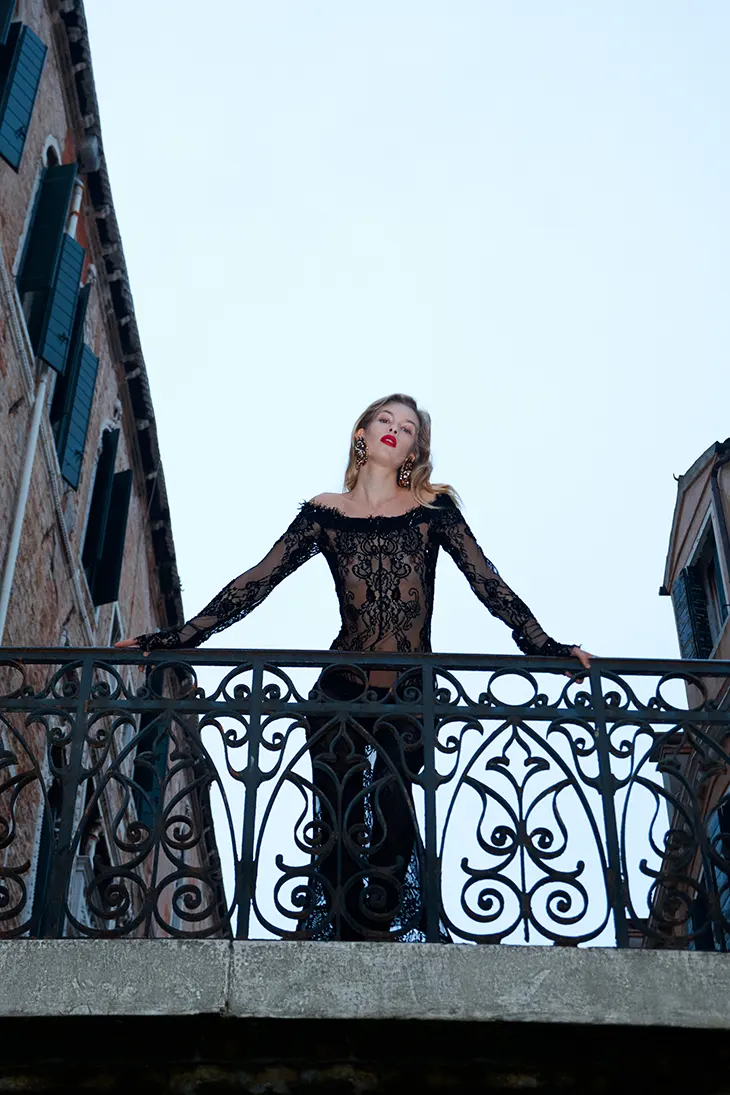
Hourglass mini dresses and lace-trimmed duchess silk skirts emphasize the waist. Jersey dresses and tops rely on draping, including a long hooded gown with trumpet sleeves and marabou trim. Leopard-print slips appear layered with lace and tulle, enriched by crystal embroidery. Puff-sleeved cadi mini dresses feature thread-embroidered bow or rose cut-outs, while cadi coats, skirts, shorts, and dresses move easily between private and public settings.
Wool jackets follow hourglass lines, including a double-breasted style detailed with plissé roses at the lapel and a cropped jacket shaped by cocoon sleeves. Cargo trousers, oversized tailoring, and a narrow silhouette that extends over the heel expand the range. Poplin shirts with plissé bow cuffs recall eighteenth-century Venetian dress codes. Outerwear introduces a controlled masculinity through capes, pea coats, and long coats with boned backs and shearling belts. Harlequin-patterned shearling capes and jackets reference Commedia dell’Arte, echoed again through argyle knits embellished with sequins.
Alpaca and wool capes and coats translate the rose motif into jacquard. Ruffled cardigans with marabou trims feature detachable sleeves and trumpet cuffs. Llama wool cardigans, dresses, and T-shirts build ruffled volume, while braid-knit viscose pieces shape peplum forms. Ribbed viscose knits carry fringed rose-leaf details, and T-shirts display baby lion graphics as a direct nod to Venice.
Gabardine capes, trenches, jackets, and cargo pieces rely on saturated dyes. Black denim receives metallic sprays, dark blue denim uses lace-print trompe l’oeil effects, and light blue denim features embroidered rose cut-outs. Sequined macro roses and micro rose embroidery reappear across trousers, dresses, and skirts, often extended with plissé lace panels that alter proportion.
Accessories complete the vision. Satin and patent leather stilettos arch the foot to heighten fetishistic tension. Metal jewelry carries winged lions, crosses, bridges, and masks. Butterfly masks and mask-like sunglasses return to the iconography of Venice and the Blumarine emblem, sealing the collection in controlled excess and nocturnal desire.