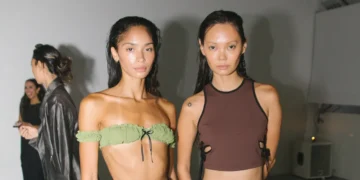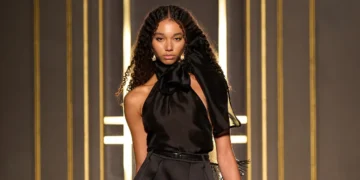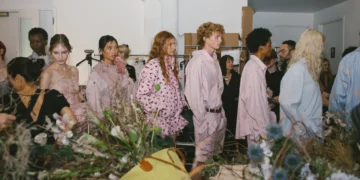



Chemena Kamali continues her deeply personal excavation of the Chloé archive and ethos with Female Trouble, a Fall 2026 collection that positions the act of dressing as something approaching sacred ritual. The designer, now firmly established in her creative directorship after joining the house in October 2023, has crafted a meditation on instinct, individuality, and the quiet rebellion of personal style.
The collection’s title arrives as an affectionate nod to Bettina Rheims‘ seminal 1989 photography book of the same name, a body of work that captured women across spectrums of fame and anonymity with unflinching intimacy. Rheims’ subjects, from film stars to strippers, from artists to acrobats, were rendered with an empathy that refused categorization. Kamali channels this spirit directly, asking a deceptively simple question: What do women naturally reach for?
Photography as Creative Compass
Photography has become Kamali’s consistent touchstone at Chloé, and for Fall 2026, the visual references run deep. Beyond Rheims, the collection draws from Erica Lennard’s Les Femmes, Les Sœurs, a 1976 work that traced the photographer’s sister Elizabeth and their circle of friends from adolescence through womanhood. Marguerite Duras wrote the afterword, and the book’s exploration of sisterhood and individual identity within collective experience resonates throughout Kamali’s silhouettes.
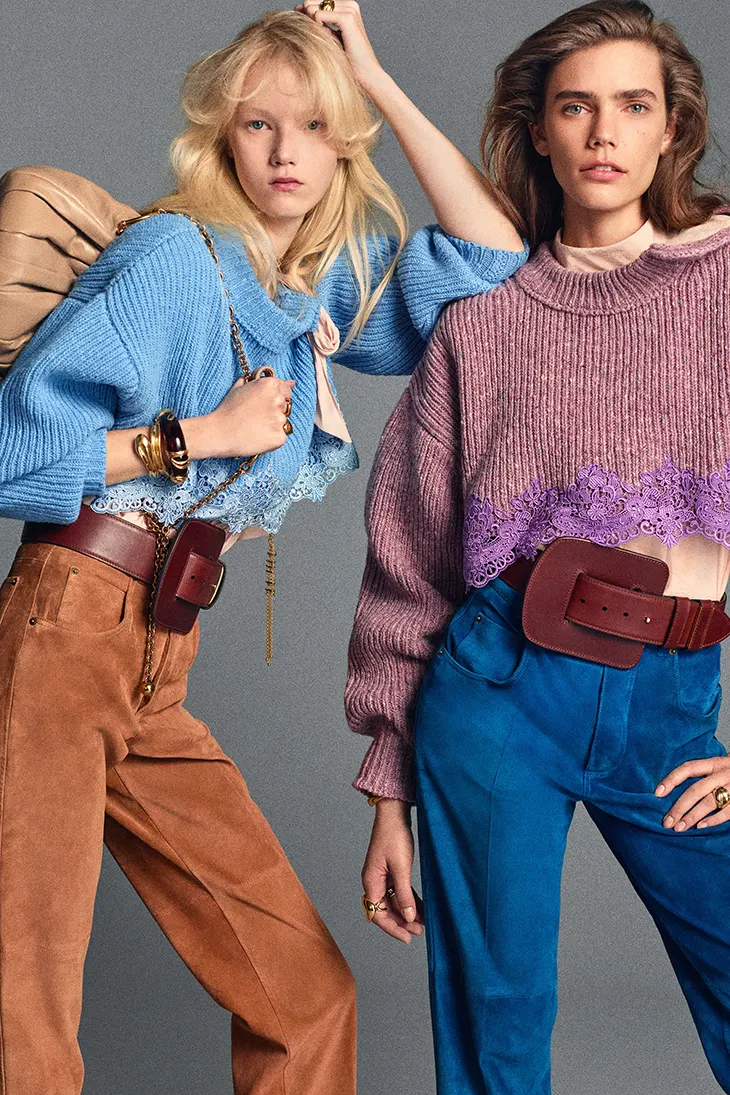
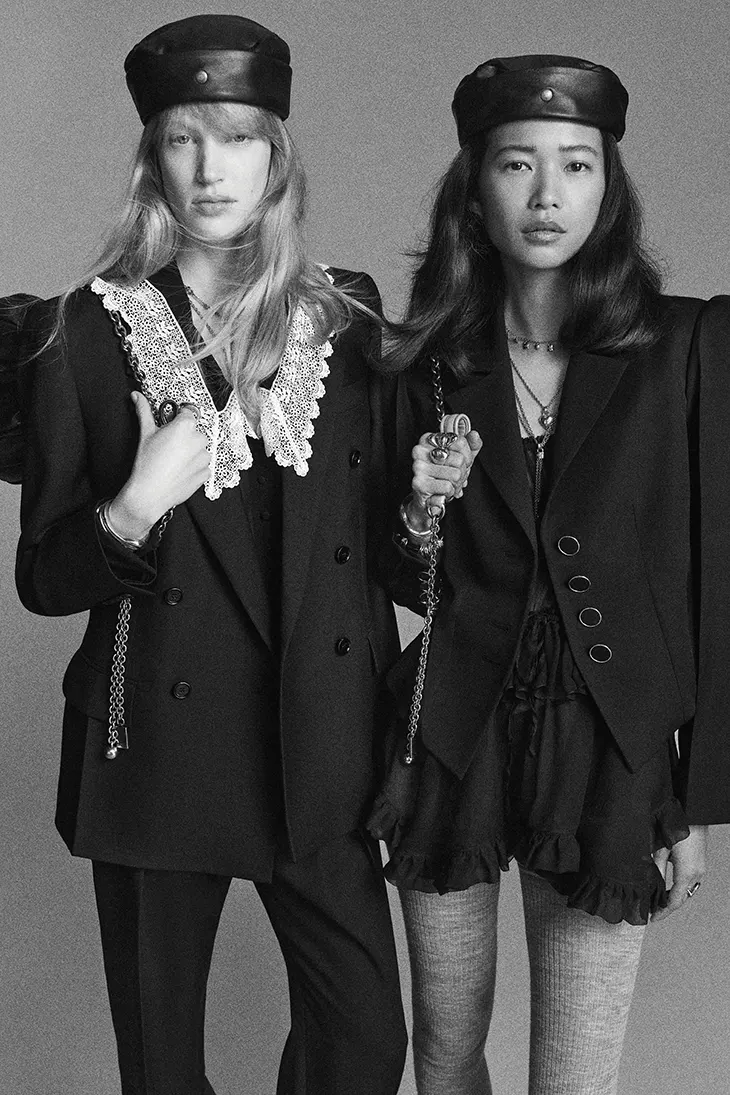
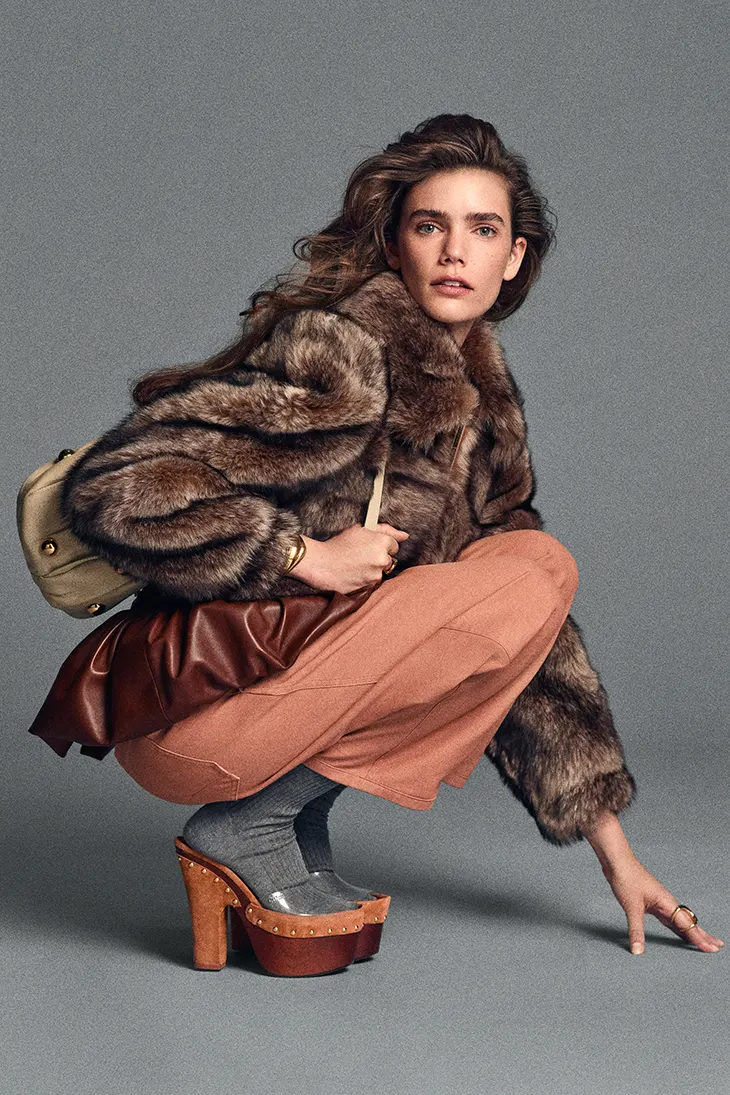
The collection imagery, captured by Mark Kean, embraces this portrait-driven sensibility. Models are photographed in moments suspended between pose and genuine emotion, their gestures amplified, their postures sculptural. The approach feels collaborative rather than directive, spontaneous rather than staged, mirroring the creative process Kamali describes as humorous, emotional, and deeply human.
Proportion as Philosophy
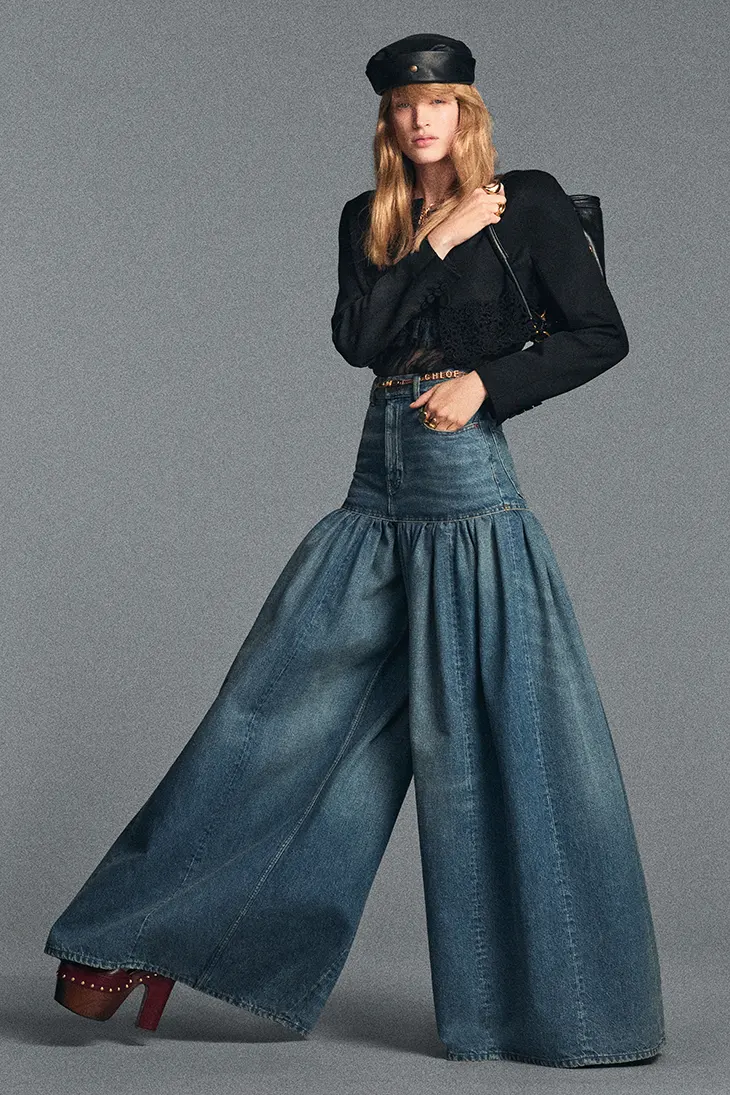
The collection’s technical achievement lies in its sophisticated manipulation of scale and volume. Garment-dyed workwear pieces and denim constructions meet draped leather Basque belts that cinch and sculpt, creating sharp silhouettes from flowing foundations. Maxi belts become architectural interventions, rescaling volume and redefining the body’s proportions with deliberate precision.
Statement flou, that particular Chloé vocabulary of fluid movement, imbues each look with ease and spontaneity. Cropped leather jackets create necessary tension against billowing skirts and diaphanous dresses. The contrasts multiply: fluidity against structure, shine merging with matte, transparency layering over opacity. Within these deliberate frictions, the house’s signature attitude emerges, sensual and self-assured without ever announcing itself.
Color as Self-Expression
The palette operates as another form of personal statement. Strong primaries and vivid hues enrich the established Chloé vocabulary of nude, apricot, ecru, and navy. Soft pastels of rose and pistachio find unexpected harmony with jewel tones of sapphire and amber. The combinations feel intentionally surprising, as if each woman has assembled her wardrobe through years of intuitive acquisition rather than seasonal shopping.
This approach to color reflects Kamali’s broader thesis about contemporary dressing. The young creatives on her team, she notes, reject conformity entirely. Their wardrobes are built through constant cycles of discovery and renewal, un-curated accumulations that prioritize self-expression over trend adherence. Boundaries dissolve when individuality becomes the only rule.
Heritage and Evolution
Kamali’s trajectory at Chloé spans decades, beginning as an intern under Phoebe Philo, returning as Design Director under Clare Waight Keller in 2012, then departing for six years as Women’s Ready-to-Wear Design Director at Saint Laurent under Anthony Vaccarello. This accumulated experience, across different houses and creative visions, informs her current approach: she understands the Chloé woman not as an abstract concept but as a lived reality.
Gaby Aghion founded Chloé in 1952 with a revolutionary premise: women deserved luxury ready-to-wear that liberated them from the formal constraints of couture. The Egyptian-born Parisian believed women should dare to be themselves, a philosophy that Female Trouble extends into contemporary territory. Where Aghion pioneered the concept of accessible luxury, Kamali pioneers the concept of instinctive dressing.
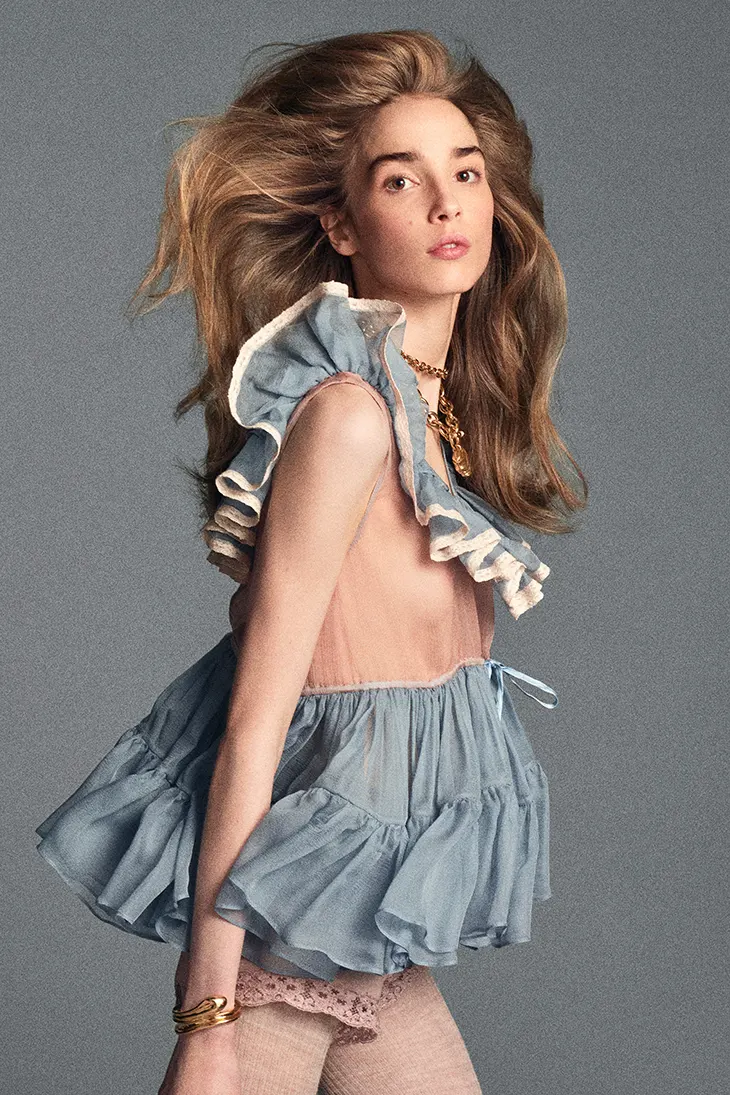
Female Trouble titled collection succeeds because it refuses to prescribe. The collection offers components, textures, proportions, and colors that invite personal interpretation rather than demanding faithful reproduction. Lace lingerie tops peek beneath structured jackets. Tiered ruffled skirts pair with leather bombers. Sheer dresses in cream and black suggest intimacy without exposure.
The studded platform clogs that appear throughout anchor the collection in a specific moment while nodding to the house’s bohemian heritage. Gold jewelry, layered and personal, adds warmth without ostentation. Every element feels considered yet uncontrived, the result of a designer who trusts her audience to complete the creative equation.
Discover more of the collection in our gallery:
Kamali has found her rhythm at Chloé. The collection will arrive in boutiques and on Chloe.com at the end of May 2026, offering women not a seasonal wardrobe but a vocabulary for self-expression. In an industry often obsessed with newness for its own sake, Chloé argues for something more enduring: the daily ritual of becoming oneself through the simple act of getting dressed.