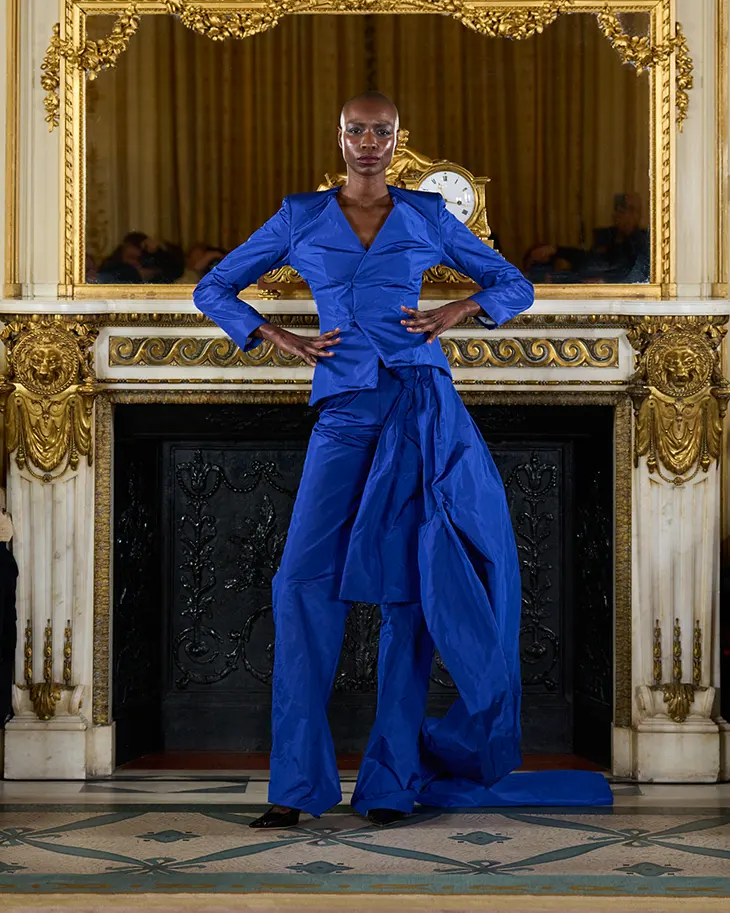



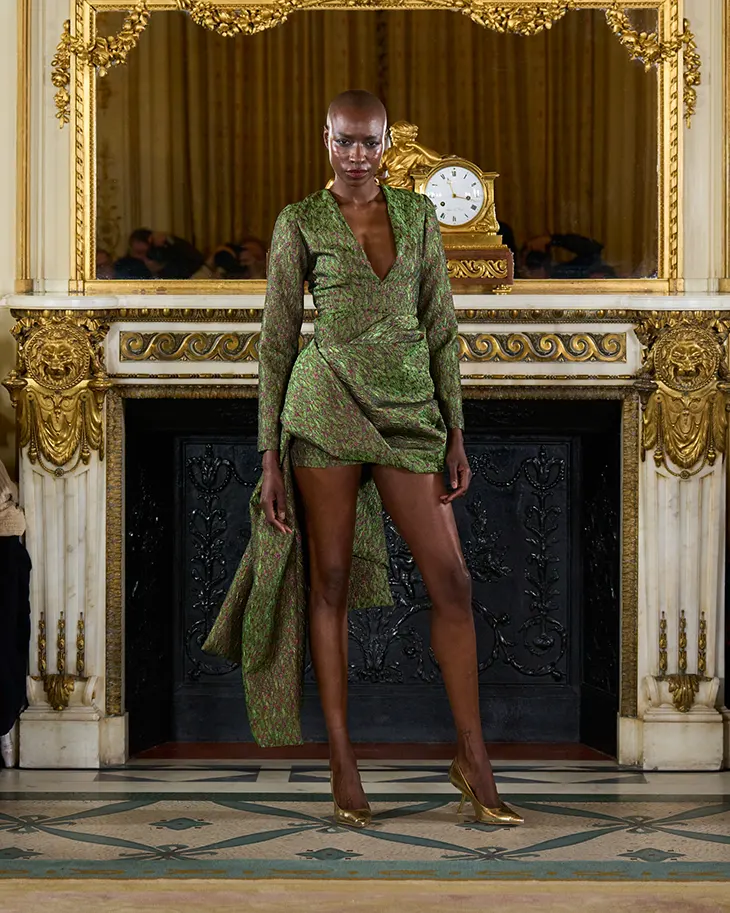
Imane Ayissi presents his Spring Summer 2026 couture collection under the name Bissakarak, a word drawn from Ewondo, one of the languages spoken in Cameroon and his mother tongue. The term refers to a scribble or first draft, a moment of trial when the hand hesitates and explores. For Ayissi, this suspended state defines the origin of creation. The collection grows from that initial impulse, where ideas remain open and form begins to emerge through touch and movement.
Ayissi locates the beginning of each collection in this fragile phase. He starts on paper, then moves to the mannequin, where the search for silhouette and volume unfolds through direct engagement with fabric. He studies how textiles react to the body, how they shift, fall, and respond. This stage carries a sense of risk and discovery, where nothing settles into a fixed result. Ayissi treats this in-between moment as the most alive point of the creative process.
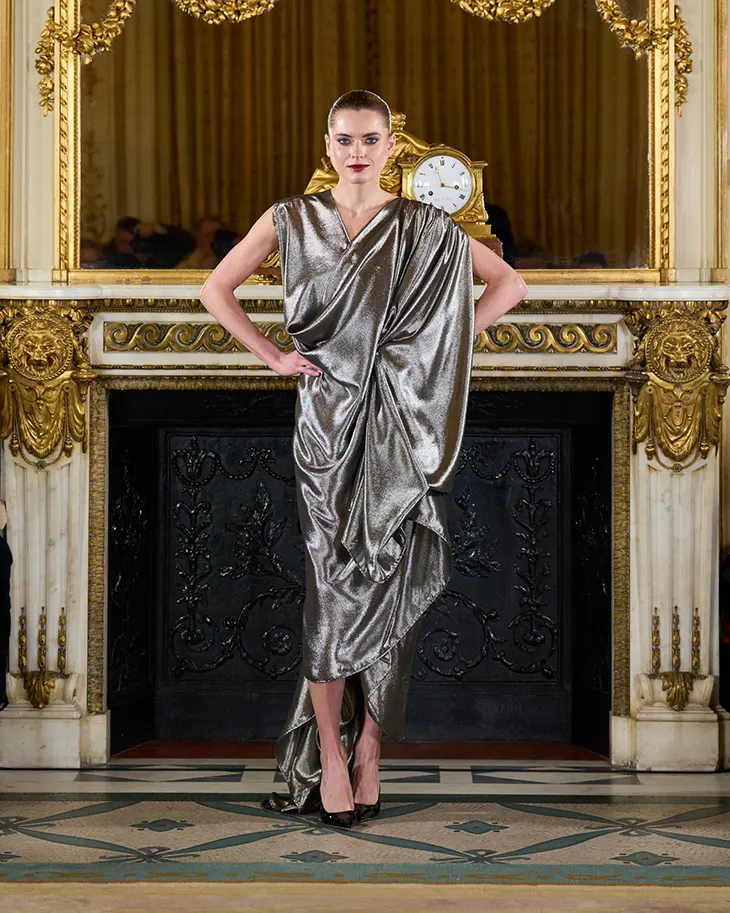
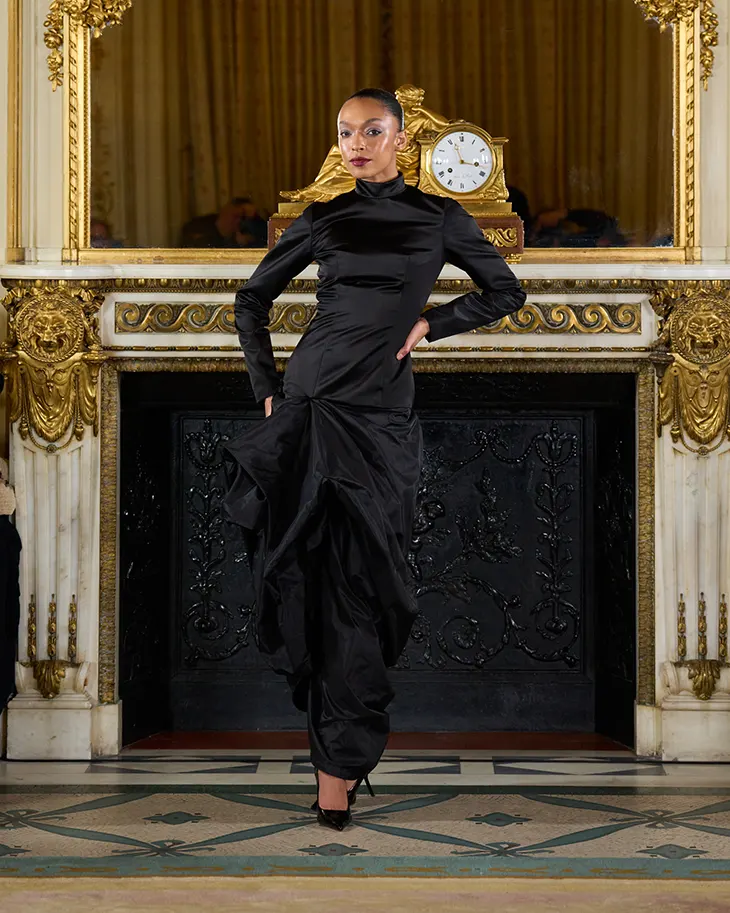
That approach reflects a practice rooted in African ways of dressing, where fabric wraps the body without aiming for a final or definitive shape. The garment, often a loincloth, stays in motion and changes with each gesture. It allows the wearer to recreate the form daily. Ayissi draws a direct connection between this practice and his couture work.
Draping, pleating, and varied tying techniques shape the core of the collection. Ayissi treats these methods as tools for exploration, allowing garments to shift between references without settling into one source. The silhouettes evoke Ancient Greece and African chiefdoms, while also carrying subtle acknowledgments of designers he has long admired, including Madeleine Vionnet and Madame Grès.
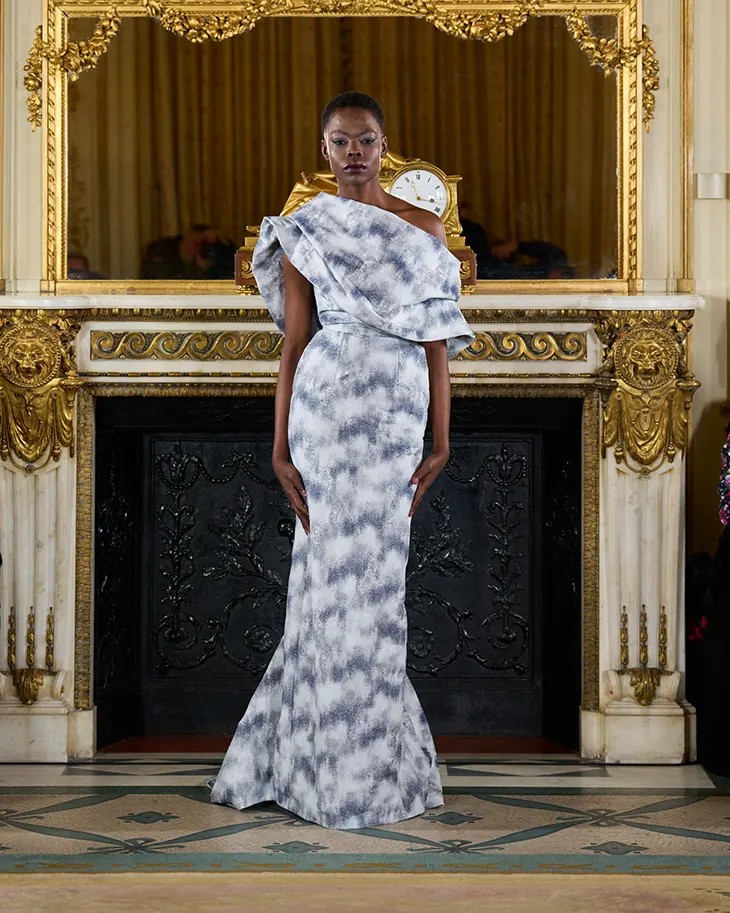
The kente cloth of Ghana, raffia from Madagascar, and woven loincloths from Nigeria enter into dialogue with silk faille and Gazar. Each pairing speaks to transformation rather than contrast. Fabrics move between contexts while maintaining continuity. Ayissi treats textiles as materials that carry memory while remaining open to change. Color operates in the same way, offering constant variation through movement and layering.
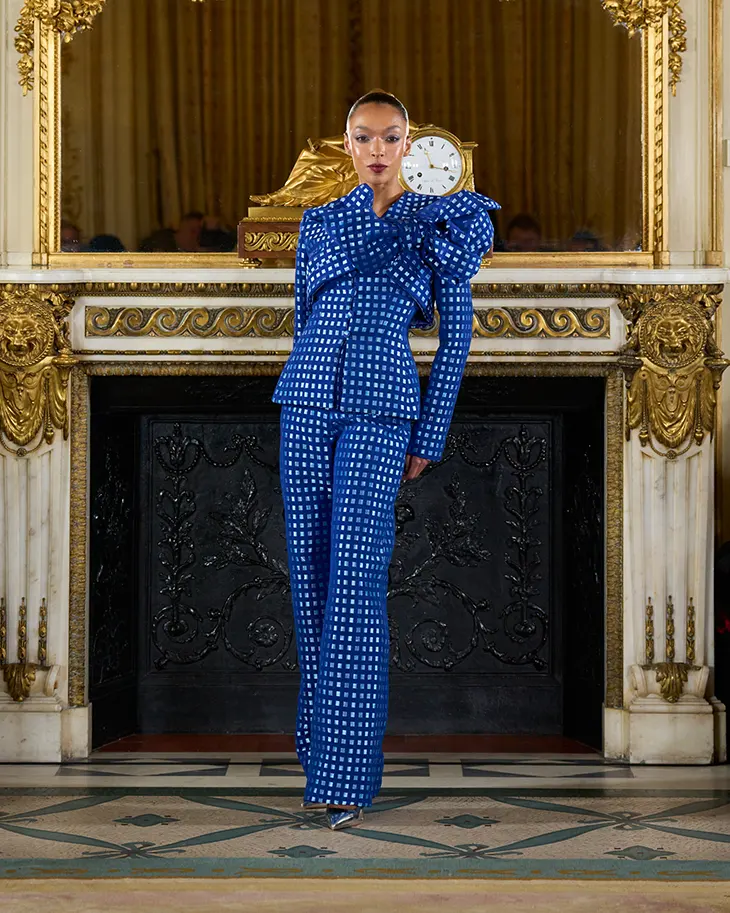
A pivotal experience in 2024 further shaped the collection. While visiting the Museum of Modern Art in New York, Ayissi encountered Mark Rothko’s paintings for the first time. He observed how the soft edges of the colored rectangles seemed to release color beyond their boundaries. That sensation informed several silhouettes in the collection. Ayissi drew from the depth and energy of those fields of color, which resist containment and challenge fixed limits.
Some looks translate this experience into flowing surfaces and expansive color relationships. The garments reflect a refusal of closure, favoring openness and continuation. Ayissi aligns this visual approach with his broader philosophy of creation.