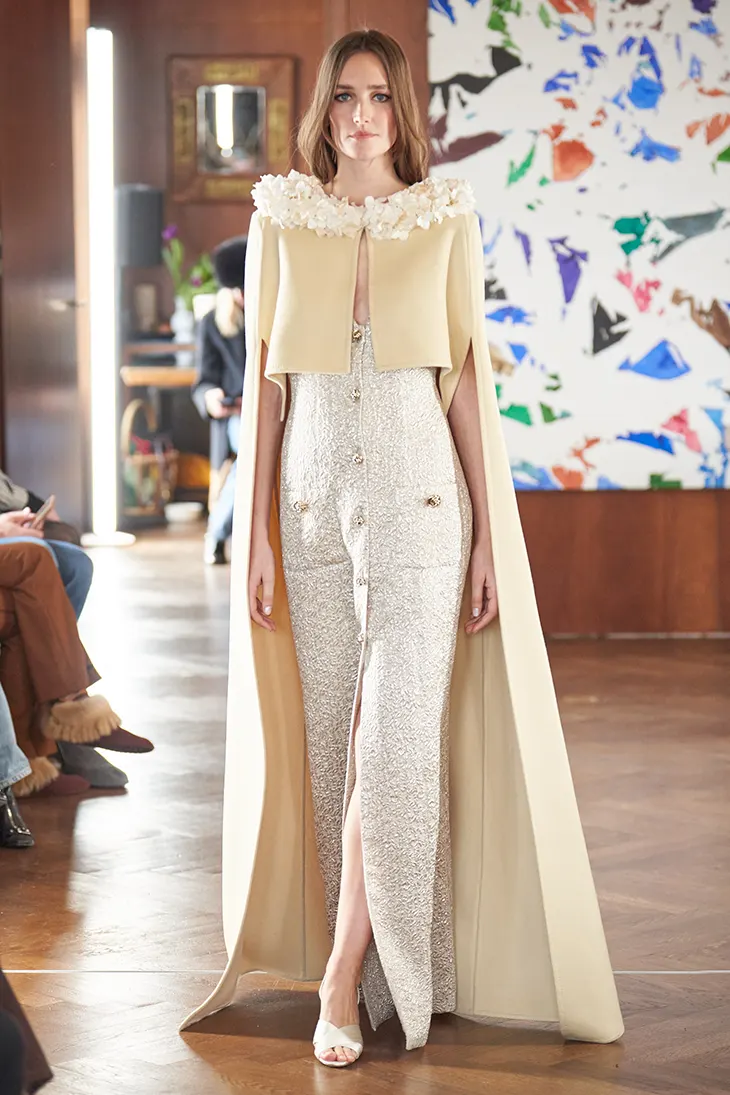



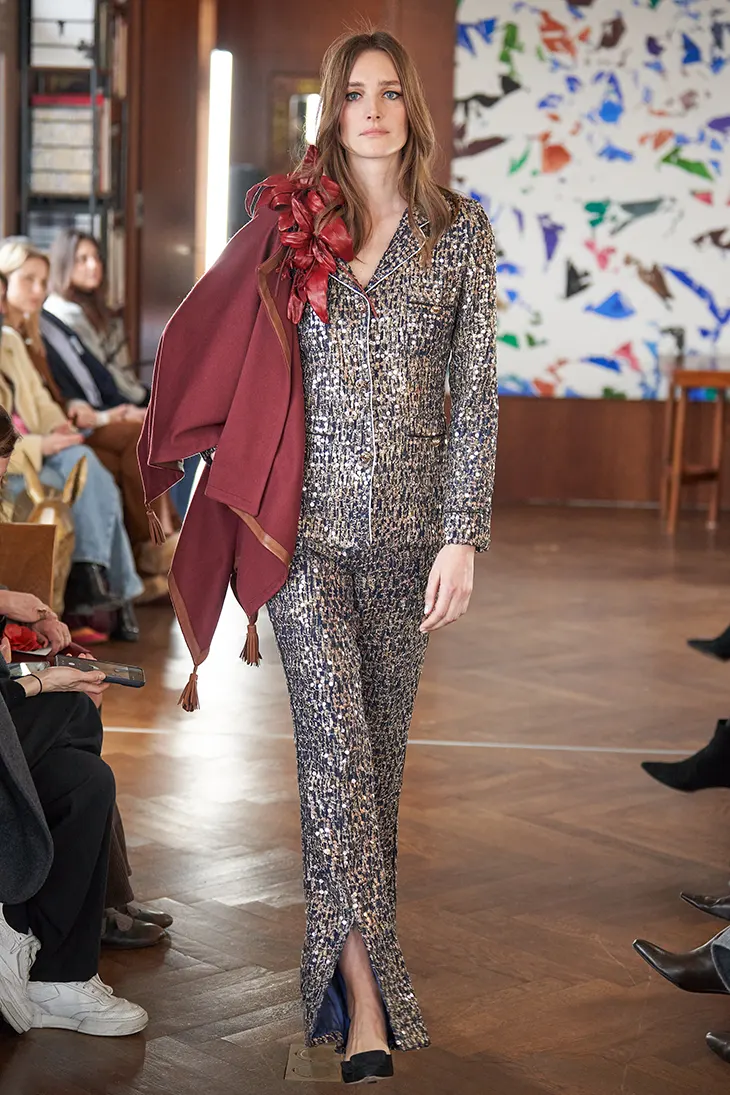
Julie de Libran frames her Spring Summer 2026 couture collection, The Scent of Iris: A Celebration of Beauty, through the iris, a flower that carries meaning beyond its form. Known for its powdery, luminous scent, iris functions here as symbol, memory, and sensation. Across cultures and time, it has represented faith, hope, and wisdom. In Greek mythology, Iris appears as the goddess of the rainbow, a messenger moving between heaven and earth. She signals connection and transition, reminding us that beauty often exists in subtle shifts and in moments.
Vincent van Gogh’s Irises offers one of the most resonant examples, where intensity of color meets emotional charge. Strength and fragility coexist within the same frame. De Libran draws from this tension, treating the iris as a guide for thinking about creativity itself. She approaches beauty as something that unfolds through nuance.
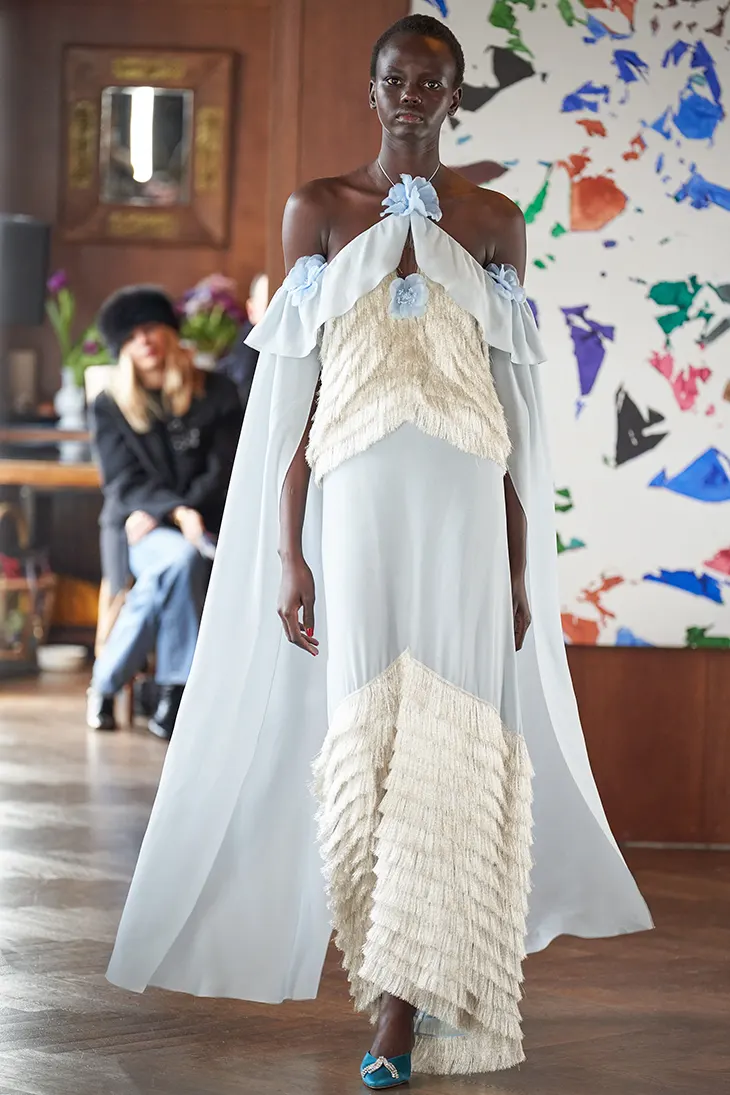
De Libran designs pieces that invite layering and transformation, allowing garments to shift across moments without fixed purpose. The wardrobe moves easily through the day, opening into evening through changes in styling and composition. Forms remain adaptable, shaped to respond to the body and to the wearer’s intent.
The collection explores relationships between masculine and feminine lines, structure and fluid movement, closeness and projection. De Libran treats these qualities as part of the same language. Tailored elements meet softer shapes. Intimate references appear in public contexts.
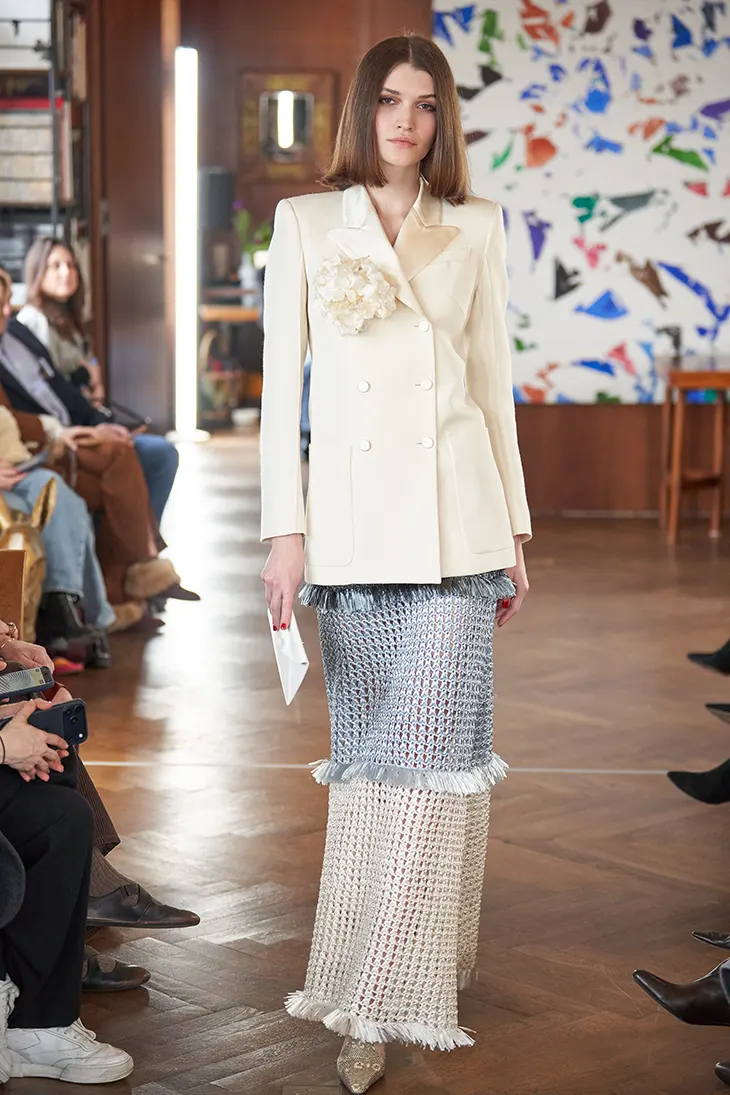
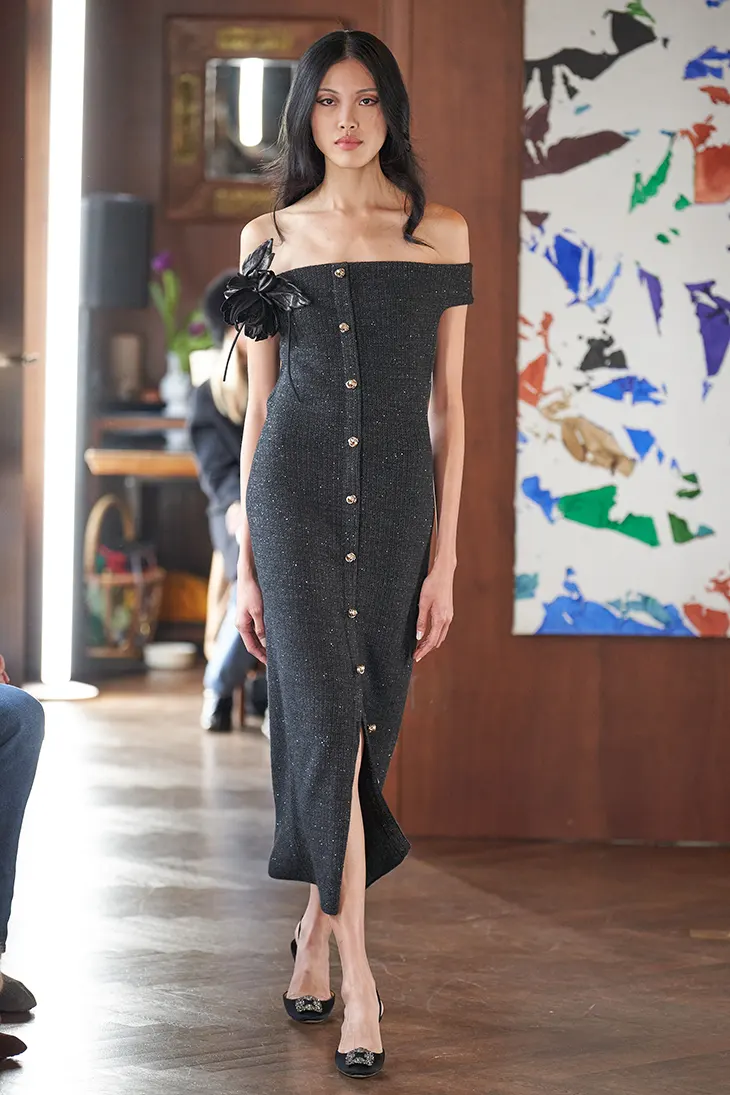
De Libran places clear focus on the human hand and the attention involved in making. Lace appears in direct contact with the skin, creating a sense of closeness. Bows soften outlines and redirect proportion. Floral elements emerge where they are least expected, interrupting clean lines with organic detail. Nightgowns move beyond private spaces, taking on new presence as garments that project confidence and control.
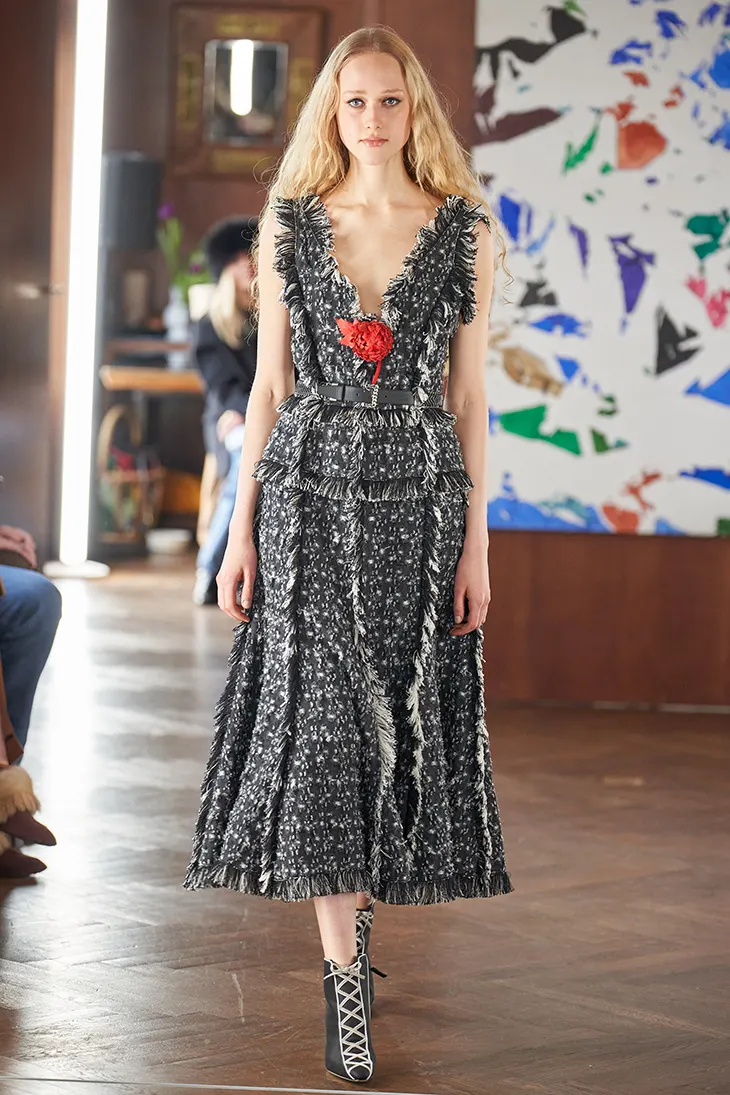
Leopard patterns introduce instinct and movement, while metallic elements reflect light and alter perception as the body moves. The palette moves between white and black, establishing a range between openness and density. Gold, azur, and metallic tones appear as accents, echoing the spectrum associated with the goddess Iris.
De Libran presents beauty as a lived experience shaped by feeling, memory, and choice. Faith, hope, and wisdom appear as guiding ideas. Like the iris itself, the collection holds strength without display and presence without insistence.