


Schiaparelli Haute Couture Spring Summer 2026, The Agony and the Ecstasy, takes shape around a shift from control to sensation. The collection emerges from a personal moment experienced by Daniel Roseberry during a creative retreat outside Rome, where an unplanned visit to the Sistine Chapel altered his approach to making. Faced first with the painted walls and then with the ceiling above, Roseberry describes a moment when analysis gave way to emotion. That encounter redirected the season away from questions of appearance and toward a focus on feeling during creation.
The reference to the Sistine Chapel operates as a conceptual trigger. Roseberry reflects on how Michelangelo’s work rejected instruction in favor of emotional permission. The ceiling did not explain meaning but invited response. That idea became central to the collection. Rather than asking how couture should look, Roseberry asked how it should feel to make it. That shift informed the entire season.
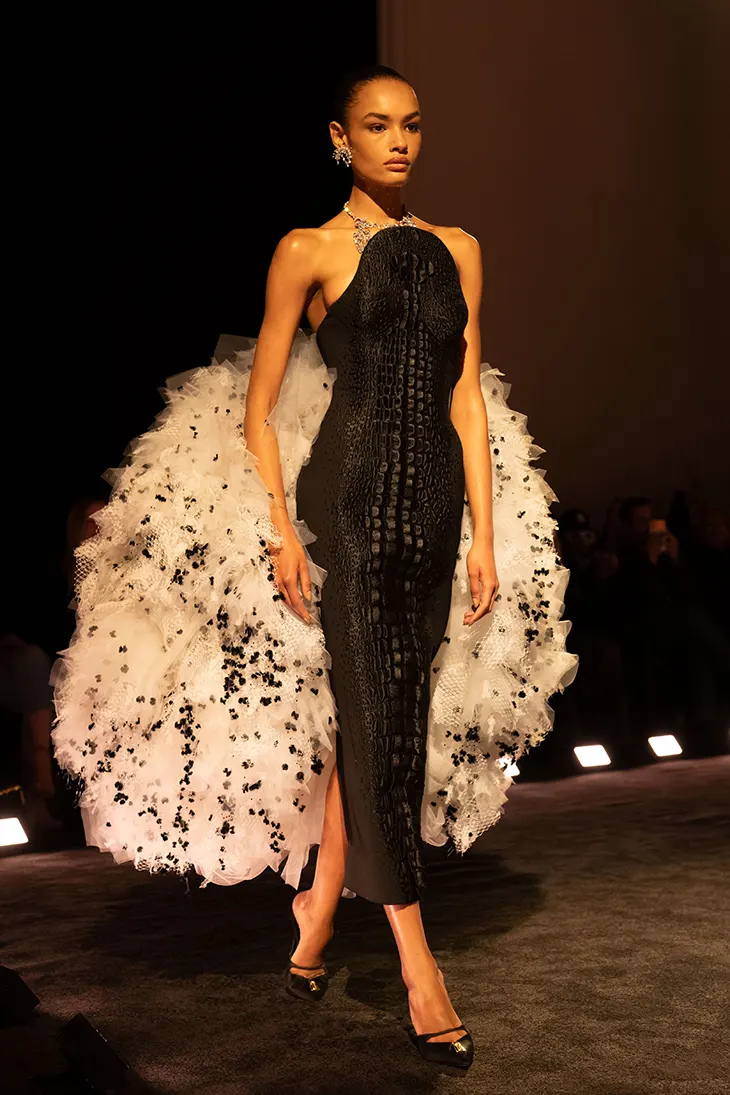
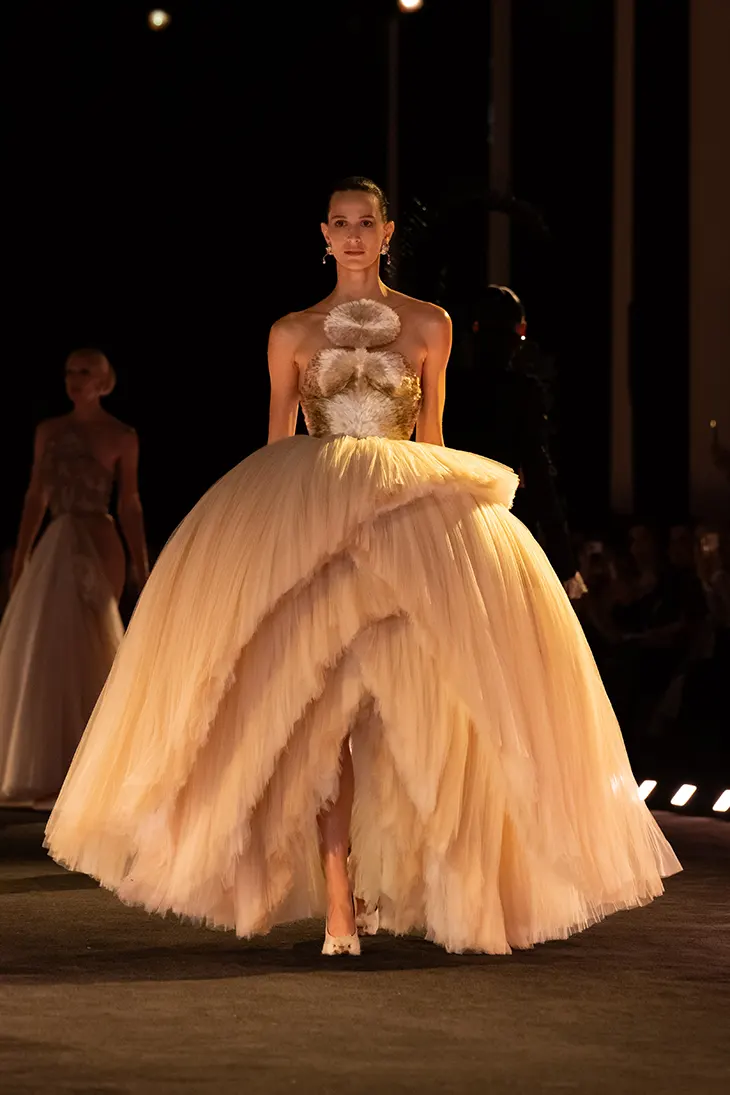
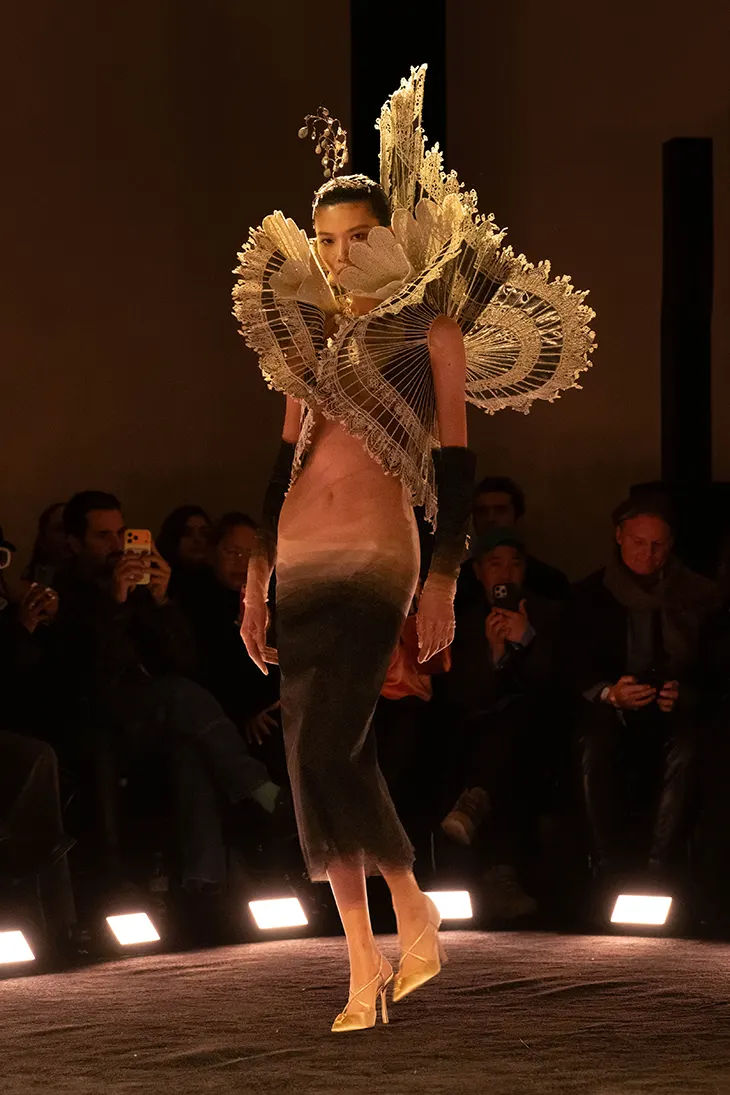
From that point, drawing became instinctive. Sharp strokes and quick lines evolved into scorpion tails, stingers, and teeth. Roseberry translated these marks into hybrid figures he describes as “infantas terribles,” part reptile and part arachnid. These creatures define the collection’s central silhouettes. They rise upward, defy gravity, and carry bold color and exaggerated form. Roseberry frames them as the ceiling of the collection, figures meant to lift the gaze and release the imagination.
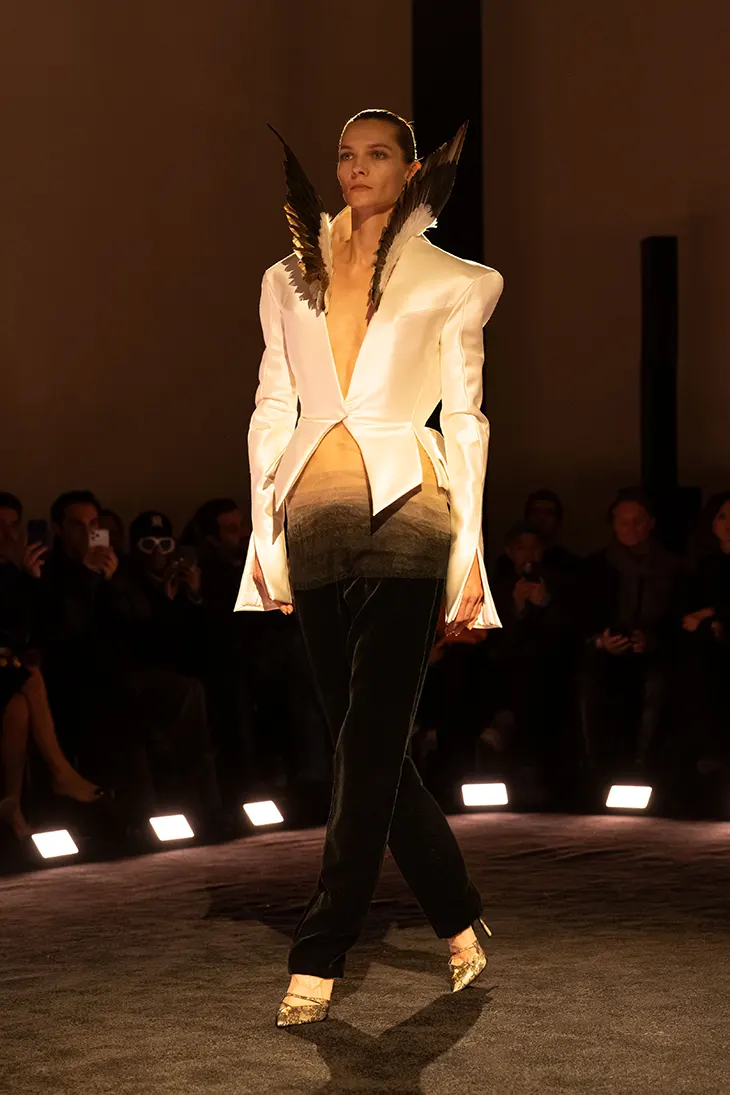
Couture relies on discipline, technique, and internal rules. Within that framework, Roseberry pushes form through the full capacity of the atelier. The collection foregrounds the depth of skill involved in haute couture production. Hand-cut lace appears as bas-relief, built into three-dimensional surfaces that create shadow and volume. Feathers appear in multiple forms, including real plumage and silk bouquets, each painted, airbrushed, or treated with resin and crystals.
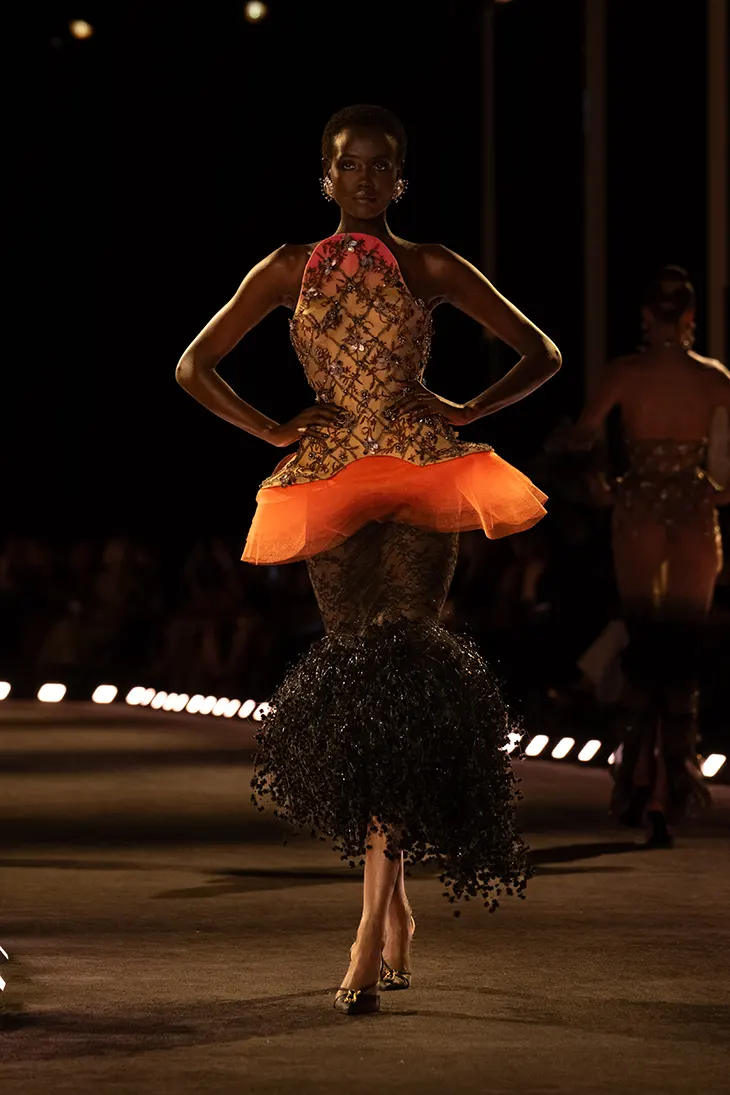
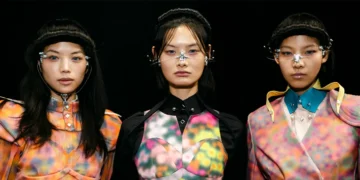
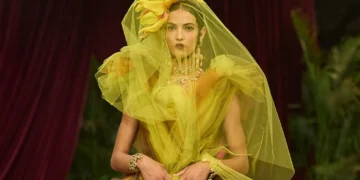
Neon tulle stacks beneath lace to produce a softened, diffused effect. Each look carries a name or internal hook that signals its identity within the collection. “Isabella Blowfish” stands out as a skirt suit composed of layered tulle and organza, finished with organza spikes and crystal shading inspired by blowfish coloration. Color draws from birds of paradise, with pinks, blues, and saffron appearing across the collection and reaching a peak in one of the season’s most elaborate jackets.
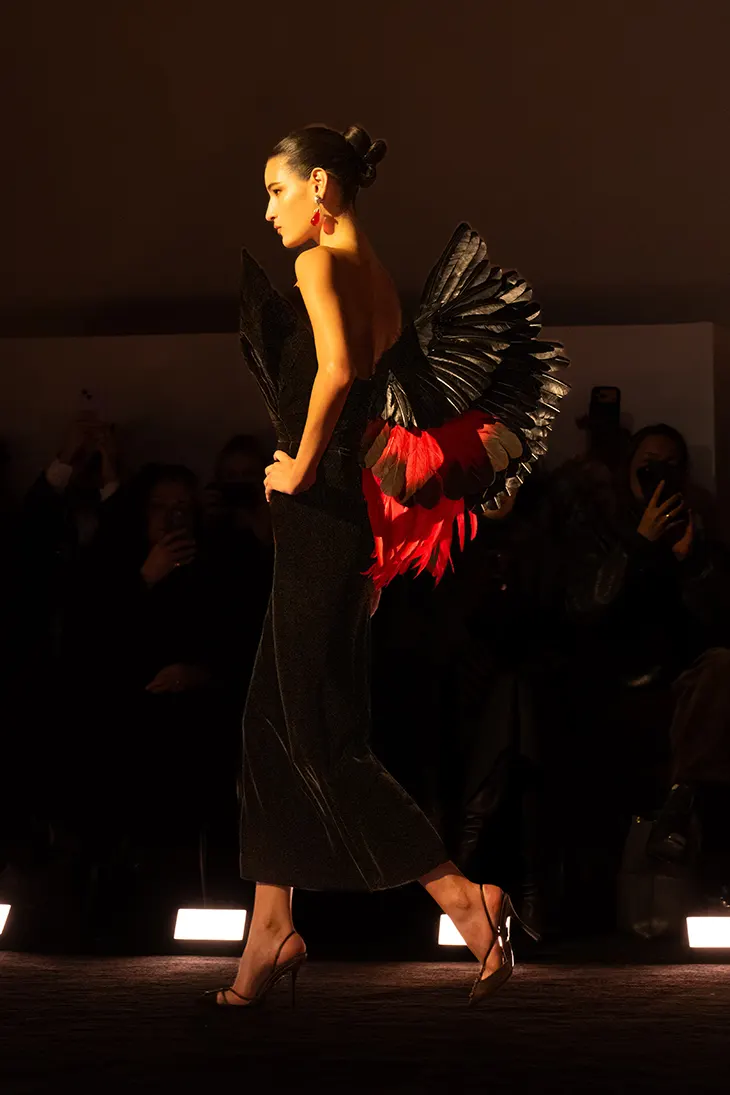
Artificial bird heads appear as sculptural elements, constructed from silk feathers with resin beaks and pearl cabochon eyes. These pieces function as imagined creatures rather than literal representations. They also connect to Elsa Schiaparelli’s long-standing fascination with animals, particularly those of the sea and sky. Roseberry references her interest in the lobster and other creatures associated with the maison’s history. The collection also revisits familiar iconography, including the keyhole, treated as a symbol of curiosity and entry.
Roseberry rejects the idea that couture exists for daily wear. For him, it serves a different purpose. Couture reconnects him to the hopeful adolescent who chose fashion over conventional paths. It creates space for fantasy at a time otherwise governed by practicality. In this collection, couture becomes an invitation to release thought and respond emotionally.